
A Single Telegram Message Wakes Up Your Coding Session
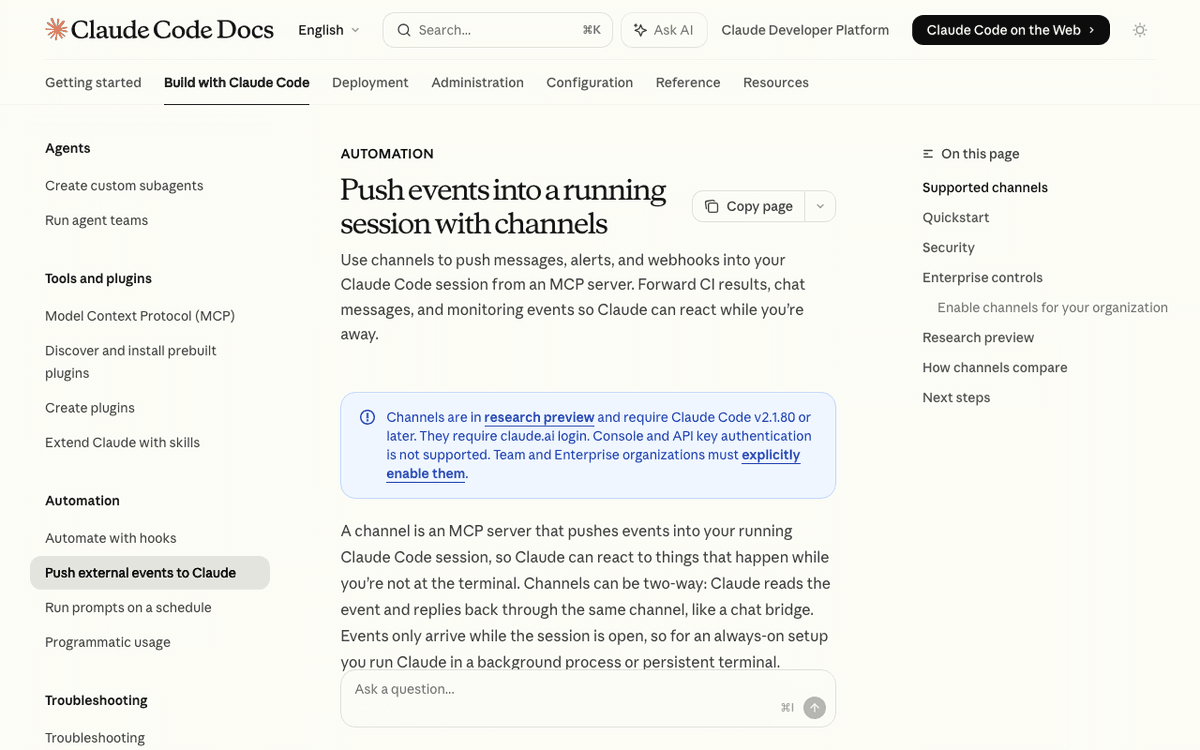
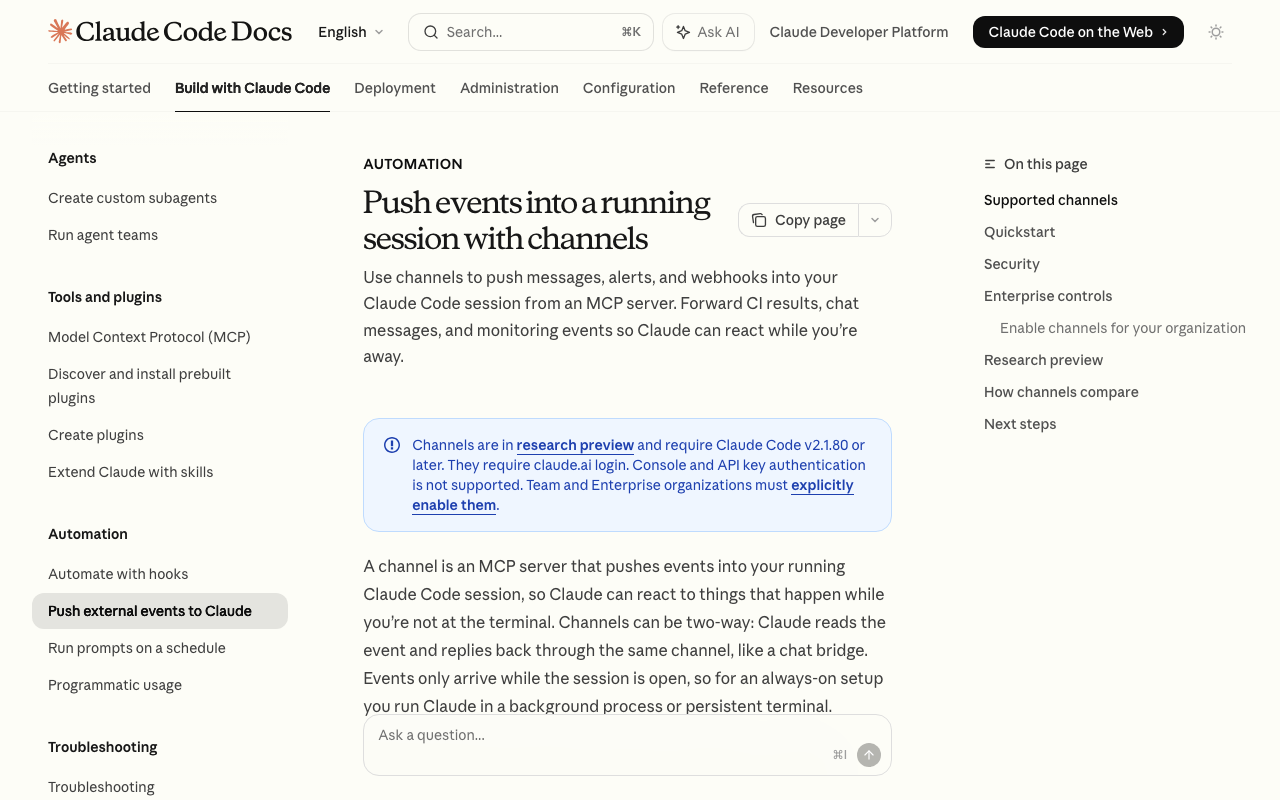
Claude Code Channels is an MCP (Model Context Protocol)-based event push feature that delivers messages from external platforms like Telegram and Discord to a running Claude Code session in real time. Think of it as a notification system for your AI coding assistant — while Claude is writing code in the terminal, it can instantly react to incoming requests from the outside world. It's currently in Research Preview and available in Claude Code v2.1.80+.
Why "Push" Was Needed
There were already several ways to extend Claude Code. Web Sessions spin up cloud sandboxes, the Slack integration is built for team chat, and MCP provides on-demand tool calls. But all of these shared a common limitation: there was no way to inject external events into an already-open session. Channels fills exactly that gap.
Looking at the evolution of AI coding agents, this progression makes sense. When Claude Code first launched in early 2025, the only interaction model was typing commands directly in the terminal. MCP then enabled Claude to pull in external tools on demand, and Remote Control added the ability to spawn new sessions from outside. But the missing puzzle piece was a mechanism to inject external events into a session that's already running. In practice, a Slack message might require a code change, or a Jira ticket update might mean tests need to run — yet none of these events could reach a Claude Code session directly. Channels solves this last gap through MCP's event streaming extension.
 Source: Anthropic
Three Key Differences from Existing Tools
To understand what Channels really is, you need to compare it with Anthropic's other offerings.
Session reuse. Web Sessions and Remote Control spawn new cloud sessions or control them externally. Channels, by contrast, injects events into a local session that's already open. If a Telegram message arrives while you're writing code in the terminal, it gets processed within the same session context — your working code, file tree, and environment variables all stay intact.
Bidirectional communication. Events don't just arrive — Claude sends responses back through the same channel. Send "write tests for this function" via Telegram, and Claude Code writes the tests and sends the results right back to Telegram, all within a single pipeline.
Push, not polling. MCP tools follow a pull model where Claude calls them when needed. Channels uses a push model that delivers events to the session the instant they occur. This difference is decisive for real-time responsiveness. One caveat: events are only received while the session is open, so you'll need tmux or screen for 24/7 operation.
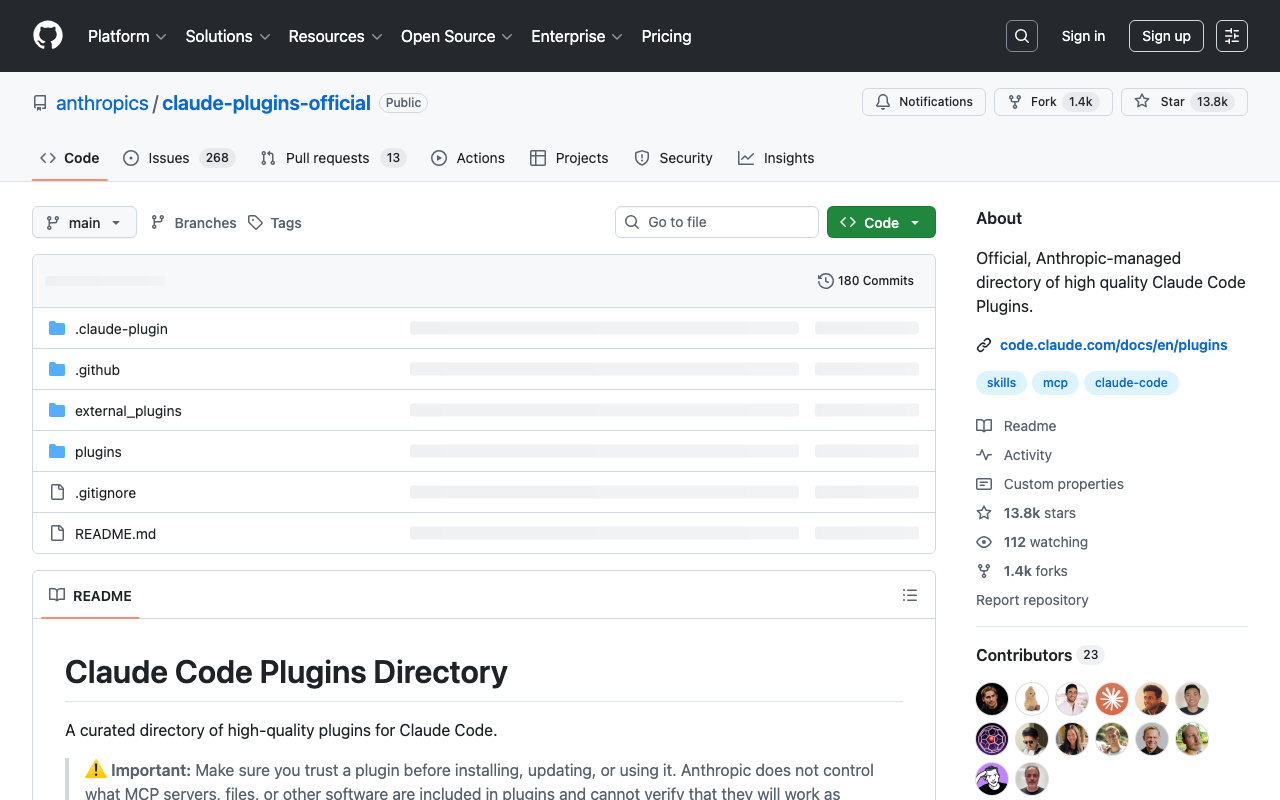
In numbers: there are currently 3 officially supported channels (Telegram, Discord, and the Fakechat local demo), with plugin source code managed in Anthropic's official GitHub repository. Notably, API key authentication is not supported — only claude.ai login works.
Setup Flow and Security Model — Allowlist-Based Access Control
Taking Telegram as an example, setup boils down to 5 steps. First, create a bot in Telegram's BotFather and get a token. Then install the plugin in your Claude Code session with /plugin install telegram@claude-plugins-official, and register the token with /telegram:configure <token>. Start a session with the claude --channels plugin:telegram@claude-plugins-official flag to activate the channel. Finally, send a message to the bot on Telegram to receive a pairing code, and run /telegram:access pair <code> in Claude Code to complete the connection.
On security, Anthropic designed a triple defense layer. First, the --channels flag only accepts plugins registered on an Anthropic-managed allowlist. Testing custom channels requires a separate flag called --dangerously-load-development-channels — a name that warns you before you even use it. Second, every approved channel plugin maintains a sender allowlist. Even if a bot token leaks, messages from unauthorized users never reach the session. Third, on Team and Enterprise plans, admins must explicitly enable the channelsEnabled setting.
This security design stands in sharp contrast to OpenClaw. The open-source personal AI assistant with over 200K GitHub stars supports 50+ platforms including WhatsApp, iMessage, Slack, and Signal, but security is entirely user-managed. Anthropic's Channels supports only 3 platforms but ships with first-party security auditing and built-in allowlist management. The tradeoff between platform breadth and security depth is clear.
 Source: Anthropic
Architecture — Inside MCP Event Streaming
The technical foundation of Channels is MCP's event streaming extension. Traditional MCP followed a request-response pattern where Claude calls a tool and the server responds. Channels adds a server-to-client event stream on top of this. The MCP server receives webhooks from external messaging platforms, converts them into MCP events, and pushes them to the Claude Code client.
A critical design decision in this architecture is how the event queue is handled. When a Telegram message arrives while Claude Code is generating code, the event is queued and processed at a natural breakpoint in the current task. Code generation isn't abruptly interrupted — instead, queued events are consumed sequentially at points like file saves or tool call completions. This preserves the atomicity of code generation while maintaining reasonable latency for external events.
The plugin architecture is also noteworthy. Each channel plugin operates as an independent MCP server and must implement Anthropic's Channel Plugin Interface. This interface requires three core methods: onMessage, sendReply, and validateSender. onMessage converts external messages into MCP events, sendReply transmits Claude's responses back to the original platform, and validateSender checks the sender allowlist. Developers who want to build custom channels just need to write an MCP server implementing this interface — though the --dangerously-load-development-channels flag requirement effectively prevents reckless use in production.
Implications — The "Always-On" Future of AI Coding Tools
The shift Channels represents goes beyond simple messaging integration. Until now, AI coding tools operated in "manual mode" — they only worked when a developer sat at the terminal and typed commands. Channels flips this to "reactive mode." A teammate reports a bug via Telegram and Claude immediately patches the code. A deployment notification hits Discord and Claude analyzes the logs. These workflows are now possible.
This direction fits into Anthropic's broader platform strategy. Claude Marketplace opens up a third-party app ecosystem, while Channels secures real-time connectivity with external services. It signals a center-of-gravity shift from model performance competition to ecosystem competition.
Of course, as a Research Preview, limitations remain. The lack of API key authentication makes CI/CD pipeline integration difficult, and the fact that events stop flowing when a session closes raises reliability concerns for production environments. But because Channels is built on MCP — a standard protocol — the community has a clear path to rapidly expanding custom channels. If channel plugins emerge for project management tools like GitHub Issues, Linear, or Jira, the way development teams work could fundamentally change. The scenario where Claude Code automatically analyzes code and opens a PR the moment an issue is created is no longer science fiction.
References
- Claude Code Channels Official Documentation
- Anthropic Claude Plugins Official (GitHub)
- OpenClaw GitHub
- MCP (Model Context Protocol) Official Site
Get daily AI news delivered to your inbox. Subscribe to the spoonai.me newsletter