
An Agent Without the Terminal — How Cowork Changes the Way You Work
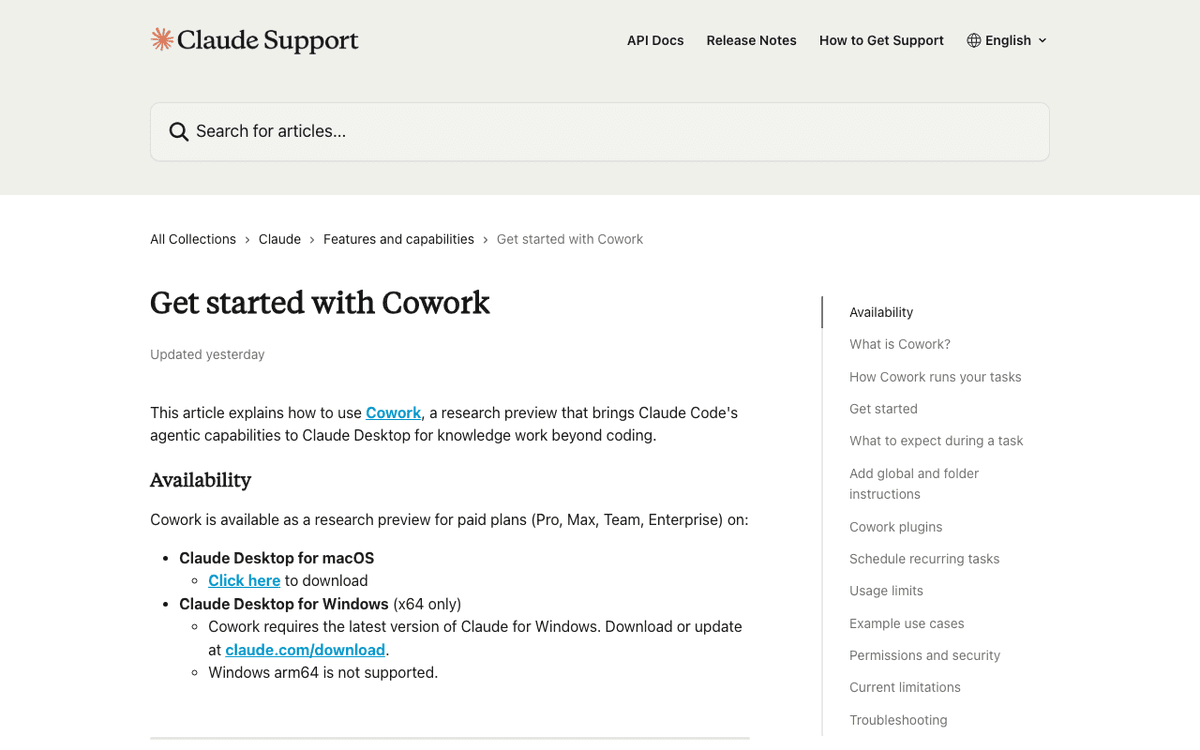
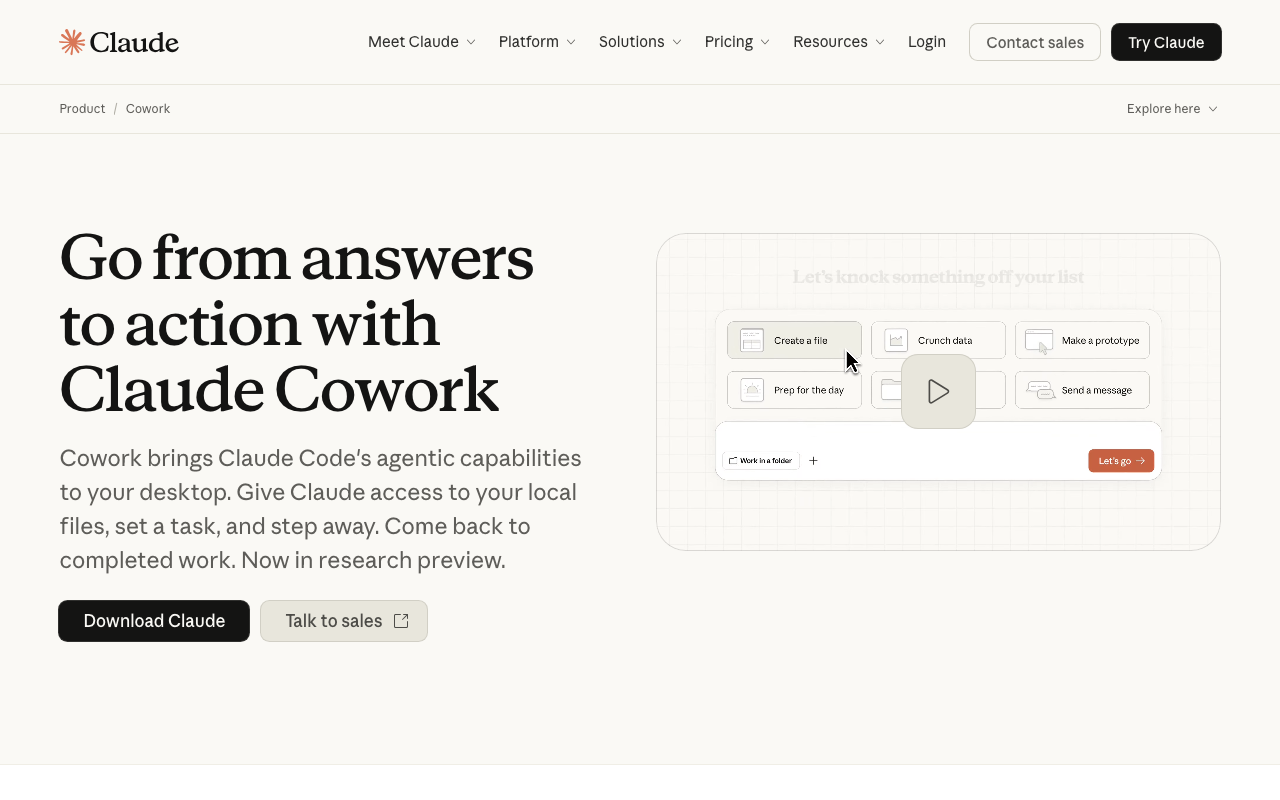
Claude Cowork is an agentic execution environment built into Claude Desktop. It runs on the same agent architecture that powers Claude Code, but removes the terminal from the equation entirely. In Anthropic's own words, you "describe an outcome, step away, and come back to finished work — formatted documents, organized files, synthesized research." Launched as a research preview on January 12, 2026, Cowork has been receiving steady feature updates through March, and is available on Pro ($20/mo), Max ($100–200/mo), Team, and Enterprise plans.
 Source: Anthropic
Background — From Claude Code to Cowork: Anthropic's Agent Strategy Expands
From Developer Tool to Knowledge Worker Tool
Claude Code established itself as a powerful agentic coding tool starting in 2025. Give it a natural language instruction in the terminal, and it reads files, edits code, runs tests, and commits to git — all automatically. The catch: this experience was locked behind the terminal, accessible only to developers. Marketers, analysts, product managers, legal professionals — knowledge workers who don't live in a CLI — were left out.
Cowork bridges that gap. If Claude Code is the agent that writes code in a developer's terminal, Cowork is the agent that creates documents, organizes data, and sends emails on a non-developer's desktop. The underlying architecture is the same: analyze the request, build a plan, decompose it into subtasks, execute each in an isolated VM, orchestrate parallel workstreams when possible, and deliver the result.
Launch Timeline — 10 Weeks of Rapid Feature Stacking
Cowork has evolved fast. It started as a research preview on January 12, followed by a live demo webinar on January 30. Claude Opus 4.6 shipped on February 5 with a 1-million-token context window, dramatically expanding the scale of tasks Cowork could handle. Claude Sonnet 4.6 followed on February 17. The February 24 Enterprise Agents livestream spotlighted corporate use cases. Early March brought recurring task scheduling, and mid-March introduced the plugin marketplace and admin controls. Dispatch launched on March 17, and persistent agent threads arrived on March 19 — 7+ major features in just 10 weeks.
Cowork vs Claude Code — Same Engine, Different Interface
Comparing the two products reveals Anthropic's agent strategy clearly.
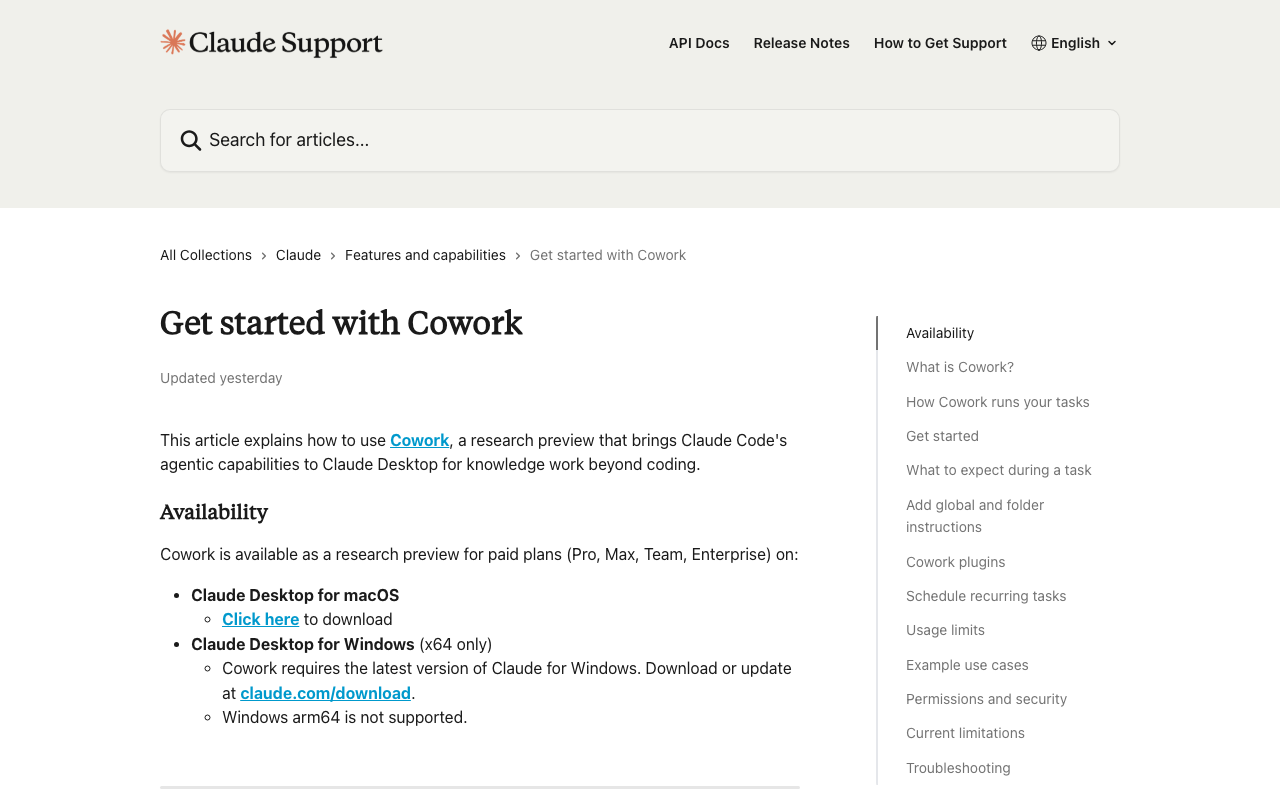
Execution environment is the biggest difference. Claude Code runs in the terminal with direct access to the local file system, git, npm, Docker, and the rest of the development toolchain. Cowork runs inside the Claude Desktop app, supporting macOS and Windows x64 (Windows arm64 is not supported). Both can access local files, but Cowork's scope is optimized for business outputs — documents, spreadsheets, and presentations.
Target users differ accordingly. Claude Code users read and write code. They understand git diff and can parse test failure logs. Cowork users say things like "create an Excel file with these formulas" or "summarize last month's 10 meeting notes into a PowerPoint." Anthropic emphasizes this with the phrase "professional outputs" — meaning Cowork can generate Excel files with working formulas and PowerPoint decks with proper layouts.
The plugin ecosystem is another critical differentiator. Claude Code extends its capabilities through MCP servers that developers configure and manage themselves. Cowork offers 13+ first-party plugins via a marketplace: Gmail, Slack, Google Calendar, Google Drive, DocuSign, Apollo, Clay, WordPress, FactSet, MSCI, LegalZoom, Similarweb, Harvey, and more. Legal document generation (LegalZoom), financial data analysis (FactSet, MSCI), CRM lookups (Apollo, Clay) — all available to non-developers with zero configuration. This plugin roster ties directly into the Claude Marketplace partner strategy.
Memory and context persistence also differ. Claude Code maintains cross-session context through CLAUDE.md files and project-level configuration. Cowork supports memory through Projects — persistent workspaces — but standalone sessions do not retain memory between conversations. This is an important consideration for users who work on the same project repeatedly.
 Source: Anthropic
How It Works and What to Watch Out For — Agents on Isolated VMs
Cowork's execution flow breaks down into five steps. You describe the desired outcome in natural language. Cowork analyzes the request and builds an execution plan. It decomposes that plan into subtasks, then runs each in an isolated virtual machine. Independent tasks are processed simultaneously via parallel workstreams. Once everything completes, the results are delivered back to you. The /schedule command lets you set up the entire flow to run on a recurring schedule.
There are caveats to be aware of. First, Claude Desktop must remain open while Cowork is running. Closing the app interrupts any in-progress tasks. Second, Cowork consumes significantly more usage allocation than regular chat. Even Max plan users can hit daily limits quickly when running complex tasks back-to-back. Third, Cowork activity is not currently logged in Audit Logs or the Compliance API. Anthropic explicitly advises against using it for regulated workloads — financial transaction records, medical data processing, or anything else that requires compliance trails.
On the configuration side, Cowork supports two layers of instructions. Global instructions (set via Settings > Cowork) apply across all Cowork sessions. Folder instructions (placed in specific directories) provide project-level context. This two-tier structure mirrors the CLAUDE.md file system in Claude Code.
Implications — Making AI Agents Accessible to Everyone
Cowork's arrival matters in three ways.
First, the barrier to entry for AI agents drops dramatically. Until now, "agents" were mostly a developer-ecosystem concept. Frameworks like AutoGPT, CrewAI, and LangGraph required Python or TypeScript fluency. Cowork lets anyone run agentic workflows inside a desktop app, with no code, starting at just $20/month on the Pro plan. This is what "democratization of agents" actually looks like.
Second, the competitive landscape shifts. Google is integrating Gemini into Workspace. Microsoft is embedding Copilot across Office. Anthropic, lacking its own office suite, chose a different path: a plugin ecosystem that connects existing tools. Google Drive, Gmail, and Slack plug in, but the execution engine stays under Anthropic's control. Instead of building its own apps, Anthropic is positioning itself as the "agent layer on top of every app."
Third, the coexistence of Claude Code and Cowork expands Anthropic's TAM (Total Addressable Market). Claude Code targets roughly 30 million developers worldwide (per GitHub's count). Cowork targets over 1 billion knowledge workers globally. Attacking both markets with the same underlying agent engine gives Anthropic a structural advantage.
That said, real-world limitations remain. The lack of audit log support could slow enterprise adoption. The requirement to keep the app open conflicts with the "step away and come back" promise. And heavy usage consumption may strain Pro plan users running anything beyond simple tasks.
References
- Anthropic Support: Get Started with Cowork
- Claude Desktop Download
- Anthropic Claude Marketplace Analysis
Get daily AI news delivered to your inbox. Subscribe to the spoonai.me newsletter