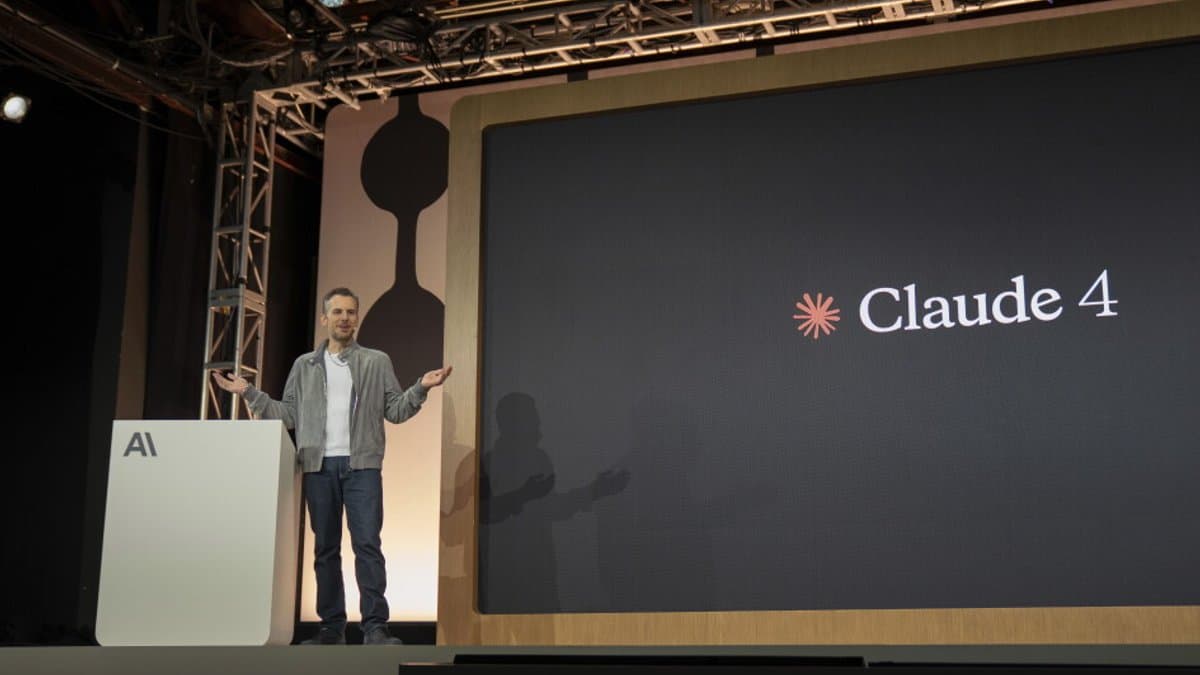
Andrej Karpathy released a new free lecture series titled "Software Engineering in the AI Era." It surpassed 2 million views within 24 hours.
Who Is Karpathy
Former AI Director at Tesla, core member of OpenAI's early research team. He educated hundreds of thousands through his Stanford deep learning course (CS231n) and now drives AI education innovation through Eureka Labs. One of the most influential educators in AI.
Core Message: "Prompt Engineering Is Dead"
Prompt engineering becomes obsolete in six months. What developers really need is system design capability.
"90% of prompt tricks from 2024 are unnecessary with 2026 models. As models improve, prompt techniques become irrelevant. But system design skills remain essential no matter how good models get."
Three Core Skills — Deep Dive
1. System Architecture
Agent-to-agent communication, state management, error recovery. Karpathy compared this to "conducting an orchestra."
What to learn specifically:
- Agent orchestration: Patterns for coordinating multiple AI agents working simultaneously. Understanding architectures of frameworks like CrewAI and LangGraph
- State management: Designing separation of long-term and short-term memory, given finite agent context windows
- Error recovery and graceful degradation: Building systems that don't collapse when AI fails. Fallback chains, circuit breaker patterns
- Cost optimization: Routing decisions at the system level — when Claude Haiku is 100x cheaper than GPT-4o but 5% less accurate, how do you architect that routing?
2. Evaluation Design (Evals)
Automated pipelines to measure AI output quality. Karpathy called this "test code for the AI era."
Why it matters: Traditional software uses unit tests to verify behavior. Input X should produce output Y. But AI systems can produce different outputs for the same input. The definition of "correct output" itself is fuzzy.
Practical applications:
- LLM-as-a-Judge pattern: Using another LLM to automatically evaluate output quality
- Human evaluation pipelines: Efficiently collecting and incorporating human judgment
- A/B testing infrastructure: Statistically measuring the effect of prompt or model changes
- Regression detection: Automatically checking that performance hasn't degraded after model updates
3. Human-AI Interface (Human-in-the-Loop)
Structures for humans to verify and intervene in agent decisions.
Karpathy's framework:
- Confidence threshold: Automatically request human review when AI confidence is below 80%
- Escalation ladder: Three levels — simple confirmation → present options → full delegation
- Audit trail: Traceable records of all AI decisions (connects to Entire's Checkpoints concept)
Developer Role Shift — By the Numbers
According to Stack Overflow's 2025 Developer Survey:
- 78% of developers use AI coding tools at least weekly
- 63% say "AI writes code for more time than I do directly"
- But 91% report "time spent reviewing AI-generated code has increased"
- "System design" ranked as the #1 most in-demand skill (up from #3 in 2024)
How This Differs from Current Education
Most coding bootcamps and CS curricula still teach "how to write code well." Karpathy criticized this as "teaching horseback riding after the automobile was invented."
Karpathy's curriculum:
- Week 1-2: Understanding AI system components (LLM, RAG, vector DB, agents)
- Week 3-4: Multi-agent system design and implementation
- Week 5-6: Building eval pipelines
- Week 7-8: Production deployment and monitoring
- Week 9-10: Cost optimization and scaling
- Week 11-12: Capstone project — solving real problems
Community Response
Thousands of quote-tweets and discussions on X (Twitter). Key reactions:
Positive:
- "Exactly pinpointed why I felt prompt engineering couldn't be a career"
- "System design being the core is really an extension of traditional software engineering"
Critical:
- "Prompt engineering is dead is an overstatement. Domain-specific prompting still matters"
- "Learning system design takes years. Unrealistic for bootcamp students"
Related Projects and Background
The Shifting AI Education Ecosystem
Karpathy isn't the only one sensing this shift:
- Andrew Ng's DeepLearning.AI: Added "AI System Design" specialization courses starting 2025, pivoting from ML fundamentals
- fast.ai (Jeremy Howard): Revamped curriculum to "Practical AI Systems" — focusing on system integration over code writing
- Replit's 100 Days of AI: Transformed coding bootcamp into AI agent building bootcamp
Common message: teach "how to build systems with AI," not "how to write code."
Is Prompt Engineering Really Dead?
Karpathy's "prompt engineering is dead" claim is controversial. Counterarguments exist:
- Domain-specific prompting: In specialized fields like medicine, law, and finance, sophisticated prompt design still matters
- System prompt design: System prompts that define agent behavior are actually becoming more important
- Structured output: Prompting for JSON Schema, function calls, and other structured outputs remains necessary regardless of model quality
More precisely: "casual user prompt tricks" are becoming irrelevant, but "system-level prompt architecture" demand is actually growing.
The Future of Software Engineers
According to IEEE Software's 2025 survey, senior developer roles are changing fastest. Code review (verifying AI-generated code), architecture decisions, and agent orchestration are becoming core responsibilities. Junior developer hiring is declining, but seniors with system design skills are at all-time peak demand. Per Levels.fyi, average compensation for Staff Engineer and above rose 18% year-over-year in 2025.
Implications
As code writing automation increases, the developer's role shifts from "person who writes code" to "person who designs systems and ensures quality." Karpathy's lectures are the clearest educational framework for this transition.
Key takeaway: The ability to design systems that make AI agents work effectively is becoming more valuable than the ability to write code line by line.
The lectures are free on YouTube. Practice materials are available on the Eureka Labs website.