200 million. That is the number of Amazon Prime members in the US who now have access to free AI-powered health consultations and virtual doctor visits through the Amazon app.
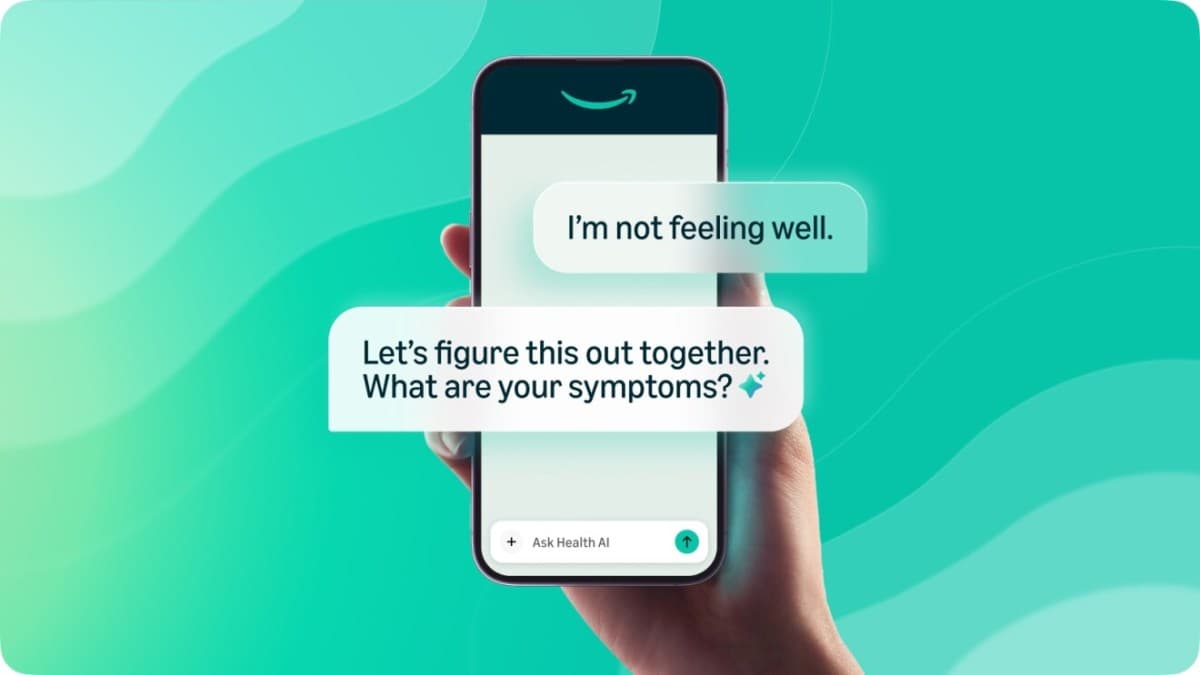
On March 10, Amazon officially deployed its Health AI assistant on Amazon.com and the Amazon app. The assistant answers health questions, explains medical records, manages prescription renewals, and books appointments. Prime members get up to five free virtual consultations with One Medical doctors for over 30 common conditions, from allergies to UTIs. Non-Prime customers can access the basic AI features too.
Simultaneously, AWS launched Amazon Connect Health, an agentic AI platform for healthcare providers. Amazon is attacking both sides of the healthcare market at once: consumer-facing AI and enterprise infrastructure.
The Backstory: Amazon's Decade-Long Healthcare Obsession
Amazon has been trying to crack healthcare for years. The track record is a mix of failures and pivots.
| Year | Initiative | Outcome |
|---|---|---|
| 2018 | Haven (JV with JP Morgan, Berkshire) | Dissolved in 2021 |
| 2018 | PillPack acquisition ($753M) | Absorbed into Amazon Pharmacy |
| 2022 | One Medical acquisition ($3.9B) | Core of current Prime health services |
| 2024 | Amazon Clinic launch | Predecessor to Health AI |
| 2026 | Health AI + Connect Health | Consumer + enterprise dual strategy |
Haven was the high-profile joint venture where three corporate giants tried to reduce healthcare costs directly. It collapsed within three years, unable to navigate the complexity of the US healthcare system. But Amazon kept going. PillPack gave it pharmacy delivery infrastructure. One Medical gave it a primary care clinic network. Health AI is an AI interface layer built on top of all of that.
The critical difference from healthtech startups: Amazon is not starting from zero. It already has prescription delivery, a clinic network, and insurance data integration. The AI layer connects these existing pieces into a single experience.
Inside the Product: Consumer AI Meets Enterprise Agents
Consumer Side: Health AI Assistant
The Health AI assistant, embedded directly in Amazon.com and the Amazon app, provides AI-powered health answers, medical record interpretation and summaries, prescription renewal management, appointment booking, and for Prime members, up to five free direct-message consultations with One Medical doctors covering 30+ common conditions including cold, flu, allergies, acid reflux, pink eye, UTIs, and more.
The decision to make basic AI features available to non-Prime customers is strategic. Amazon is using Health AI as a conversion funnel: try the AI for free, then subscribe to Prime when you need a real doctor.
Enterprise Side: Amazon Connect Health
On the AWS side, Amazon Connect Health delivers five AI agents designed to automate administrative workflows across the care continuum.
| Agent | Function | Replaces |
|---|---|---|
| Patient Intake | Auto-collects info, verifies insurance | Front desk admin |
| Scheduling | Appointments, reminders, rebooking | Scheduling staff |
| Pre-Visit | Pre-screening, test instructions | Nurse prep work |
| Post-Care | Medication reminders, follow-ups | Post-visit phone calls |
| Billing | Insurance claims automation | Billing admin staff |
Administrative costs account for roughly 30% of total US healthcare spending. The market these agents are targeting is measured in hundreds of billions of dollars.
Amazon's strategy is straightforward. Give patients an AI doctor. Sell hospitals AI admin staff. Collect from both sides.
The Bigger Picture: Big Tech's Healthcare AI Race
Amazon is not alone. As of March 2026, all four major tech companies are treating healthcare AI as a strategic priority.
| Company | Key Product | Strategy |
|---|---|---|
| Amazon | Health AI + Connect Health | Consumer touchpoint (shopping app) + enterprise platform |
| Med-Gemini, Fitbit AI | Search-based health info + wearable health data | |
| Microsoft | Copilot for Healthcare | Azure-based provider workflow automation |
| Apple | Health app + Siri medical features (delayed) | Device sensor data for personal health management |
Amazon's differentiator is end-to-end action. Google searches health information. Apple measures health data. Amazon takes you from an AI consultation to ordering medication to seeing an actual doctor, all within one platform. That is only possible because of the physical infrastructure: e-commerce, logistics, and One Medical clinics.
What This Means for You
Three things to watch.
First, healthcare AI is evolving from "search" to "agent." It is no longer just about looking up symptoms and getting information. AI that books appointments, renews prescriptions, and verifies insurance is entering clinical practice.
Second, big tech's healthcare push is accelerating with AI as the lever. Regulation and system complexity used to be the moat. AI agents automating administrative work are lowering that barrier.
Third, for developers, healthcare AI is one of the fastest-growing vertical AI markets. AWS's Connect Health is API-based, meaning third-party developers can build application services on top. For healthtech startups, this is both a threat and an opportunity.