One Number Says It All
March 24, 2026. OpenAI crossed a major milestone: they finished pretraining GPT-5.5, the company's next frontier model. Sam Altman called it "a very strong model" and said the release is just "a few weeks away." That was days ago. Translation: somewhere between April and May this year, you'll probably encounter one of the most capable language models ever built.
But here's what makes it even more interesting. OpenAI is calling this model "Spud" internally – a code name that hints at neither its final product name nor its capabilities. Will it ship as GPT-5.5, jump straight to GPT-6, or get an entirely different label? Nobody's decided yet. What is certain: its arrival will send ripples across the entire AI industry.
To Understand This: GPT's Evolution So Far
Three weeks before Spud's pretraining finished, OpenAI released GPT-5.4 on March 5. Looking at that model's specs tells you how fast things are moving.
| Model | Release | Context Window | Key Achievement |
|---|---|---|---|
| GPT-5.4 | March 5, 2026 | 1M tokens | 75% accuracy on OSWorld (above 72.4% human baseline) |
| GPT-5.5 "Spud" | April–May 2026 (expected) | TBD | Two years of research built in |
| Competition | Q2 2026 | – | DeepSeek V4, Grok 5 shipping |
GPT-5.4 was already impressive. A million-token context window – that's roughly 750,000 words – means you can feed it an entire book, codebase, or conversation history in one shot. And that 75% accuracy on OSWorld? That's above the human baseline of 72.4%. Translation: the model can now do things on your computer almost like a human would – navigate websites, run terminal commands, automate workflows.
Enter GPT-5.5. Greg Brockman, OpenAI's President, described it as the result of "two years of research" with "big model feel." That's not marketing speak for "slightly better." It's code for "this is a qualitative leap."
Dissecting the Details: What Spud Actually Is
What Pretraining Complete Means
When OpenAI says pretraining is done, they mean the model has absorbed its knowledge from the internet. Billions of documents, papers, code samples, conversations – all of it compressed into the model's weights. The next phase? Fine-tuning through reinforcement learning from human feedback (RLHF) and other optimization techniques. That's the "few weeks" Altman mentioned.
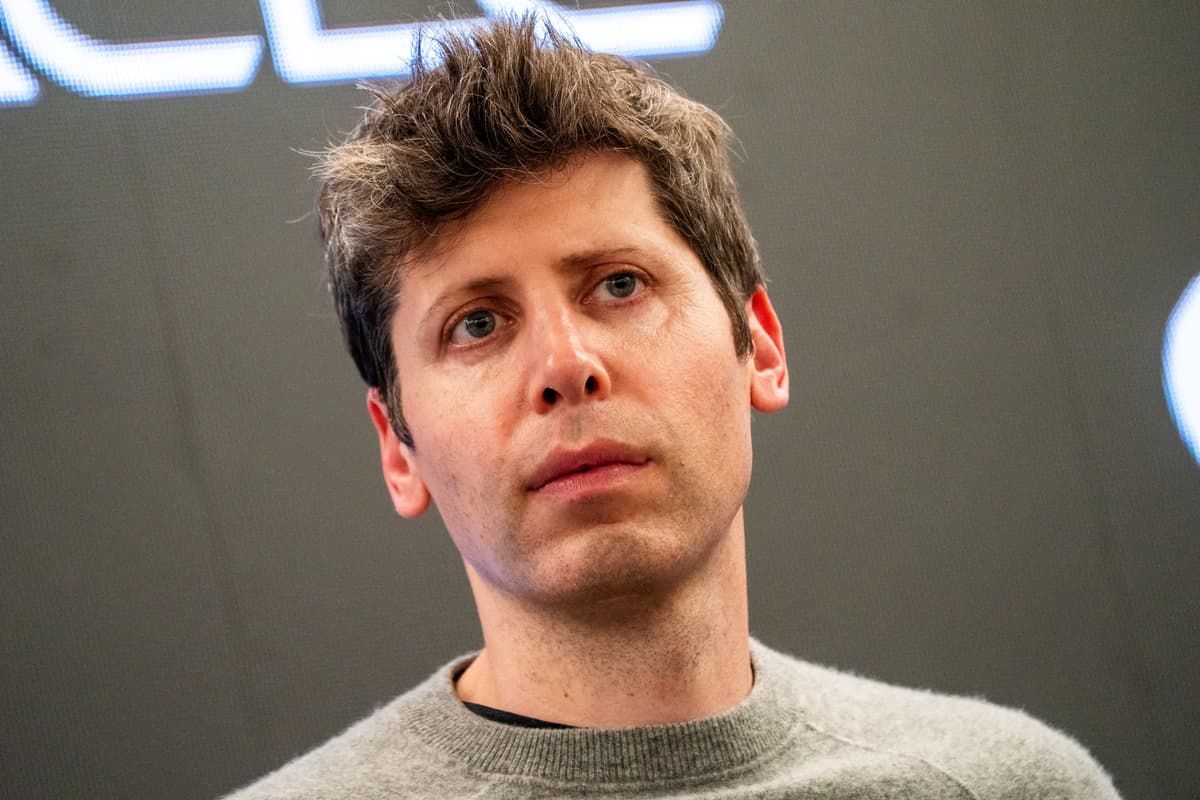
"A very strong model that could really accelerate the economy." – Sam Altman, OpenAI CEO
Notice he didn't say "it's more powerful" or "better accuracy." He said it could accelerate the entire economy. That's not hyperbole. Even GPT-5.4 has already shifted what's automatable and what isn't.
The Naming Question: Version Update or Rebrand?
Here's where strategy gets interesting. OpenAI hasn't committed to a name yet. Is it GPT-5.5? A jump to GPT-6? Something completely new? "Spud" is just the internal code name.
The choice matters more than you'd think. GPT-6 signals "new generation, new capabilities tier." It resets expectations higher. GPT-5.5 signals "refined evolution, step-by-step improvement." Each sends a different message to developers, investors, and the market. The final decision probably depends on benchmarks and what OpenAI thinks will resonate most.
Q2 2026: The Frontier Model Showdown
The second quarter of 2026 is shaping up as the most competitive period for frontier models yet:
| Model | Developer | Expected Launch | Why It Matters |
|---|---|---|---|
| GPT-5.5 or GPT-6 | OpenAI | April–May | Sets new performance ceiling |
| DeepSeek V4 | DeepSeek (China) | Q2 | Challenges Western AI dominance |
| Grok 5 | xAI (Elon Musk) | Q2 | Real-time information integration |
This isn't just three companies shipping updated models. This is a battle to define the next era of AI capability. DeepSeek V4 represents China's push for technological independence. Grok 5 represents a different architecture philosophy – AI informed by live data feeds. And Spud/GPT-6? It's OpenAI doubling down on raw capability and scale.
The Bigger Picture: OpenAI's Business Strategy
Financial Dominance
OpenAI is in the strongest position it's ever been in terms of business fundamentals:
- Q1 2026 funding: $12.2 billion (largest single raise ever)
- Annualized revenue: Over $2.5 billion
- IPO timeline: Likely in late 2026
What do these numbers mean? OpenAI is no longer a "promising startup." It's a technological superpower. When you raise $12.2 billion, you're not just funding operations – you're signaling to the world that investors believe your next product will reshape entire industries.
The IPO and New Model Timing
Here's a strategic observation: Spud's launch window and OpenAI's IPO timeline overlap deliberately. When you ship a world-class frontier model in April or May, then go public in late 2026, you're telling investors a specific story: "We don't just have a great product. We have a pipeline of continuous innovation." It's the perfect sequencing.
The Revenue Question
GPT-5.5 will likely ship as part of ChatGPT Plus, potentially with new tiered offerings for enterprise. OpenAI's current business model – API access plus subscription tiers – is already generating billions. A more capable model means higher demand from developers building AI applications. Higher demand eventually means higher revenue.
What Changes for Developers and Users?
For Developers Building AI Products
If you're shipping anything with LLMs, Spud moves the goalposts:
- Better context handling: Beyond 1M tokens, you can process entire codebases, documentation sets, and user histories in a single request. Your app gets smarter with less prompt engineering.
- New automation possibilities: If OSWorld accuracy goes above human baseline, web automation, data extraction, and form handling become genuinely reliable for the first time.
- Reasoning depth: Complex problems in medicine, law, engineering, and science get more than pattern-matching. The model actually reasons through them. That's not a feature – it's a category shift.
For Everyday Users
If you use ChatGPT regularly, what changes?
- Better answers to hard questions: Nuanced questions that currently get "pretty good" answers get genuinely great ones.
- Faster workflows: Long documents process faster. Multi-step tasks complete in fewer back-and-forths.
- New capabilities: Video understanding, PDF handling, and tool integration all get more robust.
- Pricing uncertainty: Will it be more expensive? Cheaper? That depends on OpenAI's positioning. But expect price pressure from competition.
For the Broader Ecosystem
This isn't just a product release. It's a structural shift:
- Competition accelerates: Every other lab – Google, Meta, Anthropic, Mistral – gets pushed to ship their own frontier models faster.
- Industry automation jumps: Call centers, customer support, content generation, code review – the timeline for viable AI automation gets much shorter.
- Regulation tightens: Models this capable raise serious questions about safety, alignment, and control. Expect more scrutiny from lawmakers and regulators globally.
What's Next: The Question That Matters
Spud's release isn't just "the next version of GPT." It's a signal that we're entering a new phase of AI capability development where models start displacing human judgment in domains that previously seemed untouchable.
The exact launch window is probably April or May. The exact name is still TBD. The exact price is unknown. But here's what we know for certain:
Once Spud ships, the question won't be "What can AI do?" anymore. It'll be "What can't AI do?"
How we answer that second question – what jobs AI won't touch, what decisions remain human, what safeguards we build – that's where the real story begins.
The model is trained. The infrastructure is ready. The competition is already moving. In a few weeks, we'll see what two years of OpenAI's research actually looks like when unleashed on the world.
References
- OpenAI official communications and Sam Altman public statements
- Fortune reporting on GPT-5.4 release and market implications
- Industry analysis of frontier model development cadence (Q2 2026)
- OpenAI Q1 2026 funding announcement and IPO speculation
- Greg Brockman, OpenAI President – public remarks on Spud development