NotebookLM finally moved inside Gemini
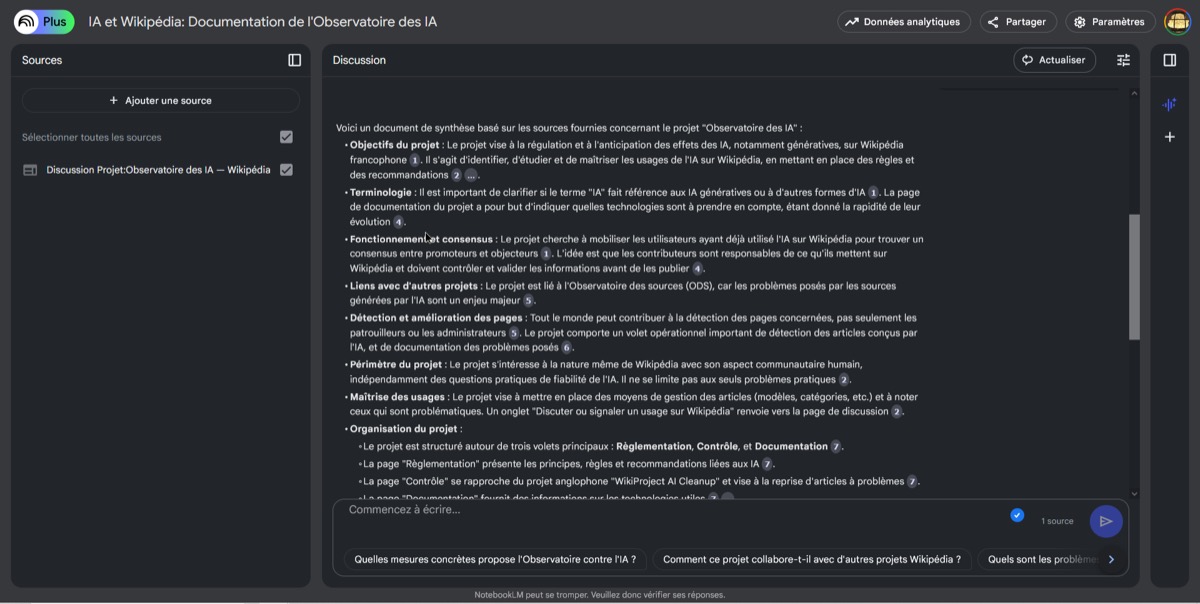
On April 8, Google announced "Notebooks in Gemini" — NotebookLM's core features are now built directly into the Gemini web app. One line from the official blog sums it up: Notebooks are now "personal knowledge bases shared across Google products."
Until now, using NotebookLM meant opening a second tab at notebooklm.google.com. For Gemini users, it was a known-but-separate tool. That friction is gone as of April 8.
Here's the short version — drop a PDF, slide deck, or Google Doc into the Gemini chat, get a source-grounded summary on the spot, and generate an Audio Overview (podcast-style conversation) from the same sources. The two apps stay in sync automatically.
What actually changed — one-sentence definition + three differentiators
Notebooks in Gemini is "NotebookLM running inside the Gemini chat window." Three things matter about the way it's been wired up.
First, bidirectional sync. Notebooks created in Gemini web show up at notebooklm.google.com, and vice versa. Sources (PDFs, links, YouTube URLs) added in one surface are immediately usable in the other.
Second, feature separation is preserved. NotebookLM the app isn't going away. Video Overviews and Infographics remain notebooklm.google.com-only. Audio Overviews can be triggered from Gemini, but your account has to be linked.
Third, tier-gated rollout. Initial access is Google AI Ultra ($249.99/mo), Pro ($19.99/mo), and Plus ($9.99/mo) web subscribers. Mobile, free users, and more European countries are listed as "coming weeks." Workspace accounts, Education accounts, and under-18 accounts are excluded at launch.
 Source: commons.wikimedia.org · CC BY-SA 4.0
Key specs vs. competing research tools
Source-grounded research tools have become a crowded category. ChatGPT Custom GPTs and Projects, Perplexity Spaces, and Claude Projects all aim at similar workflows. Putting them side-by-side against Notebooks in Gemini clarifies the positioning.
| Feature | Notebooks in Gemini | ChatGPT Projects | Perplexity Spaces | Claude Projects |
|---|---|---|---|---|
| Source types | PDF, web, YouTube, Google Docs/Slides | PDF, web, images | PDF, web, images | PDF, text files |
| Audio summary | Audio Overview (podcast) | none | none | none |
| Video summary | Linked NotebookLM Video Overview | none | none | none |
| Sources per project | Plus 50 / Pro 300 / Ultra 1000 | ~20 (Projects) | Pro unlimited | ~100 MB |
| Launch | 2026-04-08 full integration | 2024-06 Projects | 2024-04 Spaces | 2025-06 Projects |
| Price | Plus $9.99 / Pro $19.99 / Ultra $249.99 | Plus $20 / Pro $200 | Pro $20 | Pro $20 |
Audio Overview is the real moat. Every other tool stops at text summaries and Q&A. NotebookLM turns a 40-minute paper into a 12-minute two-host podcast. The commute-friendly "listen to my research" workflow is Google-only.
Feature breakdown
Add sources → summarize → ask
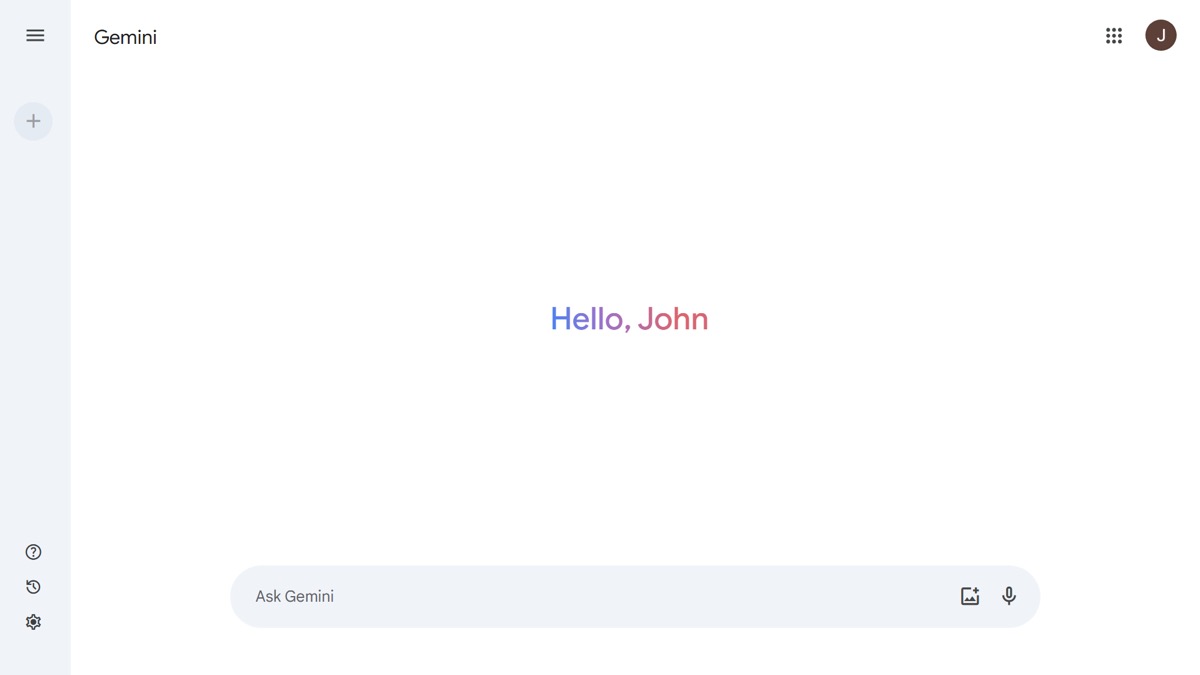
A notebook icon now sits in the upper-right of the Gemini chat. Click it and the current conversation can be bound to a notebook, and you can drag-drop new sources (PDF, link, YouTube URL) in. Gemini 3 indexes them, and from that point on answers are restricted to the sources you uploaded. That's the hallucination fix — regular Gemini chat pulls from training data and web search, but a notebook treats your documents as ground truth.
Using Deep Research reports as a source is especially neat. Gemini's Deep Research crawls 20-40 sites for a topic and delivers a report, and that report can be converted into a notebook source. The pipeline "Deep Research → Notebook → Audio Overview → execution" finally closes end-to-end.
Audio Overview and Video Overview
Audio Overview generates a 12-20 minute podcast where two AI hosts discuss your sources in a back-and-forth conversation. It went viral on X and Reddit at launch in September 2024 because people suddenly had a way to "listen to" research papers during commutes. With this integration, it becomes the default entry point. Video Overview — slide-based narrated explainers — still only generates on the NotebookLM site itself.
 Source: commons.wikimedia.org · Public domain
Pricing + rollout timeline
Access conditions differ by tier — here's what matters.
| Tier | Price/mo | Access date | Source limit | Audio Overview |
|---|---|---|---|---|
| Plus | $9.99 | 2026-04-08 (web) | 50/notebook | limited |
| Pro | $19.99 | 2026-04-08 (web) | 300/notebook | 3/day |
| Ultra | $249.99 | 2026-04-08 (web) | 1000/notebook | unlimited |
| Free | 0 | coming weeks | ~20 est. | weekly |
| Workspace/EDU | separate | TBD | — | — |
Mobile (Android and iOS) is loosely dated as "coming weeks." Some European regions are also excluded on day one. A full rollout is expected around mid-May.
Who this is actually for
The target splits into three groups — knowledge workers, students, and researchers — and each uses this differently.
Knowledge workers (consultants, marketers, PMs): Drop competitor reports, industry docs, and internal decks into a notebook, then get an Audio Overview briefing on the commute in. Ask targeted Q&A before writing slides. This is the same territory as ChatGPT Projects, but audio is the differentiator.
Students (undergrad and grad): Combine textbook PDFs, lecture transcripts, and 10-20 papers into a single notebook. Ask meta-questions like "what limitations do all these papers share?" NotebookLM was already going viral on TikTok and YouTube for this use case.
Researchers (academic and journalism): Bundle Deep Research reports, primary papers, and interview transcripts and generate citation-trackable summaries. The key value is low hallucination risk — every notebook answer attributes "this sentence came from page 7 of source 3," which raw Gemini chat does not.
Competitive response and market position
OpenAI and Anthropic did not issue a formal response after the launch. But the competitive picture is already well-formed. OpenAI launched ChatGPT Projects in June 2024 with a similar structure, then added voice chat in late 2025. Anthropic's Claude Projects supports file-grounded workflows. Perplexity Spaces has been around since April 2024.
Audio Overview as a format remains Google-only, though. Fifteen months after launch, no competitor has cloned it. The combination of Gemini's native voice model (Gemini Live + Project Astra) and NotebookLM's source-grounded synthesis is not trivial to replicate.
Google is actively rewriting its identity from "search engine" to "AI research partner." Absorbing NotebookLM into Gemini is the explicit declaration.
Don't overlook the Workspace bundle either. Gemini Plus and Pro subscribers already have Google Drive access wired in, so documents sitting in Drive can become sources without a re-upload step. ChatGPT and Claude don't have this level of file-system integration.
So what actually changes
Regular paid users (Plus/Pro): You no longer need to remember NotebookLM exists. Your document research, summary generation, and audio listening all happen inside the Gemini chat. You can stop being aware that "NotebookLM" is a product. For most users, this is the headline benefit.
Google AI Ultra subscribers: The 1,000 sources per notebook limit is actually meaningful. Being able to bundle 50 papers of 100-200 pages each into one project and run Audio Overview unlimited means academic research workflows get restructured, not just faster.
Knowledge worker teams: Until Workspace integration lands, this stays individual-account-centric. Shared team notebooks are on the "coming weeks" list but without a firm date. Until then, the pattern is "one person curates, then shares the output."
ChatGPT and Claude users: Pure document Q&A is fine in ChatGPT Projects. But if you want Audio Overview, there is no alternative to Gemini. If your workflow has any "listen to documents while doing something else" rhythm, Google just added a concrete reason to switch.
Developers: The open question is when Notebooks ships in the Gemini API. Today if you want a notebook-grade source-grounded RAG system, you have to wire Vertex AI Search yourself. The moment Notebooks becomes an API primitive — upload, auto-index, source-cited answers — the enterprise RAG market repositions overnight.