"Can Claude be a child of God?" That question was asked inside an AI company's boardroom.
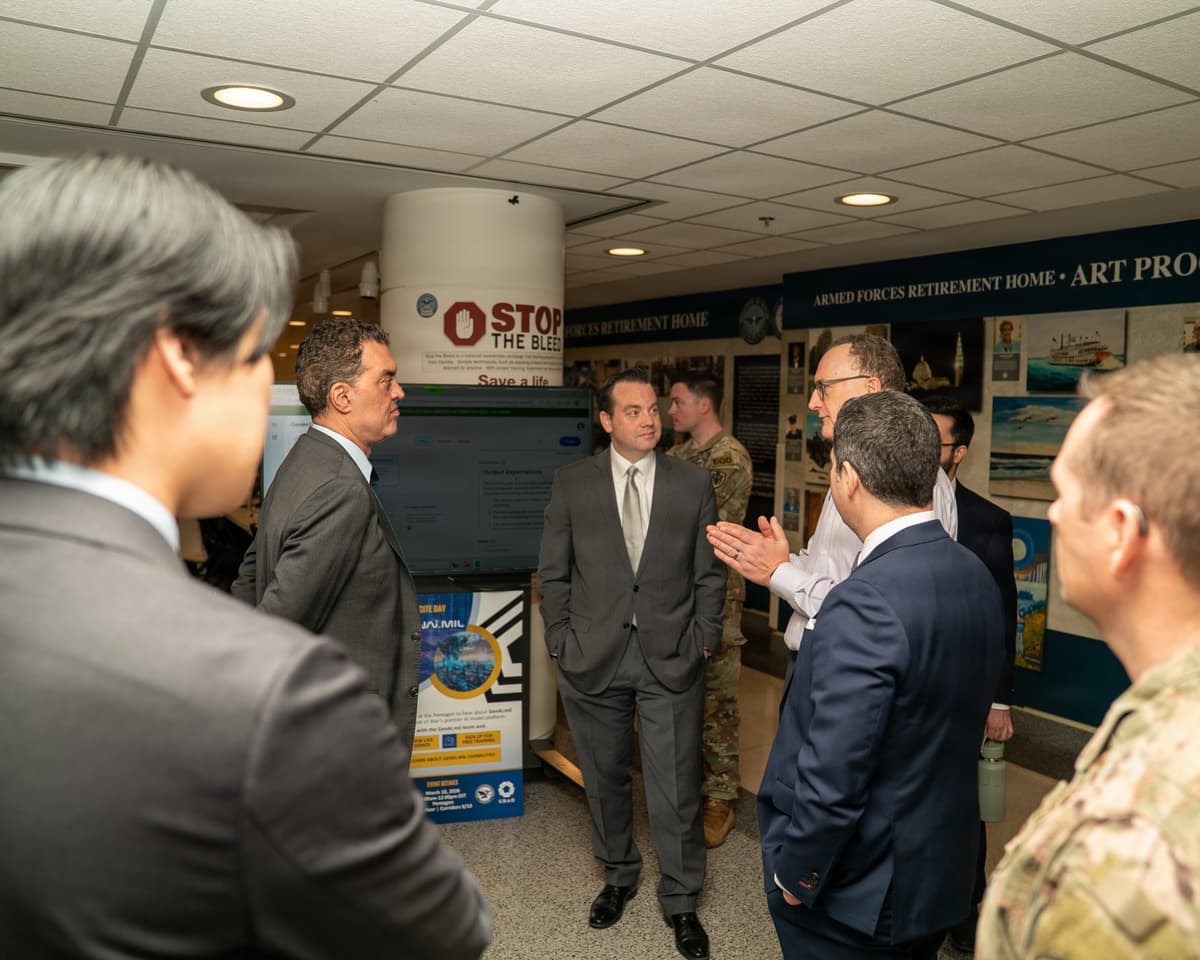
In late March, an unusual group of visitors arrived at Anthropic's San Francisco headquarters. Catholic priests, Protestant pastors, theologians, and Christian business leaders, 15 in total, spent two days dining with Anthropic's senior researchers and discussing one question: how should Claude behave morally?
The Washington Post broke the story on April 11, and the reaction was immediate.
Context: how AI ethics usually works
Designing ethical behavior into AI has always been a challenge, but the approach has been overwhelmingly technical. Remove bias from training data. Use RLHF (Reinforcement Learning from Human Feedback) to steer outputs. Create principle lists, like Anthropic's own Constitutional AI framework, and embed them into the model.
Anthropic pioneered Constitutional AI in 2023, the idea of giving an AI a "constitution" of values and letting it self-regulate. But that raises an obvious question: where do those values come from?
Until now, mostly from AI researchers and policy experts. What Anthropic did this time was expand that circle to religious leaders. CEO Dario Amodei has repeatedly said he wants to incorporate "diverse stakeholder voices" into AI design. This was the first concrete implementation of that promise.
What they actually discussed
Based on reporting from the Washington Post and Gizmodo, the summit covered three main topics.
First, how Claude should respond to grief and self-harm. When users start conversations in extreme emotional states, where should AI draw the line between empathy and professional referral?
Second, whether Claude could be considered "a child of God." This is simultaneously a theological question and a question about AI anthropomorphization, the growing tendency to treat AI as a person-like entity.
Third, how to embed ethical reasoning into systems. Silicon Valley-based Catholic priest Brendan McGuire put it this way: "We've got to build in ethical thinking into the machine so it's able to adapt dynamically."
Why it sparked controversy
The backlash was immediate and polarized.
The core criticism is representativeness. All 15 attendees were Christian. No Muslim, Buddhist, Hindu, Jewish, or secular ethicists were included. Reddit's r/technology saw threads accusing Anthropic of "injecting Christian morality into AI." Slashdot ran the story under the headline about Claude's "spiritual development."
Anthropic's position: this was the first in a planned series, with follow-up gatherings involving representatives from different religious and philosophical traditions.
| Arguments for | Arguments against |
|---|---|
| First step toward diverse ethical input | Only inviting Christians shows bias |
| AI ethics shouldn't be engineers-only | Religion isn't a scientific approach |
| External consultation shows openness | Private meetings aren't transparent |
| Practical topics like grief/self-harm | "Child of God" discussion isn't product design |
The bigger picture: a new front in AI ethics
This isn't an isolated event. It's part of a larger shift.
In 2026, AI ethics debates run along three axes. First, government regulation: 47 countries have active AI legislation. Second, corporate self-governance: Anthropic's Constitutional AI, OpenAI's safety board, Google's DeepMind Ethics team. Third, and this is what's new, participation from religious and philosophical frameworks.
The third axis matters because AI is no longer just a tech product. It's social infrastructure. GenAI reached 53% population adoption in three years. At that penetration level, an AI's values don't just reflect society's values. They shape them.
What this means for you
Claude's behavior won't change overnight because of this summit. It was advisory, not decisional.
But the direction matters. AI companies are starting to publicly grapple with "whose values go into the machine." Until now, that question was answered quietly inside engineering teams.
For developers, the takeaway is that AI "character design" is becoming a meaningful product differentiator. Claude's reputation for being "helpful but honest" isn't just a technical achievement. It's a design philosophy backed by this kind of deliberate values work.
What happens next is what matters most. If Anthropic follows through on including diverse voices, this could become a model for AI ethics. If it stops at Christianity, it becomes a PR misstep.