80%
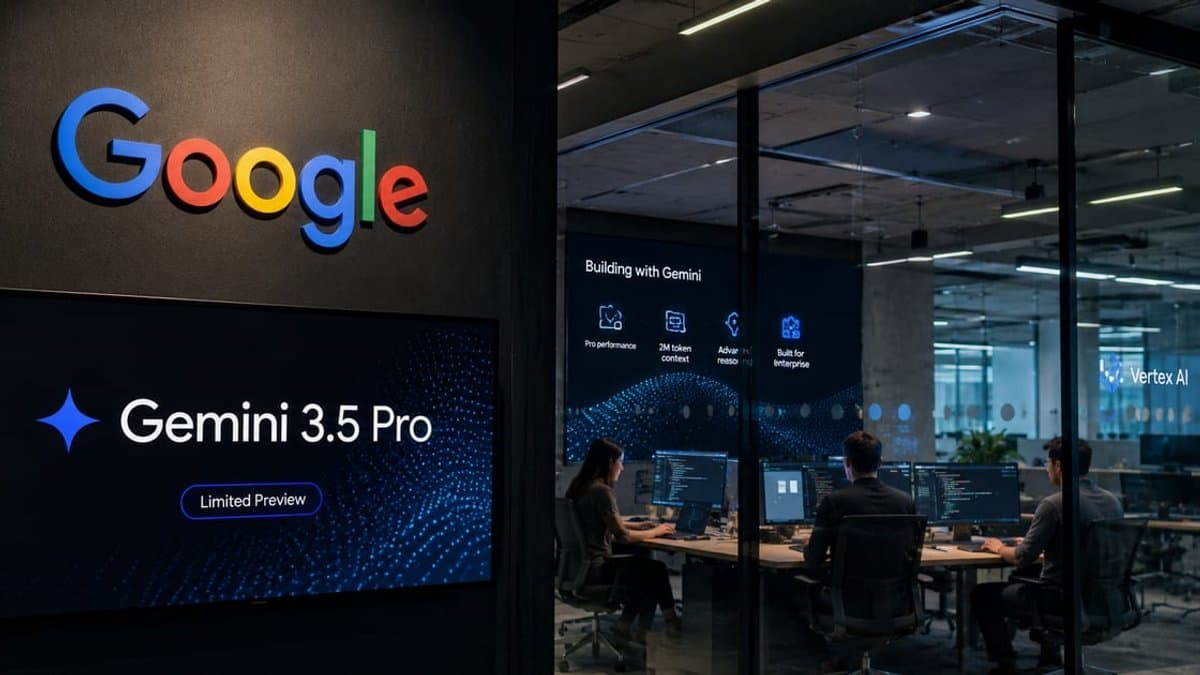
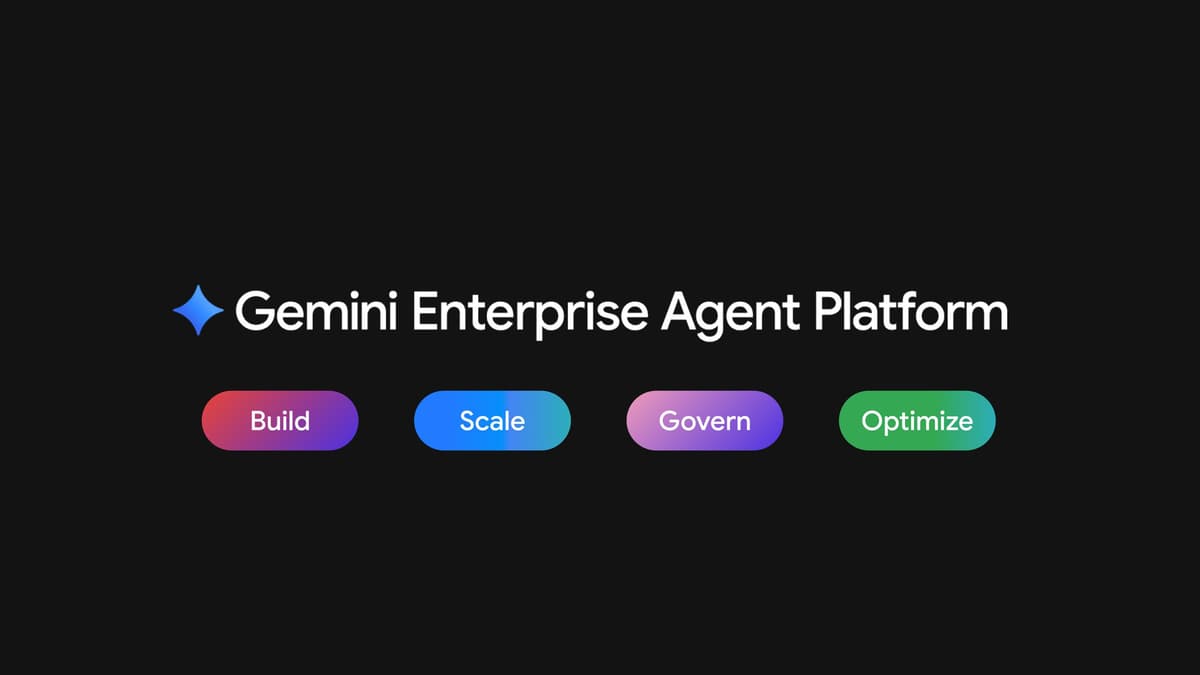
At Cloud Next '26 Google rebranded Vertex AI as 'Gemini Enterprise Agent Platform', merging agent building, deployment, governance, and Model Garden into one stack. 200+ models including Gemini 3.1 Pro/Flash, Gemma 4, and Claude Opus/Sonnet/Haiku ship in one catalog. New TPU 8t/8i deliver 3x faster training and 80% better perf-per-dollar.
Here's the deal: this isn't just another announcement. The shift took roughly 24 hours to land, and it rewires assumptions that enterprise architects have been building on for the past three years.
The Players
Google's Gemini Enterprise Agent Platform reveal is the official end of standalone Vertex AI. The new platform consolidates agent building, deployment, governance, security, and a Model Garden of 200+ models into a single offering. First-party models include Gemini 3.1 Pro, Gemini 3.1 Flash Image, and Lyria 3; the catalog also serves Gemma 4 open models, Anthropic's Claude Opus/Sonnet/Haiku, MiniMax, and DeepSeek through one console. New Workspace Studio is a no-code product that lets business users describe automations in plain language and deploy them across Workspace. On infrastructure, fresh TPU 8t and TPU 8i chips deliver 3x faster training and 80% better performance-per-dollar. Built-in Agent Identities and Model Armor provide enterprise-grade governance. Gartner expects 40% of enterprise apps to embed AI agents by year-end 2026, up from just 5% in 2025; Google is positioning itself as the default platform.
Both sides have been moving fast. Cash, model releases, and infrastructure announcements have been compressing into multi-week cycles instead of multi-quarter ones. Today's news is the visible spike of pressure that has been building all spring.
Outside the headline, the rest of the industry is moving in the same direction — agent platforms, multi-cloud routing, sovereign-AI clauses. GitHub trending, HN front pages, and IR decks are all converging on the same vocabulary, and this story sits at the intersection.
 출처: cloud.google.com · 회사 OG · 뉴스 fair use
Numbers and Timing
| Item | Value |
|---|---|
| Models in Catalog | 200+ |
| TPU 8t/8i Training Speed | 3x faster vs prior gen |
| TPU Perf-per-Dollar | 80% better |
| Enterprise Agent Penetration (Gartner forecast EOY 2026) | 40% of enterprise apps |
Read each row as a procurement decision, not a spec sheet line. The 'Status' and 'Enterprise Controls' rows are the ones compliance teams care about.
Pricing / Access
| Item | Value |
|---|---|
| input_per_1m | Per-model pricing (Gemini 3.1 Pro $3/$15) |
| output_per_1m | Per-model pricing |
| free_tier | True |
| api_available_from | 2026-04-22 |
Timeline
| Date | Event |
|---|---|
| 2024-04-09 | Vertex AI launched |
| 2026-03-15 | Gemini 3.1 Pro / Flash launch |
| 2026-04-22 | Cloud Next '26 keynote — Gemini Enterprise Agent Platform unveiled |
| 2026-04-23 | Workspace Studio + Agentic Data Cloud announced |
| 2026-04-25 | TPU 8t / 8i general availability begins |
The compression is the story. The same arc used to take 18-24 months. Today it took roughly six weeks.
Who Wins, Who Pays
엔터프라이즈 AI 에이전트 시장의 디폴트 플랫폼 자리를 노리는 구글의 통합 베팅.
Vertex AI를 쓰던 모든 고객이 자동으로 Gemini Enterprise로 마이그레이션돼서 200+ 모델 카탈로그·새 TPU·Workspace 통합을 즉시 받아. 마이크로소프트(Foundry/Copilot Studio)와 AWS(Bedrock + Agents)가 같은 시장을 노리는데, 구글이 Workspace 사용자(30억+)와 묶어 출시한 게 차별점. Anthropic Claude도 같이 서빙된다는 점은 'OpenAI vs 나머지' 구도가 다른 클라우드에서도 가속된다는 뜻이야.
Three new openings appear: enterprises that swap backends without rewriting workflows; SaaS vendors that reopen pricing negotiations using this announcement as leverage; and competitors that just lost a card in their next sales cycle.
 출처: cloud.google.com · 회사 OG · 뉴스 fair use
Historical Echoes
There are two analogues worth holding in mind. AWS-Snowflake in 2017 broke data warehouse lock-in and triggered a price compression cycle. The Codex-to-Copilot arc in 2020-2022 collapsed model exclusivity into a baseline expectation. Both ended with users gaining leverage and the dominant cloud losing pricing power.
The cautionary tale is IBM-Red Hat in 2018 — a structural reset that never produced the cloud share it promised, because internal incentive lines never aligned. Today's deal will face the same test inside both partner orgs.
Competitor Counter-Play
Google Cloud is the most likely fast counter — expect a Vertex AI Garden refresh that bundles Gemini, Anthropic and Mistral with a sharper price card. Anthropic's risk is direct comparability: Opus 4.7 still wins on reasoning, but the 2-3x price gap to GPT-5.5 is now a sales-room talking point. Salesforce, Oracle and ServiceNow benefit, because they can wrap GPT-5 inside their products under any cloud.
What Changes
Developers: Yesterday the canonical OpenAI stack was the OpenAI SDK on Azure endpoints. Today, boto3 + Bedrock calls the same models, with prompt caching, vision, function calls, and JSON mode parity.
Founders: Infrastructure choice expands. Health, finance, and public sector deployments now have an OpenAI path that doesn't require Azure.
Investors: Watch AWS 1Q26 guidance. Bedrock token throughput will likely become a new headline metric next quarter. Azure's OpenAI revenue line gets a 1-2pp short-term drag.
End users: ChatGPT pricing won't move. But your company's internal AI tools may suddenly get cheaper or faster as procurement reroutes.
Stakes
- Wins: OpenAI — diversified channel, new revenue surface.
- Wins: AWS — Bedrock catalog now matches or exceeds Azure's.
- Loses: Microsoft — exclusivity card gone, near-term Azure growth pressure.
- Loses: Anthropic — direct GPT-5.5 comparability in every Bedrock customer.
- Watching: Google Cloud — must answer with sharper pricing and bundling.
- Watching: Salesforce / Oracle — opportunity to lean cloud-neutral in pitches.
A Skeptic Speaks
Ed Zitron (Where's Your Ed At): "OpenAI's growth is just outsourced cloud cash flow."
Zitron's argument: revenue grows because infrastructure cost externalizes, not because unit economics improve. Bedrock changes the channel mix, not the underlying gross margin math.
Tomorrow Morning
- Developers: enable OpenAI models in AWS Bedrock console, queue for limited preview.
- Developers: write one boto3 migration snippet for an existing Azure OpenAI call and ship a PR.
- PMs / Founders: revisit SaaS vendor terms — which clouds can route to OpenAI now?
- Investors: AWS 1Q26 earnings (May 1) — look for new Bedrock metric.
- End users: note any speed/quality change in your company's AI assistants this week.