OpenAI moved first to lock in the EU's government channel
On May 11, OpenAI announced early EU access to its cybersecurity-tuned model 'GPT-5.5-Cyber' for the European Commission, the EU AI Office, member-state cyber agencies, and EU enterprises. EU spokesperson Thomas Régnier said the Commission "welcomes OpenAI's transparency and willingness to provide." Same day Google's GTIG dropped its first-AI-built-zero-day report — that overlap is not a coincidence. The political-alliance race in cyber-security AI just kicked off.
The comparator is Anthropic's Mythos. Anthropic shipped Mythos in April but has not yet granted the EU preview access. That single gap is the actual headline: OpenAI is moving first on the EU government channel; Anthropic is going slower and more conservative.
Timing is everything. EU AI Office enforcement powers go live in August 2026. After August, the EU can formally evaluate, demand, and penalize big-lab models. OpenAI grabbing voluntary access right before that gate flips is more than a revenue play — it positions OpenAI as a "cooperative provider" before the GPAI compliance regime is operational.
The cast — OpenAI, Anthropic, EU Commission, EU AI Office, member-state cyber agencies
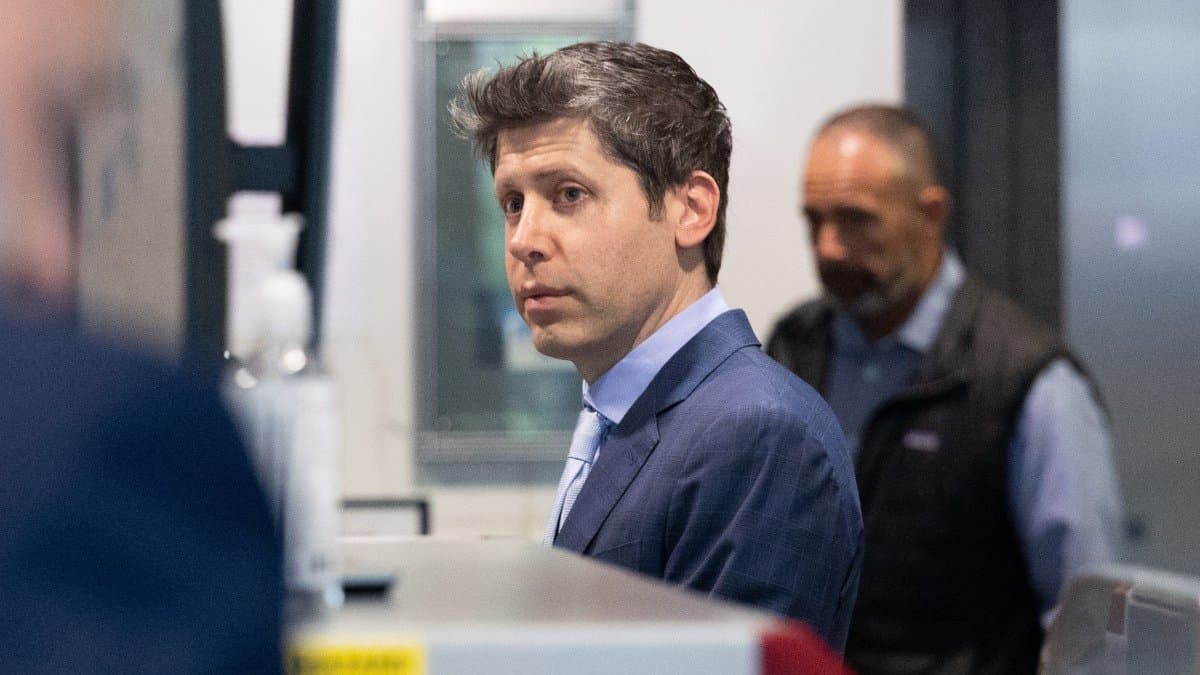
OpenAI. GPT-5 (2025) → GPT-5.5 (Q1 2026) — and now the cyber variant 'GPT-5.5-Cyber.' Behind Anthropic in cyber model brand since Mythos shipped, but moving first on EU politics. CEO Sam Altman reportedly held private meetings with the European Commission and EU AI Office that week. Same day, OpenAI also announced the Deployment Company. May 11 was OpenAI's "EU-first + enterprise acceleration" double play.
Anthropic. Mythos shipped in April with the explicit "find but don't exploit" stance. Constitutional AI guardrails extended to cyber scenarios. EU preview access still gated — likely because (1) safety evaluation isn't complete and (2) US government priority work needs to settle before EU concurrent provision. No comment as of May 13.
European Commission. Under President Ursula von der Leyen. 2026 priorities: digital and AI sovereignty, defense and energy autonomy, navigating US/China trade. AI: enforce the AI Act and define how US/Chinese model providers operate in the EU.
EU AI Office. Created in 2024 under the Commission. Owns GPAI enforcement under the AI Act. From August 2026 it can impose penalties, mandate model evaluations, and require systemic risk reporting. ~100 staff today, scaling to 200+ by 2027.
Member-state cyber agencies. Germany BSI, France ANSSI, Spain INCIBE, Italy ACN. Each owns national infrastructure protection. Member-state-by-member-state evaluation of GPT-5.5-Cyber is the next 6–12 months' real work.
Thomas Régnier (EU spokesperson). Spokesperson for the Commission's digital portfolio. May 11 statement explicitly "welcomed" the OpenAI move — official EU position.
What's inside — GPT-5.5-Cyber spec, what EU-first really means, the Mythos contrast
GPT-5.5-Cyber spec. Cyber-specific fine-tune on top of GPT-5.5 base. Capabilities: (1) proactive vulnerability discovery in codebases, (2) integrated CVE/exploit-database analysis, (3) automated threat-intelligence reporting, (4) incident-response scenario simulation, (5) multi-stage attack pattern matching. Safety-by-design: discovery is open, but generating working exploit code requires human approval.
Political weight of EU-first. OpenAI's pattern: (1) US government — already provisioned; (2) EU — equivalent priority access starting May 11; (3) the rest — later. That makes OpenAI the first true "transatlantic AI" provider. The downstream benefits: cooperative-provider recognition under the EU AI Act, evaluation priority at the EU AI Office, faster EU enterprise and government revenue.
vs. Anthropic Mythos. Mythos = "find but don't exploit." GPT-5.5-Cyber = "find, and assist response under human approval." Both gate exploit code generation. GPT-5.5-Cyber is more aggressive on response-side support — Anthropic's stance is more conservative. From an EU operational standpoint, OpenAI's posture is more attractive.
| Item | OpenAI GPT-5.5-Cyber | Anthropic Mythos |
|---|---|---|
| Release | 2026-05-11 (variant) | 2026-04 |
| Base model | GPT-5.5 | Claude Mythos (Opus 5 variant) |
| Vulnerability discovery | Strong | Strong |
| Exploit code generation | Allowed with human approval | Refused |
| Incident response support | Aggressive | Conservative |
| EU early access | From May 11 | Not yet |
| US government cooperation | Aggressive | Aggressive (CISA/NIST priority) |
| Headcount | ~4,500 | ~1,500 |
| 2026 revenue (est.) | $25–30B | $5–7B |
EU AI Office August enforcement implications. Post-August, the AI Office can require model evals, systemic risk reports, and impose penalties up to 7% of global revenue. OpenAI's "cooperative provider" pre-positioning likely earns priority exemption or reduced enforcement risk in the first wave.
Who wins, who loses
OpenAI. First, EU political asset — cooperative-provider label. Second, EU revenue acceleration — direct entry to member-state government and enterprise cyber spend, plausibly +$2–3B over 12–24 months. Third, brand differentiation vs. Anthropic — "OpenAI is the cooperative one, Anthropic the conservative one." Fourth, May 11 double play — Deployment Company $4B + GPT-5.5-Cyber EU-first to maximize narrative momentum.
Anthropic. Loses on EU politics in the short term. Gains in another lane: the conservative posture is a trust signal for some civil-society and research audiences. With the SpaceX Colossus 1 deal (May 7) plus Mythos's safety branding, Anthropic plays the US government market as its 6–12-month wedge.
European Commission / AI Office. Strengthens evaluation capability via early access. Tools to share with member-state cyber agencies. Builds political capital around "US-EU cooperation" as a model.
Member-state cyber agencies. Direct tool access. Capability uplift. Tradeoff: dependence on a single foreign provider. Tension with broader EU policy of building European GPAI capacity (Mistral, Aleph Alpha, Helsing).
Mistral / Aleph Alpha (Europe). Direct loser on cyber positioning. JPMorgan's "sovereign AI $430B TAM" report on May 12 brings visibility to Mistral, but the cyber-AI EU government channel slot just got taken by OpenAI. Expect Mistral to accelerate its own cyber model.
Enterprise CISOs. Winner. EU enterprise adoption of GPT-5.5-Cyber accelerates, especially in finance, energy, telecom, and government infrastructure. Plausibly EU OpenAI cyber revenue scales toward US-domestic equivalence within 24 months.
Google (DeepMind). Differentiated same day via the GTIG report and proprietary threat intel. But the "EU government channel first" card is OpenAI's. Likely Google I/O 2026 (May 19) lands a "Gemini for Security" SKU as the response.
Past patterns — what worked, what didn't
Worked: Microsoft EU cloud (2018–2024). Sorted GDPR early, set up EU-resident data center models, gained "EU-friendly" branding and ~$10B EU revenue uplift. OpenAI's GPT-5.5-Cyber EU-first move follows the same playbook — show up cooperative right before the regulatory gate flips.
Worked: AWS GovCloud (2011–). Separate government-priority cloud, stable government revenue. EU equivalent (GovCloud EU) followed. AWS Bedrock + OpenAI integration accelerates.
Failed: Meta in EU (2018–2024). Post-Cambridge Analytica, never landed cooperative-provider posture fast enough. Repeated penalty rounds and lawsuits, multi-billion-euro impact. OpenAI is treating Meta's cycle as a cautionary tale and moving early.
Failed: Huawei EU 5G (2019–). Locked out by US pressure plus member-state security concerns. Foreign provider that doesn't lock in political alliance early can be cut off entirely. OpenAI is using EU-first explicitly to avoid that path.
Counter-plays
Anthropic. No response yet. Plausible counters: (1) controlled-trial Mythos preview to EU, (2) UK / Canada / Australia priority instead — a "Commonwealth alliance" play, (3) deeper US integration with NSA, CISA, and NIST. The conservative posture costs short-term EU revenue but builds long-term safety brand.
Google DeepMind. Very likely "Gemini for Security" SKU at Google I/O 2026 (May 19). GTIG data + Gemini model bundle. EU-first card is OpenAI's, but Google differentiates on global threat-intel data depth.
Mistral / Aleph Alpha (Europe). Accelerate own cyber-tuned variants. JPMorgan's May 12 sovereign-AI report boosts Mistral visibility. Strategy axis: own cyber model + direct member-state government sales + European-capital framing.
Microsoft (49% OpenAI). Bundle GPT-5.5-Cyber into Azure, expand Azure for Public Sector cyber SKUs. Push Microsoft Cloud Germany / France sovereign-cloud lines.
xAI (Elon Musk). Possible "Grok Defender" cyber variant from Grok 5 (unconfirmed as of May 13). Strong US defense angle, weak EU politics.
So what changes — by persona
EU enterprise CISOs. GPT-5.5-Cyber adoption decision is the next six months' priority. Pricing, data-residency (EU vs. US), and member-state agency collaboration options all to evaluate.
US/Asia enterprise CISOs. A real big-lab cyber-model market is forming. Comparison: OpenAI vs. Anthropic vs. Google + European options (Mistral, Helsing) + Korea/Japan options (LG, NEC).
ML / security engineers. Cyber-AI fine-tune and evaluation talent will be the steepest shortage. Engineers with both CTF/HackTheBox backgrounds and LLM fine-tune experience can command $300–500K (US tier-1).
Founders. Niche capture in cyber-AI startups gets harder as big labs ship horizontal cyber models. Differentiation now lives in (1) industry verticals (finance, healthcare, energy), (2) regions (EU, APAC, Korea), or (3) specific use cases (incident response, threat hunting, compliance).
Investors. Stand-alone cyber-AI startup multiples come under pressure. Vertical / regional / use-case niches still raise. OpenAI's revenue acceleration is itself a catalyst for OpenAI's own valuation.
Regulators. EU AI Act enforcement model gets sharper. How "cooperative provider" treatment scales to other big labs is the open question. Korea, Japan, Canada, and the UK will mirror in their own AI governance.
Civil society. Critical question: is the EU-first arrangement EU self-empowerment or growing single-foreign-provider dependence? Both concerns are legitimate. Expect "multi-vendor AI" policy proposals in EU debates.