Meta just crossed the line from "chatbot company" to "agent platform"
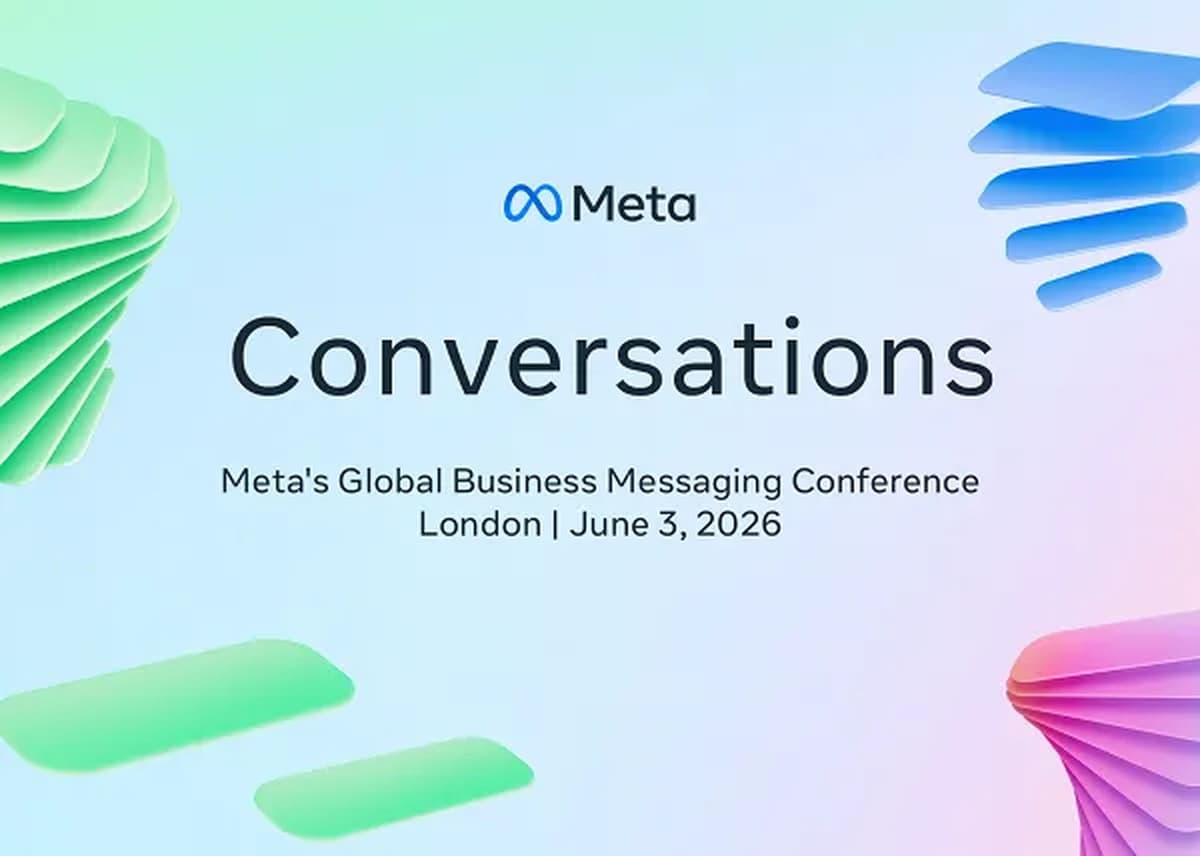
At its WhatsApp-focused conference "Conversations 2026" in London on June 3, Meta unveiled an AI "business agent" that automates a company's daily operations. Here's the deal: this isn't just a smarter chatbot. It books appointments on the calendar, closes sales, answers FAQs, and qualifies whether an incoming lead is a real buyer — it acts on a business's behalf. That's the agentic part. The reach spans all of WhatsApp, Messenger, and Instagram.
Until now, the "enterprise AI application" market has been led by OpenAI, Anthropic, and Google — companies bolting GPT or Claude onto their channels to automate customer service. Meta played a different card. It's not selling a model; it's stacking an agent on top of the messaging apps that billions of people already use every day. In the same window where a customer is already sending a message, the business's AI quietly gets the job done.
The scale is what makes this scary. Meta said more than 1 million businesses already use earlier chatbot versions on WhatsApp and Messenger. So Meta is upgrading from simple chatbots to action-taking agents from a position where it has already laid the ground overwhelmingly. The rollout is aggressive too — free first, paid tiers later — i.e., get it installed as widely as possible before monetizing.
The players — Meta, business messaging, and the word "agent"
The one drawing this picture is Meta — the company that owns Facebook, Instagram, WhatsApp, and Messenger, the world's largest messaging and social infrastructure. Meta's core business was advertising: put ads where people gather. But as the AI era arrives, Meta is trying to turn "where people send messages" from an ad billboard into a workbench where businesses get things done. This business agent is the central tool of that shift.
The stage, Conversations 2026, is Meta's annual conference on business messaging. As the name suggests, it embodies Meta's vision of putting "conversation" at the center of running a business. It's where the WhatsApp Business ecosystem grows — and this year, "agent" sits at the heart of it. A signal that Meta wants to promote business messaging from a mere customer-service channel into an "operations channel that works automatically."
The key word here is agentic. A chatbot answers. An agent acts. That difference is everything. Where an old business chatbot said "we're open from 9," Meta's business agent says "great, I'll book you for 3 PM tomorrow" and actually drops it into the calendar. It judges whether an inquiry is a buying-intent lead, advances the sales stage, and even attempts the close. The conversation flows into a transaction.
What it actually does — the agent's real jobs
The business agent's capabilities split into four. First, booking. When a customer says "I'd like to book," the agent checks open slots and puts it on the calendar — finishing in one conversation what a human staffer used to coordinate. Second, sales closing. Beyond plain answers, the agent recommends products, quotes prices, and drives the flow toward purchase. That's exactly why Meta calls it a "business agent," not a chatbot.
Third, FAQ handling. The agent takes care of repetitive inquiries on its own. Old chatbots did this too, but the agent goes past the answer to "so what's the next action." Fourth, lead qualification. Out of countless inquiries, it filters the prospects with real buying potential and hands them to the sales stage — automating the lead-screening work where sales teams spend the most time. Put the four together and businesses from a tiny shop to a mid-sized firm can run "every transaction that arrives by message" without a person.
The distribution and pricing play is clear. Launch free first, add paid tiers later — Meta's familiar "lay the platform first, monetize later" formula. With 1M+ businesses already on early chatbots, the move is to upgrade them naturally to agents while expanding the adoption base.
| Feature | What it does | Difference vs. old chatbot |
|---|---|---|
| Booking | Checks slots, books on calendar | "Acts" instead of "answers" |
| Sales closing | Recommends, quotes, drives purchase | Turns conversation into transaction |
| FAQ | Auto-handles repetitive inquiries | Connects to the next action |
| Lead qualification | Filters buying-intent prospects | Automates a sales-team core task |
| Channels | WhatsApp, Messenger, Instagram | Billions of users |
What each side gets — Meta, SMBs, and users
For Meta, this is a new revenue engine beyond ads and a way to deepen messaging-infra lock-in. Once a business runs sales and bookings through a WhatsApp agent, those operations become bound to Meta's ecosystem. Ads swing with the economy, but cementing itself as an "operations tool" creates stickier, recurring revenue. And as transaction data flows back to Meta, ad targeting gets sharper too — a virtuous loop.
For SMBs and sole proprietors, the barrier drops sharply. Without dedicated support staff or expensive CRM, they can start free and automatically handle bookings, inquiries, and sales arriving by message. For a one-person business or small shop, it's like getting a "24/7 sales and booking employee" for nothing — and it runs inside the WhatsApp and Instagram customers already use, so there's no new app to install.
For everyday users, it cuts both ways. The convenience is real — one message to a shop and your booking or purchase is done. But the line blurs between "am I talking to a person or an agent?" An agent doing sales closing means you're conversing with a persuading AI. Transparency ("this is an AI") and user protection will become important fault lines.
Echoes from history — stacking features on messaging, success and failure
Plenty of efforts have tried to grow a platform by stacking features on a messaging app. The outcomes ranged from spectacular to flat.
Huge success — WeChat's super-app. China's WeChat stacked payments, bookings, shopping, and mini-programs on top of messaging, building an "app within an app" ecosystem where people handle nearly all of life's transactions in one app. Meta's business agent can be read as an attempt to recreate that WeChat model in Western markets, with "AI agents" as the new weapon. The essence — stacking transactions on top of messaging — is identical. What WeChat did with mini-programs, Meta wants to do with agents.
Partial success — WhatsApp Business' gradual expansion. Meta has steadily grown business messaging via WhatsApp Business and click-to-chat ads — that's how the base of 1M+ businesses on chatbots formed. This agent is the next layer on that foundation. Its biggest weapon is an already-installed user base, which is exactly why the "chatbot to agent" upgrade is likely to convert naturally.
Cautionary tale — the first-gen chatbot disillusionment. Conversely, the 2016–2017 Messenger-bot boom underdelivered. Those bots were so dumb they annoyed users, leaving the impression that "chatbot = frustrating." For Meta's business agent to be different, it has to earn trust by actually getting the job done. Mis-book an appointment, fumble a close, or pass a junk lead, and the first-gen disillusionment repeats. A flashy launch and real trust are two different things.
How rivals counter — OpenAI, Google, Salesforce
OpenAI and Anthropic already hold the enterprise market at the "model/platform" layer — businesses wiring GPT or Claude via API to build agents in their own channels. If Meta is "laying the messaging channel," these firms counter with neutrality: a "universal model that plugs into any channel." But Meta's strength — a channel billions already use, plus free — is hard for model companies to replicate as a distribution edge.
Google has business messaging (RCS, Google Business Messages) and Gemini. If Meta grabs the consumer touchpoint via WhatsApp and Instagram, Google can push a similar business agent at its own touchpoints — Search, Maps, Android. Google's edge is bolting an agent onto "the moment a customer discovers a shop" (search, maps). A split could form: discovery via Google, conversation and transaction via Meta.
The CRM camp — Salesforce, HubSpot — feels the threat from another angle. Lead qualification and sales closing are core CRM territory. If Meta ships an agent that "closes sales inside messaging," SMBs can solve everything within Meta without a separate CRM. CRM companies will likely differentiate with "AI agent plus deeper data and automation," or respond by integrating with Meta's channels.
So what actually changes — by persona
If you're a small business or founder, now's the time to experiment with the business agent. You can start free, and bookings and sales run automatically inside the WhatsApp and Instagram your customers already use — extending coverage to 24/7 without labor cost. Just plan to monitor and "train" it early so the agent doesn't make wrong commitments or misquote prices.
If you're a developer or SaaS founder, watch "where to plug in" as Meta seizes the channel. Deeper automation Meta's agent can't do (inventory integration, complex payments, industry-specific workflows) and tools that unify multiple channels are still opportunities. It's decision time: go as a complement on top of Meta's ecosystem, or dig into a vertical Meta won't touch.
If you track AI and platform trends, the key is that the enterprise-agent war has spread into a "model companies vs. channel companies" structure. While OpenAI and Google fight over "the model," Meta charged in with a distribution asset — "the messaging window billions open every day." It shows the agent-era contest is decided not only by "who's smarter" but by "who holds the user touchpoint." Meta's real weapon isn't the model; it's the channel that's already installed.
References
- U.S. News / Reuters — Meta Launches Enterprise-Focused AI Business Agent to Automate Daily Operations
- Meta enters enterprise AI race with new business agent — BNN Bloomberg
- Meta To Hold 2026 Conversations Conference In London On June 3 — Dataconomy
- WhatsApp Business Platform — Meta
- Meta for Business