
Half a year just blew past a full year of records
Here's the deal: put two numbers side by side — $14.6B vs. $9.6B. The first is what flowed into defense and national-security startups in just the first five months of 2026; the second is all of last year (2025). So 2026 beat all of 2025 in half the time. That's not "investment ticked up" — it's money rushing hard in one direction.
Quick setup. For a while, VCs avoided defense. Ethical baggage, plus a sense that long, complex government contracts don't fit startup speed. But as geopolitical tension rose and "AI + autonomous systems" became central to the battlefield, that aversion flipped to enthusiasm. Defense tech is now one of the hottest places VCs are pouring money.
The emblem of this wave is Anduril. It raised a $5B Series H, pushing its valuation to $61B. Its Series G about a year earlier was ~$30.5B — so its value doubled in a year. Anduril alone is an outsized chunk of that $14.6B total.
So here's what we're unpacking: why VCs who shunned defense are suddenly drowning it in cash, exactly which tech (AI autonomous weapons, drones, uncrewed vessels) the money flows to, and what opportunities and risks the frenzy poses. A few players and you've got it.
The players — VCs, Anduril, and "AI autonomous systems"
First, VCs. Investors who fund startups chasing big exits. They always hunt for the "next giant market" — for a while that was AI and fintech. But as defense got re-rated as "the most dramatic use of AI plus a deep-pocketed, guaranteed customer in government," VC attention swung this way. Per reports, VCs are even starting to eye exits — meaning this isn't just a fad, it's hardening into a market where real returns are visible.
Next, Anduril. The face of this boom. It builds AI-driven autonomous defense systems, fusing drones, sensors, and software to detect and respond on the battlefield automatically. Unlike legacy defense primes that build weapons slowly and expensively, it positions itself to reinvent defense at Silicon Valley software speed. Getting another $5B at a $61B valuation is the market's answer to that bet.
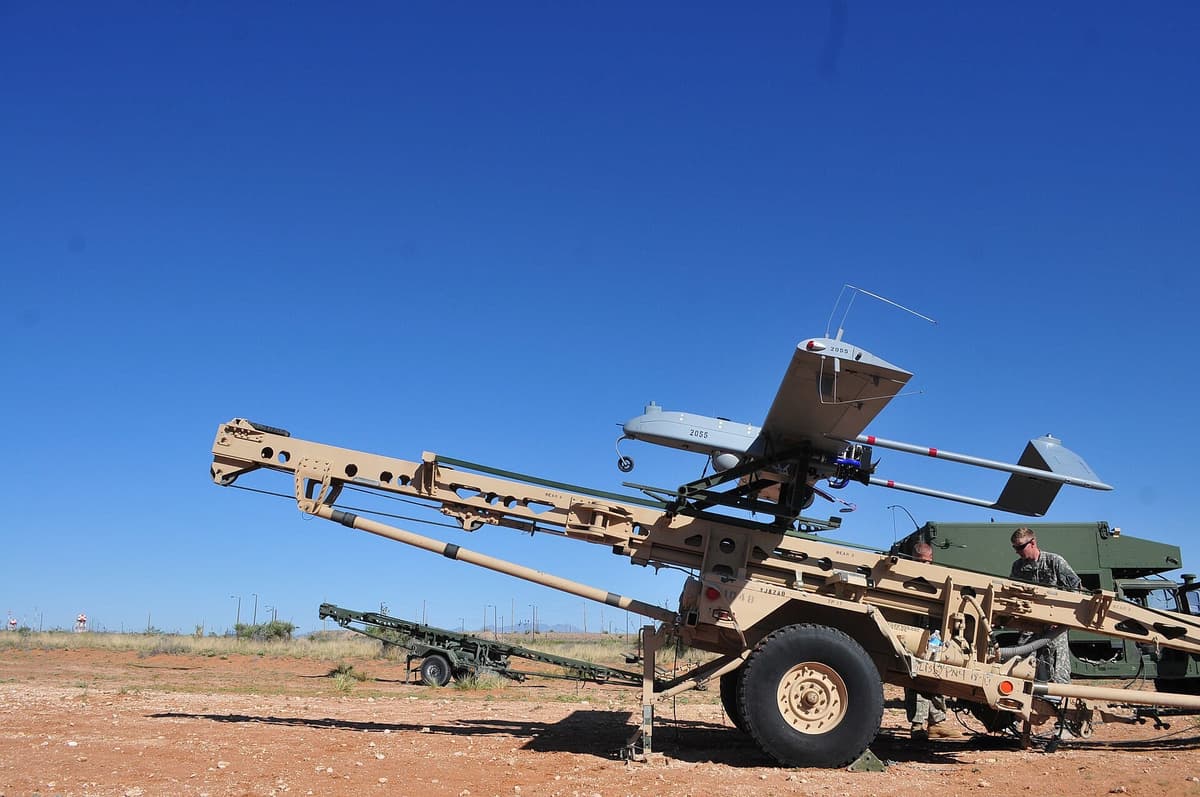
The third "player" isn't a person, it's a trend: AI autonomous systems — uncrewed aircraft, uncrewed vessels, and AI battle-management software that act on their own judgment without a human steering every move. Much of this funding flows here. "War where you commit fewer people and machines decide more" is the core investment theme.
One sentence to bind it: return-chasing VCs pour money into companies reinventing defense at Silicon Valley speed (Anduril et al.), on the theme of AI autonomous systems. That's the skeleton.
The frenzy, by the numbers
Words scatter, so here are the confirmed facts in a table.
| Item | Detail |
|---|---|
| Jan–May 2026 funding | $14.6B+ (defense, national-security, law-enforcement startups) |
| Prior record | All of 2025: $9.6B |
| Single largest round | Anduril Series H — $5B |
| Anduril valuation | $61B (vs. ~$30.5B Series G ~a year earlier) |
| Anduril lead investors | Thrive Capital, Andreessen Horowitz (a16z) |
| Three megarounds | Anduril $5B (May) + Shield AI $2B (Mar) + Saronic $1.75B (Mar) ≈ $8.75B |
| Top areas | AI-driven defense systems, uncrewed air/maritime, military software, space infra |
Line by line. First, the "half-year vs. full-year" contrast is the crux. Beating all of 2025 in five months isn't growth, it's acceleration. Once a sector gets tagged "hot," money rushes in faster — a herd effect — and defense just entered exactly that phase.
Second, the three megarounds making up over half the total is telling. Anduril $5B + Shield AI $2B + Saronic $1.75B = ~$8.75B, nearly 60% of $14.6B. So money isn't spread evenly across many companies — it's concentrating in a few giants. A "winners get bigger" structure is forming.
Third, Anduril's valuation doubling in a year. $30.5B → $61B is an enormous jump. A strong signal the market is betting on this company as "the future of defense" — but also a number that draws "is the valuation inflating too fast?" bubble concerns. Rapid value gains express expectation, but if results don't back the expectation, they can cool anytime.
Who gains what
Start with defense startups' wins. Money pouring in is obviously good. Autonomous systems and AI weapons require enormous capital to develop, and big funding buys speed to scale tech, vacuum up talent, and win government contracts. A leader like Anduril rides a flywheel where money widens the gap further — capital is speed, and speed is market capture.
VCs' win is clear too. Defense was long seen as "low return, high baggage," but now a deep, stable customer (government) plus an explosive growth theme (AI) makes it attractive. And as reports note, VCs eyeing exits means a path to real returns — via IPO or acquisition — is becoming visible. With an exit picture in view, they bet more boldly.
The unexpected variable: society and ethics. This is less a "gain" than a "cost" — money rushing into AI autonomous weapons means stepping closer to "war where machines decide without human judgment." That's beyond a tech-and-investment issue; it poses deep ethical questions. Who's accountable for an autonomous lethal decision? How far do we hand to machines? The faster money flows, the less time to answer — so there's a real cost society must bear.
Net: short-term, startups (capital) and VCs (opportunity) are clear beneficiaries. But whether a "$61B valuation" gets justified by results, and how society shoulders the ethics-and-security cost of proliferating autonomous weapons, remain big open homework.
Precedents — wins and losses
"Money exploding into one sector" is all over history. On the success side, big capital concentrating often accelerated real innovation — funding sucking in talent and tech to lift a whole industry a level. If defense tech is using capital to pull forward a clear leap ("AI autonomous systems"), that fits the success pattern.
But the failure case — a bubble — keeps us honest. Hot sectors have always drawn overheating, and when expectation runs too far ahead of results, a correction came. A valuation doubling in a year expresses strong expectation, but if government contracts don't land as hoped or commercialization lags, that valuation can cool fast. Whether "Anduril at $61B" is pre-priced future value or a sign of froth will be decided by the next few years of results.
Another balanced angle: defense's peculiarities. Unlike a typical IT startup, defense draws much of its revenue from government — a huge customer, but one that swings with politics and administrations, with long, hard-to-predict procurement. So today's frenzy leans heavily on the external environment of geopolitical tension; if that environment shifts, the mood shifts with it. No boom lasts forever.
So the balanced conclusion: a capital rush can be an engine that pulls innovation forward, a bubble that cools, or both. The lesson from precedent: the faster a valuation inflates, the more coldly you should weigh the gap between expectation and results.
How rivals counter
When money rushes to defense startups, how do incumbents and rivals respond? Counter one: legacy defense primes fight back. Giants that ruled defense for decades, sensing they trail startups on "AI/autonomy," will counter with their own AI investments or acquisitions of promising startups. Their capital and government relationships still dominate. The "Anduril-style upstart vs. legacy defense giant" clash gets going in earnest.
Counter two: a reaction to concentration. With money piling into a few giants like Anduril, VCs naturally hunt for "the next Anduril." As bets spread to category leaders — uncrewed vessels (Saronic), AI battle systems (Shield AI) — several smaller turf wars play out within the sector.
Counter three: global competition. The defense-tech boom isn't US-only. With geopolitical tension worldwide, capital and policy in Europe, Asia, and elsewhere chase homegrown defense startups. "Which nation grabs AI autonomous defense first" becomes a national-competitiveness issue, expanding the contest from company-vs-company to nation-vs-nation.
And the wild card: regulation and public opinion. If ethical and legal constraints on autonomous lethal weapons tighten, the sector's growth curve could bend. Conversely, if security threats grow, the "build more, faster" camp gains steam. So defense tech's future is heavily swayed by external variables — regulation and geopolitics — not just tech and capital. This $14.6B is the opening flare of a real "AI defense race," not the end of the game.
So what changes — by who you are
If you're an investor. Defense tech is genuinely hot, but pack as much coolness as excitement. Sectors where valuations double in a year carry as much volatility as opportunity. Especially with revenue leaning on government and geopolitics, the trend can flip when the environment shifts. Remember the "few-giants concentration" structure too — winner-take-all risk and opportunity coexist. This isn't investment advice; it's a reminder to watch the overheating signals alongside the upside.
If you're in business or policy. The key: the agents of defense innovation are changing. Not just legacy primes — Silicon Valley-speed startups are grabbing core tech. For governments and incumbents, how to cooperate or compete with these upstarts is a new task. And building ethical and legal frameworks for AI autonomous weapons before capital outruns them is urgent homework.
If you're a bystander. The significance: AI is reaching deep into the heaviest domain of all — war. We think "AI = chatbots and image generation," but one of the biggest money flows right now is autonomous weapons. That's a signal we can no longer defer the question "how far do we allow AI to go?" When you read tech news, watch "where the money flows" too, and you'll see what future society is heading toward.
The one line across all three: money has already bet hard on a future of "AI autonomous war," and society must hurry to prepare its answer in ethics and regulation to match that pace. $14.6B is a number showing just how fast that future is arriving.
🥄 Three Things You're Probably Wondering
— Why is money suddenly flooding defense? Two things converged. Geopolitical tension rose worldwide, lifting defense demand; meanwhile "AI autonomous systems" emerged as a battlefield game-changer. For VCs, it's the combo of "explosive growth theme (AI) + deep, stable customer (government)" — so a long-shunned sector suddenly looks attractive.
— Anduril at $61B — isn't that a bubble? Too early to call. A valuation doubling in a year clearly expresses strong expectation, but whether that's pre-priced future value or froth will be settled by the next few years of government contracts and commercialization. What's clear: the faster a valuation inflates, the more coldly you should weigh expectation against results.
— AI autonomous weapons — are they ethically OK? Honestly, society hasn't settled this yet. There's deep concern and strong opposition to "machines deciding to kill without final human judgment." Money flows fast while ethical and legal frameworks lag, so rather than declaring "fine" or "not fine," it's more accurate to say "the answer is still being built."
References
- Defense Tech Funding Smashes Records: Autonomous Weapons Startups Raise $14.6B — TechTimes
- Sector Snapshot: Defense Startup Funding Hits An All-Time Record As VCs Begin To Eye Exits — Crunchbase News
- Anduril Raises Another $5B As Defense Tech Startups Shatter Funding Records — Crunchbase News
- Anduril at $61B and defense tech's 2026 reset — Augment
- Defense Tech Venture Funding Smashes Records — citybiz
Numbers and criteria are as of announcement and may change. Investment calls are yours to make!
