The whole global AI map gathered at COEX Seoul
Here's the deal: from June 18–19, NextRise 2026 ran at COEX in Samseong-dong, Seoul. Now in its eighth year, Asia's largest startup fair is co-hosted by the Korea Development Bank, the Korea International Trade Association (KITA), and Korea's venture and VC associations. The scale is striking — ~1,700 startups from 28 countries, plus around 300 corporate and VC partners. The slogan: "Shape the Next."
The headline this year is who showed up. OpenAI and Palantir joined for the first time, while regulars Google, Anthropic, Nvidia, and Perplexity returned. The core players of the global AI map were in the same building in the same week. The program spanned booths, one-on-one business meetings, keynotes and panels, and IR pitching by promising startups.
The players — the hosts, global Big Tech, and 1,700 startups
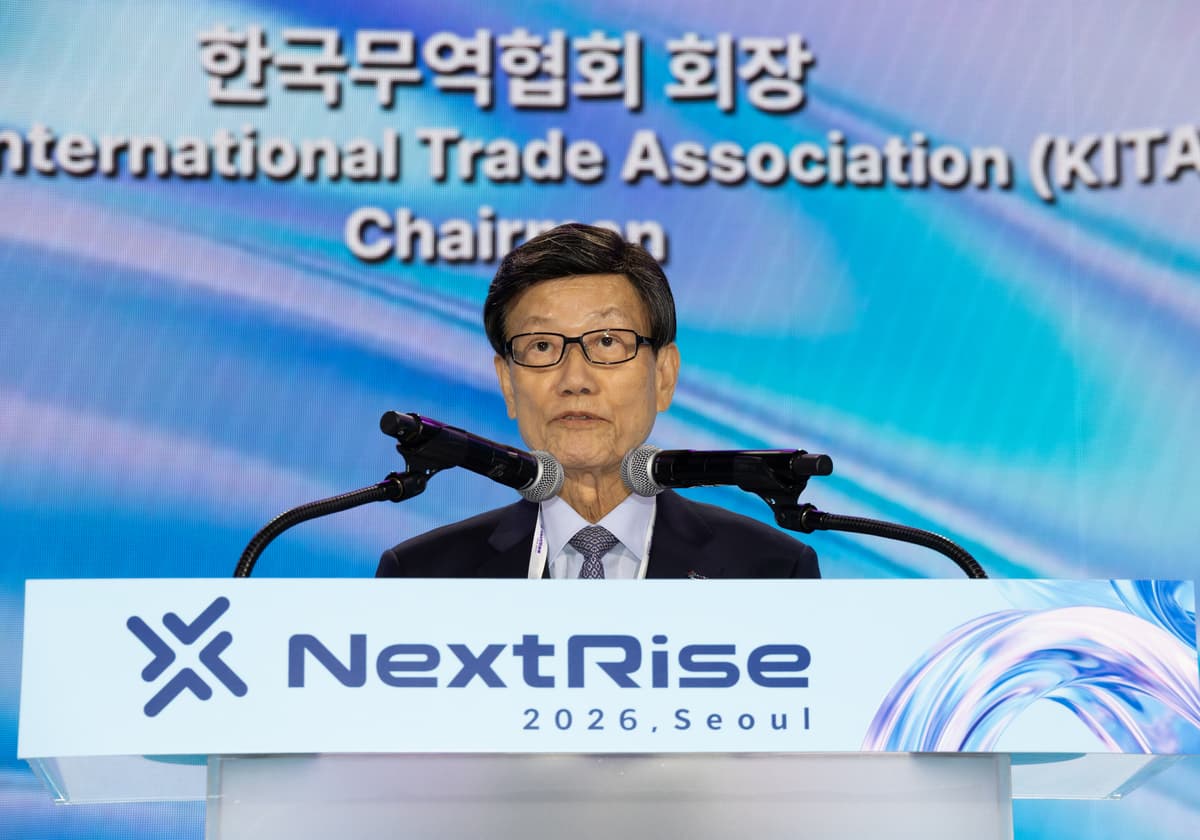
The hosts matter: KDB and KITA are national finance/trade institutions, so this isn't a private expo — it's industrial diplomacy for the AI era. The KITA chairman opened day one on stage. Global Big Tech: OpenAI's and Palantir's first appearances are symbolic — companies with endless stages chose Seoul, signaling they value Korea's market, talent pool, and role as an Asia gateway. The returns of Google, Anthropic, Nvidia, and Perplexity show the collaboration isn't one-off. The 1,700 startups — centered on AI, robotics, and fintech — get a compressed shot at global capital and partnerships in two days.
By the numbers
| Item | Detail |
|---|---|
| Dates | June 18–19, 2026 |
| Venue | COEX, Seoul |
| Startups | ~1,700 (28 countries) |
| Corporates / VCs | ~300 |
| First-time Big Tech | OpenAI, Palantir |
| Returning Big Tech | Google, Anthropic, Nvidia, Perplexity |
| Slogan | Shape the Next |
"Asia's largest" isn't an empty title — 1,700 startups from 28 countries is rare for a single-country event, and 300 corporates/VCs make it a deal-and-investment matchmaking floor, not sightseeing. OpenAI and Palantir setting up booths says global labs view Korea as a partner to build with, not just a market to sell to — Palantir's presence in particular hints at government/defense/enterprise data collaboration. And having model owners and the startups that build on them in one room creates chemistry: Big Tech hunts developers and partners; startups hunt infrastructure and capital.
What each side wants
Korean startups get a compressed shot at global investors and Big Tech — pitch for funding, ride on model/infrastructure, and find overseas partners, all at once. Global Big Tech gets market, talent, and a foothold: Korea's deep base in manufacturing, semiconductors, content, and gaming, plus a fast-absorbing developer culture, is an attractive pool. VCs get deal sourcing — scanning 1,700 startups in two days while watching where Big Tech focuses. All three leave with something, which is why this is in year eight.
Past parallels — the wins and limits of startup fairs
Like Finland's Slush or TechCrunch Disrupt, successful fairs become places where deals actually close, not just booths to browse — that virtuous loop is why NextRise has grown to year eight. The limit: the gap between a flashy lineup and real outcomes. A Big Tech booth doesn't instantly mean big investment in Korean startups; real results emerge quietly over months and can only be measured next year. So whether "OpenAI came" turns into real collaboration matters more than the attendance itself. And if Big Tech's presence aims at the Korean market directly, that's both opportunity and competitive pressure for local startups facing Big Tech products in the same space.
Counter-play — the Asia AI-hub race
NextRise sits inside a bigger picture: an intra-Asia "AI hub" race where Singapore, Japan, and the UAE all court startups and Big Tech. OpenAI, Palantir, and Nvidia gathering in one place shows Korea holds a strong hand — its edge being a deep industrial base where AI actually gets applied (chips, displays, batteries, content). It's soil for building AI products, not just consuming models. Still, Korea trails Silicon Valley and China on capital scale and talent retention — gaps one event can't close, which is why follow-through into real investment matters.
So what actually changes
If you're a Korean founder or operator, this is a concrete signal global Big Tech takes Korea seriously — lean on their models, infrastructure, and partner programs as a launchpad, while differentiating away from areas where Big Tech becomes a direct rival. If you're AI-curious or job-hunting, global labs eyeing Korea's talent pool means more touchpoints to work with them. If you're an investor, where Big Tech sets up booths is a hint about the next flow.
🥄 Three Things You're Probably Wondering
— So what does this mean for me? If you run a startup in Korea or want into AI work, yes — Big Tech interest in Korea's market and talent means more opportunity. For a casual user, little direct impact.
— Is OpenAI showing up really a big deal? Symbolically, yes — a company with endless stages chose Seoul. But the real outcome is whether the meetings become investment and collaboration, which takes months to read.
— Is Korea becoming Asia's AI hub? Too early to say. Its industrial base is a real strength, but it trails on capital and talent retention. One event doesn't decide it — follow-on investment has to back it up.
Sources
- Asia's Top Startup Fair NextRise Opens in Seoul — Seoul Economic Daily
- Nvidia, OpenAI to Headline NextRise 2026 — Seoul Economic Daily
- KDB Opens Asia's Largest Startup Fair 'NextRise 2026' — The Asia Business Daily
- NextRise 2026 to Bring OpenAI, Palantir, and NVIDIA Together in Seoul — WOWTALE
Numbers and criteria are as of announcement and may change.