Everything's ready — they just won't hit the button
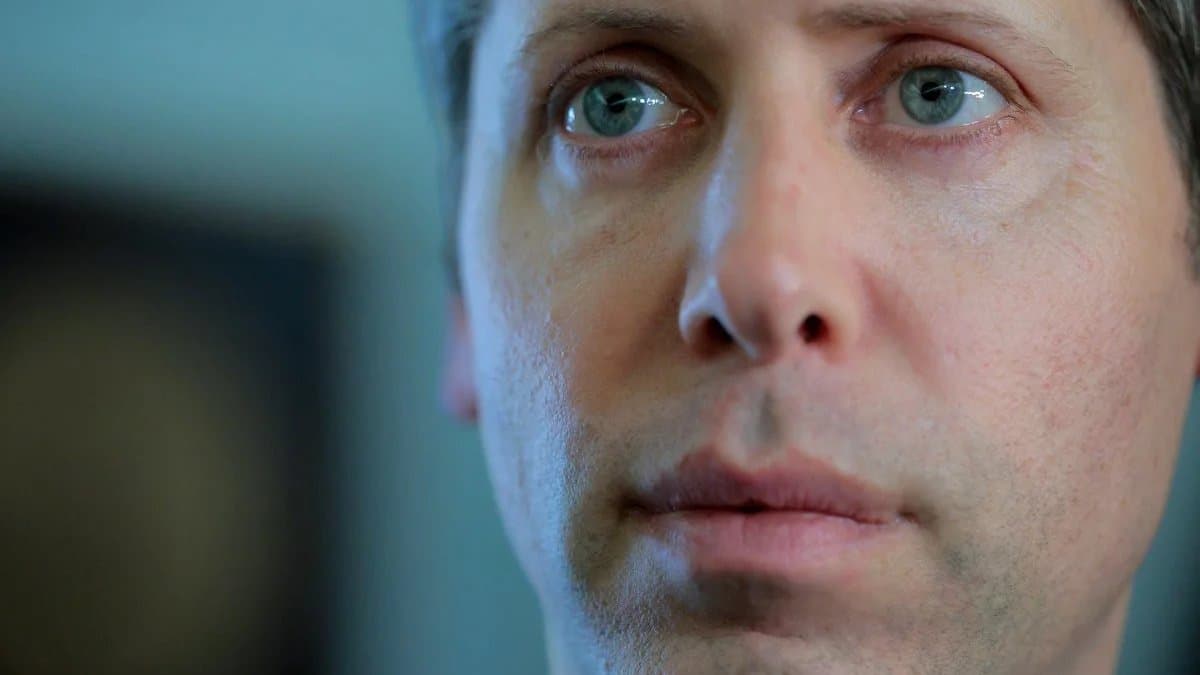
Here's the deal: OpenAI is seriously weighing delaying its IPO to 2027. It has already confidentially filed with the SEC, but at the eleventh hour it's reconsidering the timing. The reason is simple. Sam Altman insists on a $1 trillion valuation, and in this market mood, he probably can't get it.
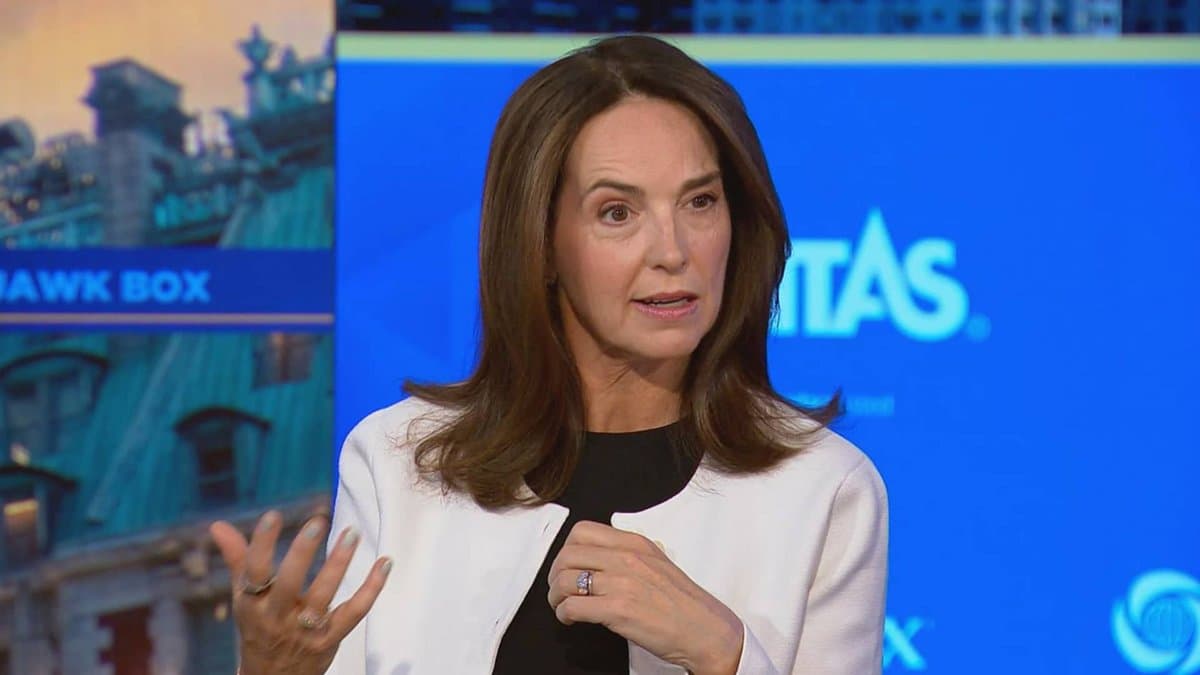
Altman's stance is hard. Advisers reportedly brought him two options — "wait until next year and chase $1 trillion, or lower the valuation and list sooner." Altman called any reduction a "non-starter." CFO Sarah Friar has reportedly told some associates the company is aiming for a 2027 listing. In other words: rather than not get the price, he'll wait another year.
The trigger came from an unexpected company — SpaceX. In June, SpaceX raised over $85 billion at a record $1.77 trillion valuation. The problem was what came next: shares fell sharply right after the debut. Watching the "biggest fish" slide the moment it went public reportedly spooked Altman — that's the core of the reporting. A glamorous debut doesn't guarantee a happy ending, and he saw it play out in real time.
So here's what we'll unpack: why OpenAI prepped everything and still won't pull the trigger, why the $1 trillion number matters so much, what the SpaceX slide revealed, and what it all means in the middle of an "AI bubble" debate that erased $2.7 trillion.
The players — OpenAI, Sam Altman, and the market
First, OpenAI. The maker of ChatGPT, no intro needed. The key point: it's now one of the "most expensive IPO candidates in history." It was valued around $730 billion in its last private round and is chasing $1 trillion in this IPO. The catch: the company burns astronomical losses pouring money into compute, so the pressure to prove "profitability" to investors is higher than ever.
Next, Sam Altman. OpenAI's CEO and the lead in this drama. To Altman, $1 trillion isn't just a number — it's pride and a bargaining chip. List once at a lower price and you signal "weakness" to the market, hurting future fundraising and recruiting. So he's playing hardball: wait until he gets full price. It's also a gamble — if the market worsens, he could get even less a year from now.
Third, the market itself. The mood is ugly. Over June, the Magnificent Seven plus Broadcom and Oracle lost a combined $2.7 trillion in market value, and the Nasdaq dropped nearly 5% in a single week. Outlets like the Washington Post and NPR started asking head-on whether "AI is one giant bubble." Investors began demanding "proof of profit," not "model performance." That mood is exactly what froze OpenAI's IPO clock.
One sentence to tie it together: the company chasing a record valuation (OpenAI), the CEO who won't cut the price (Altman), and an ugly market gripped by bubble fears all met at the IPO button — and the hand stopped. That's the backbone.
What's confirmed
Words scatter, so here are the facts in a table.
| Item | Detail |
|---|---|
| Under consideration | Delaying IPO to 2027 |
| Target valuation | Up to $1 trillion |
| Last private valuation | ~$730 billion |
| Advisers' options | ① wait for $1T next year / ② cut price, list sooner |
| Altman's stance | Cutting valuation is a "non-starter" |
| CFO comment | Sarah Friar: aiming for 2027 listing |
| Direct trigger | SpaceX's June IPO sliding after debut |
| SpaceX IPO | Raised $85B+, $1.77T valuation |
| Market backdrop | June: big tech + Broadcom/Oracle lost $2.7T; Nasdaq down ~5% on the week |
| Status | Already filed confidentially with the SEC |
Line by line. First, "filed but won't hit the button" is the crux. The prep is done — paperwork, valuation target, timing scenarios, all in place. But Altman stopped at the final step. That's not "not ready," it's "the market won't cooperate." It's a timing problem, not a company problem.
Second, the "$1T vs $730B" gap is telling. Chasing $1 trillion off a $730 billion last private mark means demanding roughly 37% more from public markets. That's an ambitious-but-doable ask in a bull market — and a stretch in a bear market full of bubble talk. Altman picking "wait" is a cold read that the market won't grant the premium right now.
Third, the "SpaceX effect" is the key lesson. SpaceX listed at a staggering $1.77 trillion but slid right after debut. To Altman, that's a vivid warning that "even a great company collapses post-debut in a frothy market." If OpenAI listed at $1 trillion and slipped like SpaceX, that's not just a stock drop — it's a "peak of the AI bubble" brand. Altman is trying to dodge that risk.
What each side gets
Start with OpenAI and Altman. First, valuation defense: rather than list into an ugly market and get marked down, waiting for a better mood to get full price can pay off long term. Second, leverage: the posture of "we're not in a hurry" is itself a strong card in front of investors and partners. Third, avoiding the bubble-peak brand: dodging the worst-case post-debut crash keeps OpenAI from becoming "the symbol of the AI bubble."
On the flip side, existing investors and employees take a hit. A delayed IPO pushes the cash-out date a year further for early backers and option-holding staff. Paper wealth turns into real money later — and if the market worsens, there's even a risk of "waiting for nothing and getting a lower price." If Altman's gamble misfires, they're the first to feel it.
And the market-wide angle is that OpenAI has become "the litmus test for the bubble debate." When the AI bellwether delays its IPO, it signals "AI assets aren't getting full price right now." That signal ripples into other AI startups' funding and listing plans. One OpenAI decision sways the mood of the entire AI capital market.
Precedents — successes and failures
Delaying an IPO and winning has plenty of precedent. The most famous is the "long private stay" of various big techs. Some giant startups didn't rush to list — they stayed private, grew their valuation, then debuted when the market was good and got full price. "Patience wins" proven in practice. That's exactly the picture Altman is going for.
On the flip side, listing at the bubble's peak and collapsing has plenty of precedent too. Companies that debuted at inflated values during overheated markets, then fell below half their listing price when the bubble burst, recurred from the dot-com era to recently. SpaceX's post-debut slide is the fresh warning of that pattern — and Altman is intensely wary of OpenAI joining that list.
But there's a "trap of waiting" too. Markets can't be predicted. Wait on "it'll loosen next year," and if the bubble deepens or the economy turns, you might not even get today's price, let alone $1 trillion. Timing the market is fundamentally a gamble, and whether Altman's hardball is a masterstroke or a self-inflicted wound is up to the market. Waiting isn't free.
Competitors' counter-plays
The most interesting is Anthropic's move. Anthropic is also a frontier lab floated as an IPO candidate and OpenAI's most direct rival. If Anthropic plays a different timing strategy by reading the market, the two companies' listing game becomes another contest of "who lists first, and at what price." Both "Anthropic charges ahead while OpenAI waits" and "both crouch" are plausible scenarios.
For already-public big techs (Nvidia, Microsoft, Google, etc.), OpenAI's delay cuts both ways. On one hand it signals "the market's bad enough that the AI flagship is delaying" — a drag on sentiment. On the other, "a huge new OpenAI supply isn't hitting the market" could be a supply-demand positive for existing AI stocks. It's a stretch where bubble weight and supply math pull in opposite directions.
VCs and private equity will read OpenAI's delay as a signal of "AI valuation reset." If the bellwether can't get full price, the startups below it get re-marked conservatively too. Funding-round terms tighten, and AI startups that can't show a "path to profitability" will find capital harder to raise. OpenAI's hesitation could cool the whole AI investment ecosystem.
So what actually changes
If you're a retail investor, the path to owning OpenAI stock just got further away. At the same time, this signals a phase where "AI assets broadly get re-rated." If you're exposed to AI stocks or funds, remember the market now judges by "does it make money," not "is the model good." Bubble talk isn't fear — it's a question: does this spending actually turn into profit?
If you're an AI startup or founder, this is a warning light on the funding climate. In a market where the bellwether delays its IPO, follow-on round valuations may come in below expectations. "Growth" alone isn't enough; you need a "path to profitability" to attract capital. Set runway conservatively and sharpen the revenue-and-margin story.
If you're watching the AI industry, the key question is "correction or collapse." A $2.7 trillion wipeout is clearly large, but whether it's a healthy correction of "AI got overpriced" or "the start of a real bubble bursting" isn't settled. OpenAI's delay is evidence of that uncertainty, not the answer. Don't conclude too fast — watch the next few quarters of profitability data.
One step further — the weight the "$1 trillion" number carries
To read this right, see why Altman fixates on $1 trillion. It isn't mere greed — it's a "trust anchor." OpenAI runs huge yearly losses pouring money into compute, and for that model to last, it constantly needs the market's belief that "future value is enormous." The $1 trillion number is the symbol of that belief. List once at a lower price and the doubt — "so it was only worth that?" — spreads through funding, talent, and partnerships. To Altman, a trillion isn't a price; it's the defensive line of a narrative.
Another easily missed angle is the real crux of the "AI bubble" debate. By Goldman Sachs' estimate, big tech plans to spend $7.6 trillion on AI data centers through 2031 — and the problem is that consumer and enterprise demand to justify that spend doesn't yet show up in the data. The market isn't asking "is AI impressive?" but "when, and how much cash, does this astronomical spend return?" OpenAI's IPO delay may be proof that even the company can't confidently answer that question right now.
But there's a cold counterpoint. Delaying the IPO doesn't mean "OpenAI's business is bad." There are plenty of signals that ChatGPT usage, enterprise adoption, and revenue are all climbing fast. The issue is simply that the gap between "the private market's generous mark" and "the public market's cold judgment" is too wide right now. Altman's bet is that this gap narrows with time — and if AI monetization materializes within the next year or two, $1 trillion could even look conservative.
In the end, OpenAI's IPO clock is held by the market, not the company. If the bubble debate resolves to "AI was overpriced," Altman's wait deepens the loss; if it resolves to "just a correction, fundamentals are solid," it's a masterstroke. The June 26 hesitation is the sharpest scene of the whole AI industry standing at the crossroads from "the era of performance" to "the era of profit."
🥄 Three Things You're Probably Wondering
— So is OpenAI going under? Not at all. It's delaying an IPO, not collapsing a business. Users and revenue are growing. The company just isn't sure the public market will pay what the private market did. The delay reads as caution, not weakness.
— $1 trillion — is that a gettable price? In this market, it looks hard. Off a $730B last private mark, $1T is roughly a 37% premium — a stretch in a bear market full of bubble talk. Altman thinks it's doable once the market loosens, and whether he's right depends on the pace of AI monetization.
— Will I be able to buy OpenAI stock? Eventually. Once it IPOs, it trades publicly and retail can buy. But the odds just rose that it slips from 2026 to sometime after 2027. Consider this the waiting room for now.
References
- OpenAI to delay IPO after Sam Altman spooked by SpaceX tumble, report says — Yahoo Finance
- OpenAI may delay IPO to 2027 as Sam Altman holds firm on $1 trillion valuation — Business Today
- OpenAI Weighs Delay of IPO as Tech Stock Volatility Rattles Advisers — PYMNTS
- OpenAI may delay public debut until 2027, targets $1 trillion valuation — Business Standard
- Tech losses fuel global stock market sell-off — Washington Post
Numbers and criteria are as of announcement and may change. Investment calls are yours to make!