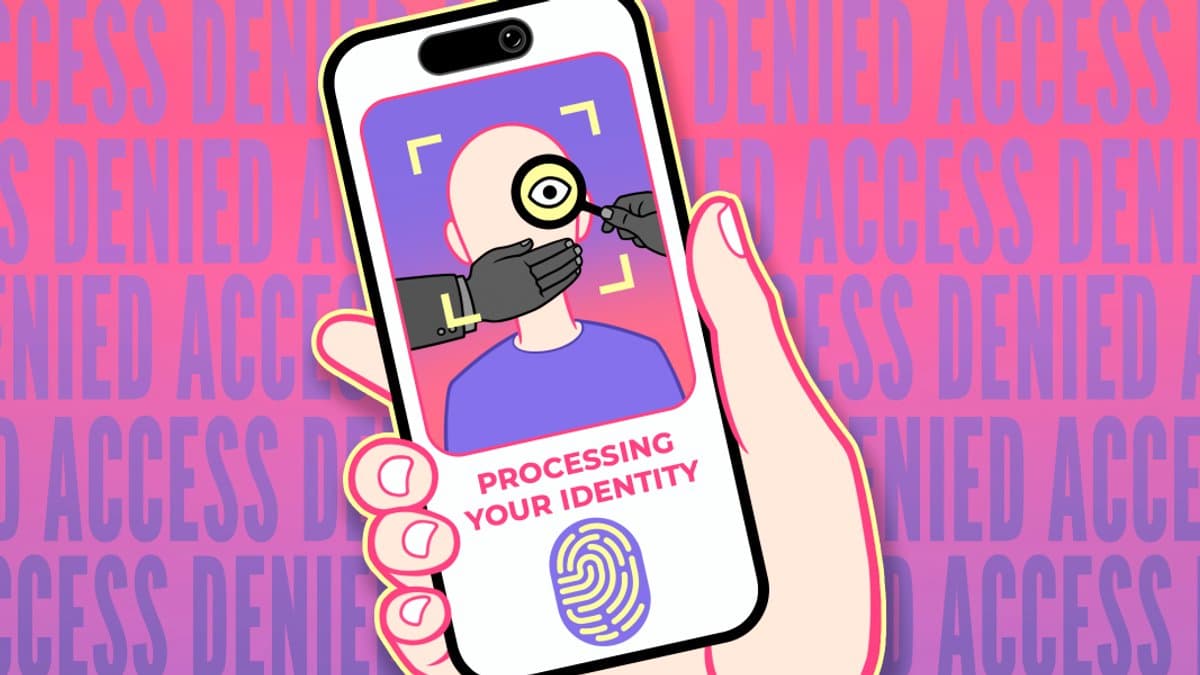
A "protect the kids" law — that changes adults' internet too?
Here's the deal: the KIDS Act (Kids Internet and Digital Safety Act) moving through Congress is heading toward effectively requiring "age verification" of nearly all internet users. Its stated purpose is protecting children online. But the digital-rights group EFF (Electronic Frontier Foundation) argues that behind the child-protection banner, the bill hides a structure that threatens adults' free speech and privacy too.
EFF flags three core problems. First, the law would push online services to verify essentially every user's age. Second, it introduces government-directed content moderation rules. Third, it creates new regulation of private and encrypted communications. In other words, mechanisms billed as "child protection" could become sweeping control over how the whole internet works.
The specific provisions tie directly to AI. AI chatbots would have to disclose to children that they aren't human, and minors couldn't use disappearing-message features. Age verification would be mandated for sexually explicit/mature content sites, and services would have to apply special controls and protections whenever they "knew or should have known" a user is a child (under 13) or a teen. The catch: to meet "should have known," a service ends up having to verify every user's age.
So here's today's story: what the KIDS Act actually contains, why "age verification" is so sensitive, what supporters and opponents each argue, how similar regulation fared in the past, and what changes for ordinary users and service operators.
The players — the KIDS Act, the Congress trying to protect, and the EFF opposing
The KIDS Act itself first. It's a package bill introduced in December 2025 by Rep. Gus Bilirakis. Its core absorbs the existing KOSA (Kids Online Safety Act) and layers on age verification, content controls, and more. It's not a single-issue law but a comprehensive package bundling several child-protection bills — which is why its scope is broad and its side effects large.
Next, the Congress and supporters pushing it. Their logic is simple and powerful: there's deep concern that social media and the internet harm kids' mental health and safety, and parents and society need tools to protect them. A House-level bipartisan deal was struck, and a vote was scheduled. "Protect the children" is a politically hard-to-oppose flag. Supporters say "this isn't censorship — it's a safeguard."
The third is the leading opponent, the EFF. Its mission is defending free speech and privacy in the digital age. Its position is "good intentions, dangerous design." Notably, the KOSA section carries a disclaimer that it "shouldn't be read to require age verification," but EFF says that when you read the rest of the bill, the disclaimer "starts to look hollow." In practice, it argues, age verification becomes unavoidable.
Tie it together: under the powerful "protect the children" banner, a law that effectively summons age verification for nearly everyone and broad content control is advancing, and the digital-rights camp is standing in the doorway calling it "a door to censorship." That's the spine.
What's in it
| Provision | Detail |
|---|---|
| Age verification | Mandated for adult/sexually explicit content access (feared to spread broadly) |
| "Should have known" standard | Special controls when a user is/should be known to be a child (<13)/teen |
| AI chatbots | Must disclose to children that they aren't human |
| Disappearing messages | Minors barred from disappearing-message features |
| Content control | Government-directed moderation rules introduced |
| Encrypted communications | New regulation of private and encrypted communications |
The most contested piece is "age verification." Supporters say "we're only requiring age checks for adult content, not forcing it on the whole internet." Opponents see it differently. To satisfy "should have known a user is a child," a service ends up having to verify every user's age — because there's no way to know in advance who's under 13 other than age checks. So the "adult-content only" caveat, in practice, spreads into "verify everyone."
Why is age verification so sensitive? Because it can mean the end of the anonymous internet. Proving your age means submitting an ID, your face, or biometrics — handing "who I am" to service after service. As that data piles up and leaks, it can become a privacy disaster, and the freedom to anonymously seek politically or religiously sensitive content shrinks. That's why EFF calls it "a door to censorship" — once age-verification infrastructure is laid, using it for other control is only a matter of time.
It matters from an AI angle too. Requiring AI chatbots to tell children "I'm not human" is the first time a law has tried to directly govern AI–minor interaction. The aim is to stop kids from mistaking a chatbot for a person and emotionally depending on it or getting harmful advice. The direction draws sympathy, but circling back to "how do you know the user is a child" entangles it again with age verification. Every road converges on a single point: verifying age.
Who gains and loses what
The pushers (Congress, parent groups) gain a powerful political banner. Opposing "protect the children" is hard, and with a bipartisan deal, the momentum is strong. For them, the law is a symbolic win — "rescuing kids from the internet's lawless zones." If it reaches a vote, supporting lawmakers earn the image of "politicians who protected child safety."
EFF and the digital-rights camp wield influence by sending the message "separate intent from design." What they gain is the position of "the voice of balance" — not opposing child protection itself, but checking that the method doesn't also erode adults' freedom and privacy. But against the strong "protect the children" banner, it's a hard fight, easily twisted into "they put privacy above kids."
The most ambiguous spot belongs to service operators and ordinary users. Operators take on the cost and liability of building age-verification systems; users absorb the hassle and privacy risk of proving their identity at service after service. Parents gain protective tools but must also hand over more of their family's identity data. "Protection for all" becomes "a cost to all."
Precedents — successes and failures
Internet regulation in the name of "protecting kids" has a long history. The cases that stuck were "narrow and specific." Laws targeting a clear, undeniable harm (e.g., child sexual abuse material) had solid social consensus and controllable side effects. The key was designing "narrow scope, clear standards." The sharper the protected group and prohibited act, the longer the law worked and the smaller the abuse risk.
The failure and controversy cases were "broad and vague." Laws with abstract "harmful" standards, or whose safeguards effectively spread into total control, got caught in free-speech disputes and were often blocked in court. Laws demanding broad age verification, especially, repeatedly clashed with "the freedom of anonymous expression" and faced constitutional challenges. EFF's worry about the KIDS Act is exactly this — a narrow banner with a broad effect.
The lesson: the success of child-protection regulation hinges not on the banner but on the precision of the design. The same "protection," designed narrow and clear, works; designed broad and vague, it erodes adults' freedom and drifts into court battles. Which one the KIDS Act becomes depends on how precisely the provisions get refined during the vote — which is why a Senate fight is already foreshadowed.
Competitor counter-plays
Big Tech platforms' counter is complicated. Publicly, opposing "child protection" is hard, so they appear cooperative — but they're wary of taking on age verification's cost, liability, and privacy risk. Some will push "less invasive age-estimation tech" as an alternative or lobby to narrow the scope. At the same time, they may eye using age-verification infrastructure, once built, as a data asset.
The Senate and opposing camp's counter is "slow it down." The House struck a bipartisan deal, but a Senate clash is foreshadowed over free speech, privacy, and encrypted-communications provisions. Opponents will agree with the broad goal of child protection while trying to strip "poison pills" like blanket age-verification spread and government-censorship potential. In the end it's a tug-of-war over "how narrowly to refine it."
Civil and digital-rights groups' counter is "offer alternatives." Pure opposition gets framed as "indifferent to child safety," so they actively propose "ways to protect kids without age verification" (device-level protections, parental tools, design regulation). Share the protection goal, but steer the means toward something that erodes privacy less.
So what changes
If you're an ordinary internet user — if this passes, you may face "prove your age" demands at more and more services. That means submitting IDs, faces, or biometrics more often, and less freedom to use the internet anonymously. It won't change overnight, but it's worth staying alert to "where my identity data goes."
If you run a service or app — new obligations could appear: age verification, minor-feature restrictions, AI chatbot disclosures. If your service has AI features especially, review the "disclose the chatbot isn't human" requirement early. With the law's final shape uncertain, track the regulatory trend and prepare a "least-invasive" design.
If you follow policy or AI ethics — this matters as an early attempt to directly govern "AI–minor interaction" in law. The AI chatbot disclosure requirement is likely to appear in similar forms in more countries and states. It's also a flagship case of how the old "child protection vs. adult freedom and privacy" tension replays in the AI era.
🥄 Three Things You're Probably Wondering
— Isn't this just age checks for adult sites? Supporters say so. But the "should have known a user is a child" standard means, in practice, nearly every service ends up verifying age — that's the opponents' core point. "Adult-only" spreads into "verify everyone." Which holds depends on the final provisions.
— It protects kids — why oppose it? EFF doesn't oppose child protection itself. The issue is the method. Age-verification infrastructure threatens privacy, erodes adults' anonymous-speech freedom, and could be used for other censorship. Its stance: "agree on the goal, wary of the design."
— Isn't making AI chatbots say "I'm not human" a good thing? Many sympathize with the direction — stopping kids from mistaking a chatbot for a person and depending on it. But circling back to "how do you know the user is a child" re-entangles it with age verification. A classic case of good intent leading to thorny enforcement.
References
- The KIDS Act Would Require Age Checks To Get Online — Electronic Frontier Foundation
- The KIDS Act Would Require Age Checks To Get Online — Techdirt
- US child safety bill reignites debate over age verification — Biometric Update
- H.R.7757 — KIDS Act, 119th Congress — Congress.gov
- Kids Online Safety Act — U.S. Senator Richard Blumenthal
This is a sensitive topic. The bill's contents and timeline may change during the legislative process.