The Day a Man Spending $145 Billion Said "I Got the Timing Wrong"
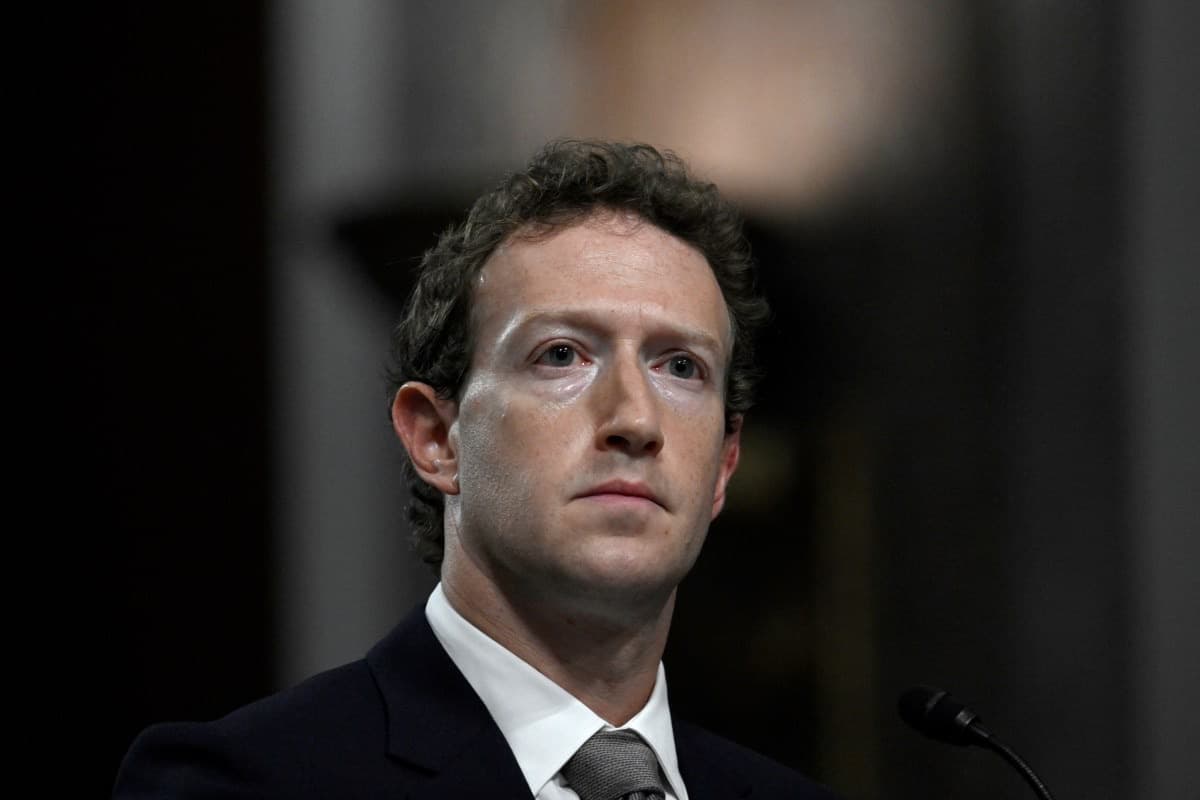
On Thursday, July 2, 2026, Mark Zuckerberg stood in front of Meta's staff. What he delivered wasn't an earnings brag or a product tease. It was, in effect, a confession that his own forecast had missed. "The trajectory of the agentic development over at least the last four months hasn't really accelerated in the way that we expected." That single sentence rippled across Silicon Valley that day. The founder of the company spending more on AI than anyone else on Earth — a company planning to burn $145 billion on infrastructure this year alone — was admitting that the very "AI agents" that money was supposed to build hadn't sped up the way he'd hoped.
Context changes the weight of that line. Over the past few months, Zuckerberg had turned the company inside out. He cut roughly 10% of the global workforce, about 8,000 people, and reassigned nearly 7,000 of them into AI groups — one of them literally named "Agent Transformation." The bet on agents wasn't just rhetoric; it was carved into the org chart. He flipped the entire board on that premise, and four months later he stood up to say the agents hadn't shown up on schedule.
And yet, the same day, a message pointing in the opposite direction leaked out too. Meta's Chief AI Officer, Alexandr Wang, referenced a next-generation model in training during a closed briefing. Internal codename: "Watermelon." According to Wang, this model — while consuming more than an order of magnitude more compute than Meta's previous frontier model — now matches OpenAI's GPT-5.5 on current evals. On one side, a cautious confession that things had stalled. On the other, quiet confidence that Meta had caught up. Same company, same day, two completely different temperatures flowing out at once.
Why is this the top story? Because the entire AI industry has staked its future on that one word: agents. Autonomous software that writes code, answers email, buys things, and handles multi-day tasks on its own. Big Tech's combined spend on this vision tops $700 billion this year. And one of the people leading that charge just said it's "slower than expected." This isn't a Meta-only problem. It's a signal that the ground the whole AI industry is standing on might be softer than everyone assumed.
The Cast: A Founder Who Flipped the Board, and a 20-Something Commander
Two people sit at the center of this story. The first is obviously Mark Zuckerberg — the guy who built Facebook. But the 2026 version of Zuckerberg is less a social-media CEO and more a gambler who's bet the company on AI. The same man who poured tens of billions into the metaverse and got mocked for it has now pivoted hard toward superintelligence. He drafted the restructuring plan last winter, executed mass layoffs in spring, and by summer found himself having to reconcile the results in front of his own staff.
The second figure is the interesting one: Alexandr Wang. He got rich founding Scale AI, the data-labeling startup. When Zuckerberg poured a fortune into Scale AI, he essentially brought Wang along wholesale and installed him as Meta's Chief AI Officer. Not yet 30, Wang is now commanding one of the largest AI organizations on the planet. He's the one who briefed that Watermelon is GPT-5.5-class. If Zuckerberg's job is to calm the market's nerves, Wang's job is to produce the evidence that "our models really are getting better."
There's a third name in the background: Andrew Bosworth, the CTO. At this town hall he surfaced as the person who reviewed a data-security incident involving employee mouse-tracking software. The fact that this kind of noise leaked out alongside the glossy narrative is a telling detail about Meta's internal mood right now — a company that's still messy in the wake of mass layoffs.
Then the offstage supporting cast. OpenAI appears as the GPT-5.5 benchmark yardstick. But Anthropic is tangled in more interesting ways. One of the things that made Zuckerberg's leadership especially optimistic when planning this restructuring was Anthropic's coding agent, "Claude Code." They looked at another company's product and concluded, "If it's this good, we can shrink headcount and replace people with agents." Four months later, they backed off with "it's slower than we thought." That's the real irony of this whole episode.
What Happened: One Town Hall, Two Truths
The core of this event is two contradictory messages that came out on the same day. One a careful confession at a public town hall, the other quiet confidence from a closed briefing. You have to lay them side by side to see the picture. Here it is in a table.
| Item | Public town hall (Zuckerberg) | Closed briefing (Alexandr Wang) |
|---|---|---|
| Core message | "Agent development hasn't accelerated in 4 months as expected" | "Watermelon has reached GPT-5.5-class performance" |
| Temperature | Defensive, cautious | Confident |
| Audience | All employees | A small closed group |
| Timeline outlook | "Bigger benefits in 3-6 months" | Currently still training |
| Basis | Underperformance after cuts and reassignment | 10x-plus more compute vs. prior model |
| Market signal | Fears agents were overhyped | The frontier chase continues |
Here's the reconciliation. Zuckerberg admitted that the "agent" application layer isn't moving fast, while Wang claimed the "foundation model" layer is actually catching up. These aren't a contradiction — they're different altitudes. No matter how smart a model gets, making that model actually work as an "agent" that finishes a multi-day job with no human in the loop is a completely different order of difficulty. That's exactly the wall Zuckerberg hit.
The numbers make the scale real. Meta plans to spend up to $145 billion on AI infrastructure this year. Big Tech overall tops $700 billion. On the people side, roughly 8,000 were let go and 7,000 shifted into AI groups. The logic of that reshuffle was simple: "Agents will do the human work, so pile the leftover talent into building agents." But the premise — a sharp acceleration in agents — never arrived in those four months. That's why Zuckerberg himself conceded the restructuring "wasn't clean" and the timing was miscalculated.
The Watermelon numbers matter too. "More than an order of magnitude more compute than the previous frontier model" simply means they threw far more money and GPUs at it. Doing so let them match GPT-5.5 "on current evals" — and that qualifier, "on current evals," is doing heavy lifting. It means they tied on benchmarks, not that they've pulled ahead in real-world use. And the moment OpenAI ships the next version of GPT-5.5, that comparison goes stale. Wang's confidence comes with a "right now" expiration date stamped on it.
What Each Side Gets: Why Say It This Way
There's calculation behind Zuckerberg's candor. Four months ago, the justification for cutting 8,000 people was "agents will replace them." If those agents don't show, the layoffs themselves start to look like a misjudgment. Better to frame it first: "It was slower than expected, but bigger benefits are coming in 3-6 months." That reframes a failure into "a plan still in progress whose timing slipped a little." It's rhetoric designed to manage employee morale and market trust at the same time.
Wang leaking the Watermelon result is the other side of the same equation. The instant Zuckerberg says "slow," the market has to ask, "So is Meta losing the AI race?" Watermelon is the card that smothers that anxiety. "The applications may be a bit slow, but the foundation model has caught GPT-5.5" — that's the balancing message. And for Wang, who has to prove his organization's reason to exist, a GPT-5.5-class number is a card he can't afford to leave in his hand.
For investors, the two messages are oddly reassuring together. Justifying a $145 billion outlay requires evidence that "something is coming out." Watermelon is that evidence. At the same time, Zuckerberg's honest admission signals "this company is facing reality." There's a paradox here: a CEO who occasionally hits the brakes coldly looks more trustworthy than one who only sprays rose-colored optimism.
Conversely, there are clear losers in this statement. The 8,000 people cut four months ago — laid off on the premise that "agents will replace you," a premise now shaking. And Anthropic. Claude Code gave Meta's leadership the confidence to shrink headcount; if it turns out that confidence was excessive, it scratches the entire narrative that "AI coding agents fully replace humans." That's a question thrown not just at Anthropic but at every coding-agent camp — Cursor, GitHub Copilot, all of them.
Déjà Vu: AI's Recurring "Overshoot, Then Downshift"
This pattern — expectations explode, then reality corrects — isn't new. The closest case is Zuckerberg's own metaverse. In 2021 he renamed the company "Meta" and poured tens of billions a year into Reality Labs, convinced "the next computing platform is the metaverse." Years passed, people didn't wear the headsets, and he eventually pivoted to AI. Zuckerberg has already lived, painfully, the experience of a big bet missing its expected timeline. Which may be exactly why he admitted "slow" faster this time.
An older case is self-driving cars. From 2016 to 2019, the industry swore "full autonomy by 2020." Waymo, Cruise, Tesla — all of them. But they slammed into the wall of "the first 90% is easy, the last 10% is hell." Flawless in the demo, brutally hard to finish handling every real-world edge case with no human. The wall AI agents hit today has exactly this shape. The benchmark demos dazzle, but autonomously finishing a real multi-day task keeps getting tripped up by "the last 10%."
There are success stories too, so the tale isn't simple. Deep learning's 2012 "ImageNet moment" was a quiet academic event at first, and a decade later it had changed everything. Cloud computing was met early with "who would trust their data to someone else's server?" and became the industry standard anyway. In other words, "slow now" doesn't mean "never." It just means the timeline stretches far beyond what people predicted. When Zuckerberg pinned it at "3-6 months," he may have been forcing a number onto a date even he doesn't actually know.
Don't forget the bets that ended in failure, either. IBM Watson launched on a "we'll cure cancer" narrative and flopped miserably in real hospitals, and its healthcare unit was eventually sold off. When the gap between expectation and reality widens too far, even a giant has to shut a project down. Which way Meta's agent bet goes is still unknown. If Watermelon truly surpasses GPT-5.5 and a usable agent emerges on top of it, this becomes a deep-learning moment; if not, it becomes one more expensive pivot. Right now, it's standing at that fork.
The Counter-Play: Who Slips Into the Gap
Zuckerberg's "it's slow" hands rivals two kinds of opening. The first is OpenAI. The fact that GPT-5.5 was named as Watermelon's yardstick means OpenAI still holds the ruler of the frontier. While others say "we're GPT-5.5-class too," OpenAI is already in the position of prepping whatever comes next. Even in the moment Meta boasts "we caught up," the reference point being OpenAI is itself a paradoxical proof of OpenAI's brand power.
The second is Anthropic, and here it's subtle. Meta's justification for cutting people was Anthropic's Claude Code — so if it turns out "agents can't fully replace humans," that's a double-edged sword for Anthropic. On one edge, "our product was recognized as that powerful" is a marketing point. On the other, it becomes a case study for "those expectations were overblown." Anthropic will probably guard against the latter frame and pivot toward "agents amplify humans, not replace them." Which, honestly, is the more realistic narrative anyway.
Google is quietly smiling too. Continuing the frontier race with Gemini, Google gets to push its models with relative stability while Meta nurses the hangover of mass layoffs and reorgs. Quietly closing the gap while a rival stubs its own toe is an old strategy. And Google already holds real-world distribution channels — Search, Android, Workspace — which puts it on higher ground than Meta for the "last 10%" of actually shipping agents to real users.
The startup camp does a different math. When a giant like Meta admits "agents are harder than we thought," it paradoxically means "this game isn't over." There's no room for startups in a market a giant has already devoured, but there's plenty of room in a market where the giant is fumbling too. Vertical startups shouting "in this one domain, our agent is the best" — law, accounting, medicine, narrow and deep — are eyeing exactly this gap right now.
So What Actually Changes: By Persona
For developers, this statement is oddly a relief. The fear that "AI will replace my job soon" has been blanketing the industry, and even Zuckerberg, who's leading the charge, admitted it's "slower than expected." Coding agents are still powerful tools, but the point where they fully replace a human developer is uncertain enough that even Zuckerberg hedged it as "3-6 months." For now, the realistic move is to treat agents as "a tool that amplifies me," not "a threat that replaces me." The dynamic where developers who use Claude Code or Cursor well outpace those who don't will hold.
For industry, it's a signal to redraw your "agent adoption timeline." If Meta backed off with "slower than we thought" in just four months, a plan like "cut headcount in half with agents this year" is dangerous. The gap between model capability (Watermelon) and real work automation (agents) is bigger than it looks, and closing it takes more time. Companies that cut people first, in a hurry, may repeat Meta's regret that "the restructuring wasn't clean."
For investors, the key thing to watch becomes "when the capex gets recouped." Meta alone is spending $145 billion, Big Tech overall $700 billion, and Zuckerberg said the benefits come "in 3-6 months." That means at least half a year before it shows up as revenue. Whether the market reads this delay as "healthy long-term investment" or "a crack in the AI bubble" will steer Big Tech stock prices. Whether tangible proof like Watermelon keeps coming will be the counterweight on that scale.
For general users, the day-to-day impact is small. But the direction is worth knowing. AI assistants that "handle tasks automatically" are being bolted onto all kinds of services right now, and Zuckerberg's confession is an honest trailer for "it'll take more time to get this perfect." So when an AI agent books an appointment or drafts an email for you, keep the habit of having a human double-check it for now. "Fully autonomous" is the marketing line; the reality is closer to "human-supervised semi-automatic." Remember that and you're fine.
🥄 Three Things You're Probably Wondering
— So is Watermelon better than GPT-5.5, or not? So far it's only a "same-class" claim — and even that comes with the "on current evals" qualifier. It means they tied on benchmarks, not that it's ahead in real use. It's also an internal claim from a closed briefing, so there's no external verification yet. The moment OpenAI ships a next version, the comparison goes stale anyway. The real skill only shows once the model is released and people use it themselves. Too early to call.
— Zuckerberg said "slow" — is the AI bubble about to pop? Hard to read it that way. What he denied wasn't "all of AI" but "the pace of agent acceleration." He actually balanced it the same day with Watermelon — "the foundation models are going fine" — and the $145 billion spending plan stands. What clearly did change: the "it'll all happen this year" expectation stretched to "3-6 months, maybe more." Less a bubble bursting, more overheated expectations correcting to real-world speed.
— Does this affect a regular office worker like me? Indirectly, yes. When companies plan to "cut people with agents," Meta's regret here can act as a brake. If more cases surface of firms that cut too fast getting burned, others get a bit more cautious. Conversely, the value of people who handle agents well will keep rising. In the end, the fork isn't "will AI take my job" but "will I use AI as my ally."
References
- TechCrunch — Mark Zuckerberg tells staff that AI agents haven't progressed as quickly as he'd hoped
- Reuters via Yahoo Finance — Exclusive: Zuckerberg says AI agent progress hasn't accelerated as hoped
- Meta Investor Relations — 2026 capital expenditure and AI infrastructure guidance
- Meta AI — Research and model releases
- Anthropic — Claude Code product page
Numbers are as of announcement and may change.