July 15. That is the last day you can build a "humanlike AI" in China
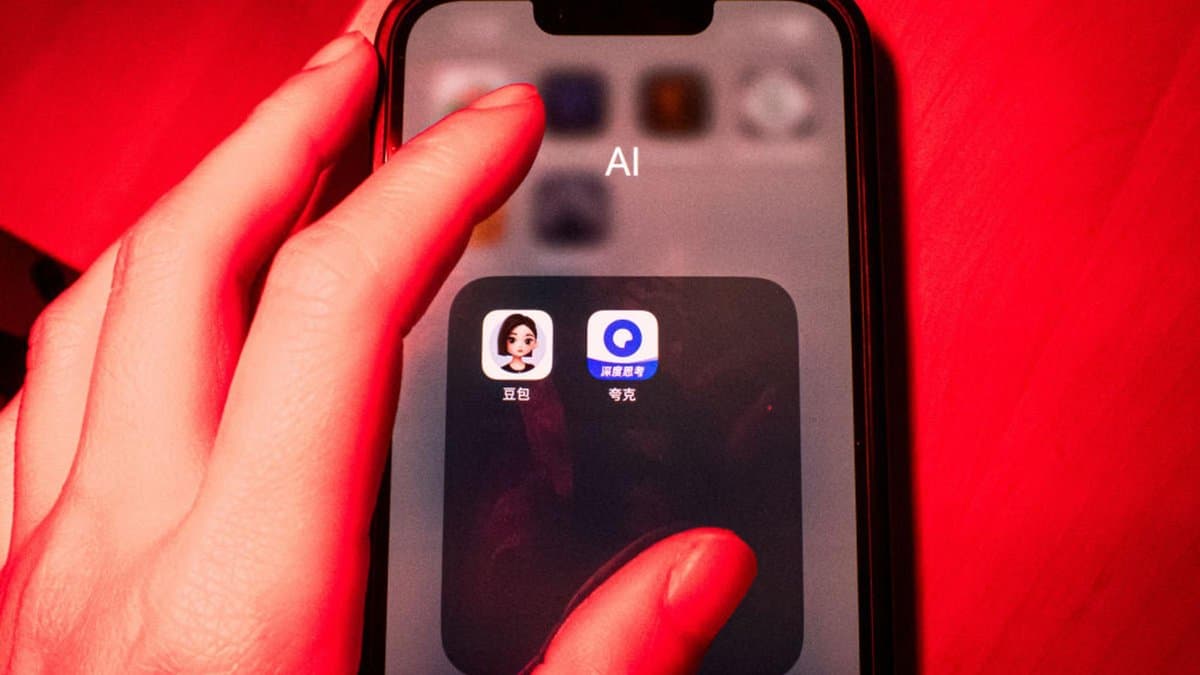
Here is the deal: a week from now, millions of people in China are going to lose the AI characters they spent months, sometimes years, building. The ones they named, gave a voice and a personality to, talked to every day until it felt like something that actually remembered them — those agents start switching off on July 15, one by one. ByteDance's Doubao and Alibaba's Qwen have already begun preemptively disabling their personalized, humanlike agent features ahead of the deadline.
The reason is simple. China has written the world's first law that specifically targets "anthropomorphic AI interaction services," and it takes effect on July 15, 2026. The formal name is the Interim Measures for the Administration of Anthropomorphic AI Interaction Services. It was jointly issued on April 10 by five government bodies, led by the Cyberspace Administration of China (CAC), together with the National Development and Reform Commission, the Ministry of Industry and Information Technology, the Ministry of Public Security, and the State Administration for Market Regulation. The crucial detail: this is not about chatbots in general. It targets only services that "simulate the personality traits, thinking patterns, and communication styles of real people to provide continuous emotional interaction."
The problem is that Doubao's and Qwen's personalized agents can't meet what the law demands by the deadline. So instead of retrofitting, both companies chose to just shut the feature off. That is the quiet-but-enormous shift happening right now in China's consumer AI market.
The players — ByteDance, Alibaba, and the regulators
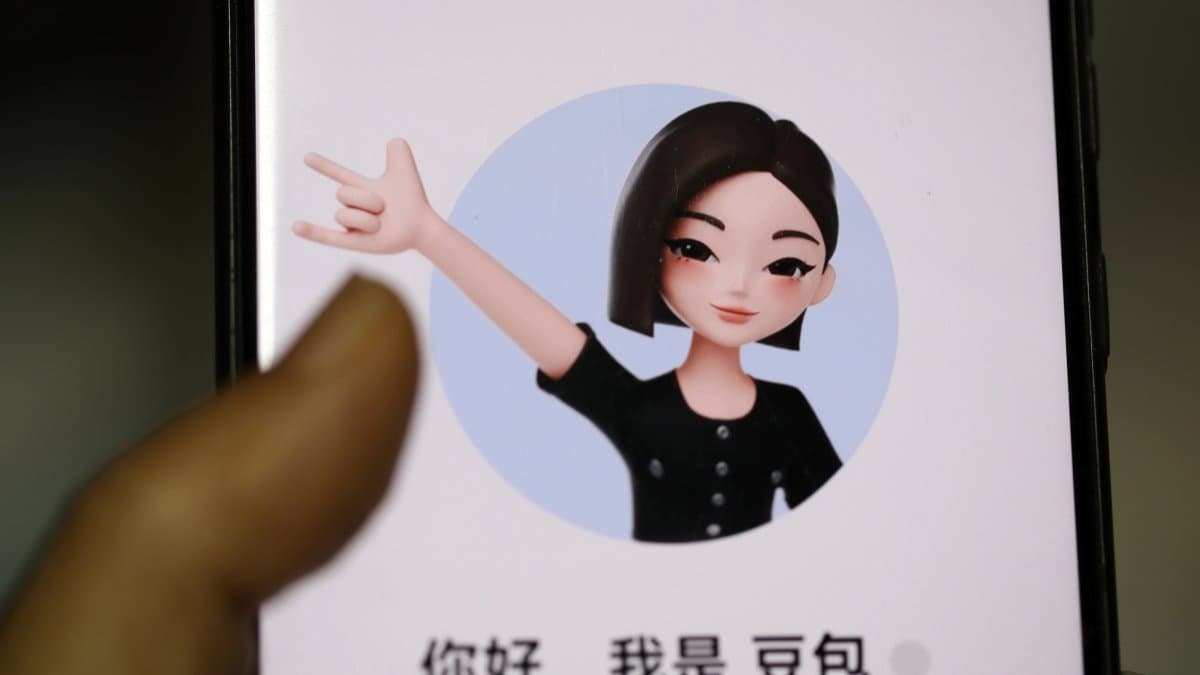
ByteDance is famous as TikTok's parent, but inside China's domestic AI market it has been building presence through Doubao, a conversational AI app. Doubao went beyond simple Q&A: it let users create custom agents with names, personalities, and speaking styles they defined themselves. Tutor, role-play character, emotional companion — it could be any of those. The appeal was that the agent remembered you and carried the relationship across sessions, and that persistence is exactly what this regulation is aimed at.
Alibaba's Qwen first made its name as a large language model for developers and enterprises, but on the consumer side it also supported user-created persona agents. Like Doubao, it let people build "my own AI with a fixed persona and voice." This time, though, Qwen made a far colder call than Doubao. As we'll get to, it announced no data migration path at all.
Look at the regulators and you can see this is not one ministry's guidance. The CAC led it, but the National Development and Reform Commission (which holds industrial policy), the Ministry of Industry and Information Technology (telecom and IT), the Ministry of Public Security (policing), and the market regulator all signed on. Five agencies co-signing is a signal: this is not an experiment, it is a settled policy direction. China has been stacking AI regulation layer by layer since the 2023 Interim Measures for Generative AI, and this anthropomorphic-services rule is the most specific — and most emotional — layer on top.
Where those three forces collide is the question of how far a "humanlike AI" should be allowed to go. And China has answered: personalized agents that foster continuous emotional dependence get tightly controlled.
What the law actually requires — and why they couldn't comply
What makes this law feel heavy is that its requirements aren't abstract principles — they force you to redesign the product itself. The core demands:
First, an anti-addiction system is mandatory. If a user stays glued for too long, the service has to issue warnings and detect unhealthy dependence in real time. According to multiple reports, that means pop-up warnings after continuous use and an instant-exit mechanism. Second, clear AI disclosure. The screen has to persistently show that "this is an AI, not a person." Third, minor protection is extremely strict. Intimate-relationship services like virtual partners or virtual family are outright banned for minors, and providing anthropomorphic services to anyone under 14 requires guardian consent. Fourth, seven categories of prohibited conduct are spelled out — content that encourages, glorifies, or implies self-harm or suicide; excessively catering to users to induce emotional dependence or addiction; using emotional manipulation to push unreasonable decisions, and more. Fifth, services with over 1 million registered users or 100,000 monthly active users must undergo a security assessment and report it to provincial cyberspace authorities.
Now you can see why Doubao's and Qwen's personal agents got caught. A personalized agent is, by its nature, designed to "remember the user, maintain a consistent persona across sessions, and keep the relationship going." But the law treats exactly that persistence and emotional bond as a risk to be controlled. For both companies, complying would mean rebuilding the whole architecture, and doing all of that by July 15 simply wasn't feasible. So they chose shutdown over retrofit.
| Item | Doubao (ByteDance) | Qwen (Alibaba) |
|---|---|---|
| Personalized humanlike agents | Disabled in stages from July 15 | Disabled from July 15 |
| Data backup window | Read-only access & export until October 15 | No official migration plan |
| Data after shutdown | Handled per privacy policy, unrecoverable in-app | High risk of data loss |
| Alternative path | Redirected to separate app "Maoxiang" | No clear alternative announced |
| Regulatory basis | Anthropomorphic AI Interim Measures (effective 7/15) | Same |
The starkest contrast in that table is how the two handle data. Doubao at least opens a read-only access and export window from July 15 through October 15. Qwen, by contrast, has announced no migration plan, raising real concern that the agent configurations and chat histories users painstakingly built could simply vanish.
What each party gains — and loses
ByteDance is trying to turn this into an opportunity. Its Doubao notice explicitly redirects users to a separate app called Maoxiang, telling them to build new agents and resume conversations there. That is a fairly clever move. Rather than cramming emotional-companion features inside a general-purpose assistant and exposing the whole thing to regulatory risk, ByteDance is peeling that feature out into a dedicated app designed for compliance from the start. In other words: keep the Doubao core clean, and move the emotional features into a compliance-purpose vessel. What it loses is churn and the friction of migrating users; what it gains is a regulatory shield and a tidier product line.
Alibaba, by contrast, is playing far more defensively. It announced no migration path and no clear replacement app. That reads two ways. One: Qwen's personal agents were always a side branch to Alibaba's core business (cloud, enterprise models, e-commerce), so it is dropping them without regret. Two: it is a conservative choice to pull out entirely to minimize regulatory exposure. Either way, Qwen users are left holding real harm in the form of data loss.
What the regulators gain is clear. They have stood up the world's first framework that directly governs "AI mimicking humans to hold people emotionally." They have secured the political case for preemptively addressing social worries — youth emotional dependence on AI, self-harm-inducing content, manipulation-driven consumption. China can now showcase its "AI safety and social control" model to the outside world.
The party that loses most, in the end, is the users. For people who spent months or years raising an AI companion — people for whom that relationship was a genuine emotional anchor — this isn't just a feature sunset, it lands as the loss of a relationship. Doubao granted an October 15 grace window, but exporting data doesn't mean the "relationship" itself transfers.
Past parallels — the wins and the failures
To understand this event, you have to look at how AI companion services have boomed and busted before. The precedents are dramatic.
Closer to a failure — Replika's abrupt 2023 romance change. The U.S. startup Replika was the poster child of AI companion apps, and in 2023, under pressure from Italy's data protection authority and its own policy shift, it suddenly blocked adult romance and intimate conversation features. Countless users who had grown emotionally dependent on that feature revolted, complaining that "my partner's personality changed overnight." The lesson is unmistakable: a relationship with an AI companion is a real emotion to the user, and cutting it off suddenly produces a heavy psychological backlash. The Doubao and Qwen shutdowns could trigger the same kind of shock.
Regulation reshaping an industry — China's 2021 gaming rules. In 2021 China imposed a hardline rule limiting minors' online gaming to three hours a week. Giants like Tencent had to roll out real-name verification and playtime caps across the board. Back then there were loud fears the industry would collapse, but in reality the big players survived by redesigning products to fit the rules, while smaller studios got cleared out. This anthropomorphic-AI rule is likely to run the same way: big players like ByteDance and Alibaba pivot to compliance-purpose products like Maoxiang and endure, while small AI companion startups that can't absorb the compliance cost disappear.
A successful preemptive adaptation — adapting after the 2023 Generative AI rules. When China enforced its Interim Measures for Generative AI in 2023, mandating content filtering, real-name systems, and algorithm registration, critics said regulation would kill innovation. Yet services like Doubao and Qwen grew fast within that frame anyway. The Chinese approach is "conditional permission, not prohibition." This precedent shows the new rule isn't about eliminating emotional AI — it's about making it survive only in a compliant form.
How competitors counter-play
Tencent and the WeChat ecosystem are probably watching this quietly and pre-tuning the emotional features in their own AI products. Tencent already built compliance muscle during the gaming crackdown, so it can absorb demands like minor protection and playtime limits relatively fast. Rather than pushing emotional agents hard, its likely strategy is to shift weight toward the regulatory safe zone of productivity and work assistants.
Baidu and the Ernie family are similar. Baidu is rooted in search and enterprise, so it was always stronger at information-providing AI than emotional companionship. This regulation actually favors players positioned around "utility AI" like Baidu. As the rules narrow the emotional-companion market, the relative appeal of the utility side grows.
Dedicated AI companion startups face the most pressure. Companies whose core product is emotional interaction itself have nowhere to hide from the rules. They have to pick one of three: (1) fully redesign as a compliance-purpose product like Maoxiang, (2) bolt on adult verification, usage limits, and AI disclosure and eat the compliance cost, or (3) pivot to overseas markets. Well-capitalized ones can survive on (1) or (2), but most will likely end up at (3) or shutting down.
Overseas players (like Character.AI) shouldn't treat this as someone else's problem. In the U.S. and Europe, youth emotional dependence on AI chatbots and self-harm-inducing content are already live social issues, with regulatory debate underway. Now that China has built the first concrete regulatory frame, other regulators are likely to reference it. The moment "Chinese-style anthropomorphic AI regulation" becomes a reference point in the global regulatory conversation, overseas companion services will feel pressure to strengthen safeguards preemptively too.
So what actually changes
For everyday users in China, a tangible change arrives right on July 15. The personal agents built in Doubao and Qwen switch off in stages, and Doubao users who don't export their data before October 15 could permanently lose their chat histories and settings. The more emotionally dependent someone was, the harder the shock. ByteDance users at least have the Maoxiang off-ramp; Qwen users have to grab their data first with no obvious alternative.
For AI industry people and developers, the proposition that "emotional AI is now a regulated product" is settled. Building humanlike agents in China from here means anti-addiction systems, AI disclosure, minor blocking, and security-assessment reporting are baseline spec. That means baking compliance in from the design stage, which raises development cost and lead time. Conversely, for teams that digest these requirements well, the entry barrier becomes a moat.
For overseas observers, including Korea, this isn't distant regulatory trivia — it may be a trailer. Worries about youth emotional dependence, emotional manipulation, and self-harm content don't respect borders. Now that China has stood up the first concrete framework, Europe, the U.S., and Asian countries are likely to reference these articles when they draft similar rules. What's happening to Doubao and Qwen right now is a scene that could replay in other countries' companion services a few years from now.
🥄 Three Things You are Probably Wondering
— So what does this mean for me? If you're outside China, you don't use Doubao or Qwen, so there's no immediate impact. But if you use AI companions or emotional chatbots at all, treat this as a preview of regulation that could eventually reach services in your own market.
— Why is this happening now? The law itself dropped on April 10, but the July 15 effective date is right around the corner, so companies are scrambling to respond now. Doubao and Qwen disabling features before the deadline is a judgment that pre-emptive cleanup beats getting punished for a violation.
— So is emotional AI just dead in China? Too early to call it. It's conditional permission, not an outright ban, so compliance-purpose redesigns like ByteDance's Maoxiang will keep appearing. But the free-for-all form — building your own AI lover with no constraints — is clearly setting.
Sources
- SCMP – ByteDance and Alibaba to disable humanlike AI custom agents as new rules loom
- Bird & Bird – China's New Regulations on AI Anthropomorphic Interactive Services
- Hogan Lovells – China's Interim Measures for the Administration of Anthropomorphic AI Interaction Services
- TechTimes – China AI Companion Law Arrives July 15: Doubao and Qwen Agent Data Will Be Deleted
- The Next Web – China's AI companion rules force Doubao, Qwen shutdowns
- AI News – China's AI companion rules: what Beijing is really going after
Numbers and criteria are as of announcement and may change.