The Coding Agent Just Quietly Walked Into the Whole Office
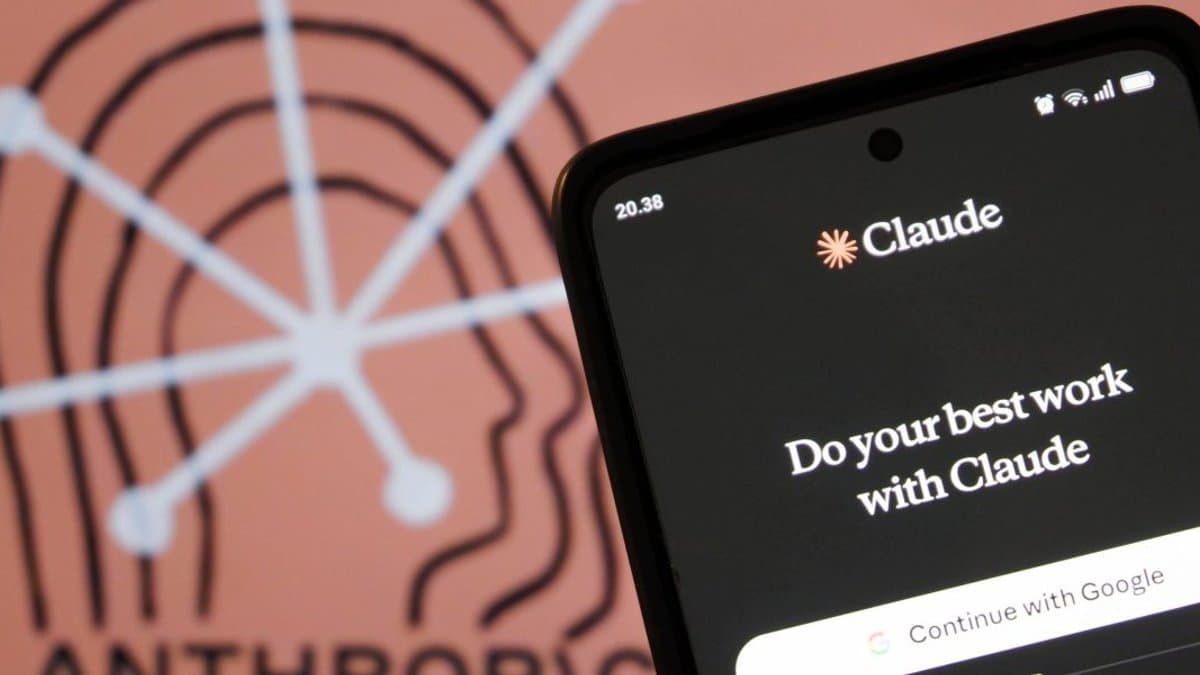
Here's the deal: on July 7, Anthropic expanded Claude Cowork to web and mobile (iOS and Android). Cowork originally shipped back in January as a Mac desktop app only. Now it lives on your phone too. The beta rolls out to Max plan subscribers first, then opens to other plans over the coming weeks.
The important part isn't "hey, one more app." It's that Cowork's whole character changes in this moment. You can hand Claude a task on your laptop and just walk away, then check progress on your phone and steer it if it needs a decision. Even better, you can close the laptop lid — or the device can go fully offline — and a scheduled task will keep grinding in the background. That's a completely different animal from the "type a question, get an answer" chatbot you're used to.
But the thing that really caught everyone's eye was the usage data Anthropic dropped alongside the launch. It sampled 1.2 million Cowork sessions from more than 600,000 organizations over the last two weeks of May, and more than 90% of that work was not software development. This is a product born from a coding tool, yet people are mostly using it to write reports, clean up spreadsheets, and build onboarding checklists. That one line pretty much explains where the AI industry is heading right now.
Let's Get Straight on What Cowork Even Is
Anthropic, as you probably know, is the AI company behind Claude. For a while it was famous among developers for a coding agent called Claude Code. You tell Claude in the terminal "fix this bug" or "build this feature," and it reads your files, edits them, runs them, the whole loop, on its own. In dev circles it's become close to a must-have.
Cowork takes that same execution muscle from Claude Code and repackages it for regular knowledge workers who've never opened a terminal in their life. When it first launched on January 12, it showed up as a "Cowork" tab sitting next to "Chat" and "Code" inside the Mac desktop app. You'd grant Claude access to a specific folder on your computer, and Claude could then read, edit, and create files inside it. The launch examples were things like reorganizing a messy downloads folder, turning receipt screenshots into an expense spreadsheet, or drafting a report from your notes.
Anthropic's own one-liner nails it: "Cowork is where you hand Claude a task, and it works across your files, calendar, email, messaging app, the web, and the other tools you connect until the job is done." So you hand off a job, and Claude moves across your files, calendar, email, messaging, the web, and whatever tools you've hooked up until it's finished. That's exactly why they named it "Cowork" — the pitch is a coworker, not a chatbot.
At first it was limited to the $100–$200/month Max plans, but on January 16 it opened up to $20/month Claude Pro subscribers too. And now, about half a year later, it's broken out of the desktop entirely onto web and mobile. Strategically, Anthropic is building a bridge from the narrow coding-agent market it started in toward the far larger market of knowledge workers who never touch a terminal.
What Actually Changed — In Numbers
This expansion boils down to three features. First, cross-device continuity. A session you start on your laptop (from the claude.ai home screen) can be picked up on your phone (in the Claude app sidebar). Armmand Hosseini, a Customer Success rep at Ramp, painted the picture perfectly: "I built a dashboard to track my clients while traveling. I started on my laptop and picked the session up on my phone while waiting for my bag."
Second, background execution. Even if you fully close the app — even if the device goes offline — the task keeps running. Third, scheduled tasks. Anthropic's example goes like this: "Set Monday's client prep for 6 am: Claude works through the email threads, transcripts, and recent news, builds the briefing doc, and leaves the follow-up email drafted but unsent." The work finishes while you're asleep.
But the real talking point was the usage data. Anthropic analyzed 1.2 million anonymized Cowork sessions (from 600,000+ organizations) between May 11 and May 31. Here's how it breaks down.
| Item | Detail |
|---|---|
| Sampling window | May 11–31, 2026 (last two weeks) |
| Scale | 600,000+ organizations, 1.2M+ Cowork sessions |
| Non-development share | Over 90% |
| Largest category | Business process 33.4% (reports, onboarding checklists, spreadsheet cleanup) |
| Content creation/copywriting | 16.4% (drafts, presentations, proposals) |
| Software development | 8.7% |
| DevOps/infrastructure | 7.0% |
| Research/intelligence | 6.4% |
| Promotion | Usage limits doubled through August 5 |
Dig into the numbers and the picture sharpens. The biggest slice is business process at 33.4% — writing reports, building new-hire onboarding checklists, cleaning up messy spreadsheets. Add content creation at 16.4% and you're at roughly half the total being pure office work. Meanwhile software development, the actual root of this tool, is just 8.7%. A product born from coding is, in practice, being used far more to handle office grunt work.
Who Gets What Out of This
Start with Anthropic. For a long time it carried a "the AI company that's great at coding" image, with a lot of revenue coming from the developer side — the API and Claude Code. But the developer market, however big, is narrow next to the entire knowledge-worker market. Cowork penetrating office work means Anthropic has a foothold to expand from a "company for coders" into a "company for every office worker." Now that it's on phones, the barrier just dropped hard for marketers, finance, sales, and HP people who aren't developers.
Enterprises get something too. More than 600,000 organizations already using it means adoption has moved past individual employees quietly experimenting toward org-level rollout. When you hand repetitive work that used to eat human hours — report drafts, onboarding docs, spreadsheet cleanup — over to an agent, people get freed up for the work that actually needs judgment. And scheduled tasks meaning the deliverable is waiting at 6 am with no late night is genuinely big for the person doing the work.
For regular users, the threshold dropped as well. You used to need to install a Mac desktop app and grant folder permissions; now you just need a phone and web access. There's the Max-plan-first constraint, sure, but they paired it with a promotion doubling usage limits through August 5. For Anthropic that's the classic diffusion play: get people to try it, get them hooked, build the habit.
Past Parallels — Wins and Flops
This shape is actually familiar. In software history, the pattern of "a developer tool crossing over into general-purpose work" repeats over and over. The poster-child win is GitHub. It started as a narrow tool for developers to manage code, then Microsoft acquired it, bolted on Copilot, and expanded into a much broader developer-productivity market. It's the case that proved a dev tool becoming a platform can have enormous reach.
There are flop-scented cases too. Microsoft's old "Clippy," or early voice assistants like Siri and Alexa, all pitched themselves as "an assistant that does anything for you," but in practice couldn't do much beyond a few simple commands, and people lost interest fast. When an agent promises "I'll just handle everything" and then the output is clumsy, trust breaks once and the user never comes back. Cowork's 90%-is-office-work stat is a good sign, but if the quality of that office output is at the "a human has to redo it" level, the story changes.
One more worth noting is the "trust curve of automation tools." RPA (robotic process automation) blew up in the late 2010s as "the future of office automation," but in reality bots broke the second a screen changed even slightly, maintenance costs exploded, and it never grew as much as the hype promised. LLM agents like Cowork are far more flexible than that, but they carry a different risk: confidently making unexpected mistakes. That's exactly why Anthropic emphasized a human-in-the-loop structure this time, where a person steps in to steer when Claude hits ambiguity. It's a design that learned from past failures.
The Competitor Counter-Play
Anthropic isn't running this race alone. TechCrunch nailed it by headlining this news "the coding agent wars are spilling into the rest of the office." Right now every AI agent that started in coding is trying to widen its territory into office work.
The most direct rival is OpenAI. It's also pushing its coding agent, Codex, beyond software development into non-developer work like reports, spreadsheets, presentations, and data analysis. On top of that, it's driving "ChatGPT agent" and "Operator," which control a browser directly to get things done on the web. That's a head-on collision with Anthropic's Cowork. Since ChatGPT is far bigger on raw user count, Anthropic has to win on "we're more trustworthy and we actually finish the job."
Google is no joke either. It's embedding Gemini deep into Workspace (Docs, Sheets, Gmail, Calendar) and pushing browser agents via "Project Mariner." Google's edge is that billions of people already live in Gmail and Google Docs — it already owns the "space where work happens" that an agent needs to burrow into. That's TechCrunch's core point: in the end the winner isn't decided by "who builds the better chatbot" but by "who owns the space where work actually gets done." Microsoft is playing the same logic, wedging Copilot into Office, Teams, and Windows.
Anthropic's response runs in two directions. One is trust. Publishing that 90%-office-work data is itself a marketing move that says "our agent is already validated in real work." The other is openness. By stressing that Cowork moves across many external tools (apps connected via MCP), Anthropic takes a "plug in whatever tools you use" stance instead of locking you into its own ecosystem the way Google and Microsoft tend to. For context, the community was also churning over pricing for an Anthropic-related model (Fable 5) today, and under that kind of pricing pressure, "how much real work does it actually take off your plate" is going to be the key justification for the price.
So What Actually Changes
For the average office worker, this is the signal that AI is stepping out of the chat window and into your real workflow. Up to now, even using ChatGPT or Claude, you were still left doing the manual middle labor — asking the question, copy-pasting the answer, reorganizing it yourself. The Cowork model wants to swallow that middle labor whole. A world where you tell your phone "have this report done by Monday morning" and go to sleep, and the draft is waiting at dawn. That said, it's Max-plan-first ($100–$200/month) right now, so most people can't just jump in. Until it's free, treat it as "so this is the direction things are going."
For people in the industry — especially SaaS and office-automation folks — this is both an alarm and an opportunity. Companies selling automatic report generation, onboarding-doc cleanup, or spreadsheet cleaning now have to ask "if a general-purpose agent just does that, what do we sell?" On the flip side, whoever builds the connectors, integrations, and verification layers that attach to Cowork is looking at a new market opening up. AI agents spilling across the whole office means we're about to watch the explosive growth that hit the coding-tool market replay on a much bigger stage.
For the investing/policy crowd, the meaning is big precisely because it's real usage data on AI agents. Agents have long been all "this is going to be huge soon" hype with thin evidence of actual use. The number — 600,000 orgs, 1.2 million sessions — is a rare piece of first-party evidence that agents are seeping into real work past the demo stage. It's also a signal that the Anthropic–OpenAI–Google–Microsoft rivalry is realigning around "who claims the office workspace." Just remember this data is Anthropic's own self-favorable statistic, so treat it as a reference point rather than gospel.
🥄 Three Things You're Probably Wondering
— So what does this mean for me? For now only Max-plan ($100–$200/month) subscribers can use it on phone and web, so it's still distant for most people. But the direction is unmistakable. AI is crossing from "a window that answers your questions" into "a coworker that does the whole job for you." Once it trickles down to cheaper plans in a few months, that's when it could actually change how you work.
— Why does "90% isn't coding" matter so much? Cowork came out of a coding tool (Claude Code). So the fact that over 90% of real usage is office work — reports, spreadsheets, document cleanup — is a strong signal that the center of gravity in the AI agent market is shifting from developers to regular office workers. That means the market gets a whole lot bigger.
— Is it ahead of OpenAI or Google? Too early to call. Anthropic being first to publish real usage data, throwing out the message "our agent is already validated," is a step ahead. But rivals have the edge on user scale (ChatGPT) and ownership of the workspace (Google Workspace, Microsoft Office). Since it ultimately comes down to "who claims the space where work happens," the race is far from decided.
Sources
- Claude Cowork on web and mobile — Anthropic (Claude Blog)
- Claude Cowork, a research preview — Anthropic (January launch)
- The coding agent wars are spilling into the rest of the office — TechCrunch
- Anthropic brings Cowork out of the desktop and onto web and mobile — SiliconANGLE
- Anthropic brings Claude Cowork to mobile and web as usage data shows most users aren't coding — VentureBeat
Numbers are as of announcement and may change.