A Company That Mined Bitcoin Just Became an AI Landlord Overnight
Here's the deal: on July 6, Anthropic signed a 20-year lease with data center company TeraWulf. The total is roughly $19 billion in expected contracted revenue over the initial term. The site is the "Justified Data" campus in Hawesville, Kentucky — a purpose-built AI infrastructure complex going up specifically for Anthropic. It's sized for about 401 megawatts (MW) of critical IT load, meaning that's the raw power dedicated to running servers alone.
But here's the number that makes your eyes pop. TeraWulf's market cap sits around $12 billion. This one Anthropic contract is worth $19 billion. A single deal is bigger than the whole company. The market wasn't going to shrug that off — on announcement day, TeraWulf shares (WULF) shot up as much as 19% intraday. This is a stock that was already up more than 80% year-to-date, and it jumped again on top of that.
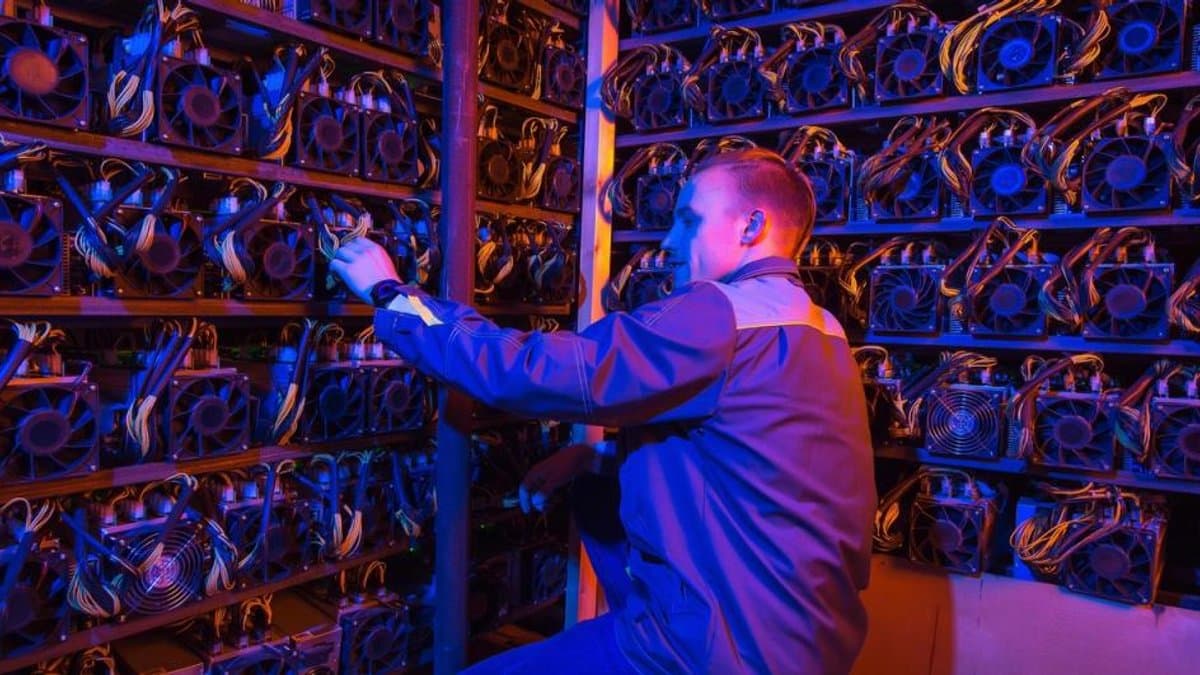
Why is this a big deal? Because TeraWulf was originally a bitcoin miner. When mining margins got squeezed after the halving, it pivoted hard — away from crunching hashes and toward selling "power and buildings for AI." This lease is proof that pivot actually landed. Founder and CEO Paul Prager put it plainly: "The Anthropic lease validates our strategy and establishes a long-duration revenue stream with one of the world's leading AI companies."
But the real weight of this news isn't "TeraWulf stock went up." It's what it reveals about how desperately the frontier AI labs are pre-buying electricity right now. A model doesn't just need GPUs — it needs the electricity to run those GPUs, and the U.S. grid isn't expanding fast enough to keep up with AI demand. So companies like Anthropic, OpenAI, and Microsoft are racing to "lock in gigawatts now, before power becomes the binding constraint." This Kentucky deal is the latest snapshot of that race.
Let's Meet the Players — Anthropic, TeraWulf, and Fluidstack
Start with Anthropic. As you know, it's the AI company behind Claude, and it's widely seen as OpenAI's fiercest rival. But building frontier models takes an insane amount of compute, and that compute needs data centers and power. Anthropic has been renting compute from clouds like Google, Amazon, and Microsoft — it's already committed to renting more than 10 gigawatts of server capacity. It locked in up to $40 billion in investment from Google along with 5 gigawatts of TPU capacity, it uses Amazon's Project Rainier (Trainium chips), and it struck a $50 billion partnership with Fluidstack. In short, Anthropic is standing on the front line of the "power land grab."
Next, TeraWulf — the real protagonist of this story. It was a bitcoin miner, but as mining margins thinned, it started recycling the assets it already had — cheap power, big land parcels, cooling and transmission know-how — into an AI data center leasing business. The Kentucky Hawesville site it's now leasing to Anthropic is the perfect symbol. This land used to house an aluminum processing plant, and TeraWulf bought it in February for $200 million. Aluminum smelting is a monstrously power-hungry industry, so the site already had massive electrical interconnection built in. So TeraWulf bought an "old heavy-industry site with tons of power flowing in" and turned it into a "building that runs AI servers." Miner to AI landlord.
The third player is Fluidstack. This announcement actually bundles two deals — one is the Anthropic lease, and the other is this one. TeraWulf agreed to sell its 50.1% stake in the Abernathy joint venture in Texas to an investor group led by Fluidstack. That Abernathy JV, set up in 2025, was a project to build a 168 MW AI data center campus. TeraWulf recovers roughly $450 million it invested there, at a premium to its invested capital. The fun part: Fluidstack is also one of Anthropic's partners. It shows just how tangled and incestuous the AI infrastructure world is.
Put it together and you get this: Anthropic secured one more dedicated compute campus it can control, TeraWulf got its hands on 20 years of stable revenue worth more than the whole company, and Fluidstack picked up the Texas site outright to grow its own AI cloud business. A three-way deal where each company walks away with exactly what it wanted.
What Did They Actually Agree To — In Numbers
This announcement splits into two deals. First, the Anthropic lease: TeraWulf leases the Justified Data campus in Hawesville, Kentucky to Anthropic for 20 years, with roughly $19 billion in contracted revenue expected over the initial term. The campus gets built in phases — the first capacity comes online in the second half of 2027, and it ramps to the full 401 MW by early 2028. TeraWulf stressed that the lease is backstopped by "investment-grade" credit. In plain terms: "a blue-chip customer nobody worries about defaulting is guaranteeing 20 years of rent."
Second, the Abernathy JV stake sale: TeraWulf sells its 50.1% interest in the Texas Abernathy joint venture to the Fluidstack-led investor group and recovers about $450 million of its investment at a premium. The plan is to plow that cash back into infrastructure it owns 100%. The idea is to shift its center of gravity away from leasing to others and toward directly owning the customer relationship and operations.
Pull the numbers into one table and it looks like this.
| Item | Detail |
|---|---|
| Announcement date | July 6, 2026 |
| Deal structure | 20-year lease (Anthropic-dedicated AI campus) |
| Total value | ~$19 billion (expected revenue, initial term) |
| Location | Justified Data campus, Hawesville, Kentucky |
| Capacity | ~401 MW critical IT load |
| Timeline | First capacity H2 2027 → full capacity early 2028 |
| Site history | Former aluminum processing plant (bought by TeraWulf in Feb for $200M) |
| Credit support | Backstopped by investment-grade credit |
| Abernathy sale | 50.1% of Texas JV → Fluidstack-led group (~$450M recovered) |
| Stock reaction | WULF up as much as +19% intraday (+80%+ YTD) |
Dig into the table and the picture sharpens. The center of gravity here is power. 401 MW is comparable to the electricity a small city consumes — and Anthropic just locked all of it up for 20 years. On top of that, first capacity not arriving until H2 2027 means if you don't sign now, you can't use that power in 2027. That's the whole answer to why AI companies are contracting power years in advance. Building takes time, and grid connection takes even longer, so it's "first come, first served."
Who Gets What Out of This
Start with Anthropic. What it gets is control. Until now Anthropic rented compute from clouds, which means it's ultimately at the mercy of landlords like Google and Amazon on scheduling and pricing. But locking down a brand-new, dedicated campus on a 20-year term means securing a compute base it can reliably use for years. To train and serve the next generation of Claude models, this kind of long-term, high-capacity power is a lifeline. And the fact that it's backstopped by investment-grade credit is also a signal that Anthropic has grown financially big enough to carry a commitment this size.
What TeraWulf gets is obvious: 20 years of stable revenue worth more than the company itself. Bitcoin mining sends revenue on a roller coaster tied to coin prices, but a 20-year AI data center lease is predictable cash coming in month after month. For a miner, that changes the entire nature of the business. And by selling the Abernathy stake, it also pocketed $450 million in cash it can use to build more of its own infrastructure and chase the next deal. The stock pop means the market rewarded the transformation.
Fluidstack picked up the controlling stake in the Texas Abernathy campus, widening the asset base for its own AI cloud business. Since it's already an Anthropic partner, there's plenty of room to run that site for Anthropic or other AI customers. It's a textbook scene of AI infrastructure companies buying and selling sites and power to optimize their respective portfolios.
Step back and the real winner might be "old industrial land with power." Aluminum plants, steel mills, retired power stations — sites that already have massive electrical interconnection are suddenly turning into gold. Pulling in new grid capacity can take years, but these sites slash that wait dramatically. The fact that a site TeraWulf bought for $200 million in February became the stage for a $19 billion contract shows exactly how much the value of "land that comes with power" has spiked.
Past Parallels — Wins and Flops
This shape isn't unfamiliar. The pattern of "one industry's infrastructure getting recycled as the foundation for the next boom" repeats over and over. The poster-child win is the fiber-optic cable (dark fiber) laid during the early-2000s dot-com boom. At the time it got trashed as overinvestment, but that infrastructure later became the substrate on which companies like Google and Netflix scaled cloud and streaming. Bitcoin mining infrastructure crossing over into AI has the same feel — leftover assets from one boom become the fuel for the next.
On the flip side, there's a flop-scented parallel too: the bitcoin miners' own dark history. When coin prices were good, plenty of them loaded up on debt to expand mining rigs and power contracts, then went bankrupt or got sold for scraps in droves when prices crashed and the halving hit. The lesson was "go all-in on one direction and you get wiped out when the market turns." The current stampede of miners into AI could become the exact same trap if AI data center demand cools faster than expected. A 20-year contract looks safe, but only as long as Anthropic keeps paying rent for 20 years.
One more worth noting is the "circular deal" controversy running through AI infrastructure broadly. A lab like Anthropic promises to rent compute; a data center company borrows against that promise to build; the chip and power suppliers to that company turn around and invest in the lab — money spinning in a loop, tangled up all over the place. If that's real demand, it's healthy growth. If it's a bubble of everyone inflating each other's revenue, one wobble can start a domino chain. That's exactly why TeraWulf went out of its way to stress the lease is "backstopped by investment-grade credit." It's pre-defending the spot the market worries about most.
The Competitor Counter-Play
This power land grab isn't a race Anthropic runs alone. If anything, OpenAI and Microsoft are way ahead on sheer scale. OpenAI is pushing its "Stargate" project — hundreds of billions of dollars in data center construction — and teaming with Oracle and SoftBank to build gigawatt-scale campuses across the U.S. Microsoft is pouring tens of billions into its own data centers too. So Anthropic's $19 billion Kentucky deal, big as it is, is "one of many" in this arena.
Anthropic's strategy is multi-sourcing. Instead of betting everything on one cloud, it spreads its power and compute across Google TPUs, Amazon Trainium, Microsoft Azure, Fluidstack, and now TeraWulf. That way it's less exposed to any single landlord's price hikes or capacity shortages, and it keeps its negotiating leverage. If OpenAI is betting on one giant single project via Stargate, Anthropic is playing the "spread it across many baskets" game.
On the data center supply side, competition is fierce too. Beyond TeraWulf, CoreWeave, Crusoe, and other former bitcoin miners — Core Scientific, Riot, and the like — are all pivoting into AI infrastructure leasing. Their real weapon is "how fast and how cheap can you secure power." What AI labs actually want is "gigawatts that reliably turn on in 2027," and the company holding the sites and power contracts that can promise that wins the game. TeraWulf buying an old aluminum plant was a move to get ahead in exactly that race.
So What Actually Changes
For developers and engineers, this is a signal that "the base for the Claude you use to run more reliably, at bigger scale" is being laid. When AI services occasionally slow down or hit limits today, it's ultimately because compute capacity is short. Anthropic pre-securing 401 MW that turns on in 2027–2028 means Claude's training and inference headroom then will be far larger than it is now. Just know this is a few-years-out story — your API isn't getting faster tomorrow because of it.
For enterprises, the important thing is that AI infrastructure is getting physical. AI sounds like a software story, but it ultimately runs on physical assets — 401 MW of power in rural Kentucky, concrete buildings, cooling systems. That means the cost and availability of AI services will be directly tied to "power prices" and "data center completion timelines" going forward. If you're a company planning to lean heavily on AI, how much power your AI provider has locked up becomes a real basis for judging service reliability.
For the investing and policy crowd, there are two messages. One: the "bitcoin miner to AI landlord" transition is a real money-maker, proven by a $19 billion contract. That's your basis for understanding why names riding this theme — TeraWulf, CoreWeave, Core Scientific — are spiking. Two: but there's a clear caution. A contract worth more than the market cap is both a growth story and a concentration risk — "the company's fate hangs on this one deal." And the circular-deal and overbuilding worries running through the whole AI data center boom are still very much live. On the policy side, as AI companies start locking up power by the gigawatt, questions like "what happens to household and business electricity bills" and "who pays for grid expansion" are about to become hot potatoes.
🥄 Three Things You're Probably Wondering
— So what does this mean for me? Nothing changes in your daily life right now. This campus doesn't switch on until H2 2027, and even then it's Anthropic-only. But the big picture is clear. How fast and reliable the AI you use will be going forward depends on how much power these companies are pre-locking today. Read it as a signal that AI competition is shifting from a "smart model" fight to an "electricity and land" fight.
— Is a miner switching to AI really that big a deal? It's pretty big. Bitcoin mining puts revenue on a roller coaster tied to coin prices, while a 20-year AI data center lease is predictable long-term cash. TeraWulf's market cap is $12 billion and one contract is $19 billion — that means the market treated this pivot as "an event that re-rates the entire company." That said, concentration risk grew right alongside it, so it's not all rosy.
— Is Anthropic ahead in the compute race? Too early to call. On pure scale, OpenAI's Stargate and Microsoft's in-house spend are far bigger. Anthropic's edge is the flexibility of spreading its power across Google, Amazon, Fluidstack, and TeraWulf instead of going all-in on one. But while diversification is stable, it may not deliver the economies of scale of one giant single project. Who wins won't be clear until these facilities actually flip on in 2027–2028.
Sources
- TeraWulf Announces Anthropic Lease at Justified Data Campus and Sale of Majority Interest in Abernathy Joint Venture to Fluidstack — TeraWulf (Investor PR)
- TeraWulf Inc. Form 8-K Exhibit 99.1 (filed 2026-07-06) — SEC EDGAR
- Bitcoin miner TeraWulf soars on a $19 billion AI data-center lease with Anthropic — CoinDesk
- Anthropic signs $19bn, 20-year lease for Kentucky data center with TeraWulf — Data Center Dynamics
- Anthropic inks $19B AI data center lease with TeraWulf — SiliconANGLE
Numbers and criteria are as of announcement and may change. Investment calls are yours to make!