The founder never hit Sand Hill Road, and $100M still showed up
Here's the deal: Lyzr, an enterprise AI-agent startup out of Jersey City, New Jersey, just ran its own funding round without putting a human in the driver's seat. Instead, it handed the job to an AI agent it built itself, called SivaClaw. This thing fielded questions from more than 130 investors, drafted investment memos, and even tracked which slides in the deck each backer lingered on. The upshot: the founders never had to fly out and do the traditional laps up and down Sand Hill Road — coffee meetings, warm intros, the whole ritual — and still pulled a $100 million Series B to the closing line at a roughly $500 million valuation.
TechCrunch and Bloomberg both reported this on July 9, 2026, and the wild part isn't the number. The number is nice, but the real headline is the picture itself: a company that sells AI agents used its own agent to raise its own money, and it actually worked. If a marketing team had scripted this, they'd deserve a raise. There is no more convincing demo that your product works than betting your own funding round on it.
And that's exactly where this story splits in two. One camp is thrilled — an agent just cracked into fundraising, long considered the most human, relationship-driven corner of the VC world. The other camp is squinting hard, muttering that this is a flashy marketing stunt dressed up as a milestone. So let's put both lenses on the table and look at what SivaClaw actually did, what it couldn't do, and whether this is a genuine signal about the future of startup fundraising or just very good theater.
So what is Lyzr, exactly
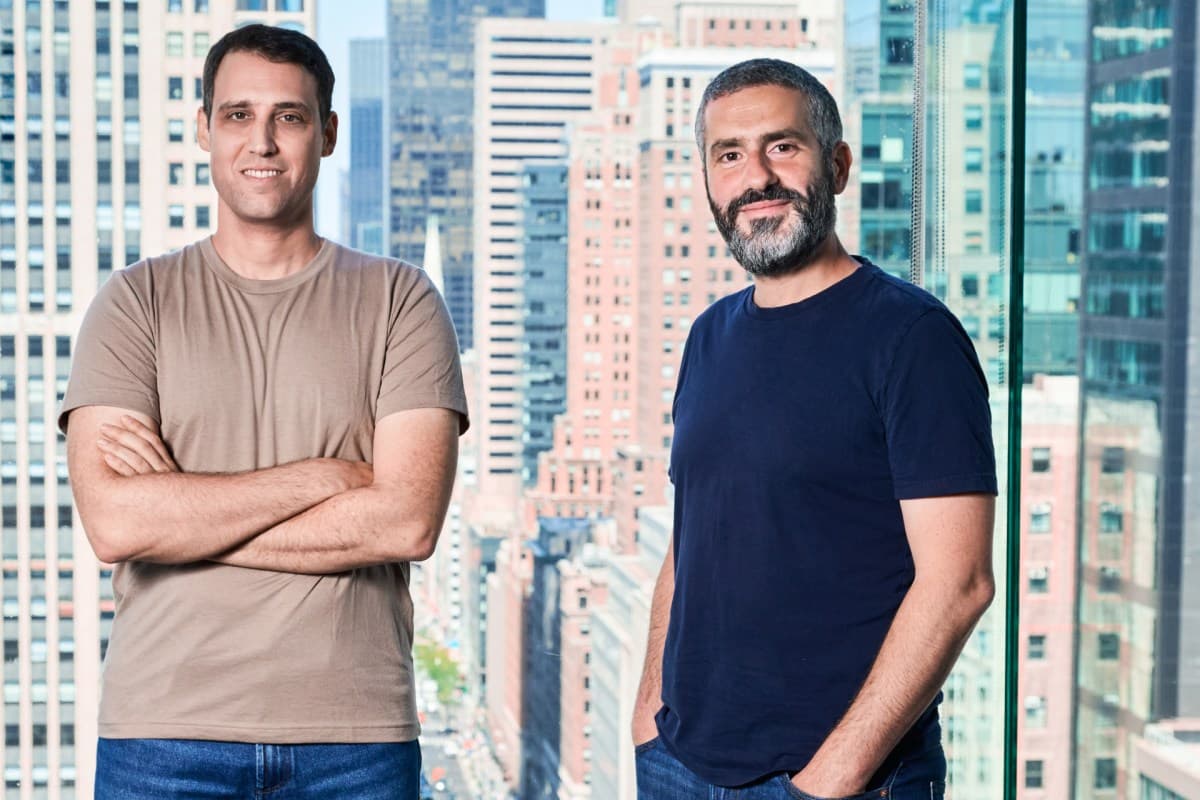
Lyzr is a three-year-old startup, founded in 2023 by Siva Surendira (CEO) and Anirudh Narayan. Siva isn't a first-timer — he previously built Power Up Cloud, an AWS consulting firm that got acquired in 2019, and he ran an AWS business group globally after that. So Lyzr is a second act by someone who already knows the plumbing of cloud infrastructure and the grind of enterprise sales. That matters, because it shapes what kind of company this is.
In one line, Lyzr builds infrastructure that lets enterprises create and run AI agents without shipping their data off to some outside cloud. Fortune 500 companies are hungry for agents right now, but when they try to actually deploy, they trip over the same rocks: data security, hallucination, explainability, governance. That's especially true in regulated worlds like finance, retail, and government, where handing your data to an external cloud is a non-starter. Lyzr wedges itself right there, pushing an on-prem approach where the agent runs inside the company's own systems.
What makes the company interesting is its customer list. Big consulting firms — Accenture, Deloitte, KPMG — reportedly use the Lyzr platform to build AI agent systems for their own clients. Consulting firms exist to solve other people's problems, so when they pick your tool to do it, that's a trust signal worth something. Accenture went further and led an earlier round in early 2026, putting $14.5 million in at a $250 million valuation.
By the numbers, Lyzr isn't a giant yet. Headcount sits around 73, and annual recurring revenue is reportedly in the neighborhood of $3 million. The pitch is the slope of the curve, not the current size: the company claims north of 300% revenue growth, and its valuation doubled from $250 million to $500 million in a matter of months. A company doing roughly $3 million in revenue commanding a $500 million valuation means investors aren't betting on today's sales — they're betting on the future value of the agent tech Lyzr builds. And what sold them on that bet was, in large part, the way this very round got done.
What SivaClaw actually did
Okay, so what did the agent concretely do? According to Lyzr, SivaClaw acted as the effective point person for the entire Series B. It responded to questions from more than 130 investors, drafted investment memos, and tracked engagement data — like which slides a given backer dwelled on. The team used that data to figure out which investors cared about what, and where interest cooled off, then refined the pitch accordingly.
How it works is laid out in surprising detail in Lyzr's own "Fundraising Agent Playbook." The agent runs on a three-layer information architecture. At the bottom are core instructions — the agent's identity, tone, and escalation rules. In the middle is a vector database stuffed with searchable documents like decks, case studies, and FAQs. And on top is a structured-data layer wired via API into systems like Stripe (live revenue) and Carta (cap table), pulling real-time financials. So when an investor asks "what's your ARR right now?", the answer isn't a memorized number — it's a figure yanked live from the source.
There's a designed flow for the investor, too. You land on a branded page, watch a pre-recorded founder interview, then hit an interactive Q&A with suggested prompts, submit an interest form, and — if you qualify — get gated access to the data room. The agent handles most of the pre-due-diligence before a human is ever in the loop. Lyzr claims this cut time spent on repetitive Q&A by 90% and automated 60–70% of investor interactions.
One crucial thing: SivaClaw didn't fall out of the sky. Lyzr already ran this play once, at its Series A last year, with a predecessor agent called Agent Sam. Agent Sam ran investor Q&A sessions and automated early outreach, and the company says it shrank the usual one-month fundraising cycle down to two weeks. That $8 million Series A was led by Rocketship.VC, with Accenture, Firstsource, Plug and Play, GFT Ventures, BGV, and PFNYC joining — and Henry Ford III, a Ford Motor director, took a board seat. So SivaClaw is really the upgraded version of a tactic that already had a proof point.
| Item | Series A (late 2025, Agent Sam) | Series B (July 2026, SivaClaw) |
|---|---|---|
| Raised | ~$8 million | $100 million (effectively closing) |
| Valuation | — | ~$500 million |
| Lead investor | Rocketship.VC | Undisclosed |
| Agent's role | Investor Q&A, early outreach | 130+ investors, investment memos, slide-engagement tracking |
| Interest drawn | 30+ qualified investors | ~$400 million in interest |
| Investor geography | Mostly US | Silicon Valley, Middle East, financial sector |
On the tech side, it's public that Agent Sam tested several models and settled on Claude 3.7 Sonnet for its reasoning over financial data and consistent tone. The company says GPT-4o and Gemini either hallucinated or struck the wrong tone. The vector DB was Qdrant, the backend was built on Lyzr Studio, and the frontend on Lovable.
Who actually wins here
The most obvious winner is Lyzr itself. The company didn't just raise $100 million — it turned the act of raising it into the most persuasive product demo money can't buy. Think about it: a company selling AI agents saying "our agents really work" a hundred times is nothing compared to saying "we raised $100 million using our own agent" once. For a Fortune 500 exec considering the platform, the trust builds itself: if they'll trust it with their own lifeline, we can probably trust it with our workflows. That's a kind of credibility no marketing budget can purchase.
It's a win for the founders personally, too. Fundraising is one of the biggest time sinks a founder faces — answering the same questions from 30, 100 investors, flying out for coffee, cleaning up the data room, over and over for months, all while the product and team get neglected. When SivaClaw strips out the repetitive Q&A and early screening, the founders can focus on the handful of conversations that actually matter: term negotiations with the lead, strategic partnerships. As Narayan framed it, the agent handles the start of the conversation so humans can spend their energy on the close.
Investors don't lose either, which is a little counterintuitive. A well-built fundraising agent actually saves their time too. They can log in at any hour, ask about financials, product, and competitive moat, get answers with citations, and even verify live revenue numbers. Got a question at 11 p.m.? No waiting two days for a founder's email reply. Sure, this is limited to the fact-checking stage — but that stage is a big chunk of diligence.
And step back, and the whole AI-agent industry benefits. Lyzr's case is a concrete, headline-friendly proof that agents can generate real money inside a real business process. With so many companies stuck unable to push agents past the pilot stage, one splashy success story creates a "maybe we should try this too" mood. Of course, that's a double-edged sword — inflated expectations set up bigger disappointments.
Has this happened before — the wins and the wipeouts
The "eat your own dog food" strategy — solving your own problem with your own product — is a Silicon Valley classic. On the wins side: Salesforce ran its own CRM internally from the early days to sharpen the product; Slack started as an internal comms tool inside a game company before it got productized; Amazon built infrastructure for its own needs and sold it to the world as AWS. What these share is that the founders were genuinely, desperately using the thing they sold — not something rigged up for a demo.
Narrow it to fundraising automation, and Lyzr's Agent Sam Series A was effectively the first big instance, with SivaClaw as the repeat and the expansion. Once can be luck; twice in a row starts to look like repeatability. And the fact that the company published an entire "Fundraising Agent Playbook" suggests an ambition to turn this into its own product category.
But dogfooding-as-marketing hasn't always worked. When a flashy self-demo diverges from real product capability, the backlash comes fast. The classic failure pattern is "great in the demo, dead in production." That's especially common in AI: everything runs flawlessly in a controlled environment with pre-scripted scenarios, then collapses when it meets a real customer's messy data and edge cases. Countless enterprise agent deployments stall at the pilot stage on exactly this — hallucination, reliability, explainability.
There's a second trap to watch: the "controlled success" illusion. Lyzr's fundraise was, in the end, a heavily controlled environment that Lyzr set up itself, answering only about Lyzr. The company built the entire knowledge base, and it could reasonably anticipate which questions would come. That's a far friendlier setup than a real customer's — running the agent on someone else's company, someone else's tangled data. So as impressive as the demo is, it doesn't automatically guarantee "your workflows will go this smoothly too."
How the competition will play it
The enterprise AI-agent market Lyzr swims in is a bloodbath. Above it, foundation-model players like OpenAI and Anthropic push their own agent frameworks. Beside it, giants like Salesforce (Agentforce), Microsoft (Copilot agents), and Google are embedding agents into their own ecosystems. Below it, open-source frameworks like LangChain and CrewAI and a swarm of startups climb up. Lyzr's differentiator is the on-prem, governance, regulated-industry niche — but that niche is squarely in the giants' crosshairs too.
Expect competitors to react to the SivaClaw stunt in two directions. The first is copycatting: use their own agent to visibly automate something about their own company — hiring, sales, customer support — and manufacture similar buzz. Plenty of startups already market "we run CS 100% on agents," and that's only going to grow. Dogfooding demos are becoming a standard grammar of marketing.
The second is the takedown. Competitors — especially the camp defending the traditional way — will argue that "fundraising is a relationship business, not an information-retrieval game." And honestly, that's a strong rebuttal. Even Lyzr concedes it: "no one is writing a $2 million check without talking to the founder." Final commitments still happen human-to-human; the agent just clears the repetitive labor upfront. Rivals will lean on this to frame what Lyzr sold as "really just a fancy FAQ bot."
Third, watch the foundation-model players. The fact that Agent Sam ran on top of Claude 3.7 Sonnet means an application-and-governance-layer company like Lyzr ultimately stands on a model company's shoulders. If Anthropic or OpenAI baked fundraising and investor-management features directly into their own products, Lyzr's differentiation narrows. So Lyzr's job is to keep defending its spot — the governance, orchestration, and security above the model. This whole stunt can be read as an attempt to prove that spot is worth something.
So what actually changes
For startup founders, this is a fairly practical signal. The "fact-delivery" part of fundraising is moving into automatable territory. Yes, building something like SivaClaw today still means a stack — vector DB, real-time data integrations, model selection — but Lyzr published a playbook and these tools are commoditizing fast, so the barrier keeps dropping. Just don't kid yourself that it makes a bad business look good. As Narayan put it: "you can build the best campaign, but if you don't have a solid business, it'll fall short." The agent is an amplifier for a good business, nothing more.
For investors, a subtle tension emerges. When pre-diligence gets automated, you can screen more deals faster, which is convenient. But it also raises a question: am I talking to the founder's real thinking, or a well-tuned agent's answers? What investors often actually want to see in fundraising isn't the numbers — it's how a founder reasons under pressure. If the agent handles the whole front end, you may have less to observe when the human moment finally arrives. So the savvier the investor, the more likely they insist: "skip the agent, let me talk to the founder."
For everyday users and industry watchers, this is a symbolic marker that AI agents are starting to penetrate genuinely high-value knowledge work. Fundraising is highly specialized, relationship-driven, and involves large sums. Seeing an agent handle 60–70% of the legwork there means adjacent domains — legal diligence, hiring screens, early-stage sales response — will feel similar automation pressure. Your job isn't vanishing tomorrow, but work made of "repetitive fact-response" is steadily sliding toward the agents.
Bottom line: the SivaClaw story sits right on the line between innovation and marketing stunt — and it's genuinely both. The agent really did handle meaningful work, and Lyzr really did package it as dramatically as possible to sell the product. The important caveat is that this is not a signal that fundraising is now fully automated. It's more like an early version of a new division of labor: repeatable information work goes to the agent, and decisions that need trust and judgment stay with humans. Where exactly that line gets drawn is going to be the fun thing to watch over the next few years.
🥄 Three Things You're Probably Wondering
— So should I just have an agent run my next round? A little early, and it's more work than it sounds. Lyzr builds agents for a living, so of course it whipped one up with its own tech — but a regular founder wiring up a vector DB with live financials is a real lift. That said, these tools are commoditizing fast, so it'll likely get much easier in a year or two. Until then, starting light with "automate the repetitive Q&A" is the realistic move.
— Isn't this just a marketing stunt? Half true. But calling it just a stunt is unfair when it actually fielded 130+ investors and real money came in. It's marketing and a genuine product demo at the same time. Just remember it ran on its own company, in an environment it controlled, so it's no guarantee "your workflows will go this well."
— Does this mean humans are done in VC fundraising? No — closer to the opposite. The more the agent clears the repetitive labor, the more the human parts — building trust, making judgment calls — stand out in value. Even Lyzr concedes "no one writes a $2 million check without talking to the founder." The front end gets automated; the real decision still happens person to person.
Further Reading
- TechCrunch — An AI agent startup just let its agent run its $100M fundraise
- Bloomberg — A Startup That Builds AI Agents Used One to Raise $100 Million
- TNW — Lyzr used its own AI agent to help raise a $100mn round
- Lyzr blog — We've raised $8M Series A to bring Agentic OS to Enterprises
- Lyzr blog — How We Built an Agent to Raise Series A Funding for Us
- Lyzr — The Fundraising Agent Playbook
- TechFundingNews — Lyzr's first-ever agent-led round
Numbers and criteria are as of announcement and may change. Investment calls are yours to make!