The company that gave AI away finally handed you a bill
Meta just put a price on its own AI model. On July 9, 2026, it unveiled Muse Spark 1.1 — a multimodal reasoning model built for agentic coding and computer use — and started selling it through a brand-new Meta Model API. The rates: $1.25 per million input tokens, $4.25 per million output tokens. On paper it looks like just another model launch. It isn't. This is Meta crossing a line it had never crossed before.
Here's the deal: Meta was the loudest company waving the "AI should be free" flag. It shipped the Llama series as open weights so anyone could download and run it, and Zuckerberg took every chance to nail his colors to the open-source mast. So when that company locks its newest model behind a closed API and slaps a rate card on it, the story isn't the spec sheet. It's the direction. The strategy shifted, and that's the real headline.
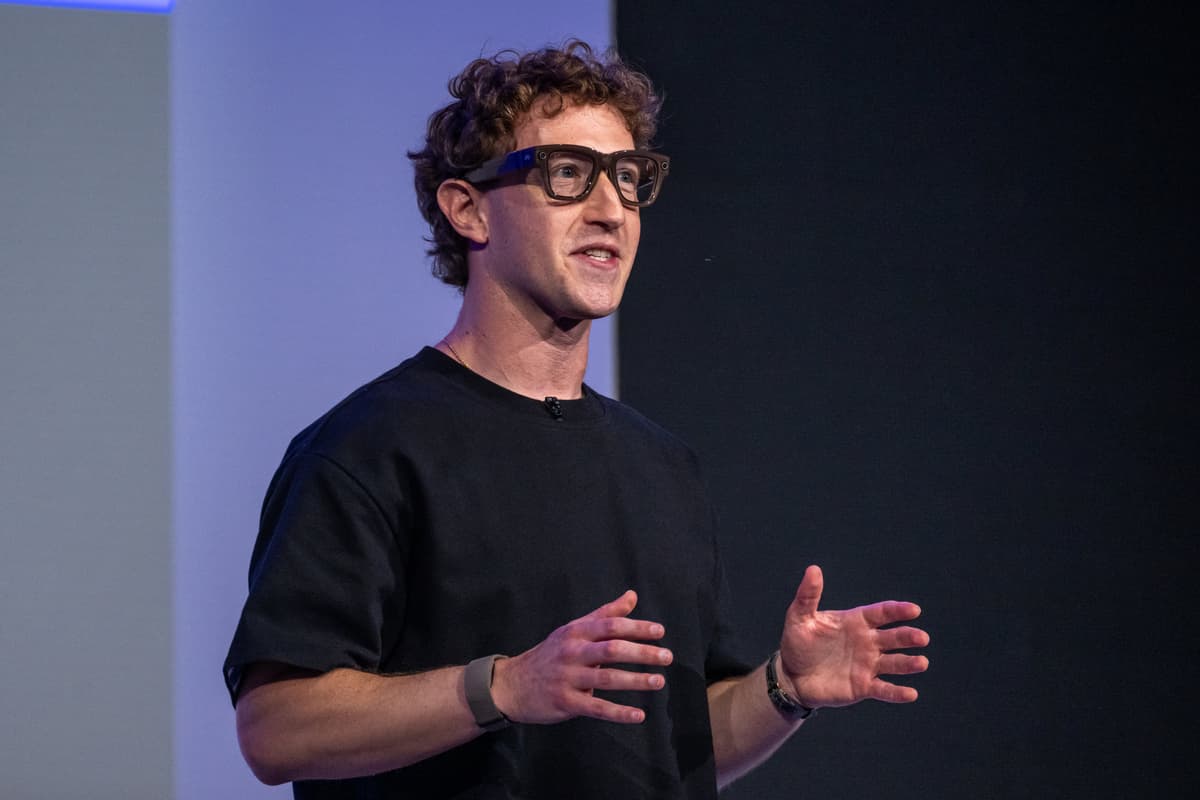
And there's one more twist. To announce this, Zuckerberg returned to X (formerly Twitter) after three years away. His last post there was July 6, 2023, so this is almost to the day a three-year gap. He skipped his own Threads platform and showed up on rival Elon Musk's turf to personally pitch "a strong agentic and coding model at a very low price." That tells you he knew exactly where the developers he wanted to reach actually hang out. Symbolically and practically, this was a calculated comeback.
Meta Superintelligence Labs plays its second card
The team behind this model is Meta Superintelligence Labs (MSL), the group Meta stood up after aggressively poaching AI talent over the past couple of years. Muse Spark 1.1 is MSL's second model. The first Muse Spark landed in April 2026, and 1.1 is both the upgrade and the version where Meta finally flipped the commercialization switch.
Context matters here. The old Meta AI story revolved around the Llama team, and Llama's identity was "open weights, free, developer-friendly." The new line carrying the Muse name is a completely different animal. No open-weight release, no download — you can only reach it through the Meta Model API. Renaming it isn't just marketing. It reads as a deliberate split inside Meta between a "free open-source lane" and a "paid frontier lane."
Why did MSL swerve like this? Simple: building frontier models has gotten absurdly expensive. GPU clusters, electricity, data, salaries — training a single model costs an astronomical amount. Giving that away for free on nothing but "ecosystem goodwill" isn't something even Meta can do forever. At some point you have to say "the frontier-grade stuff now costs money," and that moment arrived with Muse Spark 1.1.
For Zuckerberg this isn't about ego, it's about positioning. He's got years of developer goodwill and brand trust banked from the open-source era, and he can use that as a launchpad for going paid. The narrative practically writes itself: "We've always been on the developers' side, so when we charge you, that's not gouging — it's fair." Pricing the model far below rivals is part of that same narrative.
Look under the hood — this is about the "agent," not just the code
Muse Spark 1.1 in one line: it's a model built to be run as an agent. It goes past chatting and spitting out code — it's tuned to use tools on its own, operate a computer, and push long-running tasks all the way to done.
Start with the core specs. It carries a 1-million-token context window, which means it can chew on an entire large codebase or a fat pile of documents in one pass. It takes text, images, video, and PDFs as input, with search and citations built in so it can answer with sources attached. It's trained to operate desktop, mobile, and web browser interfaces directly, so it can click and type its way through complex multi-step workflows on your behalf. On top of that it does multi-agent orchestration with subagents running in parallel, plus zero-shot generalization to tools and MCP servers it has never seen before.
The benchmark numbers make the model's personality clearer. On tool use, it's clearly out front. It posted a leading 88.1 on MCP Atlas, which measures scaled tool use, and 54.7 on JobBench for professional tool use. On pure coding, though, it's not the champ. On SWE-Bench Pro it scored 61.5, while Claude Opus 4.8 leads at 69.2 and GPT-5.5 sits at 58.6. Averaged across coding and multimodal evals it lands around third place — but on agent and tool-use evals it's the leader. That's the consensus read across the reviews.
| Item | Muse Spark 1.1 detail |
|---|---|
| Release date | July 9, 2026 |
| Built by | Meta Superintelligence Labs (MSL) — its second model |
| Previous version | First Muse Spark, April 2026 |
| Context window | 1 million tokens |
| Input modalities | Text, image, video, PDF (search + citations built in) |
| Pricing | $1.25 / 1M input tokens, $4.25 / 1M output tokens |
| Headline benchmarks | MCP Atlas 88.1, JobBench 54.7, SWE-Bench Pro 61.5 |
| Access | Meta Model API (public preview), OpenAI-compatible / Meta AI app 'Thinking' mode |
| Strategic meaning | Meta's first paid first-party model |
Access is the other big thing. The Meta Model API is designed to be OpenAI-compatible. In plain terms: if you already wrote your code against the OpenAI SDK, you swap the base URL and API key and most of it just works. That's a blatant lure. It's Meta saying "we'll make your switching cost basically zero, so just try ours." Replit CEO Amjad Masad, an early tester, said what impressed him most was "how much it packs into one model," singling out the massive million-token context. For everyday users, the model also shows up in the Meta AI app and on meta.ai in "Thinking" mode.
Who wins here — the price tag is the real weapon
The strongest weapon in this launch isn't performance, it's price. Put $1.25 input and $4.25 output next to the frontier-grade rates from Anthropic or OpenAI and analysts peg it at roughly a quarter of the cost. Even if Muse Spark 1.1 sits a rung below the top coding models, at a quarter of the price the whole calculation changes.
The biggest winners are developers and startups. For companies selling coding agents as a service, token cost is margin. Run an agent all day and the tokens pile up fast, so cutting that cost of goods to a quarter either fattens your margin at the same price or lets you undercut rivals and grab share. Long-running agent workloads especially spit out a lot of output tokens, so that $4.25 output rate lands hard.
Meta itself wins too. Llama built the brand but never produced direct revenue. Now that API money starts flowing in, Meta finally has a story for recouping the massive amounts it's poured into AI infrastructure. Better still, a paid API gives it real usage data and workload patterns, which is exactly the raw material for building better models next time. When you give it away for free, you can't really see who uses it or how. Now the meter is running.
On the flip side, the awkward position belongs to companies like Anthropic and OpenAI that have protected margins with a frontier premium. Their pitch has been "our model is the best, so it costs more." When a slightly-less-capable alternative shows up at a quarter of the price, that premium logic cracks. The large chunk of practical buyers who think "I don't need best-in-class, I just need an agent that works" are far more price-sensitive. If Meta peels that segment off on price, the top-tier players eventually have to touch their pricing too.
We've seen this script before — the wins and the flops
"Shake up the market on price" is not a new play. On the win side, in early 2025 DeepSeek ran exactly this script. It shipped respectable performance at a fraction of US frontier-model pricing and jolted the market with a "wait, that performance at that price?" shock. In the aftermath, several vendors re-examined their pricing and the whole category of cheap, high-efficiency models started being taken seriously. Meta's move here is essentially DeepSeek's open-source play, replayed through a brand name and a paid API.
Another worth remembering is early cloud computing and AWS. AWS didn't win on "we're the flashiest." It won on "we're the cheapest, the easiest, and the simplest to switch onto." Make it trivial for a developer to hop on, then make it sticky so they don't hop off. Making the Meta Model API OpenAI-compatible follows that exact textbook — kill the barrier to entry and vacuum up the traffic first.
But there are flops too. Go in cheap and you risk your brand hardening into "cheap = second-rate," and then you can't climb up to premium even when you want to. Price wars are also a stamina contest, and if your opponent has a deeper war chest you can be the one who tires first. Meta's chest is deep, but Anthropic, OpenAI, Google, and xAI are all well-capitalized rivals, so the "who runs out of breath first" game isn't a free win.
One more thing. Meta's original Llama strategy was itself a bet — "give it away free and capture the ecosystem" — and it won the brand but not the revenue. That failure is the backdrop for this pivot. In other words, Meta learned from both its own success (brand) and its own failure (weak monetization), and it's showing up with a compromise: "keep the brand, but this time actually get paid." Whether it works hinges on whether developers read "Meta going paid" as a betrayal or as a reasonable evolution.
How the rivals hit back
This arena is already hot. Claude, GPT, Gemini, and Grok are all slugging it out in coding agents, and now Meta has entered with a paid card, so the reactions will vary.
Anthropic will probably lean harder into the performance-and-trust card. Using Claude Opus 4.8's SWE-Bench Pro lead as proof, expect a sharpened message: "with coding agents, accuracy and reliability are everything — cheap that breaks costs you more." Enterprise buyers take the risk of an agent botching their codebase very seriously, so that logic sells. If the price pressure gets bad, though, Anthropic could adjust rates on certain tiers or spin up a separate low-cost option to defend.
OpenAI has room to counter with ecosystem and product integration. It already owns a huge developer base and tool ecosystem, so it can differentiate on "we don't just sell a model, we sell the whole stack." And the fact that the Meta Model API is OpenAI-compatible is, ironically, evidence that OpenAI's interface has effectively become the industry standard — which lets OpenAI frame it as "everyone's copying our spec."
Google can respond on both price and integration. Its own TPUs let it drive down cost of goods, so it can compete on price, and it has the integration play of baking Gemini into Workspace and Cloud. xAI's Grok got the most symbolically direct poke, given that Zuckerberg made this announcement on Musk's X of all places — and Grok has been beefing up coding and agents too, so it can't not react on price or performance. In the end, Meta's cheap paid entry likely works as downward pressure on the whole market's pricing. For consumers and developers, that's not a bad outcome at all.
So what actually changes for you
If you're a developer or engineer, this launch means one more real option on the table. If you run coding agents or automation workflows, the OpenAI-compatible API lets you A/B test by just swapping the base URL. Performance isn't top-of-class, but it's strong on tool use and computer use at a quarter of the price, so you'll find plenty of tasks where "I don't actually need the best model for this" holds. Any team seriously thinking about cost optimization should wire it up and try it.
If you run a startup or a service, this is a chance to rework your cost structure. If token cost drives your service margin, a cheap model landing hits your P&L directly. But before switching models wholesale, the realistic move is hybrid: route accuracy-critical work to a top-tier model and high-volume repetitive work to the cheap one. Risky task, premium model; bulk task, budget model.
If you're an investor or market watcher, the thing to watch isn't the individual benchmark scores — it's Meta's pivot itself. The open-source evangelist crossing over to a paid API may signal that the economics of the model business are shifting weight from "give it away to capture the ecosystem" toward "charge directly to recoup." At the same time, intensifying price competition keeps squeezing model margins, which could harden a world where "the model is cost, the money is in the product and service on top of it."
If you're just a regular AI user, nothing changes overnight. But since the model is available in the Meta AI app and on meta.ai in "Thinking" mode, you may get better answers on complex multi-step tasks or long documents than before. And as industry-wide pricing drifts down, the fees and free-tier policies of the various AI services you use have room to get more generous over time.
🥄 Three Things You're Probably Wondering
— So should I dump Claude or GPT and switch right now? Not right this second. On raw coding accuracy Claude Opus 4.8 still leads, and Muse Spark 1.1 lands around third overall. But for tool-and-computer-heavy workloads, factor in price and some tasks give you a real reason to move. Rather than a full switch, A/B it alongside what you use.
— If Meta went paid, is Llama's free ride over too? Not clear yet. The Muse line looks split off as the paid frontier lane, and there was no announcement that the Llama open-weight lane is going away right now. Still, the company's center of gravity is clearly shifting toward paid, so it's plausible the free lane's investment priority isn't what it used to be.
— Why did Zuckerberg announce this on Musk's X of all places? Because developer and tech opinion still gathers on X. Skipping his own Threads to resurface there after three years is both a symbolic poke and a practical calculation — he aimed precisely at where this news needed to spread. Call it a comeback chasing two rabbits at once.
Further Reading
- Meta AI Blog — Introducing Muse Spark 1.1 and the Meta Model API
- TechCrunch — Meta enters the crowded AI coding battle with Muse Spark 1.1
- Bloomberg — Meta Starts Charging for AI With Muse Spark 1.1 Agentic Model
- Meta for Developers — Model API docs
- SiliconANGLE — Meta launches flagship Muse Spark 1.1 model with multi-agent upgrades
- MarkTechPost — Meta Superintelligence Labs Releases Muse Spark 1.1
Figures are as of announcement and may change.