"Stolen At Every Level" — The Weight Of Apple's Complaint
Here's the deal: on July 10, 2026, a filing landed at the U.S. District Court for the Northern District of California. The plaintiff was Apple. The defendants were OpenAI and two former employees who had jumped from Apple to OpenAI. And the language in the complaint was brutal. Apple claimed OpenAI had systematically taken its trade secrets "at every level." Not one rogue engineer, but a company-wide, systemic act of theft — that's the whole framing.
Why is this a bomb? Because just two years earlier, these two companies were the partnership of the century. In 2024, Apple announced it was integrating OpenAI's chatbot into Siri, its voice assistant. OpenAI got called out on the WWDC stage as the marquee partner for "Apple Intelligence." OpenAI's technology was heading into hundreds of millions of iPhones worldwide — a deal loaded with symbolism for both sides. And that relationship flipped into a courtroom brawl in just two years.
The picture the complaint paints isn't a simple contract dispute. Apple believes OpenAI is trying to clone its entire hardware organization. Unreleased iPhone parts, Apple Watch designs, internal technical documents — the most sensitive assets of Apple the hardware company show up in this filing. The most closed, secrecy-obsessed company on the planet just publicly declared war on the most-watched AI company, saying flat out: "you stole our stuff."
In this piece I'll walk through the specifics the complaint alleges, the people involved, and the timeline of how partners became courtroom enemies. Where I can't call it, I'll say so honestly. Where the facts are on the record, I'll nail them down.
Meet The Players — Two Former Partners, And Two People Caught Between Them
First, Apple. It needs no introduction, but in the context of this lawsuit, Apple's identity matters. Apple is a hardware company. iPhone, Apple Watch, Mac, AirPods — designing and selling physical devices is the core business. And Apple is famous as the most obsessively secretive company on earth. It guards against a single unreleased component leaking, and its internal information controls are notoriously savage. So when Apple puts "parts got carried into an interview room" into a complaint, that alone tells you this hit Apple's deepest nerve.
Next, OpenAI. This is the company that opened the generative-AI era with ChatGPT, with Sam Altman as CEO. It started as a software and model company, but lately it's been expanding its ambitions into hardware. That's the core backdrop of this lawsuit. An OpenAI spokesperson pushed back on the suit like this: "We have no interest in other companies' trade secrets. We remain focused on building innovative technology that empowers people everywhere." A flat denial.
Then the two people caught in the middle. The first is Tang Tan. He's the center of the complaint. Tang Tan rose to Vice President at Apple, a core hardware figure. He's known to have been deeply involved in iPhone and Apple Watch hardware design. He crossed over to OpenAI to lead hardware. According to Apple's allegations, while Tang Tan was still employed at Apple, he steered candidates coming into OpenAI interviews to bring unreleased iPhone and Apple Watch parts as a "show-and-tell." He allegedly turned the interview room into a confidential-parts viewing session.
The second is Chang Liu. A former systems engineer who spent eight years at Apple. Apple claims Chang Liu failed to return his company laptop when he left, and that there's evidence he downloaded confidential technical documents around the time of his departure. Eight years means a veteran with access to the deepest parts of the company — which makes this case sting even more for Apple.
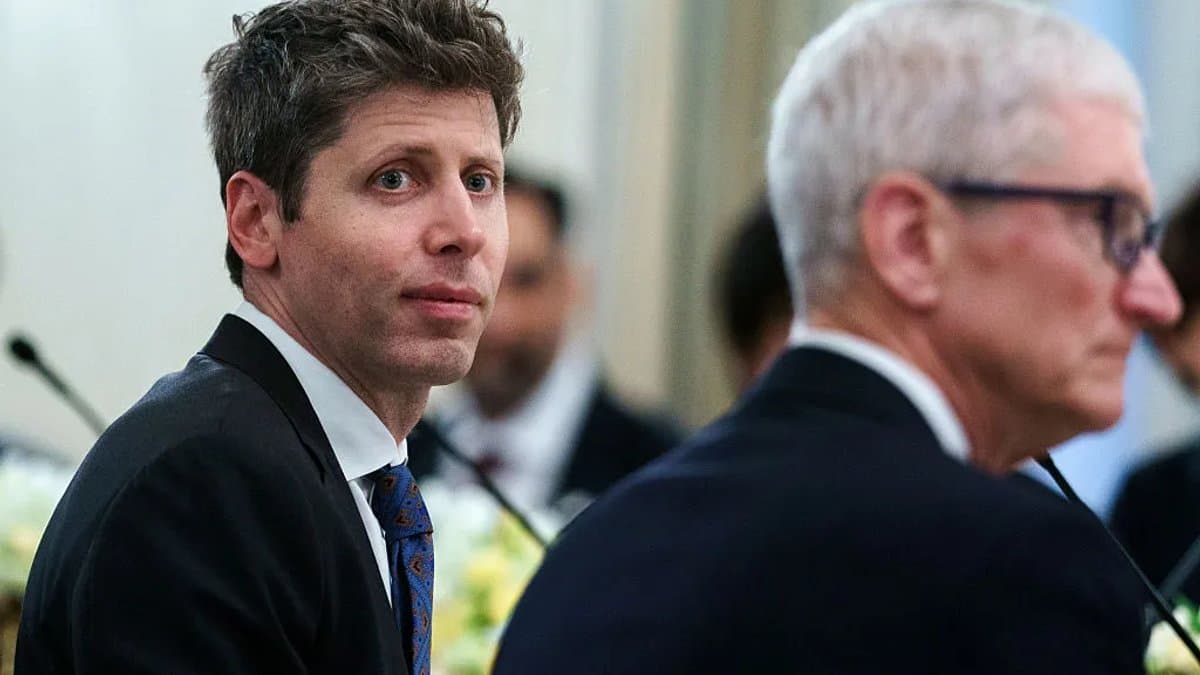
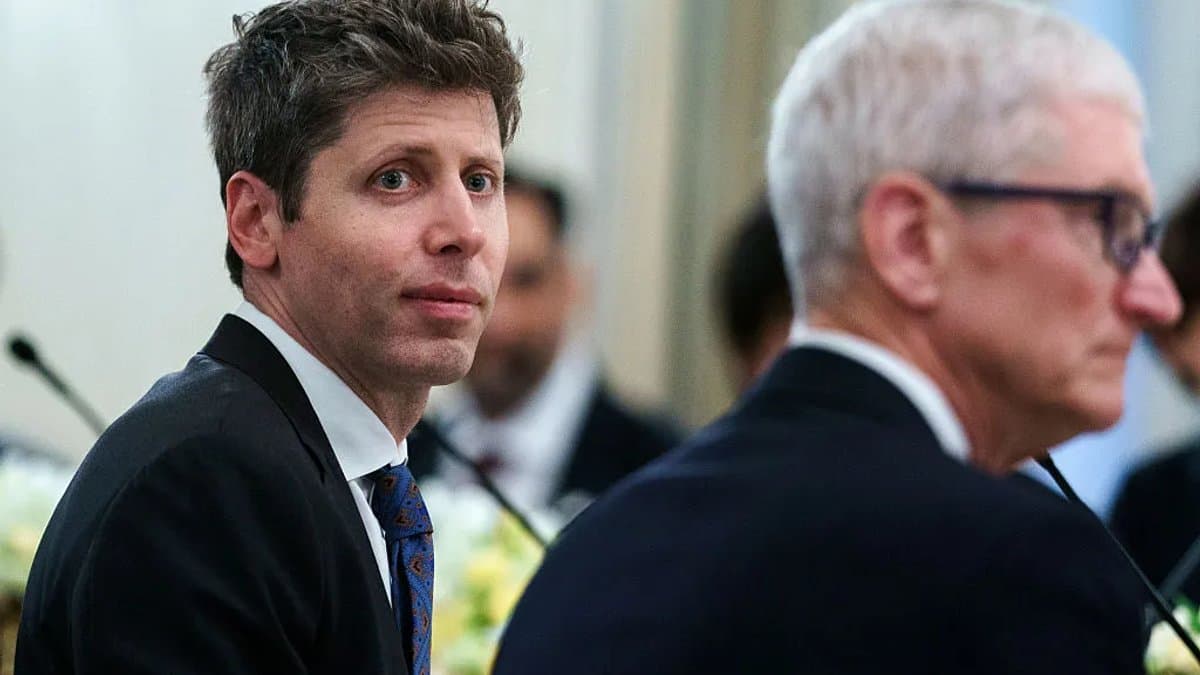
And in the background stand the two CEOs, Tim Cook and Sam Altman. The two men who took the stage together in 2024 to announce the Siri-OpenAI integration now stand at opposite ends of a lawsuit.
What Actually Happened — The 'Systematic Theft' The Complaint Alleges
Apple's claims break down into roughly three threads. First, the interview show-and-tell steering through Tang Tan. Second, Chang Liu's unreturned laptop and confidential document downloads. Third, tying those two together into the "at every level" frame — meaning not isolated misconduct, but systematic theft at the organizational level.
The most eye-catching thread is the interview show-and-tell. Normally, tech interviews ask a candidate "what have you built so far?" But if Apple's allegations hold, Tang Tan used that question as a channel to extract unreleased Apple parts. If he steered candidates coming from Apple or Apple suppliers to "bring the parts you worked on and show us," that isn't normal hiring vetting — it can be read as a systematic collection of a competitor's confidential information. And if Tang Tan himself was still an Apple VP at that time, this goes beyond conflict of interest into territory that could touch breach of fiduciary duty.
The Chang Liu thread looks more like a textbook trade-secret case. Unreturned company laptop, downloaded confidential documents — that's the kind of circumstantial evidence that shows up constantly in U.S. trade-secret litigation. Forensics on download logs, access records, and exfiltration traces can produce a fairly concrete picture. The fact that Apple singled out an eight-year engineer in the complaint likely signals it has already secured some internal logs. That said, whether the download allegation actually led to trade-secret use is something that has to be fought out at trial — too early to call.
Here's the skeleton of the complaint in one table.
| Item | Detail | Apple's framing |
|---|---|---|
| Filing date | July 10, 2026 | — |
| Court | U.S. District Court, Northern District of California | Silicon Valley venue, home turf for trade-secret suits |
| Defendants | OpenAI + two former employees | Targeting company and individuals at once |
| Key phrase | "at every level" | Systematic theft, not isolated misconduct |
| Tang Tan | Ex-Apple VP, now OpenAI hardware lead | Allegedly steered interview candidates to "show-and-tell" unreleased parts while employed |
| Chang Liu | 8-year former systems engineer | Allegedly kept company laptop + downloaded confidential docs after leaving |
| OpenAI's stance | Full denial | "No interest in other companies' trade secrets" |
OpenAI's rebuttal is short but clear. Saying "no interest" leads straight into a defense of "we win on our own technology." At trial, the key will be proving whether the "trade secrets" Apple points to were specific and non-public enough to be legally protectable, and whether they were actually used in OpenAI's products. In trade-secret suits, pinning down "what, exactly, and how it was used" is far harder than the claim that "they stole it."
Everyone's Stakes — Why Apple Drew Its Sword Now
For Apple, the payoff from this lawsuit is layered. On the surface it's about protecting trade secrets, but underneath sits a bigger picture: defending against talent drain. Apple's hardware people are the most coveted talent pool in Silicon Valley. If OpenAI is vacuuming up Apple alumni as it moves into hardware, Apple needs a powerful deterrent to stop it. A lawsuit can be the flare that sends a message to the entire industry: "take our people and we'll meet you in court."
The second stake is defending hardware competition. Apple is a company that leans nearly half its revenue on a single product, the iPhone. If OpenAI builds an "AI-native device" using Apple alumni and know-how to go after an iPhone replacement, that aims a dagger at Apple's heart. It's no accident Apple singled out unreleased iPhone and Apple Watch parts in the complaint. It's a warning: "don't reach for the future of our hardware."
For OpenAI, this suit is an annoying risk. OpenAI is in the early stages of its hardware push. If a "built from stolen Apple stuff" frame gets slapped on at this moment, that tag could follow every future hardware launch. That's why OpenAI instantly and flatly denied it. In terms of brand-image defense, it's a fight it can't back down from.
For Tang Tan and Chang Liu personally, this is tied directly to their careers. Trade-secret misappropriation can escalate from civil into criminal. Especially if the allegation of leaking non-public info while still employed is upheld, individual liability — plus a devastating blow to future industry activity — is on the table. For both men, rebutting Apple's claims is a matter of survival.
Meanwhile, the hidden stakeholder in this fight is all of Silicon Valley. California is a state that voids non-compete clauses by law. Employees are free to move to competitors. So companies have leaned on the one weapon left to block talent drain: trade-secret litigation. This Apple-OpenAI case will be a proving ground for how that weapon gets wielded in the AI era.
Precedents — A Defense That Won, And Suits That Fizzled
The most famous success story in trade-secret litigation is Waymo v. Uber. In 2017, Google's self-driving unit Waymo sued, alleging its engineer Anthony Levandowski downloaded thousands of LiDAR technical documents before jumping to Uber. That suit ended in 2018 with Uber handing Waymo roughly $245 million in equity, and Levandowski was criminally charged and convicted. The clear physical evidence of document downloads decided the outcome. That Chang Liu's "unreturned laptop and document downloads" thread structurally resembles the Waymo case is telling.
On the flip side, plenty of suits lost steam because they couldn't specify the trade secret. The biggest hurdle in these cases is concretely identifying "what the trade secret actually is" in court. If the plaintiff waves vaguely at "they stole our know-how," courts won't take it. Many trade-secret suits founder early or fizzle into settlement because they fail the "reasonable particularity" requirement for identifying the secret. However strong Apple's language is, if it can't prove at trial "which design element of that part is a non-public trade secret and how OpenAI used it," the suit can deflate.
Apple itself has lived both sides of this. In the past, Apple filed multiple suits when its chip-design talent left for startups or rivals. When Silicon Valley chip architects departed Apple to found companies or join others, Apple pressed with claims of confidential leaks. Those suits mostly resolved through settlements or talent returning. Apple has been less "a company that takes suits all the way" and more "a company that uses suits to pressure hard and force a negotiating table."
So this OpenAI case has two branching scenarios. One: like Waymo-Uber, the physical evidence (Chang Liu's download logs) is strong enough that OpenAI settles to close it. The other: Apple fails to specify the trade secret, or OpenAI proves "it wasn't used in our products," and the suit deflates. Too early to call which way it goes right now. But Apple suing the company (OpenAI) and two individuals at once reads as a classic "two-track" strategy — using the individuals' physical evidence to pressure the company.
Rivals' Counter-Play — The Calculations Of Everyone Watching
The most fascinated observers of this suit are probably hardware-and-AI double-threats like Google and Samsung. Google owns both the Pixel phone and Gemini, and it's a leading contender in the AI-native device race. While Apple and OpenAI tear at each other, Google can highlight the advantage of integrating hardware and AI inside its own fence. It can quietly float the message: "we don't depend on partnerships that leave us betrayed."
Meta is running the numbers too. Meta has invested aggressively in wearable hardware, combining Ray-Ban smart glasses with AI. From Meta's seat, a delayed OpenAI hardware push is welcome news. If the suit rattles OpenAI's hardware roadmap or chills its hiring, Meta can slip into the gap. Then again, Meta has hired plenty of Apple alumni itself, so it can't purely cheer for "talent-drain suits becoming the industry standard."
The most delicate position belongs to Microsoft. Microsoft is OpenAI's biggest investor and partner. If OpenAI gets tangled in litigation, Microsoft's math gets complicated too. That said, OpenAI's hardware ambitions don't directly overlap with software- and cloud-centric Microsoft, so Microsoft is likely to step back and watch. OpenAI floundering in hardware isn't bad for Microsoft either.
Meanwhile, this suit ripples into the startup ecosystem. California's free job-hopping culture has been the engine of Silicon Valley innovation, but if big companies start aggressively using trade-secret suits as a talent-drain weapon, engineers may hesitate to move. Especially if a resource-rich company like Apple sets the precedent that "leave and you get sued," you get a chilling effect that shrinks the freedom of talent mobility. AI startups will price in bigger risk when recruiting from big companies.
Finally, you can't leave out Jony Ive. In 2025, OpenAI fired the starting gun on its hardware push by acquiring Jony Ive's hardware startup io Products for $6.4 billion. Jony Ive is the icon of Apple design, the legend who co-created the iPhone. With him standing on OpenAI's side, Apple's decision to sue means this fight goes beyond simple parts theft — it carries the character of a symbolic war over "who inherits Apple's DNA."
So What Actually Changes
If you're a developer or engineer, it's a signal that there's more to be careful about when you switch jobs. Especially if you plan to move from a big company's hardware or AI division to a competitor, manage device returns and document handling more cleanly than ever. Given that Chang Liu's "unreturned laptop" got nailed right into the complaint, one trivial exfiltration trace can become physical evidence. "It was standard practice" won't fly in court.
If you're an investor, factor in that legal uncertainty has been added as a variable to OpenAI's hardware roadmap. A drawn-out suit or a large settlement could affect the pace and cost of OpenAI's hardware push. That said, it's hard to argue this one suit shakes OpenAI's valuation, and you could even read Apple's defensive posture as evidence of how fierce the hardware competition is. Too early to translate this into an investment call.
If you're an enterprise IT or legal lead, this is good teaching material. Apple's "two-track" strategy of suing the company and individuals at once, and the way it flagged information-gathering conduct like interview show-and-tells, can serve directly as a checklist for reviewing your own trade-secret protection policy. Offboarding processes for departing employees, device recovery, access-log management — this case re-confirms these three are the core that decides a suit's outcome.
If you're a regular user, nothing changes right now in how you use your iPhone or ChatGPT. But the future of the Siri-OpenAI integration announced so ambitiously in 2024 has gone cloudy. With partners turned courtroom enemies, the odds have risen that Apple swaps a different AI into Siri instead of OpenAI, or switches to its own model. The backend of the AI assistant on your iPhone could quietly change.
🥄 Three Things You're Probably Wondering
— So what does this mean for me? Not much directly. How you use your iPhone or ChatGPT stays the same for a while. But which AI powers the Siri on your phone could quietly shift depending on how this fight ends. The two former partners have split.
— Why did this blow up now, of all times? OpenAI's 2025 acquisition of Jony Ive's io Products for $6.4 billion, pivoting into hardware, was the trigger. Until then OpenAI was Apple's partner, but the moment it stepped into hardware it became Apple's direct competitor. The timing of Apple raising unreleased parts and talent drain is no accident.
— Can Apple win? Too early to call. Chang Liu's laptop and document-download thread could be strong physical evidence like the Waymo-Uber case. But the real gate in a trade-secret suit is specifying "what the secret is and how the other side used it." OpenAI is denying everything, and fights like this end in settlement far more often than in a verdict.
References
- TechCrunch — Apple sues OpenAI over alleged trade secret theft
- CNBC — Apple OpenAI lawsuit trade secrets
- Axios — Apple sues OpenAI over trade secret theft
- Apple Newsroom — official announcements
- OpenAI Blog — official statements
Figures are as of announcement and may change.