A $1.5 Billion Coming-Out Party — "The Problem Isn't the Model Anymore, It's Execution"
On July 15, 2026, a genuinely odd company officially entered the world. Its name is Ode with Anthropic. It was created by Anthropic — the maker of Claude — and yet Anthropic didn't use the launch to announce a new model or brag about benchmark scores. Instead, the only thing this company is selling is a promise: "We'll embed our engineers directly inside your company and make AI actually turn into money."
Here's the deal: there's real money on the line. This is a $1.5 billion joint venture. And it's not Anthropic going it alone. Private-equity giants Blackstone and Hellman & Friedman are co-founders, and the investor consortium also includes Goldman Sachs, General Atlantic, Leonard Green & Partners, Apollo Global Management, GIC, and Sequoia Capital. A frontier AI lab and Wall Street's biggest buyout shops sat down at the same table and declared: "The next trillion-dollar business is right here."
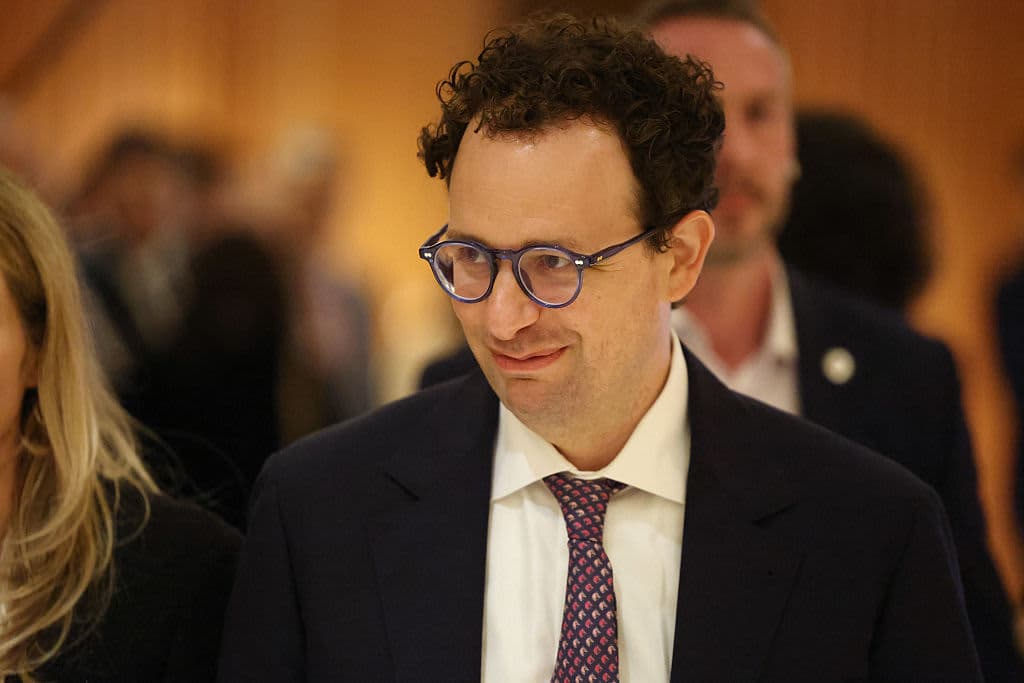
And here's the twist that makes it interesting. The premise of this bet is not "our model (Claude) is the best in the world." It's almost the opposite. Ode's chief technologist, Eddie Siegel, put it bluntly: "I think model selection matters, but it's not where the majority of calories are spent." In other words, model performance has already leveled off enough that the real money divides at a different point — how well you implement that model inside actual enterprise workflows. That's the backbone of this entire story.
Meet the Players — An AI Lab, Two Buyout Giants, and One Startup
Start with Anthropic. It builds Claude and, alongside OpenAI, is one of the two poles of the frontier AI world. The unspoken assumption of frontier labs used to be: "If we build the safest, smartest model, enterprises will just adopt it." Reality was harsher. Companies grabbed API keys, had no idea what to wire them into, ran a pilot, and watched it fizzle. For Anthropic, Ode is a strategic move forward — don't stop at selling the model, take responsibility for making that model actually run inside the customer.
The second player is Blackstone, one of the world's largest alternative-asset managers with well over a trillion dollars in assets. Blackstone owns hundreds of portfolio companies. Its investment in an AI implementation firm isn't a passive financial bet — it's a practical calculation to plant AI inside its own portfolio and drive up enterprise value. Private equity's core job is to raise a company's value over five years and sell it; AI implementation could be a fresh lever for exactly that value creation.
Third is Hellman & Friedman, another large buyout firm with a long history in software, healthcare, and financial-services companies. Like Blackstone, it brings a live testbed: its portfolio companies. The fact that both PE firms are co-founders means Ode launches with a potential-client list already in hand. Customers that a consulting firm would normally take years of sales to crack are being handed over directly by shareholders.
The actual body of Ode is a startup called Fractional AI, an applied-AI engineering boutique the joint venture acquired in May. Here's a juicy detail: right up until it was acquired, Fractional AI had been working under an 11-month partnership with OpenAI. It cut that cord and defected to the Anthropic camp. Fractional's co-founders carried their titles over — Chris Taylor became Ode's CEO and Eddie Siegel its CTO.
Ode's staffing is worth a look too. It currently employs about 100 engineers and describes them as "elite generalists." The company's proudest boast is that more than half the team are former founders. These aren't narrow domain specialists — they're versatile builders who can be dropped into an unfamiliar industry, define the problem, and construct a system. That trait ties directly into the "forward-deployed engineer" model we'll get to below.
What They're Actually Selling — and How
Ode's business model in one sentence: "We partner directly with a customer's CEO, deploy our engineers inside that company, and re-architect its core business processes around AI." The key concept here is the Forward Deployed Engineer (FDE). Instead of licensing software and saying "figure it out yourself," you attach a handful of engineers to the customer's site, build systems in their real environment, and hand it over so the customer can run it independently when you leave. It's the model Palantir has used for years, retooled for the AI era.
Ode runs on a "Claude-first" principle — it defaults to the Claude models its parent makes, but reaches for rival models when needed. That's consistent with Siegel's philosophy that model choice matters but isn't where the calories go. What customers ultimately want is a solved problem, not a specific brand of model. Target industries span financial services, healthcare, retail, manufacturing, and software.
CEO Chris Taylor's ambition is unapologetic. In an exclusive interview with TechCrunch he said, "It's pretty easy to imagine this as a trillion-dollar company someday if we execute well." In the same breath, he acknowledged the hard part: "The key challenge of the business is how do you go through that phase of hyper growth without losing the emphasis on quality?" He named the chronic disease of the consulting-and-implementation business himself — scale people too fast and quality collapses.
Anthropic's Garvan Doyle framed the company's reason for existing this way: "As organizations scale from experimentation to implementation, they need partners with deep expertise and operational understanding." In short, Ode is a product aimed squarely at the frustration of companies that have run plenty of AI pilots but seen zero impact on the bottom line.
| Item | Detail |
|---|---|
| Official launch | July 15, 2026 (JV itself formed in May) |
| Investment size | $1.5 billion |
| Co-founders | Anthropic, Blackstone, Hellman & Friedman |
| Investor consortium | Goldman Sachs, General Atlantic, Leonard Green & Partners, Apollo Global Management, GIC, Sequoia Capital |
| Foundation | Fractional AI (acquired May 2026, ex-OpenAI 11-month partner) |
| Leadership | CEO Chris Taylor · CTO Eddie Siegel (both Fractional co-founders) |
| Headcount | ~100 engineers, over half former founders |
| Model strategy | Claude-first, uses rival models when needed |
| Target industries | Finance, healthcare, retail, manufacturing, software |
What Each Side Gets Out of It
Start with Anthropic's payoff. Frontier labs spend astronomical sums training models, and to recoup that they need enterprises to use Claude — for real, at scale. The problem is that handing over an API guarantees nothing; companies fail to adopt on their own. Ode is the mechanism that fills that last mile. On top of that, through Ode, Anthropic gets priceless feedback data on how Claude is actually used in the field and where it breaks — an asset that flows straight back into model improvement. And instead of housing a giant consulting org in-house, spinning it off as a separate entity funded by PE capital spreads the financial burden.
Blackstone and Hellman & Friedman's payoff is the value creation mentioned earlier. They hold hundreds of portfolio companies; plant AI in them to improve margins or create new revenue, and that flows straight into higher enterprise value and bigger exit gains. So Ode is both a "dedicated AI-adoption squad" for their portfolios and a double bet — if Ode itself grows, their equity stake appreciates too. They're solving other people's problems with other people's money while growing their own assets.
The payoff for financial investors like Goldman Sachs and Sequoia is simpler. They're taking an early equity position on the thesis that AI implementation is the next trillion-dollar pie. Given that Sequoia is one of Silicon Valley's premier venture firms, the mere fact that a VC, buyout shops, and an investment bank all piled in together shows a capital-markets consensus forming around the "implementation market."
The customer's payoff is clear. For companies that want to use AI but have no in-house talent to design it, Ode essentially rents out a finished team — and one wired directly into the applied-AI team at Anthropic, the maker of Claude. And because the project ends with the customer able to stand on its own, the company insists it isn't the forever-dependency trap that traditional consulting can become. Whether that holds in practice depends on what's actually in the contract.
Precedents — The Wins and the Failures
The template here isn't new. Palantir is the marquee success. It pioneered the FDE model — send engineers into the client to build entire data systems — and used that "sticky implementation" to break into government and enterprise markets, creating high lock-in where a customer, once landed, rarely leaves. That Palantir-style moat is exactly what Ode is chasing. Software gets copied; an implementation deeply embedded in a customer's operations is much harder to replicate.
But there's a flashing warning light too, and it's the history of traditional consulting and systems integration. Accenture, Deloitte, IBM Global Services made money on large IT-adoption projects, yet kept slamming into the ceiling of "revenue built on headcount." Scale people too fast and quality drops, projects slip, budgets blow out — over and over. When CEO Taylor says the real challenge is protecting quality through hyper-growth, that's a signal he's aware of precisely this trap.
There's also a sobering data point: the MIT NANDA initiative's "GenAI Divide: State of AI in Business 2025" report. Based on 150 leader interviews, a survey of 350 employees, and analysis of 300 public deployments, it concluded that 95% of enterprise generative-AI pilots delivered no measurable impact on P&L. The cause wasn't the technology — it was the organization. MIT called it the "learning gap": companies' inability to integrate AI into their workflows, structures, and culture, the human side of the equation. But there's a wrinkle here that favors Ode: the report found that purchased solutions delivered more reliable results than tools built in-house. The data itself underwrites the reason an external implementation partner like Ode should exist.
To sum up: this bet is stretched between two extremes — succeed and it's a Palantir-grade moat, fail and it's the old SI headcount business. And what decides the fork is exactly the "quality" Taylor named.
Competitors' Counter-Play — Everyone Is Sprinting to the Same Place
Here's the big picture. Ode isn't running alone; it's just one combatant in the "implementation war" that erupted across the first half of 2026. Almost every AI giant poured billions in the very same direction within months of each other.
OpenAI launched The OpenAI Deployment Company on May 11, 2026. Structured as a majority-owned subsidiary, it raised more than $4 billion from 19 investors (including TPG, Bain Capital, and Goldman Sachs) and acquired applied-AI consultancy Tomoro to bring roughly 150 FDEs on board from day one. It's a mirror image of the Anthropic camp's strategy — same structure, same timing, right down to Goldman Sachs investing in both. Fractional AI cutting its 11-month OpenAI partnership to defect to Anthropic is itself one scene in this competitive talent war.
Microsoft announced on July 2 that it would spend $2.5 billion on a "Frontier"-style organization and embed roughly 6,000 engineers and specialists directly inside client companies. (Some crawl summaries cite $6 billion, but per tier-1 outlets like CNBC and The New Stack, $2.5 billion and 6,000 people are the more reliable figures; there's some uncertainty here, so I'm flagging it honestly.) With Azure and Copilot as its own distribution rails, Microsoft is the most threatening on sheer scale.
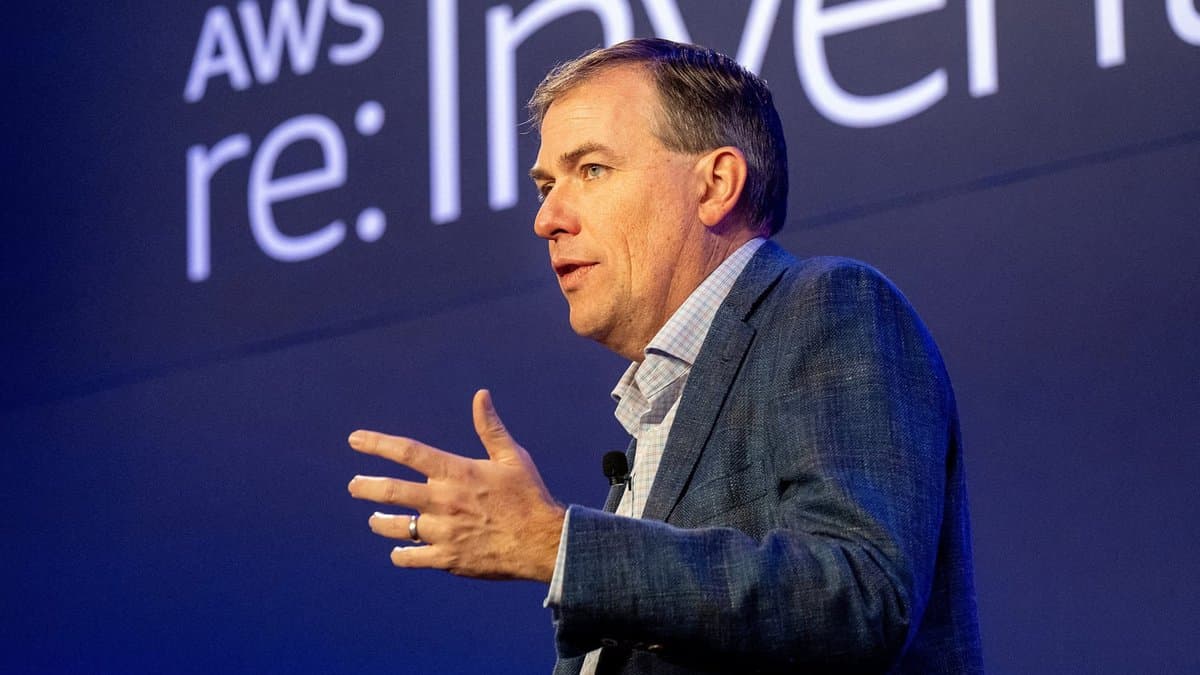
AWS stood up a "Forward Deployed Engineering" organization on June 30 with $1 billion. Led by Francessca Vasquez, AWS's VP of Frontier AI Engineering and Services, it dispatches "pods" of five or six engineers — combining software engineers with AI agents — into the customer's environment to build systems, make the customer self-sufficient, and then withdraw. It's nearly the identical FDE model to Ode's.
The traditional heavyweights are counterattacking too. Deloitte built its own FDE practice, and Accenture formed an FDE partnership with Microsoft. So Ode has to fight on two fronts at once: (1) the frontier/cloud camp of OpenAI, Microsoft, and AWS, and (2) traditional consultancies like Deloitte and Accenture. Ode's differentiation pitch — direct wiring into Anthropic's applied team, an elite-generalist roster of former founders, and Claude-first-but-model-neutral flexibility — is real, but the cold truth is that rivals are pitching almost exactly the same things.
So What Actually Changes
For developers — the "Forward Deployed Engineer" has firmly become 2026's hottest role. OpenAI, Anthropic, Google, AWS, and Microsoft are all hunting this talent, and Ode boasts a team where more than half are former founders. The signal: the premium is shifting away from deep expertise in one language or framework toward the "generalist plus business sense" who can be dropped into an unfamiliar industry, define the problem, and stand up a system. Understanding a customer's operations and moving them into a production system now pays more than crafting clever prompts.
For investors — in just the first half of 2026, roughly $9 billion-plus flowed into the single theme of "AI implementation": OpenAI ($4B+), Microsoft ($2.5B), AWS ($1B), Ode ($1.5B). The fact that Sequoia, Goldman Sachs, TPG, Bain, and Blackstone all jumped in means capital markets are betting the next big profit pool is not "training models" but "deploying and implementing them." That said, whether this becomes a Palantir-style high-margin moat or an old-SI low-margin headcount grind is unsettled. Watch the margin structure and the re-engagement (renewal) rates.
For enterprises (adoption leads) — your options for "how do we adopt AI?" just widened. It used to be consulting firms (the Deloittes) or in-house builds; now the maker of the model will attach a deployment team directly. As the MIT data shows, in-house builds fail at high rates, so leaning on an external implementation partner may be statistically the safer play. Just scrutinize, at the contract stage, how you'll avoid vendor lock-in (being tied to one model or one team) and whether you can truly stand alone after the engagement ends.
For everyday users — nothing you'll feel today. But the larger arc is this: AI is passing an inflection point from "neat chatbot" to "infrastructure actually embedded in enterprise work." The back ends of the company you work for, the bank you use, the hospital, the online store — over the next few years, more of them will be re-architected through implementation firms like these. The surface UI may look the same while the machinery underneath quietly changes.
🥄 Three Things You're Probably Wondering
— So what does this mean for me? Not much directly, today. But if you're a developer or work inside a company, read it as a signal: over the next few years, implanting AI into real work is likely to pay more than building the AI itself.
— Will this actually become a trillion-dollar company? The CEO says it's "easy if we execute well" — but that's what CEOs say. SI history is littered with firms that scaled headcount and watched quality collapse. Whether Ode ends up like Palantir or like old-school consulting won't be clear until margins and renewal rates show up. Too early to call.
— Why is everyone suddenly building the same thing? The MIT report exposing that 95% of pilots had no P&L impact was the trigger. The data made clear the models are good enough but companies can't use them — and everyone did the same math at once: solve the "can't use it" problem and a trillion-dollar market opens up.
Sources
- TechCrunch: Anthropic, Blackstone bet the next trillion-dollar AI business is implementation, not just models
- Businesswire: Anthropic, Blackstone, and Hellman & Friedman Introduce Ode with Anthropic
- OpenAI: OpenAI launches the OpenAI Deployment Company
- CNBC: AWS puts $1 billion into new AI unit to embed engineers with customers
- Fortune: MIT report — 95% of generative AI pilots at companies are failing
- The New Stack: Microsoft, AWS and Anthropic are spending billions — and not on better models
Numbers and criteria are as of announcement and may change. Investment calls are yours to make!