Zero FDA-Approved Drugs in the Field, Yet a $3.8B Valuation — AI Drug Design Just Started Making Real Money
Here's the deal: plenty of companies use AI to find drugs. Chai Discovery says it designs them. That subtle distinction is exactly what has Silicon Valley and Big Pharma buzzing at the same time. On July 13-14, 2026, Chai Discovery announced a $400 million Series C round that valued the company at a staggering $3.8 billion. Consider that just seven months earlier, in December 2025, its Series B pegged it at $1.3 billion. That's roughly a 3x jump in half a year.
What's even more striking is the pace. This is the company's third major round in under a year: a $70 million Series A (August 2025), a $130 million Series B (December 2025), and now this $400 million Series C. Add the $30 million seed from September 2024 and total funding blows past $600 million (around $630 million). For a startup barely two years old, sucking in capital at this speed is not something you see every day, even in venture land.
But there's an asterisk you absolutely have to attach. Roughly $20 billion has poured into generative-AI drug discovery so far, and the number of "AI-designed drugs" approved by the FDA is still exactly zero. So that $3.8 billion isn't a price tag on proven results — it's a price tag on expected results. And yet investors piled in anyway, for one big reason: the world's largest drugmakers — Lilly, Pfizer, Novartis — are already running Chai's models in production. Let's unpack the story.
The Players: A Company Born in OpenAI's Offices, and the People Who Funded It
Start with Chai Discovery itself. Founded in March 2024, it's an AI molecular-design company. At its core, it builds AI models that predict how proteins and molecules interact — and, going a step further, reprogram those interactions on demand. Traditional drug hunting screens tens of thousands of candidate compounds one by one in a lab. Chai aims to draw, from scratch (de novo), an antibody that latches precisely onto a chosen target, entirely inside a computer. That's where "designing a drug" rather than "finding a drug" comes from.
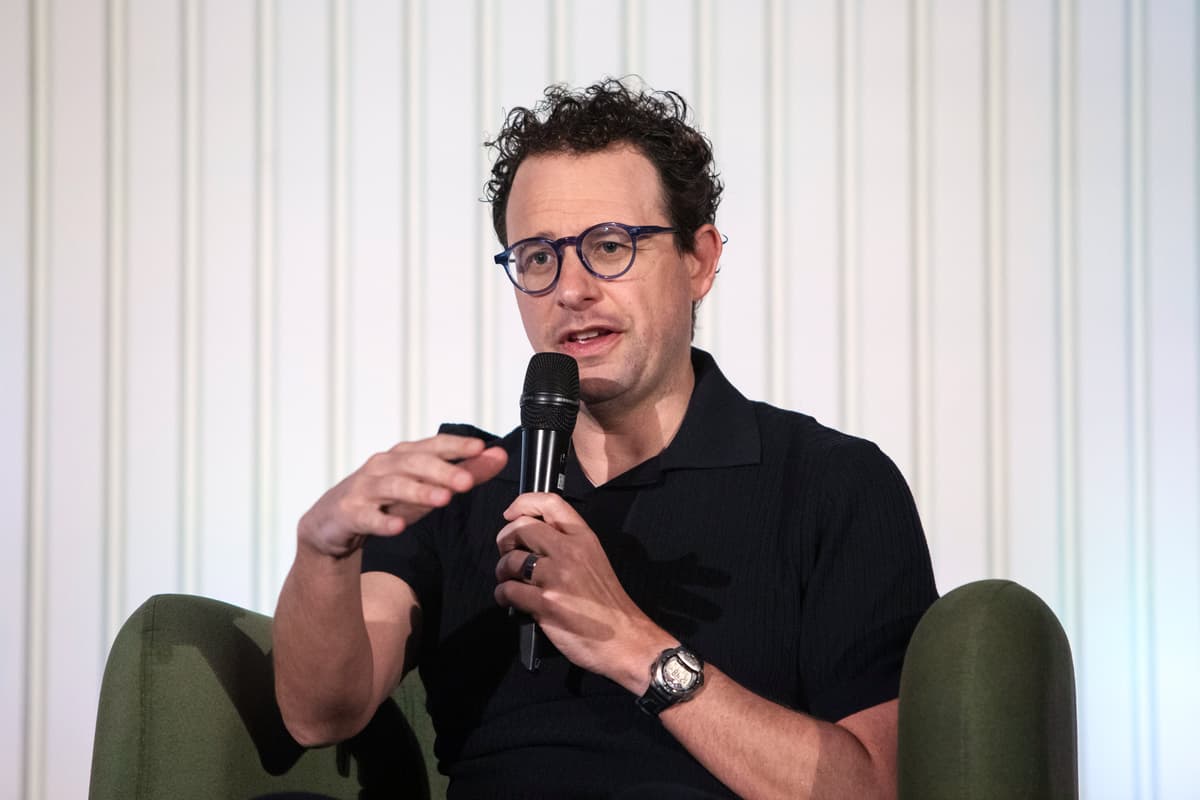
The founding story itself is a good one. The company's seed literally began in conversations between the founders and OpenAI CEO Sam Altman. CEO Joshua Meier was an early member of OpenAI, working on GPT-1 and GPT-2 back in 2018. He then co-led development of ESM1 — the first transformer-based protein language model — at Meta's FAIR lab. After that, he ran the AI division at bio-AI company Absci, where he pioneered early de novo antibody design research that contributed to drugs now in the clinic. In short, he's one of a handful of people who deeply understand both language models and proteins.
The co-founding bench is deep too. President Jack Dent is a longtime friend Meier met on the first day of computer science classes at Harvard; he built resilient, large-scale machine-learning systems at Stripe. CTO Matt McPartlon and Jacques Boutreau round out the team. The fun twist: Altman made the first move. After Meier left OpenAI, Altman messaged his old college friend Dent to ask whether Meier might be up for building a proteomics startup together. That's how the company was effectively conceived in and around OpenAI's offices.
This round was led by Index Ventures, with Kleiner Perkins, Sequoia Capital and Dimension writing large checks alongside. New investors included Bain Capital Ventures, Battery Ventures, Baillie Gifford, BDT & MSD, Sapphire Ventures and Avra Capital. Existing backers — Thrive Capital, Oak HC/FT, Menlo Ventures, General Catalyst, Glade Brook, Avenir, Lachy Groom and Yosemite — opened their wallets again.
And one name on that list jumps out: OpenAI. OpenAI has been a strategic shareholder in Chai since the seed round, and it joined this one too. A company that builds AI models investing in a company that uses AI to design drugs — that structure captures the capital flow of the current AI boom about as neatly as anything. The round was reportedly "heavily oversubscribed," meaning there was a line of investors who wanted in and couldn't get an allocation.
What Actually Happened: What "Chai-3" Really Changed
Chai's weapon is a series of AI models that keep getting better. Its first model, Chai-1, launched in September 2024 as a biomolecular structure-prediction foundation model on par with Google DeepMind's AlphaFold3. Releasing it free for non-commercial use put Chai on the map overnight. In 2025, Chai-2 followed, moving the company into de novo antibody design — building antibodies from scratch rather than just predicting existing structures.
The real headliner of this announcement is the newly unveiled Chai-3. According to the company and multiple outlets, Chai-3 roughly doubles success rates on molecular-interaction targets versus the prior generation, Chai-2, and hits antibody design "hit rates" — the share of candidates that actually bind the intended target — in the 35-40% range. The point isn't just predicting a structure; it's generating antibodies that bind their targets substantially more tightly. Stronger binding affinity means better odds of efficacy and developability.
CEO Joshua Meier's own words compress the ambition: "Tomorrow's medicines should be designed with the precision, speed and scale of modern engineering, and this support helps us move faster towards that future. AI drug discovery has moved from promise to deployment, and Chai's models are already unlocking progress for our partners." Translation: what Chai sells isn't "potential" — it's "a tool Big Pharma is already using."
The commercial record backs that narrative up. With Eli Lilly, Chai struck a research collaboration in January 2026 that included building a bespoke AI model trained on Lilly's proprietary data. With Pfizer, it signed a licensing agreement in June 2026 granting early access to Chai-3 plus a custom Pfizer-specific model. It also has a formal collaboration with Novartis. Having three of the world's largest drugmakers on the roster side by side is a rare feat even among AI-drug startups.
Here are the numbers at a glance:
| Item | Figure | Note |
|---|---|---|
| Series C size | $400M | Announced Jul 13-14, 2026; oversubscribed |
| Post-money valuation | $3.8B | ~3x in seven months |
| Prior valuation (Series B) | $1.3B | Dec 2025, $130M raised |
| Total raised | $600M+ (~$630M) | Seed + A + B + C combined |
| Round lead | Index Ventures | With KP, Sequoia, Dimension |
| Big Pharma partners | Lilly, Pfizer, Novartis | Lilly Jan, Pfizer Jun deals |
| Chai-3 antibody hit rate | 35-40% | ~2x success vs Chai-2 |
| Founded | March 2024 | Achieved in ~2 years |
The two most important rows in that table are "3x in seven months" and "Big Pharma partners." The valuation jumped because of investor enthusiasm, but the thing justifying that enthusiasm is actual revenue contracts with Lilly, Pfizer and Novartis — and that's precisely what separates this round from pure froth.
What Each Side Gets Out of It
Chai Discovery gets the obvious things: time and firepower. That $400 million is fuel to buy more GPU clusters, train bigger models, expand pharma contracts, and push its own drug pipeline. AI drug development burns enormous amounts of money on both compute and experimental data, and this round buys at least several years of runway. It also comes with the premium signal of being oversubscribed.
The investors — especially Index Ventures and OpenAI — secured equity at the hottest intersection there is: "AI × bio." For OpenAI it's particularly symbolic. It gets to hold a stake as its own language-model technology extends into proteins and molecules and delivers real industrial results. If Chai eventually produces an approved drug or becomes a large M&A target, the returns for early- and mid-stage backers could be explosive.
Big Pharma (Lilly, Pfizer, Novartis) wins big too. These companies spend years and billions to discover a single drug; if AI can compress the early candidate-design stage, they cut both time and cost. Crucially, getting a custom model trained on their own proprietary data creates a "data moat" that rivals can't easily replicate. Instead of just paying Chai, they're buying something far more valuable — speed in drug discovery.
Back to OpenAI for a moment, because it matters. The company is now pushing a narrative beyond pure chatbots: "AI that accelerates science." Its investment in Chai is physical evidence of that story. AI that goes beyond writing code and text to actually designing molecules aimed at human disease — that's a powerful card OpenAI can play when justifying its own eye-watering valuation.
Precedents — Successes and Failures
The AI-drug boom isn't new, and there are hard lessons on the failure side first. The first generation of AI drug-discovery startups in the late 2010s drew enormous hype, but most hit a wall in the clinic. Exscientia and BenevolentAI, once market darlings, saw core pipelines fail or underdeliver in trials; their stocks collapsed and both ended up in restructurings and mergers. The painful lesson: even when AI picks great candidates, whether those candidates prove safe and effective in human trials is an entirely separate problem.
That's exactly the risk hanging over Chai too. The 35-40% hit rate it touts is a success rate for binding a target in the lab, not a success rate for curing disease in a human body. That cold statistic — $20 billion invested, zero FDA approvals — captures the gap precisely. There's also data suggesting AI-originated drug candidates haven't yet clearly beaten traditional methods on Phase II success rates (both hover around 40%).
On the other hand, there are real signals supporting the success case. The number of AI-originated drug programs jumped from roughly 24 in 2023 to more than 173 by 2026, and 15-20 of those are expected to enter meaningful trials this year. The pipeline itself is thickening explosively. And critically, unlike the first generation, Chai runs a platform strategy — selling tools to Big Pharma — alongside any in-house drug ambitions. That shares clinical-failure risk with partners while locking in actual contract revenue from Lilly and Pfizer, a far more stable model.
To sum it up: Chai is routing around the exact spot where first-generation AI-drug companies fell over (the high failure rate of running your own clinical trials) by leaning on a platform and partnerships, while wielding the dramatically better model performance the field has enjoyed since AlphaFold. But the gap between "an antibody that binds well" and "a drug that actually cures" remains — and until that gap closes, $3.8 billion is an expectation, not a receipt.
How Rivals Counter
The strongest competitor is Isomorphic Labs, spun out of Google DeepMind and carrying the Nobel-winning AlphaFold lineage. It has also signed major partnerships with Lilly and Novartis, and it's backed by deep capital plus DeepMind's talent and compute. If Chai competes on "startup speed," Isomorphic answers with "Google's resources and the AlphaFold brand." They're colliding head-on over the same Big Pharma customers.
The second axis is Xaira Therapeutics, which launched in 2024 with more than $1 billion and aims at both AI drug design and its own drug development. It started with far larger initial capital than Chai and absorbed technology from academic stars (protein-design luminaries like David Baker). Add EvolutionaryScale (maker of ESM3), Generate Biomedicines, Cradle and Nabla Bio — all protein- and antibody-design specialists — and the ring is crowded.
Their counter-play splits into two lanes. One is a model-performance arms race: outdoing each other on benchmarks like antibody hit rate, binding affinity and target difficulty. When Chai brags about doubling success rates with Chai-3, rivals aim their next-gen models at beating that number. Ultimately this race converges on one question — who first produces a drug that actually works in the clinic — because benchmark numbers eventually have to be validated by real outcomes.
The other lane is a land-grab for partnerships. There are only a handful of global Big Pharma players, and a contract to build a custom model on a drugmaker's proprietary data effectively forms an exclusive relationship. Chai's lock on Lilly, Pfizer and Novartis is a big advantage, but Isomorphic and Xaira are building their own camps, so the fight over the remaining giants will be fierce. This market is likely heading toward a structure where only a few — "great model and Big Pharma locked in" — survive. Chai is using this $400 million to plant itself firmly in that lead group.
So What Actually Changes
For developers and AI researchers — Chai is the clearest example yet of language-model techniques extending into proteins and molecules. The same transformer machinery that handled text is moving to amino-acid sequences and molecular structures, opening entirely new application areas. Some models (like Chai-1) are released for non-commercial use, so if you care about the bio-AI intersection, the company's technical reports and open models are worth a look. Career-wise, read this as a signal that demand for "AI × life science" talent is spiking.
For investors — this is where to be careful. That $3.8 billion does sit on real substance (Lilly, Pfizer contracts), but it's still an expectation in a field with zero FDA-approved drugs. The round is private, so retail investors can't buy in directly anyway. Treat this deal as a barometer for the "AI bio" theme's temperature — and when you look at related public companies (pharma, AI healthcare) or funds, rigorously separate marketing numbers like benchmark hit rates from whether anything has actually entered the clinic.
For enterprises (pharma and biotech) — putting AI design into your drug-discovery workflow is shifting from "experiment" to "competitive necessity." The fact that Lilly, Pfizer and Novartis moved signals that laggard drugmakers will soon go hunting for similar partners. How you turn your proprietary data into an AI training asset, and which platform you partner with, could decide your R&D competitiveness for years.
For everyday users and patients — the pills you take won't change tomorrow. An AI-designed drug still needs Phase III trials and approval, which take years. But the direction is clear: over the coming years, expect more drugs aimed at previously "undruggable" targets and faster-developed antibody therapeutics. Read this news as a milestone that the trend has moved beyond the lab into Big Pharma's actual pipelines.
🥄 Three Things You're Probably Wondering
— So what does this mean for me? Almost nothing right now. This is a private funding round you can't buy into, and AI-designed drugs are years away from the pharmacy. But it signals we've reached the stage where AI genuinely designs drugs that Big Pharma pays to use — so if you follow bio and healthcare, it's a milestone worth remembering.
— So has this company actually succeeded? Too early to say. The Lilly, Pfizer and Novartis deals are real wins, but there are still zero FDA-approved drugs built on this company's tech. In fact the entire AI-drug field has spent $20 billion with no approvals yet. It's more accurate to see $3.8 billion as a price on "results that are expected," not "results that are proven."
— Why is OpenAI investing in a drug company? Because Chai's roots are in OpenAI. The CEO is an OpenAI alum, and Sam Altman nudged the founding into existence. Beyond that, OpenAI gets to hold equity in the narrative that "our AI tech extends into proteins and molecules and delivers real industrial results." AI × bio is the hottest intersection right now, and having a foot in it is strategically valuable.
Sources
- Businesswire — Chai Discovery Announces $400M Series C to Advance AI-Driven Molecular Design
- FierceBiotech — Chai brews up $400M series C to fuel AI molecule models used by Lilly, Novartis and Pfizer
- SiliconANGLE — Chai Discovery nabs $400M Series C as AI-designed antibodies reach Big Pharma
- TechCrunch — From OpenAI's offices to a deal with Eli Lilly: how Chai Discovery became one of the flashiest names in AI drug development
- HIT Consultant — Chai Discovery Raises $400 Million Series C to Scale AI Drug Discovery Platform
- General Catalyst — Our Investment in Chai Discovery
Numbers and criteria are as of announcement and may change. Investment calls are yours to make!