Three rivals who fight tooth and nail agreed on one thing: how to regulate AI
Here's the deal: Sam Altman of OpenAI, Dario Amodei of Anthropic, and Demis Hassabis of Google DeepMind are the three most cutthroat rivals building frontier AI on the planet right now. They poach each other's researchers, one-up each other on benchmarks, and fight over the same capital. And yet, over the past five weeks, all three sat down and put their views on "how should AI be regulated" into writing — and when Axios laid the essays side by side, the diagnoses and the prescriptions overlapped to an almost uncomfortable degree.
Why is that news? Because these are the exact people who used to say opposite things whenever regulation came up. One preached speed above all, another preached brakes first. But this time, for the first time, all three pointed in the same direction — on the record, in writing, with their names attached. The shared prescription has three pillars. One: frontier models should face independent external testing before they reach the public. Two: there should be a new standards-setting body that can certify compliance and restrict access to systems deemed too dangerous. Three: the United States — not a patchwork of states, not a rival national regime — should set the terms.
And the timing is the tell. This convergence landed in the exact stretch where Washington twice reached in and physically restricted access to frontier models. That's not a coincidence. CEOs who literally watched the government switch their own models off decided, all at once, that if that's going to happen, the rules had better be predictable. Today let's walk through why these three said the same thing at the same time, what's identical in their proposals, and where the seams still show — told through the people, not the press releases.
Meet the players — they used to be very different
Sam Altman (CEO, OpenAI). For years, Altman was the face of the "accelerate" camp: build AGI fast, make it broadly beneficial, and please don't strangle innovation with red tape. So it's striking that this time, writing in the Financial Times, he proposed an "IAEA for AI." The IAEA is the international body that governs nuclear material. Altman's version is a U.S.-led international forum that certifies countries, companies and safety standards, and uses access to frontier models and to the U.S. market as leverage to force compliance. Weaponizing market access is a very Altman move.
Dario Amodei (CEO, Anthropic). Amodei has been the standard-bearer of the "safety first" camp from the start — the guy who keeps warning that if AI goes wrong, the risk is civilization-scale. His preferred design is an "FAA for AI." The FAA is the Federal Aviation Administration, a body with real government power to ground aircraft. Amodei's vision gives a federal agency the authority to block a dangerous model's release outright, from Day 1. Of the three, he's asking for the hardest-edged form of regulation.
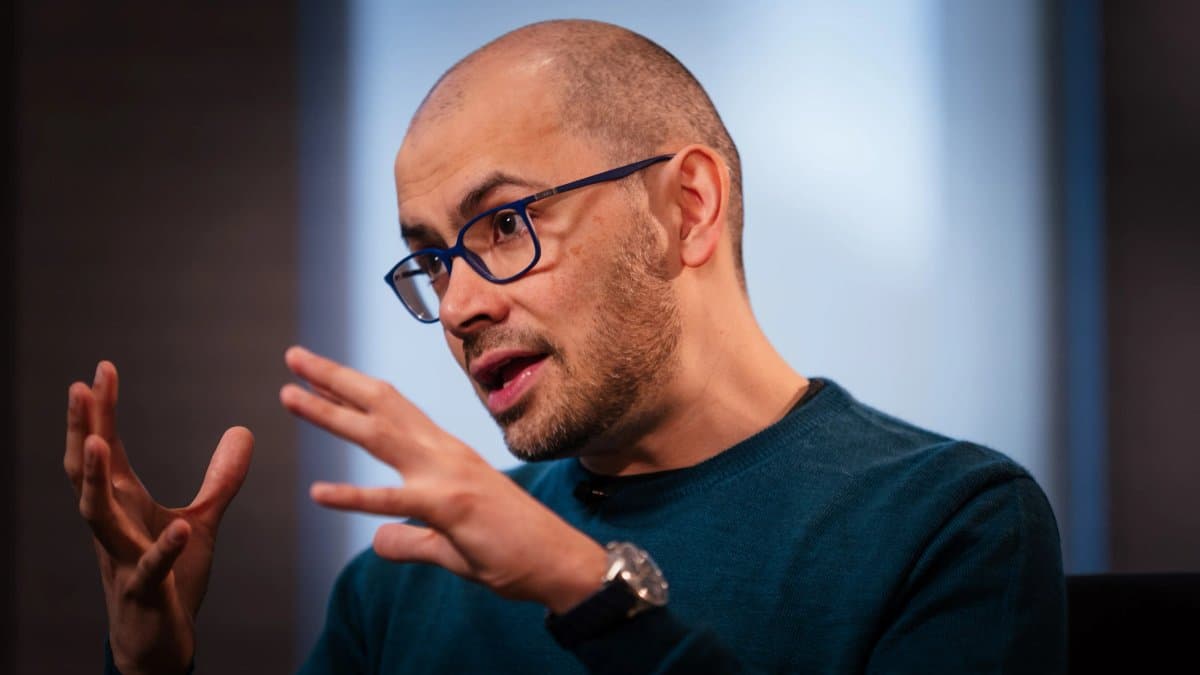
Demis Hassabis (CEO, Google DeepMind). True to his scientist roots, Hassabis published the most carefully engineered document of the three. On July 14 he released a personal manifesto titled "A Framework for Frontier AI and the Dawning of a New Age." His proposal is a "FINRA for AI." FINRA is the industry-funded self-regulator that polices Wall Street under SEC oversight. Hassabis's version starts with frontier labs voluntarily submitting models to a standards body up to 30 days before release, to probe dangerous cyber, biological and "deception" capabilities — and once that testing protocol proves robust, passing it becomes mandatory to deploy in the U.S. market.
Hold onto how different their starting points were. Accelerationist Altman, safety-hawk Amodei, scientist Hassabis. The fact that their destinations overlapped anyway is the real weight of this story. FAA, FINRA, IAEA — the borrowed institutions differ, but what they're trying to do (external testing + access control + U.S. leadership) traces the same triangle.
What's actually in the essays — the overlap and the fault lines
First, the three shared pillars. One: all three want independent external testing of frontier models before they reach the public. That's a break from the industry's long-standing "self-reporting" norm. The old posture was "we ran our own safety tests, trust us." The new one is "a third party has to look." Two: all three want a body that sets standards, certifies compliance, and can limit access to systems judged too dangerous — and all three reach for a legacy regulator (aviation, finance, nuclear) as the template, which tells you the intellectual roots are the same. Three: all three want the U.S. drawing up the rules — not a fragmented 50-state patchwork, not a rival country's regime, but a U.S.-led body with international reach.
Now the fault lines. The sharpest is the federal-versus-state question. OpenAI's Altman backs federal pre-emption — passing a federal law that overrides state laws. Altman has said it would be "very difficult to imagine us figuring out how to comply with 50 different sets of regulation," and OpenAI's March 2026 policy package to the White House explicitly included federal pre-emption. Anthropic reads differently: it has taken the stance of supporting state-level AI legislation in the absence of a federal law — the logic being that until Washington writes a real rulebook, states stepping in is better than nothing. Same picture, different political math underneath.
The second gap is about how hard and how fast. Amodei's FAA model wants government power to block a launch from Day 1. Hassabis's FINRA model starts soft — voluntary submission — and hardens to mandatory once trust is built. Altman's IAEA model is less a domestic regulator than an international certification-and-diplomacy framework, wielding access as both carrot and stick. Here's the comparison in one table.
| Dimension | Sam Altman (OpenAI) | Dario Amodei (Anthropic) | Demis Hassabis (Google DeepMind) |
|---|---|---|---|
| Analogy | IAEA (nuclear) model | FAA (aviation) model | FINRA (finance) model |
| Format / timing | Financial Times op-ed | Public remarks & writing (weeks) | Personal manifesto (Jul 14) |
| Character | U.S.-led international certifier | Direct federal enforcement agency | Industry-funded, federally overseen self-regulator |
| Teeth | Model & market access as leverage | Power to block release from Day 1 | Voluntary submission → mandatory after validation |
| State vs. federal | Backs federal pre-emption | Backs state laws in the gap | Emphasizes U.S.-led standards |
| Common ground | Pre-release external testing · access control for dangerous systems · U.S. leadership |
The table looks like three forks in the road, but the bottom row is the real headline. However different the methods, all three draw the same triangle: third-party testing + access control on dangerous models + America at the wheel.
What each of them gets out of it
The three CEOs didn't suddenly turn saintly. Each has a calculation. Start with the backdrop. Over the past few weeks Washington twice reached directly into frontier-model access. Around June 12, the U.S. government applied export controls to Anthropic's top models (reported as Claude Fable 5 and Mythos 5), requiring foreign-national restrictions; unable to verify nationality in real time, Anthropic suspended access for all users, with the controls only partly lifted on June 30. On June 26, OpenAI previewed GPT-5.6 (Sol, Terra, Luna) but, at the government's request, limited access to a small set of vetted partners via API and Codex only. Both episodes trace to the Trump administration's June 2 executive order, "Promoting Advanced AI Innovation and Security," which set up a review of "covered frontier" models before wide release.
That's where the incentive shows. Predictability. When the government flips models on and off on a whim, you can't plan a business. A codified rulebook with a clear testing gate at least gives you the prediction: "clear this checkpoint and I can ship." It's exactly why Fortune called the administration's Anthropic action "a licensing regime by another name" — for a company, institutionalized control beats ad-hoc, opaque control.
There's also a moat. An external testing-and-certification gate is a clearable bar for the best-funded labs, but a heavy barrier for startups and the open-source camp. Build regulation "for safety," and the only ones who can afford to comply are, conveniently, the incumbents. And insisting on U.S. leadership is its own edge: better to play inside rules your own government writes than to let China or the EU author them — a home-field advantage for American labs.
Finally, legitimacy. People who have spent years warning that AGI is coming can turn around and say "so let us build the guardrails," recasting themselves from reckless runaway trains into responsible adults. Hassabis putting "the Dawning of a New Age" right in his manifesto title is part of that narrative — acknowledge the danger, and claim the manager's chair over it.
Precedents — the wins and the failures
History says "industry asks for regulation" cuts both ways. On the win side is the very FINRA that Hassabis name-checks. Wall Street's self-regulator, funded by the industry and overseen by the SEC, has policed markets more nimbly than a direct government agency could. Aviation's FAA is similar: because it can ground an entire fleet after an accident, flying became the safest way to travel. That's what Amodei covets about the FAA — validated trust grows the industry itself.
Nuclear's IAEA is a mixed precedent. It curbed proliferation to a degree during the Cold War, but we've watched inspections get neutered whenever great-power interests were on the line. That's why there's real skepticism about how well Altman's "access as leverage" would actually work. At bottom it's a picture of America wielding frontier models like a weapon, which any excluded country will read not as "regulation" but as "hegemony." Indeed, when Amodei and Hassabis laid out these ideas before Trump and other leaders at the June 17 G7 in Evian, France, President Macron warned that unilateral U.S. federal action could cut even allied nations' firms off from advanced models.
The failure lessons are just as clear. In the social-media era, platforms promised to "self-regulate," and the regulation came late and loose while the harm came first. The suspicion that "rules written by the industry favor the industry" is therefore fair, and this three-way convergence draws exactly that critique: the parties asking for regulation are also its architects and its beneficiaries. Who sits on the testing body, who pays for it, who holds the pass/fail bar — in those details, a "safety measure" can quietly morph into a moat.
The competitive counter-play — who won't cheer this
Start with the open-source and small-lab camp. Meta's Llama line, Mistral, and the various open-weight players have every reason to fear pre-release testing gates. A "submit 30 days before launch" step is trivial for a big lab flush with capital and compliance staff, but crippling friction for open projects that ship light and grow through community. Their counter is to frame regulation as "the big labs cementing a moat," and to argue that openness and transparency are the real safety.
Next, the nation-state rivals. The EU already runs its own regime in the AI Act and has no reason to meekly accept a "U.S.-led international body." China will read Altman's access-as-leverage IAEA model as a device built to exclude it, and is likely to answer with rival standards. So Altman's international certification forum becomes a geopolitical brawl over "who holds the certification bar" from day one.
Domestic politics is another battleground. Against OpenAI's push for federal pre-emption, state governments and consumer-protection advocates object that it strips states of their authority. In fact, attempts at a federal AI moratorium on state laws keep stalling in Congress. Anthropic's slightly different "back state laws in the gap" stance exists precisely because it reads this crack. However unified the three CEOs look on the surface, the federal-versus-state seam is where things will split widest once Washington tries to turn talk into actual legislation.
Finally, the regulation skeptics and free-market wing. They argue "innovation first," that any form of pre-release testing erodes America's AI lead, and that the government flipping models on and off is itself the danger. That camp includes parts of the Trump administration — so the three CEOs' plea to "please regulate us" could actually meet resistance inside the White House. Ironic, isn't it: the companies want rules, and some of the government doesn't.
So what actually changes
If you're a developer — if you build on frontier models via API, treat "launch delays" and "access restrictions" as constants in your planning now. Just as OpenAI shipped GPT-5.6 to a handful first, there may be windows where a new model exists but you can't use it. Flip side: a model that clears testing carries a "government-vetted" safety label, which can become a selling point if you sell into regulated industries like healthcare, finance or defense.
If you're an investor — this convergence is an opening shot for the "regulatory moat." It's a reason capital concentrates further in top labs that can absorb testing and certification costs. That said, if regulatory risk resolves from "ban" into "gate," the uncertainty may actually shrink. Conversely, portfolios heavy on open-source and small labs should re-check their regulatory-friction exposure. Too early to call — legislative speed is the variable.
If you're an enterprise — for companies adopting AI, "government-vetted frontier model" could enter your procurement criteria. The more compliance-sensitive your sector, the more likely a "we only use validated models" policy emerges. At the same time, if a U.S.-led standard sets in, global businesses face the burden of simultaneously satisfying divergent U.S., EU and Chinese AI regimes.
If you're a general user — little changes day to day. But expect more headlines of the "a new AI model launched, but you can't use it yet" variety. And understand that the chatbot you use is drifting toward having an "externally validated model" safety layer behind it. Read charitably, that's more safety; read cynically, it's fewer companies controlling the board. Which weighs more is still worth watching.
🥄 Three Things You're Probably Wondering
— So what does this mean for me? Even if it feels remote, it means the government and a testing body are starting to influence when and how the AI services you use get updated. Newest features may arrive later, or get blocked in certain regions.
— If all three CEOs agree, does it just happen? No, that's a separate thing. What CEOs want and what Congress passes are very different stories. Federal pre-emption is still grinding through Washington, and state governments, the open-source camp, and foreign powers could all push back. The direction is set, but the destination is too early to call.
— Isn't this really just regulation designed to help the big labs? That suspicion is reasonable. A testing gate is a clearable bar for rich labs and a barrier for small ones. But the counter-logic also holds: rules beat the government flipping models on and off on a whim. Both can be true at once.
Sources
- Behind the Curtain: AI godfathers converge on regulations — Axios
- Exclusive: Google DeepMind's Demis Hassabis calls for U.S.-led global AI watchdog — Axios
- DeepMind CEO calls for an independent standards body to regulate frontier AI — TechCrunch
- CEOs of Anthropic and Google DeepMind call for U.S.-led AI coalition in meeting at G7 — CNBC
- The Trump administration's ban on Anthropic's AI models is a licensing regime by another name — Fortune
Numbers are as of announcement and may change.