For Eight Years He Only Sent a Letter. This Time He Shows Up in Person
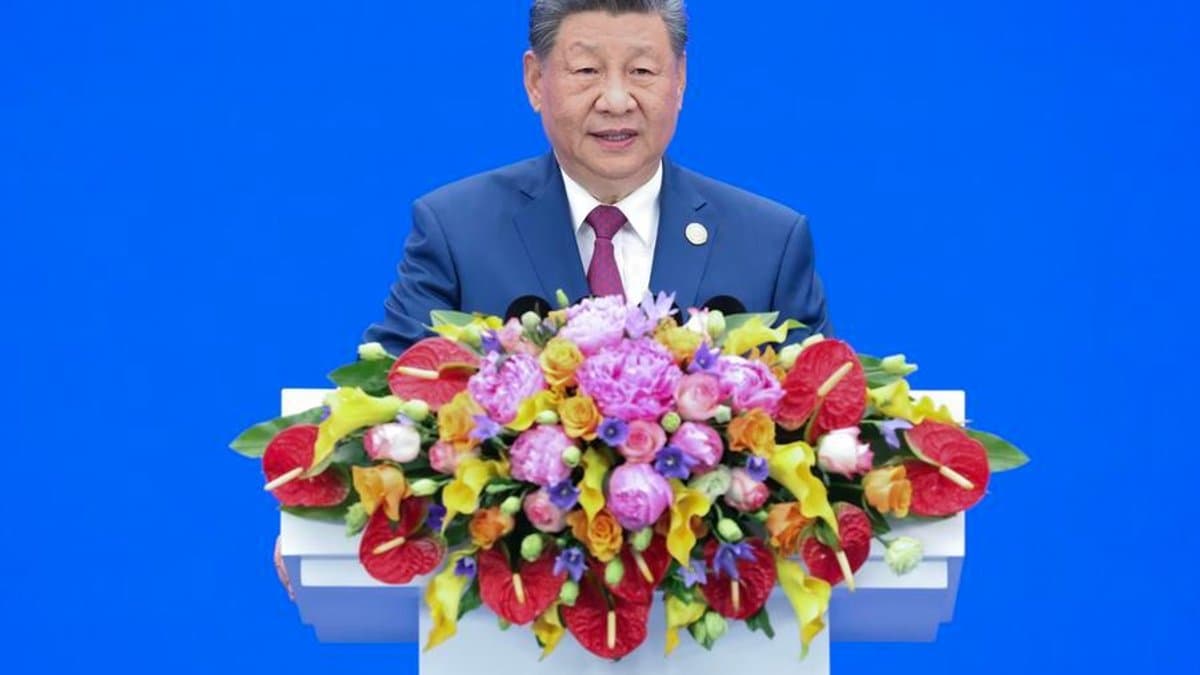
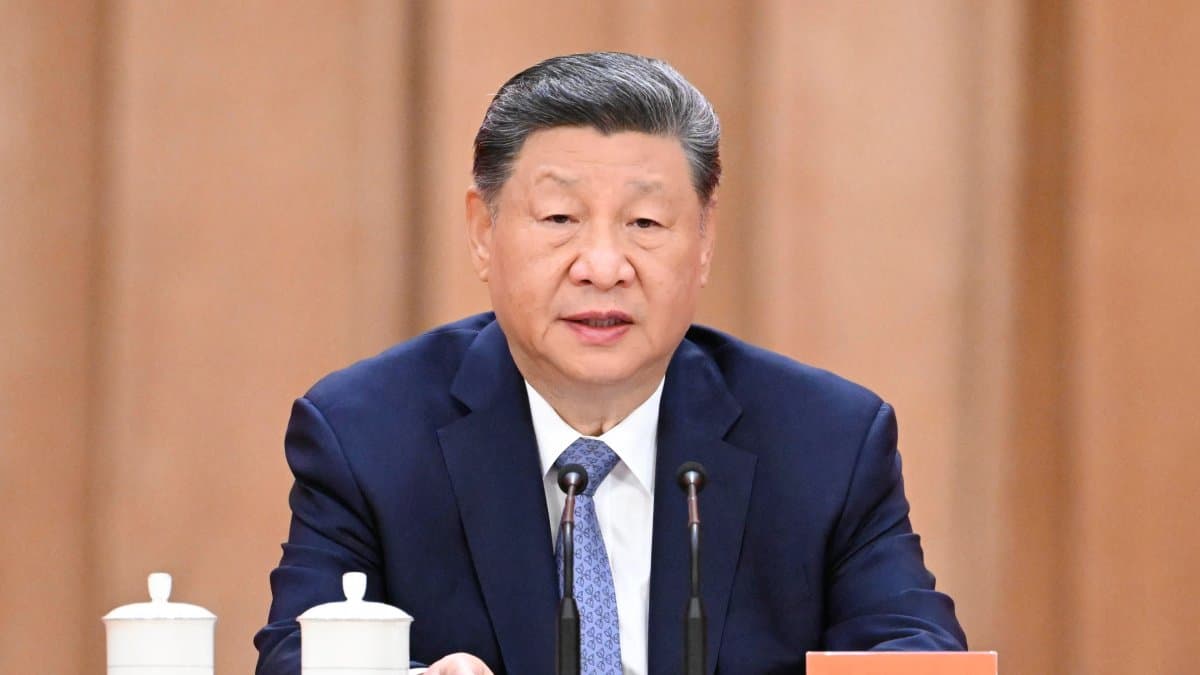
Here's the deal: the World AI Conference (WAIC) has been held in Shanghai every year since 2018, and in all that time China's top leader Xi Jinping has never once appeared at it in person. Some years he sent a congratulatory letter. In 2024 and 2025, Premier Li Qiang — the number-two figure — took the stage to declare the event open. That pattern just broke. On July 17, 2026, Xi is attending the opening ceremony himself and delivering the keynote for the first time.
Why is that a big deal? In Chinese politics, whether the paramount leader shows up "in the flesh" at an event is itself a signal about national priorities. A congratulatory letter says "I'm interested." Sending the premier says "this matters." But the leader appearing personally is close to a declaration: "this is a top-tier state agenda." China's Ministry of Foreign Affairs, in its July 13 announcement, previewed that Xi would "systematically elaborate on China's policies, position, visions and propositions on AI development and governance." That sentence is basically the whole point. China is publicly drawing a line — it intends to be a rule-maker in AI, not a rule-taker.
The timing is sharp, too. This conference lands right as US–China AI competition is heating up. China has started tightening overseas access to its best models, while Washington accuses Beijing of copying American ones. In the middle of all that, Xi is stepping onto the stage to unveil a blueprint for a Shanghai-headquartered "World AI Cooperation Organization" (WAICO) and an alternative governance model aimed at the Global South. That's the real spine of this story: against a US order built out of chips and export controls, China is countering with an order built out of membership.
Who's Involved — The Man on Stage, the City That Built It, the Rival in the Shadows
Xi Jinping and China's leadership. The protagonist. During a 2025 visit to Shanghai, Xi described AI as entering a phase of "explosive development" and urged the city to lead in both development and governance. China's 2026 government work report nailed down "building an intelligent economy" and expanding "AI+" initiatives as national priorities. Xi's first-ever personal appearance at an AI event sits at the end of that arc — so this isn't a spur-of-the-moment photo op, it's the apex of a strategy that's been building for years.
The World AI Conference (WAIC) and Shanghai. The stage itself. WAIC is an annual event that the Shanghai municipal government launched in 2018 together with central ministries. It has long served as a showcase for China's AI industry and a gathering point for foreign big tech (past editions drew figures like Elon Musk and Jensen Huang). The 2026 edition is the biggest yet. Running July 17–20 over four days, it features more than 140 forums, over 1,400 guests, more than 1,100 exhibitors, and more than 300 products making their global debuts. Twelve government ministries and eight national laboratories are taking part, along with nine Nobel and Turing laureates. Deep-learning pioneer Yoshua Bengio, reinforcement-learning researcher Richard Sutton, and economist Thomas J. Sargent are on the roster, and Turing laureate Andrew Chi-Chih Yao chairs a new "WAIC Academic" group running closed-door scholarly sessions.
The High-Level Meeting on Global AI Governance. The political-diplomatic track running alongside WAIC. This is the piece that elevates the conference from a tech expo into a stage for governance diplomacy. The Shanghai AI Laboratory has effectively acted as its secretariat, laying the groundwork — and what comes out of it feeds into WAICO, which I'll get to.
The United States as the rival. Not on the stage, but casting a shadow over every line. Over the past three years, the US has built an AI governance regime made of export controls and "restricted-entity lists." The Trump administration's "AI Action Plan" put national advantage front and center under an "America First" banner. Tellingly, NVIDIA CEO Jensen Huang announced he would skip this year's conference, citing scheduling conflicts, and observers expect many US tech executives to keep a low profile this time.
The Core — The Cards Xi Is Expected to Play
Xi's keynote is expected to lean on three main cards. First, defining the World AI Cooperation Organization (WAICO). WAICO is a multilateral-body concept that Premier Li Qiang first floated at the 2025 conference — the idea of an international AI governance organization with a permanent headquarters in Shanghai. It's loosely modeled on the security-focused Shanghai Cooperation Organization (SCO), but the difference is that it centers on technology rather than security. Analysts expect Xi to use this speech to give WAICO substance and definition.
Second, an "Action Plan on Cooperation in AI Development." This is a framework to widen access to computing power for developing nations and to share open-source ecosystems. It reads clearly as China's answer to the Trump administration's "AI Action Plan." Where the US talks about "national advantage," China talks about "inclusive access" — a deliberate symmetry. Third, a "China Wisdom for the World" case collection: a compilation of Chinese AI cooperation projects across more than 20 countries, positioning Chinese-style AI applications as templates for global adoption.
The exhibition floor has plenty to see, too. Huawei is publicly debuting its Atlas 950 SuperPoD, an AI supercomputing cluster that scales up to 8,192 Ascend processor cards. Huawei claims its performance surpasses NVIDIA's upcoming NVL series — a centerpiece of the "chip independence" narrative under US sanctions. ZTE's Nubia line is unveiling what it calls the world's first "AI Agent smartphone," running StepFun's Agent OS with ByteDance's Doubao assistant underneath. It's a symbol of the shift from an era of opening one app at a time to one where an agent autonomously handles multi-step tasks.
Let me be honest about one thing, though. This piece is written on opening day (July 17), and all three cards above are "expected" content based on Chinese state media and foreign-press previews. Actual wording in the speech could change, or announcements could slip. What's confirmed is the fact that Xi attends the opening ceremony and gives the keynote, plus the conference scale and schedule; the specific announcements inside it are still at the preview stage. Read it with that caveat in mind.
| Item | Detail |
|---|---|
| Event | 2026 World AI Conference (WAIC) + High-Level Meeting on Global AI Governance |
| Dates / Venue | July 17–20, 2026, Shanghai, China |
| Key event | Xi Jinping attends opening in person and delivers keynote (first appearance since 2018 launch) |
| Past pattern | 2018 congratulatory letter / 2024 & 2025 Premier Li Qiang attended |
| Scale | 140+ forums, 1,400+ guests, 1,100+ exhibitors, 300+ global debuts |
| Participants | 12 ministries, 8 national labs, 9 Nobel/Turing laureates |
| Expected initiatives | Defining WAICO / AI Development Cooperation Action Plan / "China Wisdom for the World" collection |
| Notable debuts | Huawei Atlas 950 SuperPoD / ZTE Nubia AI Agent phone |
| Geopolitical backdrop | Intensifying US–China AI race; US export controls vs. China's "membership" governance |
What Each Side Gets Out of It
China's government gets the status of rule-maker. Until now, the rulebook of AI discourse has largely been written in Washington — export controls, safety standards, even the definition of "frontier" models flowed from a Western-centric process. But when Xi personally takes the stage to launch WAICO and the action plan, China is presenting "its own board" to the world for the first time. And when that board is wrapped in the benevolent language of "sharing compute access with developing nations," China can even claim a moral high ground contrasted against the US "containment order."
Global South countries stand to gain something concrete. Advanced US AI is expensive and access-restricted. If China says, "we'll open our open-weight models and compute resources at low cost, and give you a seat at the decision-making table," that's a genuinely attractive offer. It's essentially selling "membership" to nations that have had little voice in AI rule-making. As The Next Web's analysis put it, the contrast is stark: "The United States has spent three years building a governance regime made of export controls and restricted-entity lists. China is proposing one made of membership."
Shanghai collects a city brand. If WAICO's headquarters lands in Shanghai and the Shanghai AI Laboratory runs its secretariat, the city can claim the title of "capital of Asian AI governance." That translates into real assets — talent, capital, and corporate relocation. It's also a classic way Beijing elevates a specific city as the face of a national strategy.
Chinese firms like Huawei and ZTE get the world-first debut stage. Huawei's Atlas 950 in particular is a chance to prove, in front of global media, that "we can build supercomputing without NVIDIA." The performance claims aren't independently verified, but even the symbolic effect of demonstrating "chip independence" under US sanctions is a valuable stage for Huawei. Conversely, NVIDIA — absent this year — once again reveals its delicate position in the Chinese market.
Precedents — Successes and Failures
The nearest reference points are the various US-led AI governance initiatives. The Bletchley Park AI Safety Summit that Britain hosted in 2023, the follow-on summits in Seoul and Paris, and the US-led "AI Safety Institute network" all put "safety" front and center and had some success building Western-centric norms. But they drew persistent criticism for limited Global South participation — and that's precisely the gap China is driving into with WAICO. China's positioning is essentially: "We'll take care of the countries you left out."
A worthwhile success case is China's own track record of "founding institutions" as diplomacy in other domains. Like the Asian Infrastructure Investment Bank (AIIB), the Belt and Road Initiative (BRI), and the SCO, China has repeatedly built "parallel institutions" alongside the existing Western-led order to expand its influence. WAICO is the AI version of that lineage. The reason that playbook worked was that it came with real inducements — physical infrastructure or funding. WAICO follows the same success formula by showing up with tangible inducements of its own: compute resources and open models.
On the failure side, international politics is full of bodies where "the declaration was grand but the substance never followed." Member states gathered, but with no binding rules and no real funding, the body withered into irrelevance — that's a common story. There's a big gap between Xi sketching a beautiful blueprint on stage and WAICO actually becoming a functioning multilateral body. AI governance in particular is a field where national interests in data sovereignty, censorship, and security collide sharply, so the more the "China-led" coloring deepens, the harder it may be to draw in major players like the West and India.
There's another failure lesson worth remembering: the contradiction between control and openness. On one hand China says it will share open models with the Global South; on the other, it's discussing tightening overseas access to its own best models. If those two directions clash, it risks giving the impression that "they don't actually hand over the good stuff, they just make a show of it." Given how many countries' tech diplomacy has lost trust over exactly this contradiction, how China balances it is a core variable for WAICO's success.
Competitors' Counter-Play
The United States will counter with the "values alliance" card. If China scatters tangible inducements across the Global South to recruit members, the US will respond with the normative language of democracy, transparency, and safety, plus its allied networks (the G7, the AI Safety Institute network, and so on). The US weakness, though, is "access." Having locked away advanced chips and top models behind export controls, it's a hard sell to tell developing nations "come do this with us." So the US is likely to move toward strengthening selective openness for allies and core partners.
NVIDIA and the US semiconductor camp occupy a delicate spot. Jensen Huang skipped this conference, but China remains a massive market for NVIDIA. On a stage where Huawei's Atlas 950 shouts "you don't need NVIDIA," the company has to keep walking a tightrope — defending its China market while complying with US restrictions. Whether Huawei's performance claims turn out to be hype or substance will tip that balance.
"Middle ground" countries like Europe and India will hedge. They won't fully board either the US normative alliance or China's membership body; they'll try to extract practical gains from both. India especially has pushed an independent line emphasizing its own AI sovereignty, refusing subordination to either side. Even if WAICO dangles attractive terms, India won't easily sign onto anything tagged "China-led."
Big tech (OpenAI, Google, Anthropic, Meta) responds through markets rather than politics. What matters to them isn't the flag on a governance body but which ecosystem attracts more developers and nations. If WAICO helps Chinese open models become the Global South standard, US big tech could lose share in those regions. So separately from the governments' norm fight, they're likely to double down on low-cost pricing, localization, and openness to hold onto emerging-market developer communities.
So What Actually Changes
For developers, nothing in your code changes today. But in the big picture, you're witnessing an inflection point where the AI ecosystem splits into two camps. If WAICO takes on substance, you'll increasingly face choices about which standards, toolchains, and compute infrastructure to build on — the Chinese open-model camp or the US/Western one. Rather than binding your system deeply to one camp, keeping a swappable abstraction layer gets wiser by the day.
For investors, this is an event to read for the direction of geopolitical risk more than for individual stocks. Chinese AI infrastructure, open-model, and compute-related firms may get a tailwind of state support; US firms on export-control lists may face stronger headwinds of market-access restrictions. But WAICO's concrete execution and funding are still at the preview stage, so it's too early to bet on this as a settled catalyst. Treat it as directional only. (Numbers and announced content are as of the announcement and may change.)
For enterprises, one more variable — "camp risk" — has been added to AI procurement and governance strategy. Companies operating in the Global South are more likely to run into Chinese-style AI standards and regulatory frameworks going forward, while companies centered on US and European markets will follow the Western norm track. The more a company targets both markets, the more complexity it faces in complying with two different governance regimes at once.
For everyday users, there's almost nothing to feel right now — your app screens stay the same. But this news is a symbol of an era shift: AI has become a geopolitical agenda that a head of state personally manages. Going forward, which AI services work in which countries, and which models become standard in which regions, may split along political lines. The paramount leader stepping onstage effectively formalizes an era where AI is treated as a strategic asset like semiconductors or energy.
Go one step deeper and this is the prologue to the biggest rule fight of the 21st century — who holds the reins of AI governance. If the 20th-century order was built through bodies like the UN, IMF, and World Bank, the order of the AI era is being forged right now, on this Shanghai stage and in the counter-moves from Washington, Brussels, and New Delhi. Xi taking the stage himself after eight years signals that China is willing to stake top-tier political capital on that rule fight. And how those rules get written will quietly determine what AI you get to use, and on what terms, years from now.
🥄 Three Things You're Probably Wondering
— So what does this mean for me? Almost nothing directly, right now. Unless you work in policy, investing, or global business, nothing changes tomorrow. But it's worth knowing as context: the choices and prices of the AI services you use — and which country's rulebook they sit under — may gradually split along this kind of top-level governance competition.
— Will WAICO really become an alternative to the US? Too early to say. China bringing tangible inducements like open models and compute access is a real strength, but multilateral bodies have a big gap between "declaration" and "functioning." It hinges on how much major players like the West and India will join something tagged "China-led," and on whether China actually opens up its good models or just makes a show of it. Right now it's a blueprint.
— Is Xi showing up in person really that big a deal? In the grammar of Chinese politics, yes. For a leader to appear personally for the first time at an event handled for eight years by letters and premier stand-ins is the strongest possible signal that "this is now a top-tier state agenda." Whether or not every previewed announcement materializes, the fact that Xi took the stage is already the message.
Sources
- South China Morning Post — Xi Jinping to attend World AI Conference for first time as China elevates tech push
- Bloomberg — Xi to Debut at China's Flagship AI Summit as US Rivalry Heats Up
- The Next Web — Xi Jinping will give the keynote at China's flagship AI summit for the first time
- gov.cn — Xi to attend opening ceremony of 2026 World AI Conference, deliver keynote speech
- Ministry of Foreign Affairs of China — Xi Jinping to Attend and Address the Opening Ceremony of the 2026 World AI Conference
- CGTN — Xi Jinping to address opening ceremony of 2026 World AI Conference and High-Level Meeting on Global AI Governance
Numbers are as of announcement and may change.