An image generation company bought a horoscope app
Here's the deal: on July 23, 2026, Midjourney posted a short note on its updates page titled "Midjourney's First Acquisition." First in the company's history. And the target wasn't what anyone guessed — not an AI startup, not a rendering engine, not a 3D tools shop. It was Co-Star, an astrology app.
The deal actually closed in spring 2026 and is only being disclosed now. Terms weren't announced.
The initial reaction was mostly "why?" Engadget's headline carried the sarcasm openly — "which users will surely be thrilled about" — and pushback did materialize among Co-Star's user base. Plenty of them were not delighted to learn an AI image company now owns the app on their home screen.
Read the announcement to the end, though, and it reframes. Midjourney founder David Holz described the acquisition as "the slow blossoming of a very unusual research lab," and previewed roughly half a dozen similarly ambitious projects over the next six months. One already underway is Midjourney Medical. This isn't the purchase of an astrology app. It's a company changing shape.
The two companies at the table
Midjourney is an oddity in AI. It arrived in early 2022 as an image generation service and briefly defined the category. But several things separate it from its peers.
First, it took no venture money. While most AI companies raised billions and burned it on compute, Midjourney ran on subscriptions. No investors to answer to — and no external pressure to grow, which means it has to manufacture its own.
Second, it never had a real app. Using Midjourney meant joining a Discord server and typing commands into a channel. A web interface came later, but four years in it remained a consumer AI service with no standalone mobile app. That's its single biggest weakness.
Third, the competition changed entirely. Once OpenAI and Google folded image generation into their flagship products as a default feature, the category "dedicated image generation service" started to wobble. As Gizmodo put it, Midjourney was an early contender that has lagged larger competitors.
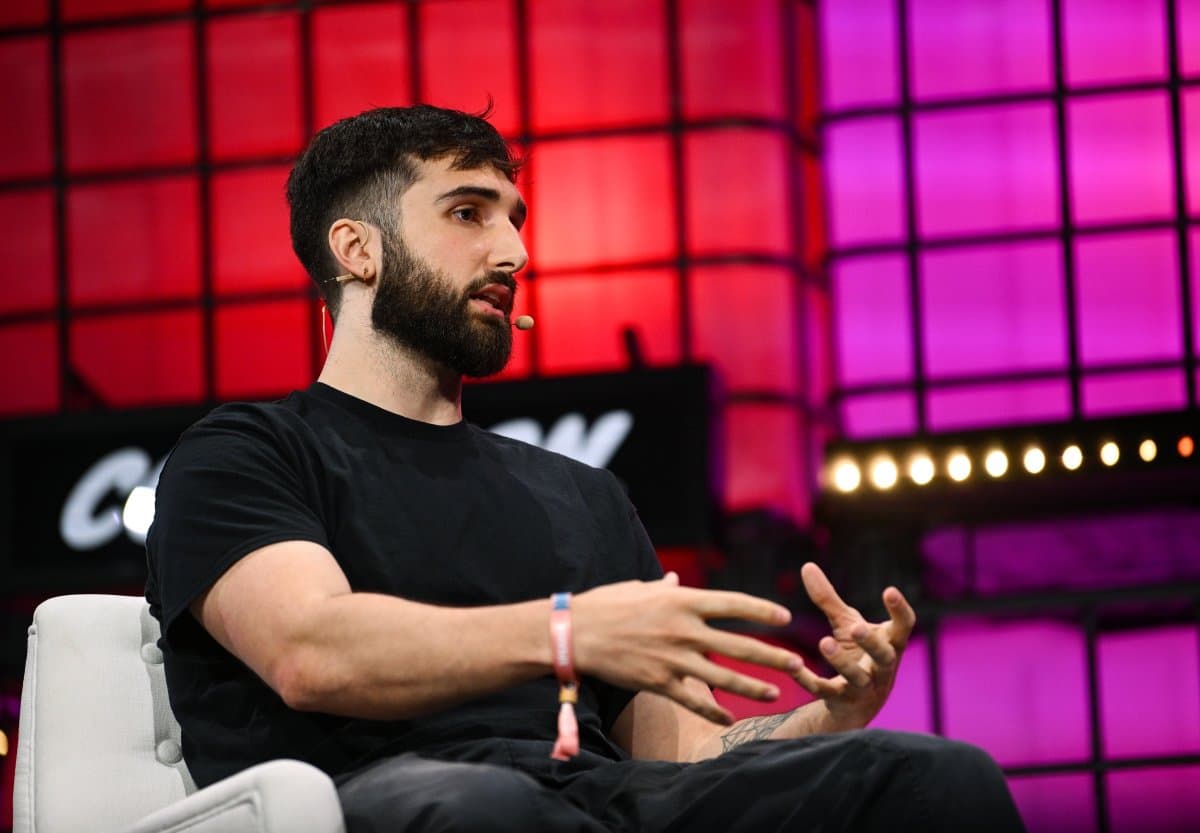
Co-Star has precisely what Midjourney lacks. Built by founder Banu Guler, the app takes your birth date and time and sends you daily guidance and lines of text. What made it famous is the voice — bluntly, sometimes brutally direct instead of soothing, a personality that became a meme in itself.
The scale is real: 4.3 million monthly active users. By Guler's own account, 35% of young people in the US have passed through it, across tens of millions of downloads. The genuine asset here isn't astrology. It's knowing how to design a habit that makes someone open an app every morning.
What was announced
| Item | Detail |
|---|---|
| Announced | July 23, 2026 (Midjourney updates page) |
| Deal closed | Spring 2026 |
| Terms | Undisclosed |
| Target | Co-Star (astrology app) |
| Co-Star MAU | ~4.3 million |
| Banu Guler's new role | Chief Design Officer, Midjourney |
| Co-Star operations | Remains under Guler's control |
| Previewed | ~6 ambitious projects within 6 months; Midjourney Medical underway |
| First standalone app | Astrology-based image generator |
Two sentences from Holz's post carry the weight. One is his read on Guler: "I respect her insights immensely and am excited to have an opportunity to have her and her amazing team join Midjourney to help build a broader organization around Product and Design." The other is a commitment about Co-Star's fate — it will not be absorbed or shut down, but will remain entirely under Guler's control and direction, backed by "radically expanded resources and teams."
Holz and Guler first met about five years ago, during a period when he was thinking about how people make decisions and reflect on themselves across time.
Guler's side of it: "We're at a crazy moment in history," adding that she and Holz share "the belief that computers can be tools that reveal our humanity."
And the product plan. Midjourney will build an astrology-focused image generator — which becomes the company's first standalone app outside Discord. A threshold it couldn't cross for four years, crossed by acquisition.
What each side gets
Midjourney gets three things, and the order reveals the strategy.
First, a consumer app organization. What Midjourney lacked was never the model — it was a team that has built and operated an app. Onboarding design, push notification timing, retention experiments, app store optimization: entirely different muscles from training image models. Co-Star's team has done this in production for years.
Second, an exit from Discord. Practically, this is the biggest gain. Being trapped inside Discord adds enormous friction to new user acquisition; a service that isn't in the app store barely exists for most people. Building the first standalone app by importing an experienced team wholesale rather than staffing up is a decision to buy time.
Third, a daily habit. Image generation is a tool you reach for when you need it. An astrology app is something you open every morning. Holz's remark about how people make decisions and reflect across time points here: he wants image generation to occupy a slot that gets opened daily.
Co-Star gets resources. Consumer apps have nowhere to go when growth flattens. Add ads and users leave; add subscriptions and conversion disappoints; build features and you need headcount. With Midjourney's image capability and cash behind it, the product can plausibly extend into "a personalized image generated for you every day." For Guler, selling while retaining control is not a bad set of terms.
But there's a visible risk, and Engadget flagged it: Co-Star's user base and Gen Z sentiment toward AI are on a collision course. An April 2026 Gallup survey put Gen Z excitement about AI at 22% and anger at 31%. Co-Star is among the most widely used apps among young Americans. Being acquired by an AI image generation company is itself a churn factor. Holz going out of his way to state that Co-Star stays under Guler's control reads like anticipation of exactly that backlash.
How acquisitions like this have gone before
Tech companies buying user habits and a design organization rather than technology has real precedent.
The canonical success is Facebook buying Instagram. In 2012 Facebook already had photo features. What it lacked wasn't technology — it was mobile-native instinct and the team that had it. Keeping Instagram as a separate brand while feeding it resources was the decisive choice. Midjourney leaving Co-Star under Guler's control is structurally the same move.
The counter-examples are plentiful. Large companies acquiring beloved apps and then losing the users while reorganizing around the parent's strategy is a well-worn path. The pattern is consistent: "nothing will change" at announcement, integration one to two years later. That's exactly what Co-Star users are suspecting right now, and statistically their suspicion is well founded.
The broader creator-tools trend is also worth noting. AI image and video companies have been buying apps and teams to secure consumer touchpoints. The reason is the same everywhere: as model performance converges, competition moves from the model to distribution and habit. Seen that way, Midjourney's choice looks strange but tracks the industry exactly.
One more angle: build versus buy. Midjourney could have built a standalone app itself — it has the money and the brand. But harder than building an app is designing a reason to open it. Co-Star already owns that reason, and that's what got purchased.
How competitors push back
OpenAI already achieved the same goal from the opposite direction, folding image generation into ChatGPT — an app people open daily. OpenAI built the habit first and attached images; Midjourney built the images first and is now buying the habit. The order is reversed, and which order is stronger seems clear: the side that already has hundreds of millions of daily opens.
Google is in the same position. Image generation is diffused through Gemini, Search and Photos, so there's no separate app to open. For Google, image generation is a feature, not a product.
Adobe defends on a different axis. Firefly and Creative Cloud are bound to professional workflows, and it leads with copyright safety for enterprise buyers. Midjourney's consumer pivot doesn't collide with Adobe head-on.
And the real competitor might not be an AI company at all. If what Midjourney is building is "open daily, receive a personalized image," its rivals aren't Stable Diffusion derivatives — they're social apps and wellness apps, fighting over five minutes of a user's morning. The rules in that market are habit formation, not model quality, which is exactly why acquiring the Co-Star team makes sense.
Sentiment and regulatory risk are live variables too. Buying a youth-skewed app while young users' hostility toward AI-generated imagery rises is a brand risk, and competitors have room to attack there.
So what changes
If you use Midjourney, nothing changes today. But with six projects previewed inside six months, you're going to watch this company transform from an image generation service into an operator of several consumer apps. Once a standalone app ships outside Discord, accessibility improves materially.
If you use Co-Star, the company's official position is that nothing changes now: Guler keeps running it, resources increase. Post-acquisition drift is common enough, though, so treat the appearance of AI-generated images inside the app as the signal that its character is shifting.
If you build consumer apps, the lesson here is that habit costs more than technology. Midjourney owns a world-class image model and still couldn't ship an app. Co-Star, with no remarkable technology, captured 4.3 million mornings. That's a clear read on which resource is scarce in AI products right now.
If you follow the AI industry, the trend to track is model companies going consumer. As capability levels out, differentiation migrates to product experience. That Midjourney filled its chief design officer seat via acquisition tells you what the company decided it was missing.
If you invest, Midjourney is private and takes no outside capital, so there's nothing to buy. But this is a useful datapoint on where value gets assigned in AI consumer acquisitions: not to a model or a patent, but to a daily habit and the people who built it.
If you're just reading the news, one sentence: Midjourney bought an app store icon slot and the people who know how to earn one — the astrology was incidental.
🥄 Three Things You're Probably Wondering
— Why astrology, of all things? Astrology doesn't look like the point. Holz said he'd been thinking about how people make decisions and reflect across time, and Co-Star is an app that turned that shape into a habit. The daily slot and the team that built it read as the actual targets. That the first standalone app is an astrology-based image generator is just the shortest path to combining the two assets.
— Is Co-Star really not going to change? The company explicitly committed to keeping it under Guler's control. It's also true that "nothing will change" promises don't have a great survival rate. If you want a tripwire: the moment AI-generated images become a default feature inside the app is likely when the character shift starts.
— Does this let Midjourney catch OpenAI? Not in image generation. With images built into ChatGPT and Gemini, pure capability competition can't beat that distribution. But if what Midjourney is chasing isn't a general chatbot and instead several consumer apps each occupying a specific habit, the comparison changes. The six projects promised within six months are what to judge it on.
Sources
- Midjourney's First Acquisition — Midjourney Updates (official)
- AI Startup Midjourney Buys Astrology App Co-Star and Is Building Its Own Apps — Bloomberg
- 'We're at a Crazy Moment in History': Midjourney Buys Astrology App Co-Star — Gizmodo
- Midjourney is buying horoscope app Co-Star, which users will surely be thrilled about — Engadget
- Midjourney announces surprise purchase of popular horoscope app Co-Star — Yahoo Finance
Figures are as of announcement and may change.