A rocket company bought a code editor for $60 billion
Here's the deal: on August 14, a single line in a regulatory filing closed the largest startup acquisition in history. SpaceX's purchase of Cursor became effective that day — exactly two months after the June 16 announcement, at a price tag of $60 billion.
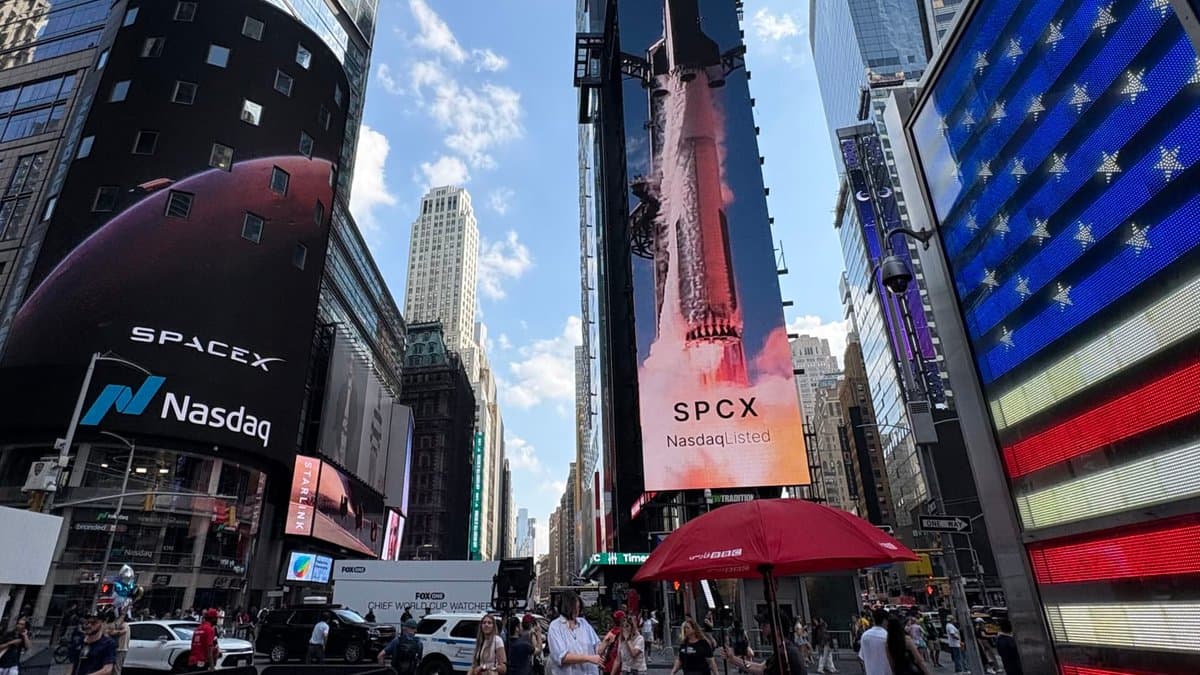
Not a dollar of cash changed hands. The whole thing was stock. SpaceX issued roughly 391 million new Class A shares and handed them to Cursor's shareholders. That structure only became possible because SpaceX went public in June. Days after listing, the company started spending its own shares like currency — and the first thing it bought was a company that makes a text editor.
On the surface it reads as a strange deal. Why would a company that builds rockets and satellites want an IDE? But line up what SpaceX has done over the past four months and the picture snaps into focus. April: a model-training partnership with Cursor. June: an acquisition agreement and an IPO, days apart. August 12: Grok 4.6 ships. August 14: the acquisition closes. That's not impulse shopping. That's a sequence someone drew up in advance.
Cursor's own blog post is the best one-sentence summary of the deal: "We will have access to the largest fleet of GPUs in the world, giving us the compute to build stronger models that are also more economical to run." A coding-tools company announcing its acquisition led with GPUs, not features. That tells you what was actually bought.
Who's on each side of this table
Cursor started in 2022. The legal entity is Anysphere, but the product name long ago ate the company name — a rare kind of success. The team forked VS Code and wired models deep into the editing loop, and the "press Tab and it predicts your next edit" experience spread through developer circles by word of mouth. Over the past few years it became one of the fastest-growing products in the AI coding category, and three or four years in, someone put a $60 billion number on it.
SpaceX is a public company now. It listed in June at a $1.77 trillion valuation. And it currently houses three quite different businesses under one roof: launch, satellite internet (Starlink), and AI. The third is SpaceXAI — the name that stuck after Elon Musk's separately founded xAI (2023) combined with SpaceX. The official announcements on the x.ai domain now use that branding.
Why does that combination matter? Because the real bottleneck in frontier model training isn't algorithms — it's power and capital. Standing up a gigawatt-class training cluster means securing generation capacity, land, and enough cash to eat years of losses. A company that builds rockets and satellites has raised money for exactly that kind of thing before. Colossus 2, the training cluster, is what came out of the pairing.
And two days before the close, on August 12, Grok 4.6 shipped. It scored 61 on Artificial Analysis's Intelligence Index — tied with OpenAI's GPT-5.6 Sol — while pricing output tokens at $6 per million against Sol's $30. One-fifth the price for the same score. Cursor's post points to Grok 4.6 as an early product of the collaboration. In other words, they stapled a piece of evidence to the announcement.
The missing piece was distribution. SpaceXAI's weakness over the past year was never raw model quality — it was reach. The Grok app went through a stretch of falling downloads, and the gap to ChatGPT and Gemini in the consumer chatbot category never really closed. Cursor is the mirror image of that problem: a window that working developers already keep open all day.
Put numbers on the contrast and it gets sharper. On August 11 Google announced Gemini's app had crossed a billion monthly users; ChatGPT crossed the same line in June. Those positions are hardening. A latecomer isn't going to reverse that with ad spend and app-store placement. So you find a different door — and developer tooling is that door. Far fewer users, but much higher spend per user, and above all a usage pattern that hits the model hundreds of times a day. Measured in tokens consumed, a few hundred thousand paying developers can be a bigger market than tens of millions of casual chatbot users.
The structure, and what the numbers say
Here's the skeleton of the deal.
| Item | Detail |
|---|---|
| Acquirer | SpaceX (public since June 2026) |
| Target | Cursor (Anysphere, founded 2022) |
| Price | $60 billion |
| Consideration | All stock — approximately 391 million new Class A shares |
| Announced | June 16, 2026 |
| Effective | August 14, 2026 (per regulatory filing) |
| Absorbed into | SpaceXAI team |
| Brand | Cursor retained, continues as a separate product |
| Collaboration began | April 2026 (model training partnership) |
The all-stock structure deserves a second look, because it means two things at once. First, from SpaceX's side, no cash left the building. The money earmarked for launch vehicles and data centers stayed put, and a company got acquired anyway. Second, from Cursor's side, this wasn't a sale — it was a swap. Cursor's shareholders sold Cursor equity and bought SpaceX equity. The founding team and early backers signing off on that means they judged Cursor-inside-SpaceX to be worth more than Cursor-alone.
There are revenue estimates attached. Morgan Stanley pegged Cursor as adding roughly $2.5 billion to SpaceX's 2026 revenue and about $13 billion in 2027. A fivefold jump year over year is aggressive, and the case for it isn't just Cursor's own growth rate. It's that owning both the model and the tool changes the margin structure underneath.
Right now most AI coding tools buy models and resell them. They charge users $20–40 a month and hand a large slice of that straight back to a model provider as API spend. The more a heavy user codes, the worse the unit economics get — which is why so many companies in this category have rewritten their pricing pages repeatedly. But when the model and the tool live inside the same company, that API spend never leaves. It becomes an internal transfer price.
That's what Cursor means by "stronger models that are also more economical to run." Grok 4.6's price sheet is the supporting evidence. If you own a model that serves the same benchmark score at one-fifth the token price, and you run a coding tool on top of it, you get a cost structure competitors can't easily match.
There's an unproven assumption in there, though. Will Cursor users actually switch to Grok-family models, or will they keep reaching for Claude and GPT? Cursor's appeal was partly its neutrality — a place to pick among models. Whether that menu survives the acquisition isn't addressed in the official post.
Worth noting on the regulatory side too: a $60 billion transaction went from announcement to effective in two months. Comparable big-tech deals routinely sit in antitrust review for a year or more. The likely reason is that this isn't a horizontal combination — a rocket company and a code editor don't compete in the same market. But put SpaceXAI's model business into the frame and the vertical character of the deal is obvious, and how far review went on that axis isn't visible in public filings. If vertical integration of the AI stack keeps accelerating, this question comes back at the industry level rather than deal by deal.
Who actually gains here
SpaceXAI gains distribution. You can build a frontier model, but if nobody uses it, all you have is a training bill. Cursor arrives with the single most willing-to-pay AI audience there is — professional developers. And coding is a domain where model quality is legible: if you ship something good, that fact travels fast.
Cursor gains cost and time. Training your own models means winning GPU and data-center contracts, and that market is currently spoken for years out by OpenAI, Anthropic, Google, and Meta. Inside SpaceX, you don't have to rejoin that queue. "Largest fleet of GPUs in the world" is marketing language, but the operational meaning is real: no waiting for training slots.
SpaceX shareholders face a more complicated calculation. Issuing 391 million shares dilutes existing holders. But the narrative — a company that within two months of listing owns launch, communications, and AI — carries weight in valuation multiples. The dominant read of the deal is that this is Musk's swing at catching Anthropic and OpenAI.
Developers probably come out ahead in the short run. Vertical integration creates room to cut prices, and Grok 4.6 was usable in Cursor from day one. The medium-term concern is the other side of the same coin: one of Cursor's strengths is letting you compare models in a single interface, and an owner who makes models has weaker incentives to keep that comparison honest.
Rival tools are in an awkward spot. Anyone still buying models wholesale and reselling them retail now competes against a vertically integrated shop. If you lose on cost, what's left is product experience and enterprise trust — both of which take years to build.
We've seen this vertical play before — the results split
Platform companies buying tool companies to run their own technology through them is an old pattern, and it has broken both ways.
The success case everyone cites is Microsoft buying GitHub. $7.5 billion in 2018, kept as an independent brand, and years later Copilot got built on top of it. Two things made it work: the brand and product independence were actually preserved, and the parent's assets (Azure compute, an OpenAI stake) got layered onto the tool to create something new. That is precisely the shape Cursor's acquisition is aiming for — keep the brand, add the parent's compute.
The failure cases are just as common. Acquirer forces the acquired product onto the parent's stack, users leave. This happens especially often in developer tooling, and the reason is simple: developers have low switching costs and excellent information. You can move editors in an afternoon, and the community will tell you exactly what the alternatives are. It's one of the least brand-loyal audiences in software.
The Musk acquisition people reach for first is Twitter, but this one is a different animal. Twitter was a consumer social product whose organization and policies changed sharply post-close. Cursor is a paid developer tool, and the official post explicitly frames continuity — the work stays familiar. Whether the promise in the post matches operations twelve months from now is a question only time answers.
How the rivals counter
Anthropic already played a different card. One day earlier, on August 14, it made Claude Code's auto mode the default on paid plans. That's a signal that it wants to compete on autonomy rather than price — moving the axis of competition from "how cheap" to "how much does it handle by itself." With an October IPO in view, Anthropic also has every reason to push product metrics right now.
OpenAI answered with speed. On August 13, together with Cerebras, it previewed Ultrafast mode for GPT-5.6 Sol: up to 750 tokens per second, as much as 14x faster than standard serving. In coding agents, latency is churn, so this is a head-on response. If SpaceXAI's pitch is "same quality, cheaper," OpenAI's is "same quality, faster."
Microsoft and GitHub defend on distribution. Copilot is already inside enterprise procurement agreements, and adding a new vendor to a security review is nobody's favorite afternoon. That said, Copilot also sources models from multiple providers, so it isn't immune to the cost squeeze either.
Google comes at it from a different angle. Gemini crossed a billion monthly users on August 11, giving it consumer scale, and it approaches developers bundled with cloud contracts. Because it trains and serves on its own TPUs, it's a company that finished vertically integrating a long time ago.
Independent coding tools are being forced to choose. Bind tightly to one model company (better costs, lost neutrality) or stay neutral (keep the menu, lose on price). Lovable's dual approach — offering frontier models alongside an in-house trained model — is one answer to that dilemma.
So what actually changes
If you use Cursor, nothing changes today. The brand and the product are explicitly staying. But two things are worth watching over the next few quarters: how prominently Grok-family models get favored in the model picker, and which direction pricing moves. Companies whose cost structure improves usually either cut prices or raise included usage. When that signal shows up, integration is actually working.
If your team uses a different tool, now is a good moment to look at where its models come from and how that cost flows into your plan. Expect frequent pricing changes across this category over the next year, and expect most of them to be unfavorable to heavy users.
If you're a founder, the message here is a little bleak. However fast you grow at the application layer, whoever holds the models and the compute ends up holding the leverage. Cursor was the best-executing company in its category and still chose combination over independence.
From an investor's seat, the all-stock format may matter more than the price. Two months after listing, a company used its own shares as currency to buy a $60 billion business. If that proves repeatable, expect more listed AI-adjacent large caps to go shopping at the application layer the same way.
For the industry as a whole, this reads as the opening shot of a consolidation phase. The last two years asked "who builds the best model." What's happening now asks "who owns the window people use it through." And there are far fewer windows than there are models.
🥄 Three Things You're Probably Wondering
— Can I still use Claude or GPT inside Cursor? Right now, yes, and the official post says the product continues as-is. What it doesn't say is how the model menu evolves long-term. There aren't many precedents where a model company owned a tool and kept full neutrality, so it's too early to call.
— Was $60 billion a fair price? Depends on your frame. Morgan Stanley's $13 billion 2027 contribution estimate would make the multiple defensible — but that estimate itself assumes the integration synergies work, which makes it a bit circular. And since this was paid in stock rather than cash, the real cost gets settled after the fact by where SpaceX shares go.
— Does any of this touch me? If you don't write code, barely at all. But the trend it signals — model companies buying up applications — will shape the price and the choices of the AI tools you do use. The era of tools multiplying is ending; the era of them sorting into a few camps has started.
References
- Cursor is now a part of SpaceX (Cursor blog, 2026-08-14) — the primary source. "Largest fleet of GPUs in the world," the April partnership start, brand and product continuity, and the Grok 4.6 reference all come from here.
- SpaceX Completes Its $60 Billion Cursor Acquisition (Bloomberg, 2026-08-14) — the August 14 effective date and the regulatory filing basis, plus the Anthropic/OpenAI framing.
- SpaceX to acquire Cursor for $60B in stock, days after blockbuster IPO (TechCrunch, 2026-06-16) — coverage from the June announcement, where the post-IPO all-stock structure first surfaced.
- SpaceX to acquire the AI coding startup Cursor for $60 billion (CNBC, 2026-06-16) — Cursor's growth background and how the listing and the acquisition connect.
- SpaceX completes record $60 billion acquisition of AI coding platform Cursor (Investing.com) — source for the ~391 million share issuance and the largest-startup-acquisition record.
- SpaceXAI completes its Cursor acquisition following Grok Bot and Grok 4.6 release (9to5Mac, 2026-08-14) — Cursor joining the SpaceXAI team to work on Grok, Grok Build, and the Grok API.
- Introducing Grok 4.6 (xAI, 2026-08-12) — the model that landed two days before close, with the 61 Intelligence Index score and $6-per-million output pricing.
Numbers and criteria are as of announcement and may change. Investment calls are yours to make!