The industry's expected turning point came and went, and opinion moved the other way
Here's the deal: for three years the AI industry has run on an unstated assumption — make the product good enough and public opinion follows. Early resistance was framed as unfamiliarity, something usefulness would dissolve. Smartphones went that way. The internet went that way.
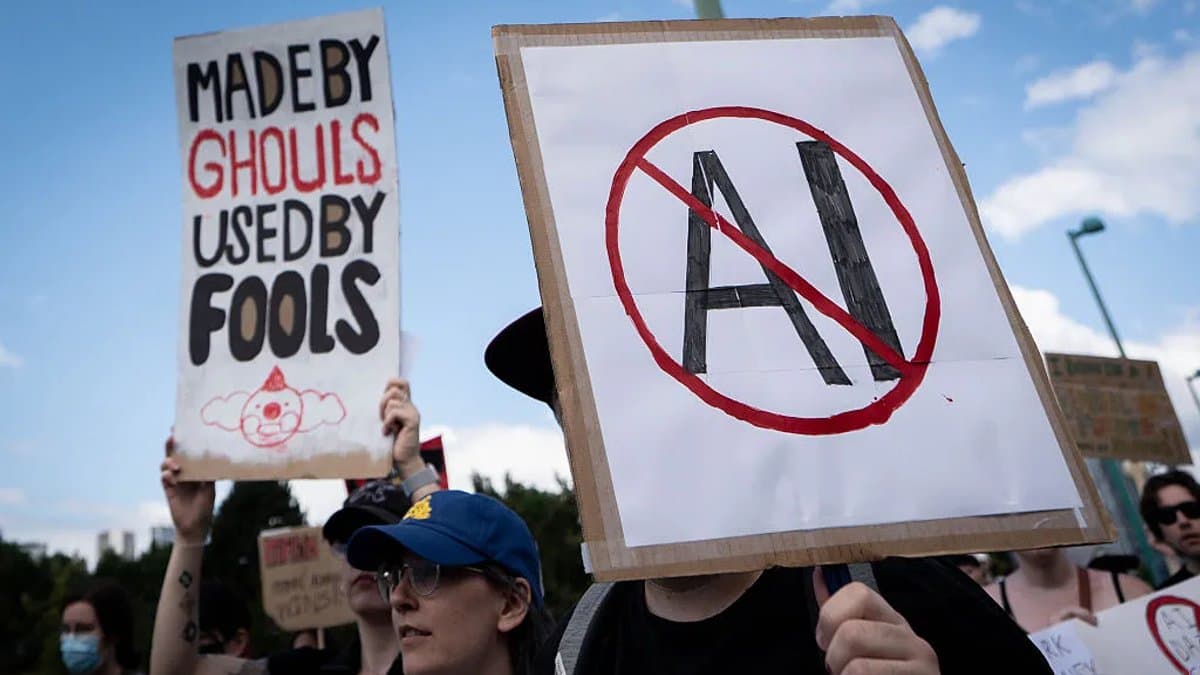
That moment has passed. Opinion went the other direction.
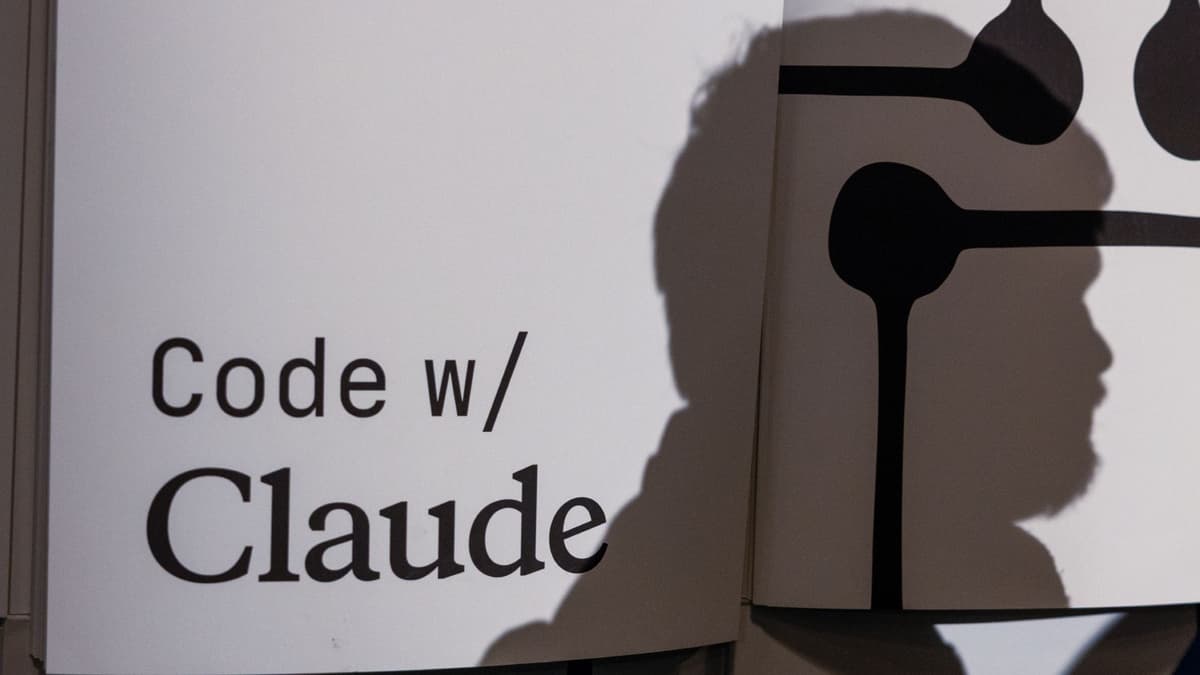
Anthropic CEO Dario Amodei met the situation head on. His phrasing: "I think it is fundamentally a crisis of trust." And then: "Ordinary people don't trust companies, governments, or the tech industry and always suspect that we are cooking up some new way to screw them over."
So far that reads like standard self-criticism. Then he went further: "We haven't yet delivered on our big promises to benefit the world. That is totally on us."
A frontier lab CEO saying "we didn't deliver and that's on us" is unusual. Reading the polling released the same week, it looks less like humility than like accurate observation.
The crisis in numbers — three surveys
Pew Research Center published a survey on August 18 (fielded June 22–28).
| Measure | Figure |
|---|---|
| "More concerned than excited" about increased AI in daily life | 52% (37% in 2021) |
| "More excited than concerned" | 9% |
| "Equally excited and concerned" | 37% |
| Under-30s who are "more concerned" | 55% (first majority for that cohort) |
| Believe AI will mean fewer human jobs over 20 years | 71% |
Concern moved from 37% to 52% in five years. And for the first time a majority of adults under 30 landed on the concerned side. Younger cohorts normally lead technology adoption. Here they're leading in the opposite direction.
Break it out by age and the picture sharpens. The group least anxious about AI in Pew's data is 50-to-61-year-olds — counterintuitive, since resistance to new technology usually runs highest among older cohorts. The likely explanation is that younger people feel direct competitive pressure in the labor market: reduced entry-level hiring, automation of junior tasks, uncertainty at the start of a career. That's abstract to someone near retirement and concrete to someone in their twenties. In the CNBC poll, 45% of 18-to-34s said AI will negatively affect their careers.
CNBC and Generation Labs polled more than 1,000 US adults aged 18–34, showing them the names of nine executives running AI companies and asking who they trust to act responsibly on AI.
| Figure | Say they don't trust |
|---|---|
| Alex Karp (Palantir) | 81% |
| Peter Thiel | 79% |
| Dario Amodei (Anthropic) | 76% |
| Mark Zuckerberg (Meta) | 71% |
| Elon Musk | 70% |
| Sam Altman (OpenAI) | 69% |
Only one of the nine posted positive net trust: Satya Nadella, at +35%. Alongside that, 45% said AI will hurt their careers, 40% backed government regulation, and 60% want the data center buildout to slow.
The most painful number there is 76%. The CEO of the lab that has built its identity on AI safety is distrusted by young adults more than Zuckerberg or Musk. A safety-forward position has not converted into public trust.
An Economist/YouGov survey in May found more than 70% of Americans believe AI is advancing too rapidly.
What produced this — three strands, and a fourth
First, the absence of felt benefit. Consumers watch AI features get inserted throughout the products they already use — above search results, inside document editors, in operating system settings. Almost none of it was requested, and little of it maps to a clear personal gain. Unwanted features keep accumulating while perceived usefulness doesn't, and that state has persisted for years.
Airbnb CEO Brian Chesky made this point on a recent podcast: a good share of the backlash comes from not building enough products regular consumers actually want, and more practical applications demonstrating clear personal benefit are needed.
Second, concrete fear of loss. Job displacement leads, followed by unauthorized use of copyrighted work as training data and cheating in education. These aren't abstract anxieties; they're concerns with names and cases attached. Pew's 71% on job losses reflects it.
Third, physical presence. Data centers became the front line of public opinion over the past two years — electricity prices, noise, water use, weak employment relative to tax breaks. While AI was abstract software, the argument stayed online. Buildings arriving in your county changed that. The 60% in the CNBC poll wanting the buildout slowed is the result, and Pennsylvania's governor signing the "nation's strictest" data center rules on August 18 is the same current.
Fourth, narrative fatigue. For three years the industry has repeated a message that everything changes within months. Much of that hasn't arrived, and what did arrive mostly amounted to office automation. Repeated overstatement erodes trust in two directions at once: unkept promises cost credibility, and risk warnings from the same speaker get discounted alongside them. Amodei's "we haven't delivered and that's totally on us" is precisely an acknowledgment of this.
The fight around Amodei — did the warnings feed the backlash?
Amodei's "crisis of trust" line has context. It came at the Aspen Security Forum on August 15, in response to a challenge from investor Gavin Baker.
Baker's argument: Amodei's repeated warnings about AI's dangers have helped fuel the backlash in the United States — particularly opposition to data centers.
Amodei pushed back directly. The public's reaction, he argued, is driven less by tone than by confidence in how systems actually behave in the real world. His evidence was enterprise behavior: customers tightening scrutiny around privacy and reliability, with that pressure showing up in real procurement decisions.
This argument has run inside the industry for years in the same shape: "naming risks earns trust" versus "naming risks manufactures fear." Amodei represents the first position, investors like Baker the second.
The 76% figure doesn't settle it. You can't separate whether Amodei is distrusted because he talks about risk, or whether distrust of the category "AI company CEO" is simply projecting onto an individual. What is clear is narrower: a safety-forward strategy has not produced a trust premium, at least among younger adults.
Precedents — when an industry lost the public
The collapse of trust in social media in the late 2010s is the closest case. Facebook's image was broadly positive through 2016, then reversed within a few years through Cambridge Analytica and the disclosures that followed. What matters is that recovery essentially didn't happen. The company renamed itself and expanded, and trust metrics never returned. Once industry-level trust breaks, product improvement rarely repairs it.
Nuclear power in the 1970s and 80s is starker. After Three Mile Island (1979) and Chernobyl (1986), public opinion didn't recover for decades — even as the industry accumulated safety records and technical improvements. What the public responded to wasn't statistics but a sense of controllability. The AI debate has the same shape: what people fear isn't error rates, it's who's holding the controls.
GMO foods in the 1990s split by region. The US broadly accepted them; Europe developed durable opposition. The difference wasn't the technology but trust in regulators — Europe was fresh off the BSE crisis and its collapse in food safety authority. National differences in AI sentiment can be read the same way: societies that trust their regulators absorb new technology more easily.
Early personal computing and the internet get cited as the counterexample — resistance at first, acceptance eventually. But there's a decisive difference. PCs and the internet were understood as technologies that gave individuals control. Today's AI is understood as one that takes control away. That's why the "new technology always wins eventually" frame fits poorly here.
How each company is responding
OpenAI is betting on consumer surface area: entrench ChatGPT as an everyday tool, let felt utility accumulate, and let trust follow. Altman's 69% distrust number suggests that hasn't landed yet.
Microsoft is the sole positive result. Nadella's +35% net trust puts him in a different category from the other eight. A plausible reading: Nadella has done relatively little of both the apocalyptic warning and the inflated promising in AI discourse, and Microsoft's center of gravity is enterprise rather than consumer, which narrows friction with individual users. Quiet positioning appears to have been the trust-preserving choice.
Meta and xAI are relatively indifferent to public sentiment management, concentrating on open-weight distribution and fast releases to hold developer ecosystems. Zuckerberg at 71% and Musk at 70% distrust look like an accepted cost.
Regulators read these numbers as a mandate. With 40% of respondents backing government regulation and 60% wanting the buildout slowed, tightening rules is politically cheap. State-level regulation is multiplying accordingly.
Anthropic itself is at an awkward moment. It's preparing to file publicly for an IPO as soon as the end of this month, and once listed, public sentiment stops being a brand issue and becomes a share-price variable. Regulatory risk, consumer backlash, enterprise procurement scrutiny — all of these belong in a risk factors section.
What actually changes for you
If you build AI products, the practical lesson is direct: inserting AI features nobody asked for is now the most expensive choice available. Placed where users didn't want them, features accumulate resentment rather than utility. Clear off-switches and conservative defaults are the trust-positive design.
If you're driving enterprise AI adoption, re-read internal resistance. In a society where 71% expect job losses, an internal rollout is not a pure productivity question. Unless you say up front what gets automated and what doesn't, and — if the claim is augmentation rather than replacement — why, the rollout stalls before it starts.
If you work in marketing or communications, assume "made with AI" is no longer a positive signal. For some consumer segments it's clearly negative. Leading with outcomes rather than the technology is the safer construction.
If you watch policy, these numbers are a leading indicator for the next year or two of regulation. A first-ever majority of under-30s on the concerned side means opinion is unlikely to soften through generational turnover. There's no reason to expect regulatory pressure to ease.
If you invest, it's time to carry sentiment as a risk line item. In data center assets and consumer AI products especially, public opinion is converting directly into cost. As Pennsylvania showed, once local approval becomes a permitting condition, project timelines and capital expenditure move immediately.
If you're in Korea or a similar market, the axes differ somewhat — US polling doesn't transfer cleanly — but data center siting conflicts and job anxiety are already appearing in comparable form. Korea is also pushing AI as national industrial strategy, which can open a wider gap between policy discourse and public sentiment than in the US. Gaps like that, left open, tend to surface all at once at the individual project level. That's exactly the path US data center opposition took.
If you just use AI, this survey confirms your fatigue isn't personal. More than half of respondents report the same thing.
🥄 Three Things You're Probably Wondering
— Did Amodei's warnings cause the backlash? Someone argued exactly that (investor Gavin Baker) and Amodei disputed it. It's a hard causal claim to verify. What the polling shows is that distrust spans all nine figures, including executives who have issued almost no warnings and still sit near 70% distrust. That's too broad to explain through one person's rhetoric.
— Will better products improve sentiment? The data doesn't support the assumption. Model capability improved beyond comparison over five years while concern rose from 37% to 52%. If Chesky is right that the gap is a shortage of products regular consumers actually want, the problem is product direction rather than capability — and whether performance alone fixes it is too early to call.
— Why is Nadella the only one with positive trust? There's no official explanation. Two plausible factors: Microsoft's enterprise center of gravity means fewer friction points with individual users, and Nadella has engaged in relatively little apocalyptic warning or inflated promising in AI discourse. It's one survey, though, so whether that's a structural advantage or a moment-in-time difference needs more data.
Sources
- TechCrunch — AI was supposed to win people over by now, it hasn't (2026-08-19)
- TechCrunch — Anthropic CEO says AI backlash is 'fundamentally a crisis of trust' (2026-08-16)
- Pew Research Center — Young adults in the US are increasingly wary of AI, concerned it will take jobs (2026-08-18)
- Pew Research Center — What the data says about Americans' views of artificial intelligence (2026-03-12)
- Forbes — Young Americans Don't Trust Billionaire AI Leaders Like Musk, Zuckerberg and Altman, Poll Finds (2026-08-13)
- The Hill — Majority 'more concerned than excited' about increased AI use in daily life (2026-08-18)
- Forbes — Most Young Americans Are More Concerned About AI Than Excited, Pew Survey Finds (2026-08-18)
Figures are as of the surveys cited and may change.