100+. That's the number of AI initiatives Stellantis and Microsoft just committed to build together
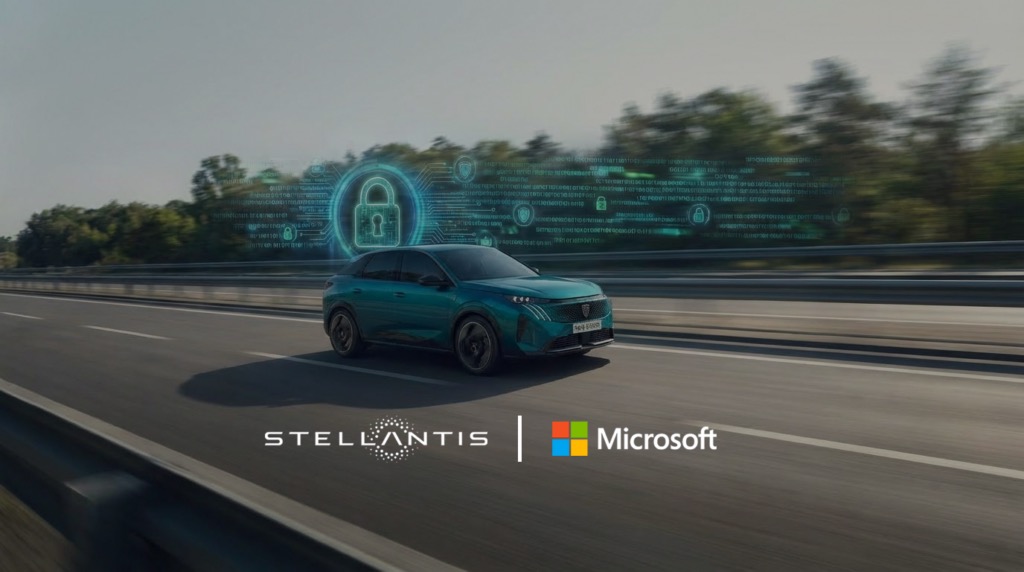
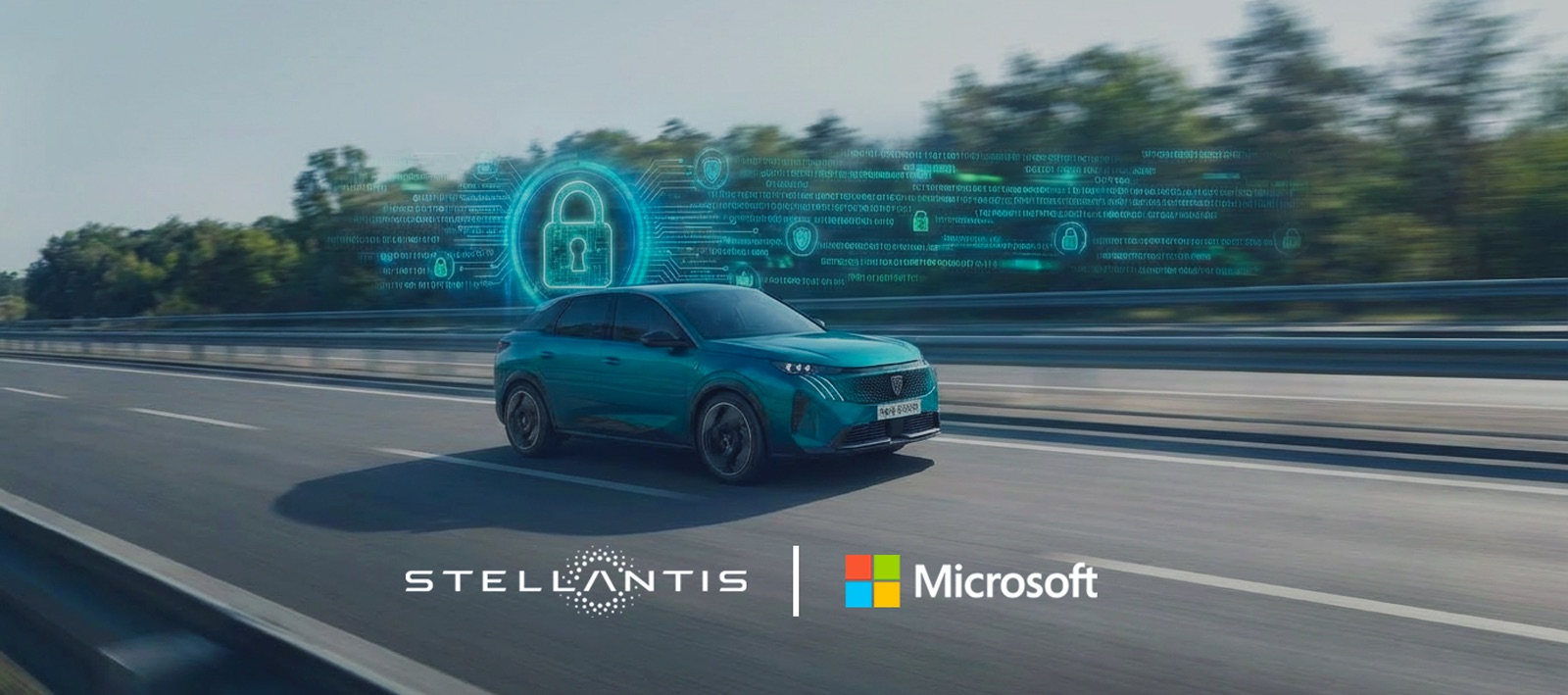
Announced April 16, 2026. Stellantis – the world's fourth-largest automaker, parent of Jeep, Ram, Peugeot, Citroën, Fiat, Chrysler, Dodge, Maserati, Alfa Romeo, and six more brands – named Microsoft its five-year strategic AI partner. Not a SaaS contract. A full-stack commitment to co-develop more than 100 AI tools across customer care, product development, and operations.
Judson Althoff, CEO of Microsoft's Commercial Business, set the frame in the press release:
"By combining Stellantis' global scale and engineering expertise with Microsoft's trusted cloud, AI and security platforms, we are delivering real value for millions of drivers worldwide."
The parties – Stellantis and Microsoft
Stellantis was formed in 2021 from the merger of FCA (Fiat Chrysler) and PSA (Peugeot Citroën). Roughly €157B in 2024 revenue, approximately 6.5 million vehicles sold globally in 2025, ranking fourth behind Toyota, Volkswagen, and Hyundai-Kia. Its 14 brands span Jeep and Ram in the US, Peugeot/Citroën/Opel/DS in Europe, Fiat/Lancia/Alfa Romeo/Maserati in Italy, and Chrysler/Dodge in North America – no single captive home market, rather a truly global footprint.
The company is mid-restructure. Former CEO Carlos Tavares stepped down in late 2024, Antonio Filosa took over in early 2025 with a mandate to reset cost structure and accelerate the digital rebuild simultaneously. Stellantis is losing share in the US, Europe, and China at once, all under EV and SDV pressure. Time is more expensive than money here. Maintaining a homegrown software stack at the pace required isn't realistic. The company needed a partner that could sit underneath every major AI workstream – Microsoft got the call.
Microsoft is roughly a $3.5T market cap company with about $280B in FY2025 revenue. From an automotive-industry viewpoint, Microsoft is the only hyperscaler carrying a full enterprise stack – Azure plus Microsoft 365 Copilot plus Dynamics 365 plus Defender. AWS wins on infrastructure depth, Google Cloud on AI research, but Microsoft is the only vendor where one buying decision can cover "factory floor to dealer network to boardroom."
This isn't the first contact between the two. Stellantis has been using Azure for pockets of manufacturing analytics since 2022, and Microsoft 365 has long been the house standard. The April 2026 five-year deal is about upgrading that sporadic usage into deep vertical integration. The relationship moved from "power user" to "strategic AI operations outsourcing" in one announcement.
Ned Curic, Stellantis Chief Engineering and Technology Officer, framed the Stellantis side:
"Through our collaboration with Microsoft, we are accelerating our AI momentum across the enterprise, giving our teams the tools to innovate faster."
 Source: news.microsoft.com · Microsoft official press kit
Deal structure – terms, amount, duration, exclusivity
Dollar figures haven't been disclosed, but the operational scope is unusually specific. Here's what's been made public.
| Item | Disclosed terms |
|---|---|
| Contract term | 5-year strategic collaboration |
| Joint AI initiatives | 100+ (customer care, product development, operations) |
| Initial Copilot seats | 20,000 (Microsoft 365 Copilot) |
| Copilot Chat scope | All employees (across ~260,000 Stellantis staff) |
| Data center reduction | -60% footprint by 2029 |
| Cyber defense | Global Cyber Defense Center rebuilt on AI analytics |
| Exclusivity | Microsoft as primary strategic partner — partial contracts with other hyperscalers can remain |
| Announcement | April 16, 2026 (joint press release) |
"Primary strategic partner" is the key phrase. Not legally exclusive – but effectively, Stellantis is anchoring AI infrastructure to Microsoft. Existing smaller workloads on AWS or Google Cloud can survive, but nearly all new AI initiatives go on Azure. Five years from now, Stellantis's IT stack is likely redesigned around Microsoft.
Total deal value isn't public, but triangulating from hundreds of millions in annual cloud consumption, 20,000 Copilot seats at roughly $30/month each, plus projected expansion, a multi-year total in the billions is plausible. For Stellantis the number is partially offset by the on-prem data center retirement and internal digital headcount reduction. The deal is structured as a replacement investment, not pure new spend.
What each side gets
For Stellantis, three clear wins. First, speed. Building a comparable AI platform in-house would burn 2–3 years just to get to a first usable milestone. Starting on Azure and Copilot, production deployments can land in six months. Against Tesla, BYD, and Xpeng in the SDV race, time is scarcer than cost. Second, cost-structure reset. The 60% data center footprint reduction maps to hundreds of millions of euros in annual OPEX savings – directly tied to Filosa's restructuring targets. Third, talent war relief. Instead of hiring thousands of AI specialists into a legacy automaker culture, Stellantis rents access to Microsoft's engineering base. Recruiting becomes a smaller problem.
For Microsoft, four strategic wins. First, a flagship "Automotive Industry Cloud" reference. AWS had BMW and Volkswagen, Google Cloud had Ford and Renault. Microsoft was lagging the vertical. Landing a top-4 OEM closes that gap in one move. Second, Copilot B2B pricing anchor. Twenty thousand seats at an enterprise manufacturer becomes the industry benchmark other deals get compared to. Third, Azure revenue acceleration. 60% data center reduction equals massive Azure consumption growth. This directly narrows the AWS-Azure growth gap over the next five years. Fourth, factory AI moat building. The manufacturing predictive maintenance and quality inspection data asset Microsoft will accumulate is a wedge against Nvidia Omniverse and Siemens MindSphere.
Both sides share an under-discussed benefit: signaling. Ford, Hyundai, Nissan, Renault – all will now face boardroom pressure to pursue similar comprehensive deals. That expands Microsoft's pipeline while giving Stellantis a 12–24 month head start in actual AI operations. First mover sets the standard everyone else has to match.
 Source: stellantis.com · Stellantis official press kit
Past partnerships that worked – and didn't
Hyperscaler-OEM partnerships have been run several times now with very different outcomes. Worth reviewing to place the Stellantis deal in context.
Success — BMW x AWS (2020–). BMW Group named AWS its primary cloud partner in 2020 and routed plant data, vehicle telemetry, and customer data into a Cloud Data Hub. By 2024, factories and engineering centers worldwide were feeding AWS, and BMW's SDV position visibly improved. Lesson: concentrating on one hyperscaler beats spreading across multiple when speed matters. Stellantis choosing the same shape with Microsoft is a partial imitation of this playbook.
Success — Toyota x NTT (2022, $3.3B). Toyota signed a 10-year partnership with NTT to jointly build SDV infrastructure and autonomous platforms, with regional data sovereignty in mind. Lesson: general-purpose hyperscalers aren't always the right answer. Where regional regulation and data sovereignty matter, deep telco partnerships can outperform. The Stellantis-Microsoft deal is a different bet – global scale over regional depth.
Failure — Volkswagen Cariad (2020–2024). Volkswagen poured billions into software subsidiary Cariad to build its own vehicle OS. Repeated delays in 2023–2024 triggered management changes and layoffs. The company eventually entered a $5B joint venture with Rivian, effectively outsourcing core software. Lesson: building vehicle software in-house takes a decade and may not match the OEM's actual DNA. Stellantis picking Microsoft is an implicit "we won't repeat Cariad."
Edge case — Ford x Google Cloud (2021). Ford named Google Cloud its six-year strategic partner, but the pace of actual SDV and AI product launches has been slower than projected. Lesson: a contract doesn't guarantee outcomes. Without internal execution capacity, cultural alignment, and executive engagement, big partnerships stall at the paperwork. Stellantis fronting both Althoff and Curic on the announcement is a move that shows awareness of this risk.
Competitor counter-plays
AWS will defend BMW and Volkswagen hard. It expanded the BMW vehicle-OS collaboration in 2024 and is likely to concentrate resources on winning a new US-based OEM (think modules at GM or Rivian) through the rest of 2026. Losing Stellantis stings, but AWS still has more cumulative factory-manufacturing data than Azure. The counter-play is vertical deepening, not broad counteroffensives.
Google Cloud will answer from a different angle. Expect the company to deepen Ford and Renault while using Waymo plus in-house AI research to differentiate on the autonomy and ADAS stack. Gemini-powered voice and multimodal in-car interfaces are an area Copilot can't easily match. The likely play is expanding the Apple-CarPlay / Android-Auto embedded position. Google's response to the Stellantis deal is "get deeper inside the actual vehicle."
Salesforce Agentforce + ServiceNow AI + SAP Joule responses matter too. Copilot pushing into CRM and ERP territory is an existential issue for these vendors. Salesforce is already pushing Agentforce into automotive dealer networks. ServiceNow is defending factory workflow automation. The Stellantis all-in signals a real risk that horizontal SaaS vendors get pushed out of automotive verticals, forcing each one to rush automotive-specific features.
Chinese competitors (Huawei Cloud, Alibaba Cloud, Tencent) can't compete directly in US and European OEM markets due to regulation, but they're accelerating vertical integration with domestic brands (Geely, BYD, Xpeng). The global pattern sharpens into "US-style hyperscaler partnerships vs. Chinese-style domestic vertical integration." Stellantis's public alignment with Microsoft accelerates that split.
What changes for whom
For auto industry workers: within five years, every internal tool you use is Copilot-shaped. Document search, meeting notes, product briefs, engineering design reviews – all flowing through AI Copilot. Adobe, Google Workspace, and Slack get squeezed out of automotive environments. The Microsoft Teams + Copilot + Outlook "one-stack" environment becomes default. For engineering in particular, "design suggestion auto-generation" using past project data becomes routine.
For the AI industry, the enterprise Copilot "tier-1 reference customer" war just got sharper. Salesforce Agentforce, ServiceNow AI, and SAP Joule are all fishing the same enterprise pool. Microsoft capturing a top-4 global OEM first is a large marketing asset. Expect the next 2–3 years to see a cascading series of large deals in automotive, aerospace, and chemicals, with vendors racing to plant tier-1 flags in each vertical.
For consumers, Jeep, Fiat, Peugeot, and Ram customer experiences will shift onto Copilot-based systems within five years. Voice assistants, call-center interactions, dealer scheduling, OTA update notifications – all running on the Microsoft AI stack. "AI diagnoses your car remotely and pushes an OTA fix" goes from a Tesla-only experience to standard across the Stellantis brand portfolio. Data privacy questions follow: all that vehicle telemetry flows to Azure, which will create real friction with EU GDPR and US state-level data laws over the next few years.