6 trillion
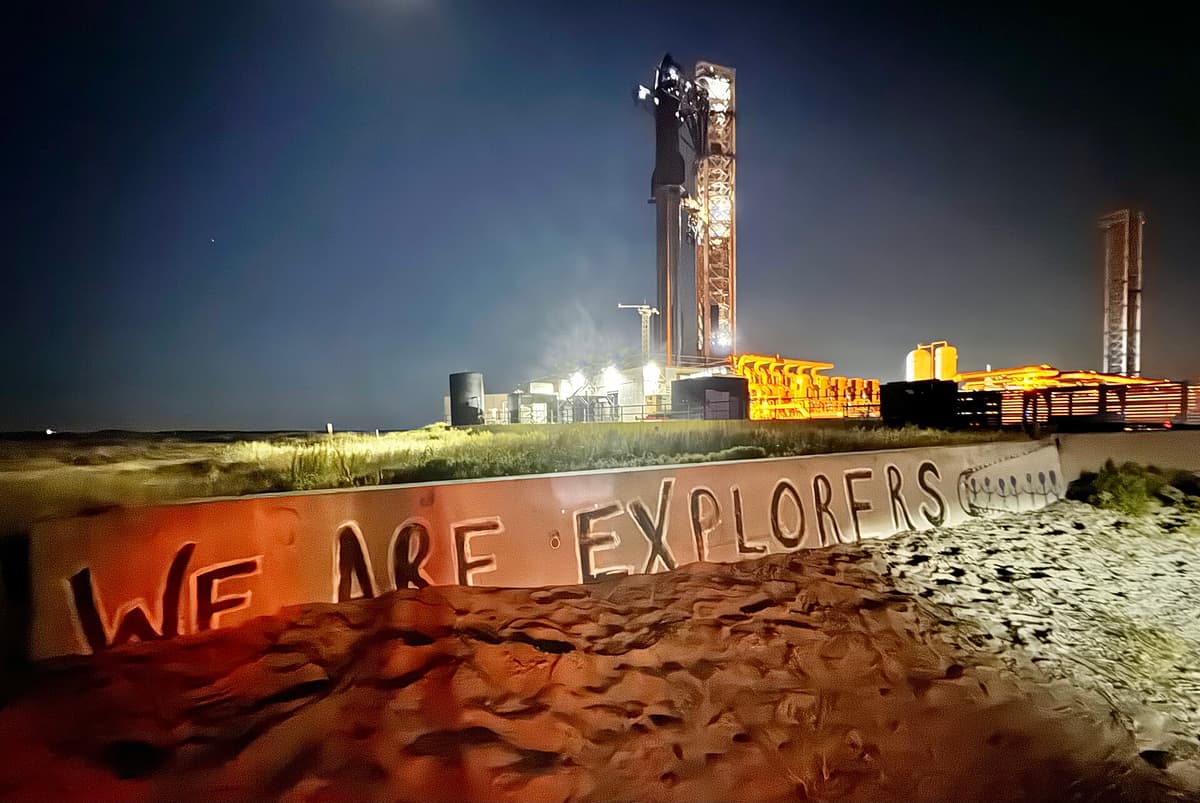
Six trillion parameters. That is roughly 3x Grok 4's 2T and nearly 2x the estimated 3.5T of GPT-5 Turbo. Musk dropped the number on X on the 22nd alongside a launch window commitment: "Grok 5 this year, probably December."
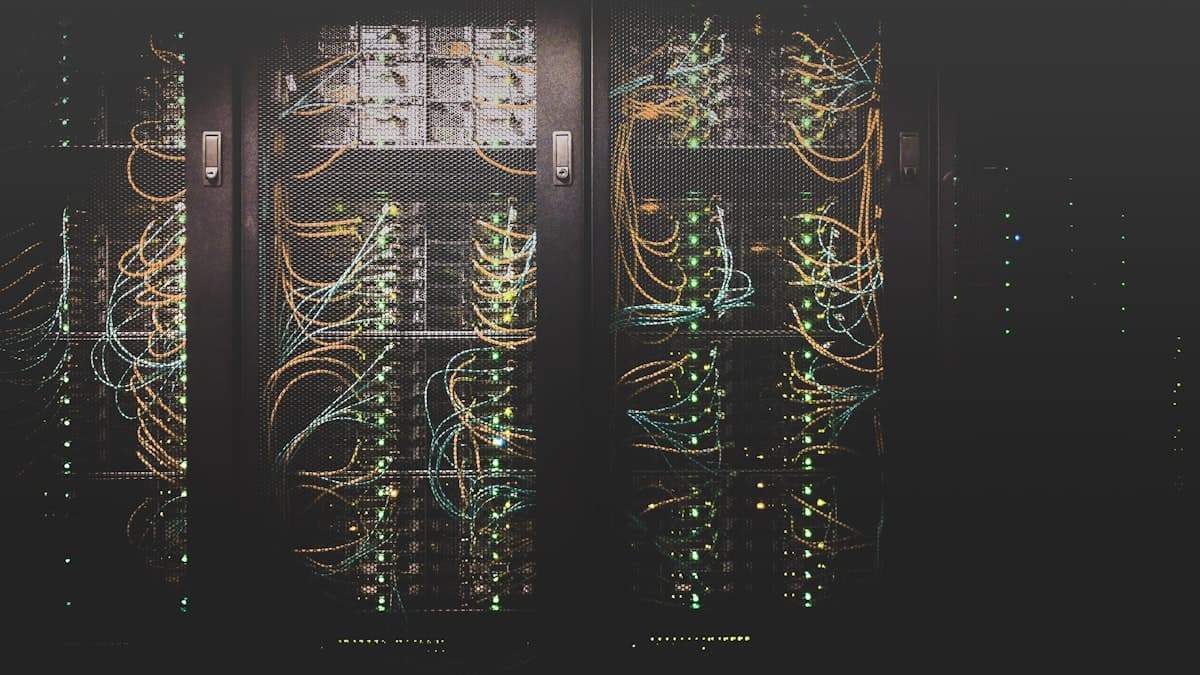
The training infrastructure is just as aggressive. Colossus 2 is already running on 550K GPUs, and Musk says the plan is to push it to 1M by year-end. If that lands, it is the single largest AI training cluster on the planet.
The context you need
xAI joined the frontier lab race less than three years after it was founded. Incorporated in July 2023, it shipped Grok 1 in 2024, Grok 3 and Grok 4 in 2025, and now Grok 5 is slated for late 2026. The speed is possible for two reasons. First, Musk took the Tesla and SpaceX playbook of vertically integrated factories and applied it straight to AI data centers. Colossus 1 was built in 122 days. Colossus 2 is being built faster. Second, xAI locked in direct multi-billion-dollar Nvidia contracts that effectively front-ran the rest of the industry's GPU supply.
 Source: unsplash.com · Unsplash License
But Grok 3 and Grok 4, while benchmark-competitive, lost in actual enterprise adoption to Claude, GPT, and Gemini. Two reasons: insufficient safety evaluations, and Musk's X posts being perceived as enterprise risk. Grok 5 is the attempt to break that pattern.
Breaking down the core
What 6T parameters actually means
Parameter count alone is not the whole story, but at the frontier it still matters. Here is the publicly estimated lineup:
| Model | Est. parameters | Release | Architecture |
|---|---|---|---|
| Claude Opus 4.7 | 2.5T (MoE) | Q1 2026 | Dense + MoE hybrid |
| GPT-5 Turbo | 3.5T (MoE) | Q4 2025 | Sparse MoE |
| Gemini 3 Ultra | 2.8T (MoE) | Q1 2026 | Sparse MoE + Pathways |
| Grok 4 | 2T (Dense) | Q4 2025 | Dense transformer |
| Grok 5 (planned) | 6T (MoE) | Q4 2026 | Sparse MoE + RL loop |
Through Grok 4, xAI kept a dense-first approach. That sacrifices training efficiency but improves inference consistency. Grok 5 is xAI's first sparse MoE model, and the consensus estimate is that 400B of the 6T will actually activate per token. If correct, that is about 40% larger active than GPT-5 Turbo's 280B.
Colossus 2's economics of scale
Colossus 1 in Memphis started at 100K H100s and grew to 200K this year. Colossus 2 is an entirely different class.
| Metric | Colossus 1 (Memphis) | Colossus 2 (Memphis + expansion) |
|---|---|---|
| GPUs (current) | 200K H100/H200 | 550K B200/GB300 |
| Target GPUs | 200K | 1M (by year-end) |
| Total power | 250MW | 1.2GW (target) |
| Training target | Grok 3, Grok 4 | Grok 5, Grok 6 |
| Brought online | July 2024 | February 2026 |
The significance becomes clear against OpenAI's Stargate and Anthropic's 5GW AWS commitment. xAI is concentrating into a single cluster the scale that other labs are splitting across multiple buildings and partners. That helps training efficiency. The cost is grid risk — xAI is installing on-site natural gas turbines in Memphis to buy its way out of grid constraints.
Reading between the 10% AGI line
Musk tweeted that Grok 5 has "a 10% chance of being AGI." Worth noting: Musk's working definition of AGI is not the same as OpenAI's or DeepMind's. His version is "a system that outperforms human experts on most intellectual tasks," but the benchmarks and evaluation criteria for that claim have not been published. Reactions split in two. One camp says the parameter count and compute scale make it at least worth testing seriously. The other says "AGI" here is pre-fundraise marketing language.
The bigger picture
Safety is the most contested part of this announcement. xAI has not yet published a public Model Card or a safety evaluation protocol comparable to what Anthropic or OpenAI ship with each release. Grok 4 shipped without red-team results, and Grok 5 so far has only a verbal Musk commitment that "we'll do whatever safety work is needed." No structured framework has been shared.
 Source: unsplash.com · Unsplash License
This matters because if Grok 5 really does show AGI-class behavior — whether at Musk's 10% or some higher probability — the commercial API opens without a documented guardrail. Anthropic has its Responsible Scaling Policy, OpenAI its Preparedness Framework. xAI has left that slot empty.
At every stage of the frontier race, xAI is the only lab publicly operating on a "speed first, safety later" posture. Whether Grok 5 succeeds or not, this posture alone is going to reshape regulatory pressure on the industry.
The business picture has its own structural issue. xAI's enterprise revenue is reportedly around $500M, against Anthropic's $30B+ ARR and OpenAI's $50B+. Most of xAI's revenue comes from X Premium+ subscriptions; the enterprise sales motion is weak. For Grok 5 to rebound in enterprise, raw performance is not enough — it needs documented safety evaluations and compliance tooling.
So what actually changes
Three things developers should watch.
API pricing. xAI has priced Grok 4 roughly 30% below GPT-4.5 as a deliberate price lever. Whether Grok 5 holds that cost advantage as a 6T MoE model is the question. Consensus is it will price in the same tier as Claude Opus and GPT-5 Turbo.
Open-weights posture. Grok 2 was released with open weights, and Grok 3 followed a year after launch. Grok 4 has not been released. Musk has never explicitly confirmed the "Grok N-2 is open" policy will hold going forward. If Grok 5 is AGI-class, the N-2 rule is likely to get rewritten — the weights stay closed.
Tesla and Optimus integration. xAI's roadmap has Grok's multimodal and real-time reasoning embedded in Tesla's autonomy stack and the Optimus robot. If Grok 5 ships late in 2026, integration with Optimus V3 and FSD v14 is plausible for early 2027. If that lands, xAI is no longer a pure LLM company — it is a physical AI company.
For the broader shift this implies, pair this with Horizon Robotics' Xingkong chip unifying cabin, drive, and fusion on a single SoC. 2026 looks like the year the frontier of AI moves from LLMs to physical AI.