The biggest IPO in history — and really, an 'AI listing' too
Here's the deal: the numbers feel unreal. SpaceX began its IPO roadshow on June 4. At $135 a share, it would sell about 556.6 million shares to raise $75 billion, targeting a valuation around $1.75 trillion. If it lands, it easily eclipses Saudi Aramco's ~$29 billion (2019) as the largest offering in history — and the allocation is reportedly already oversubscribed. Pricing comes after the close on June 11, with a Nasdaq debut as "SPCX" on June 12.
But the real twist of this listing lies beyond the "rocket company" surface. In February 2026, SpaceX absorbed Elon Musk's AI company xAI, pulling the chatbot Grok and the giant Colossus data center wholesale into SpaceX. So this IPO isn't just a space listing — it's the first public-market debut of Musk's frontier-AI assets. Buy one share of SPCX and you're holding Starship and Starlink plus Grok in one basket.
The timing is pointed too. With Anthropic having filed its S-1 and an OpenAI listing being discussed, SpaceX jumping into the public market kicks off a "public-market test for AI giants." Companies that took astronomical private valuations are now stepping onto the scale of real investors. SpaceX is the biggest, flashiest first batter.
The players — SpaceX, xAI/Grok, and Elon Musk
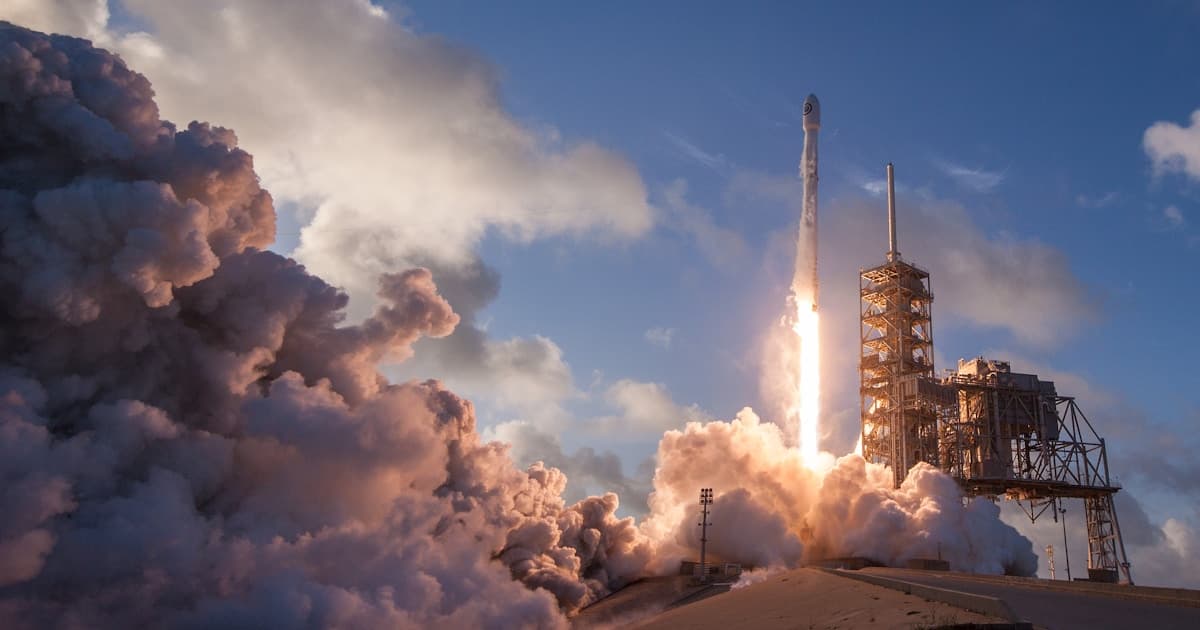
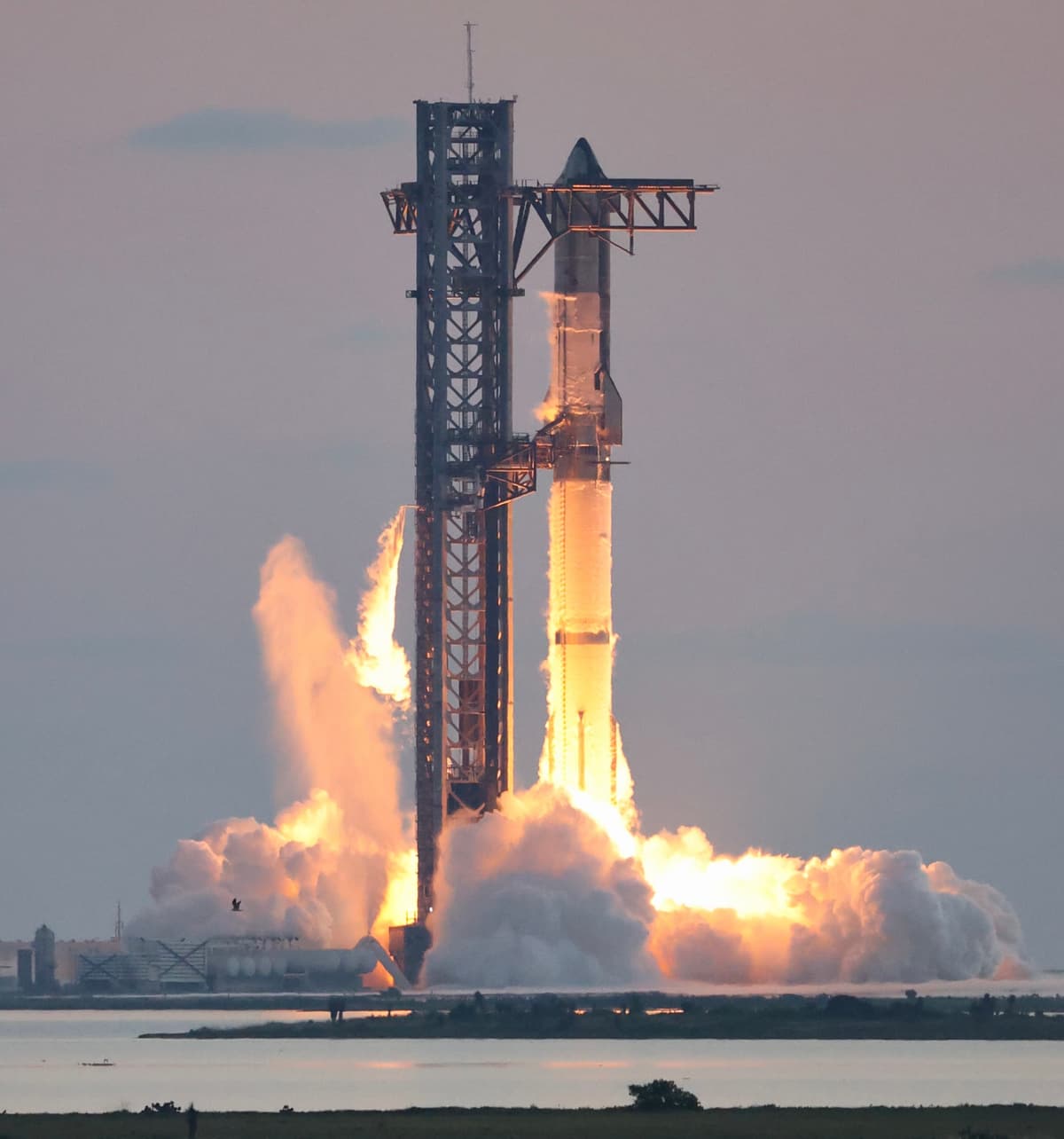
First, SpaceX. A space company that revolutionized launch costs with reusable rockets (Falcon) and built a steady revenue base with Starlink satellite internet. Pushing its next-gen heavy rocket Starship, it became the de facto standard of space infrastructure. But space alone doesn't explain this listing — a new AI leg got bolted on.
Next, xAI/Grok/Colossus. xAI is the AI company Musk founded in 2023, running the chatbot Grok and Colossus, a giant data center of hundreds of thousands of GPUs. In February 2026, SpaceX absorbed xAI (the merger valued the combined entity around $1.25 trillion), folding Grok and Colossus into SpaceX as an AI segment. An unprecedented combination — rockets, satellites, and AI under one roof.
The last player is Elon Musk. He's reportedly raising enormous capital in this IPO while keeping "ironclad control" via a dual-class share structure — take outside money, keep the controls. Classic Musk design. Within his empire spanning SpaceX, xAI, and Tesla, this listing is the inflection point where "an asset bundling AI and space" gets priced on the public market for the first time.
What's inside — the numbers and the timeline
The core points:
| Metric | Detail |
|---|---|
| Roadshow start | June 4, 2026 |
| IPO price | $135/share (~556.6M shares) |
| Raise | ~$75B |
| Valuation | ~$1.75T (largest ever) |
| Pricing | June 11 (after close) |
| Listing | June 12, Nasdaq 'SPCX' |
| AI assets | xAI/Grok/Colossus (absorbed Feb 2026) |
The standout is the "largest ever" scale. A $75B raise more than doubles Aramco's ~$29B. A ~$1.75T valuation stands shoulder-to-shoulder with major big techs, and a private company listing at that value is unprecedented. That the allocation is already oversubscribed signals demand overwhelming supply.
The second is the "AI props up the valuation" structure. Pure space can't justify $1.75T alone. On top of Starlink's steady cash flow and Starship's future potential, the "AI premium" of xAI/Grok lifted the valuation considerably. Investors buy two mega-themes — space and AI — in one ticker, and Musk frames the synergy of the two as the heart of the narrative.
The third is the shadow of profitability. Behind the dazzling valuation sit cold numbers — 2025 revenue of about $18.7 billion and a GAAP net loss of roughly $4.94 billion. It's still accounting-loss-making. Some analysts question whether $1.75T pulls too much of the future forward. As strong as the "AI + space" story is, whether it converts to real profit is the true test after listing.
Who wins — SpaceX, Musk, and investors
For SpaceX, it gains enormous capital and a new "AI company" identity. $75B can fund Starship development, Starlink expansion, and above all AI data-center buildout like Colossus. AI demands vast capital for power, chips, and data centers, and pulling money from the public market builds the stamina to endure that arms race. A funding pipe opened for a space company morphing into an AI infrastructure company.
For Musk, it's a deal that captures funding and control at once. Keeping dominance via dual-class shares while pulling in outside capital lets him grow his empire without losing his grip. And by listing xAI bundled into SpaceX, he connected private AI assets to public-market liquidity and valuation. His method of compounding wealth via Tesla's stock now gains a new axis: "SPCX."
For investors, it's two-sided. On one hand, a rare chance to grab two mega-themes — space and AI — in one ticker, bundling Starlink's cash flow with Grok's growth. On the other, it's a bet buying a loss-making company at a record valuation, so the risk is record-sized too. And dual-class shares limit ordinary holders' real influence, with the company's fate effectively tied to one man — Musk.
Past parallels — the promise and shadow of mega-IPOs
Unprecedented IPOs carry lessons from precedent.
A shadow of success — Aramco's lesson. The prior largest IPO, Saudi Aramco in 2019, succeeded as a listing but leaned heavily on domestic and regional capital over global investors, and its shares lagged for a while afterward. "Biggest IPO" doesn't equal "best investment." After SPCX's dazzling oversubscribed start, the long homework of proving profitability awaits.
Two sides of story premium — Tesla. Musk's Tesla long earned valuations beyond traditional metrics on a "selling the future" narrative. That structure — huge returns to believers, a bubble to skeptics — likely carries straight into SPCX. Tesla's stock rollercoaster already showed the "Musk premium" is powerful and volatile at once.
The risk of 'AI bundling' — echoes of dot-com. Valuations jumping when you attach "AI" to a name recalls 2000, when adding ".com" lifted stocks. Of course SpaceX is a real, vast business, unlike the empty shells then. But the question "is the AI premium backed by real AI revenue?" remains live, and if the answer doesn't come, the premium can deflate.
Competitor counter-plays — space rivals, AI labs, and other mega-IPOs
First, space rivals (Blue Origin, ULA, Rocket Lab, etc.). If SpaceX secures huge capital via IPO, the gap could widen across launch, satellites, and AI data centers. Rivals face pressure that "head-to-head on capital is hard," forcing them toward niches (small satellites, special launches) or reliance on government contracts. Fittingly, Blue Origin's Bezos made an AI bet on Flourish around the same time, while Musk tied AI to space — the two moguls' strategies oddly diverge.
AI labs (OpenAI, Anthropic) see the SPCX listing less as direct competition than a public-market benchmark. Anthropic has filed its S-1, and an OpenAI listing is discussed. How SpaceX-xAI is valued and received in public markets affects the terms for AI listings that follow. SPCX effectively tests first "what AI assets are worth in public markets," so every AI lab will watch its share trajectory.
Other mega-IPO candidates are affected too. If SpaceX soaks up $75B, companies aiming to list around the same time must compete for investor money and attention. A successful jumbo IPO signals "the IPO window is open," spurring others; a wobble makes followers pull back. SPCX will be a weather vane for the whole 2026 IPO market.
So what actually changes — by persona
If you watch investing or markets, this is the phase where privately inflated AI and deep-tech valuations finally get tested in public markets. The results of the "AI mega-listings" — from SpaceX-xAI through Anthropic and OpenAI — will reveal the true market price of AI assets. SPCX's post-listing price is the first report card of that test.
If you work in AI or space, the key is that the funding race entered a new phase. With Musk pulling $75B from public markets, the stakes of the arms race over AI data centers, power, and talent rise another notch. Stay private or pull public-market capital — deep-tech companies get a new reference point for funding strategy.
If you watch AI broadly, the message is that AI has become a central theme of giant capital markets. Once the domain of research labs, AI is now a core engine propping up the valuation of the largest IPO in history. At the same time, the "$4.94B loss" figure reminds you that the dazzling narrative hasn't fully stood on the solid ground of profit. That tension between story and numbers is the key thing to watch in AI listings ahead.
Numbers and figures are as of announcement and may change. Investment calls are yours to make!
🥄 Three Things You're Probably Wondering
— If I buy SpaceX stock, am I buying Grok too? Effectively, yes. When SpaceX absorbed xAI in February 2026, Grok and the Colossus data center came into SpaceX. So one SPCX share bundles Musk's AI assets alongside rockets and Starlink — a rare structure where you buy space and AI in one ticker.
— At a ~$1.75T valuation, does it make money? Not yet, in accounting terms. 2025 revenue was about $18.7B, but GAAP net loss was roughly $4.94B. Starlink generates cash, but Starship development and AI data-center investment consume enormous sums. That's why some analysts see the valuation as "pulling too much future forward." Treat the dazzling story and current profitability separately.
— Why list a space company and an AI company together? It's Musk's design. Bundling xAI into SpaceX (1) lifts the overall valuation with an AI premium, (2) connects private AI assets to public-market liquidity, and (3) lets Starlink's cash flow underwrite AI's enormous investment. He sells space-AI synergy, but the combination also carries big capital-structure advantages.
— Can ordinary investors take part in this IPO? Partly. Reports say a retail allocation via Robinhood, Charles Schwab, and Fidelity is in place, and a retail-investor event for about 1,500 people is planned for June 11. But dual-class shares limit ordinary holders' voting influence, and buying a loss-making company at a record valuation carries large risk — keep that firmly in mind.
References
- SpaceX targets fixed $135 IPO price for roadshow, source says — CNBC
- SPCX IPO: Record $75 Billion Offering Is Already Oversubscribed — Yahoo Finance
- SpaceX targets mid-June 2026 IPO at $1.75 trillion valuation, dwarfing every public offering in history — Crypto Briefing
- SpaceX IPO targets June 2026 after SEC filing — Capital.com
- SpaceX — Official Site