Yesterday Wrote the Price, Today the Market Sets the Value
Here's the deal: on June 12, SpaceX finally began trading on the Nasdaq under the ticker SPCX. Yesterday's news was about the company locking in a fixed $135 offer price. Today is the day that number gets tested against real buyers and sellers. Those are two completely different events. Pricing is the starting line a company and its bankers agree on at a desk. The first trading day is when thousands of buy and sell orders collide to produce an actual clearing price.
Start with the scale. SpaceX issued roughly 555.6 million shares at a fixed $135, raising about $75 billion and implying a valuation near $1.77 trillion. That makes it the largest IPO in stock-market history, edging out Saudi Aramco from 2019. The previous largest US IPO, Alibaba, raised about $25 billion — SpaceX is pulling in more than three times that in a single listing. The numbers alone tell you this isn't just a space company's debut; it's a capital-markets event.
The thing to watch today is volatility. Markets expect SPCX to hit multiple trading halts on day one. A halt is a safety mechanism: if the price swings beyond a set band, the exchange briefly pauses trading. With this much attention crowded into one name, those halts are likely to trip several times. In other words, whether the $135 fixed price was too low or too high will get answered — loudly and messily — over the course of today.
The Cast — SpaceX, Musk, and the Money Chasing AI
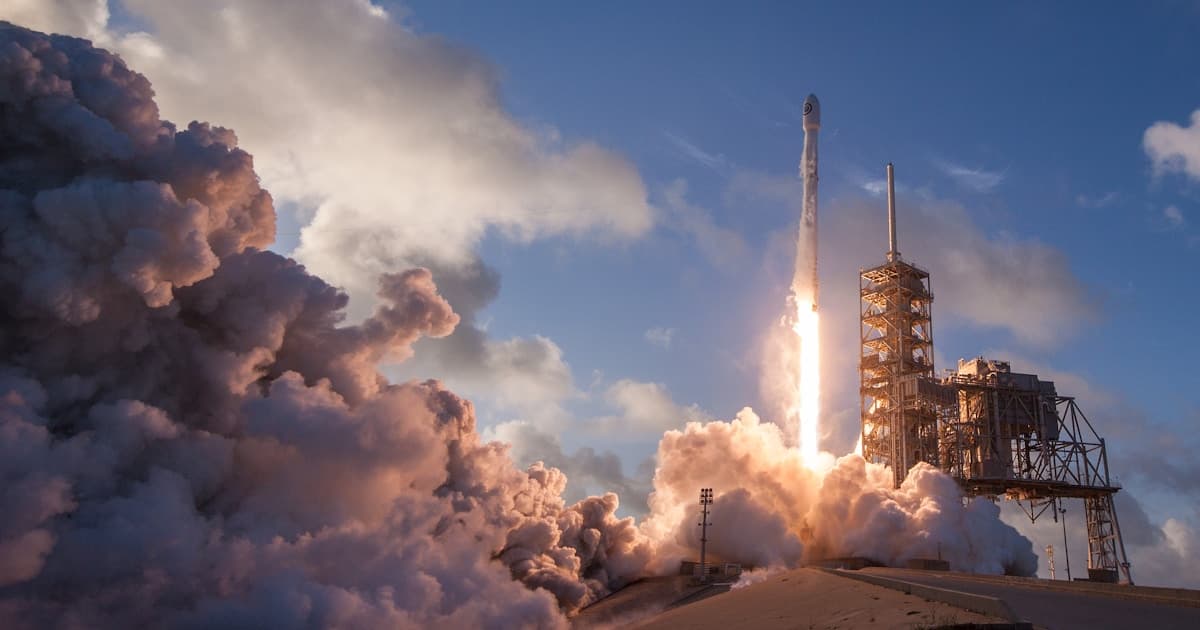
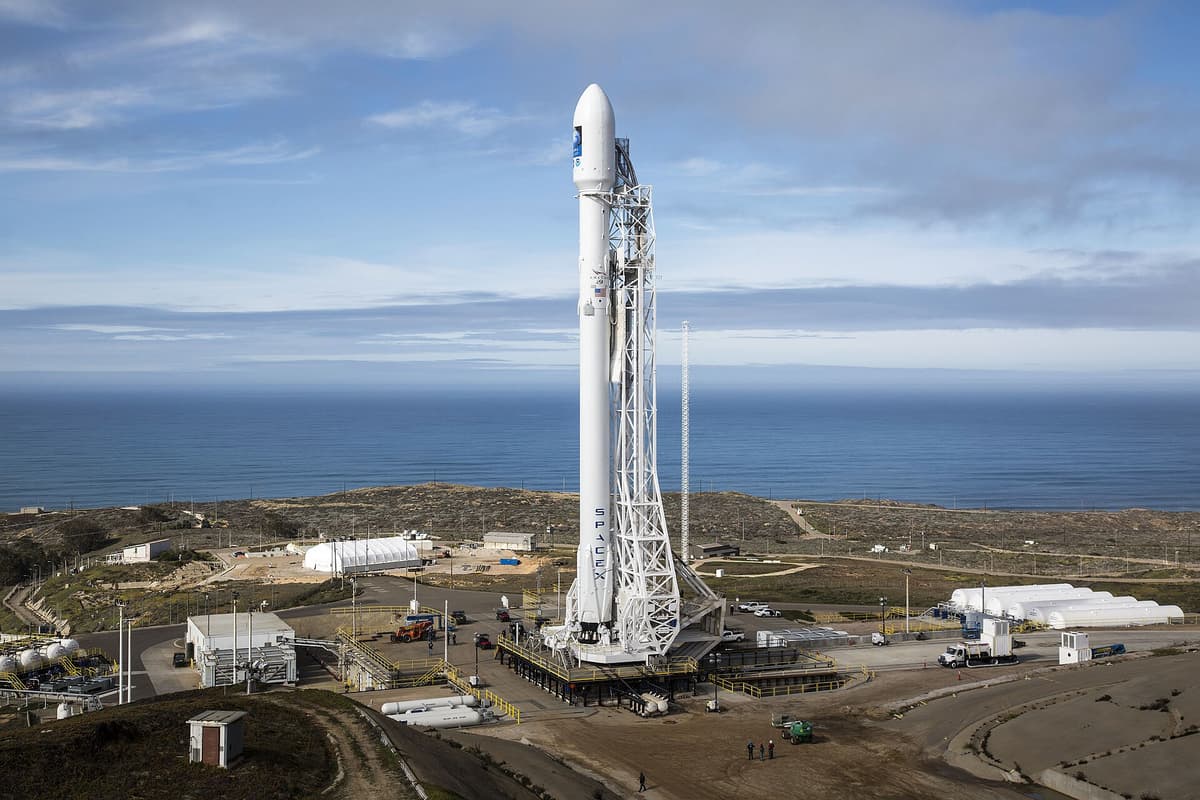
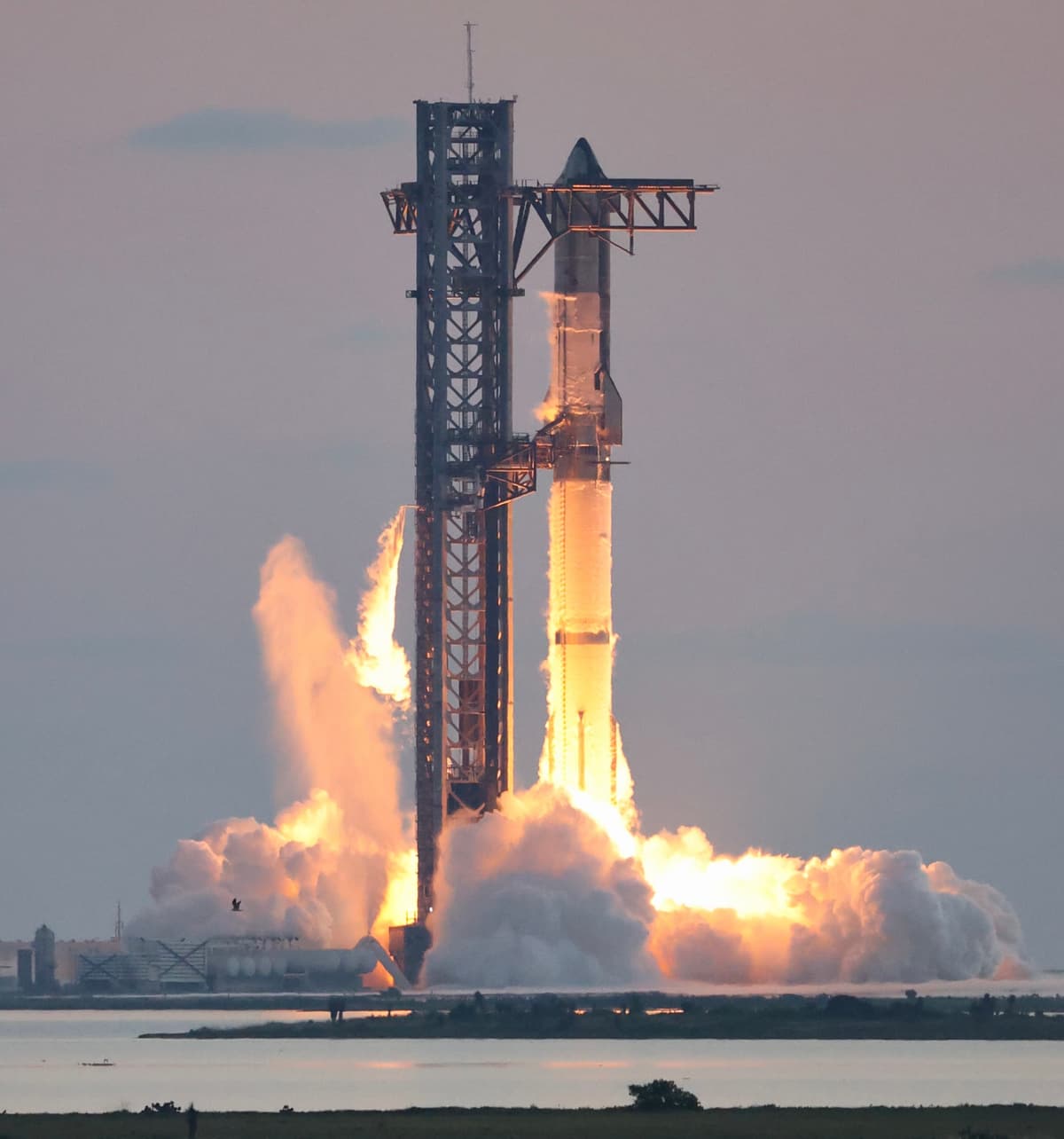
First, SpaceX. With reusable Falcon 9 rockets it drove launch costs down, and with Starlink satellite internet it built a steady subscription revenue base. The key point is that it's no longer just a rocket company — it's a "space infrastructure platform." Launch revenue, Starlink subscriptions, and Starship contracts are its three revenue pillars, and that diversified cash generation is what underpins the $1.77T valuation. Today's listing is the first time that value gets tested in public markets.
Second, Elon Musk. As founder and largest shareholder, he keeps north of 80% of the voting power even after raising $75 billion, thanks to a dual-class structure that takes in outside capital without surrendering control. For investors, buying SPCX is effectively a bet on one man's judgment. On top of that, the story carries an AI overlay: the synergy between Musk's AI company xAI and SpaceX — the data pouring off satellites and rockets, autonomous orbital calculations, and more.
Third, the money chasing AI itself. SpaceX's debut isn't a standalone event but one piece of a bigger wave. Anthropic filed a confidential S-1 on June 1 (~$965B valuation), and OpenAI followed on June 8–9 (~$850B). SpaceX, Anthropic, and OpenAI are knocking on the public-market door almost simultaneously. That's why today's SPCX print reads as a weathervane for the market's appetite for AI and space.
The Core — What Actually Happens on Day One
| Item | Detail |
|---|---|
| First trading day | June 12, 2026 (today) |
| Exchange / Ticker | Nasdaq / SPCX |
| Offer price | $135 (fixed price) |
| Shares issued | ~555.6 million |
| Amount raised | ~$75 billion |
| Valuation | ~$1.77 trillion (largest IPO ever) |
| Day-one expectation | High volatility, likely multiple halts |
| Musk voting power | Above 80% after listing |
The table makes it plain: the price was set yesterday; today is about how the market receives it. If the opening trade runs well above $135, it signals the market thinks SpaceX was underpriced and demand overwhelms supply. If it slips below $135, it reads as a "$1.77T was too rich" warning. The fixed-price approach raises the stakes. Most IPOs offer a range like "$120–$140" and finalize after gauging demand. SpaceX set a single price, which dumps the entire burden of price discovery onto day one.
There's one more variable that will shape the weeks ahead. In May 2026, Nasdaq amended its index-inclusion rules, shortening the Nasdaq-100 waiting period for megacap IPOs from roughly three months to just 15 trading days. That makes SpaceX eligible to join the index around early July. Once it's in, passive funds tracking the index have to buy SPCX mechanically, which affects post-IPO supply and demand. So today's price isn't the end — it's the opening scene of a drama that runs through index inclusion a few weeks out.
Demand ran hot, too. Reports indicate investor demand far exceeded the $75 billion SpaceX sought. Demand swamping supply increases the odds of a pop on day one — but it's a double-edged sword, because it also means expectations may already be baked into the price. Predicting today's move with any certainty is premature.
Who Gains What
For SpaceX, the biggest win is the dry powder: about $75 billion. It can push next-generation Starship development, expand the Starlink constellation, and fund astronomically expensive ambitions like Mars with public-market capital. Being public also gives employee stock options liquidity, which helps retain talent. Musk takes the money while keeping 80%+ voting control — close to an ideal outcome.
For early and existing investors, long-locked stakes finally get a path to cash. SpaceX shares traded only in a constrained secondary market until now; the public listing explodes that liquidity. But how much they realize depends on where the price settles, so whether SPCX trades above or below $135 today directly drives their gains.
For retail investors, today opens the first large window to bet directly on the space-and-AI theme. SpaceX was a private company ordinary people couldn't buy; now anyone can trade SPCX. Just keep in mind that the dual-class structure leaves shareholders almost no governance influence, and at a $1.77T valuation, a lot of future growth may already be priced in.
History — Mega-IPOs, Hits and Misses
On the success side, Alibaba (2014) and Saudi Aramco (2019) both listed at record-class scale, with huge business bases and cash flows backing their valuations. SpaceX, with steady Starlink subscription revenue, is different from a story-only IPO — there's a real money-making business underneath.
On the disappointment side, plenty of hyped tech companies debuted and immediately fell below their offer price, or saw the froth evaporate right after listing. A fixed-price, high-valuation combo is especially exposed: if day-one discovery disappoints, the backlash is large. If $135 turns out to have sat above the market's comfort level, a first-day decline could feed the "AI and space bubble" narrative. The bigger the deal, the bigger the ripple to overall market sentiment.
The lesson: for mega-IPOs, the real test isn't how much you raised but whether you justify the valuation with results. Alibaba and Aramco proved it; the bubble IPOs never did. To justify $1.77T, SpaceX has to deliver on Starship commercialization, Starlink subscriber growth, and the xAI synergy in actual numbers. Today's first trade is just the first line of a long scorecard.
Rivals' Counter-Play
Direct competitors in launch (Blue Origin and others) have to feel the pressure of SpaceX's war chest. A SpaceX armed with $75 billion that drives launch prices lower and accelerates Starship could widen the gap on both price and technology. Rivals' counter-plays are diversifying government launch contracts, attacking small-sat and niche-orbit markets, or raising their own capital to fight back.
In the bigger picture, SpaceX competes indirectly with AI giants like OpenAI and Anthropic for capital-markets liquidity. If SpaceX absorbs $75 billion today, that's capital not available for others listing around the same time. So today's SPCX result is a variable in how OpenAI and Anthropic tune their own timing and pricing — a strong debut says the market is still thirsty for AI and space, while a weak one could cool the mood.
Then there's the internal synergy of Musk's empire. If xAI and SpaceX share data and infrastructure, that creates a moat — "AI and space fused into one platform" — that rivals struggle to copy. Catching up would require simultaneous massive investment in both space and AI, which is hard. Ultimately, today's IPO injects enormous capital into Musk's integrated strategy, with the potential to reshape the competitive map.
So What Actually Changes — By Audience
For investors, you've got a weathervane for the space-and-AI theme. SPCX trading well above $135 today signals the market's appetite is still hot; below it signals bubble worries. Given the dual-class structure and high valuation, approach it knowing this is a long-term bet on Musk — and brace for big swings and repeated halts on day one.
For people in tech and space, see this as the moment public-market money flows in earnest into space infrastructure. As $75 billion goes into launch, satellites, and AI, demand for work and talent across the industry rises. At the same time, SpaceX's widening capital edge could reshuffle the competitive landscape, so it's worth checking where your company or career sits in that current.
For general observers, grab the big picture: this is an era when record money is pouring into AI and space. Three giants — SpaceX, Anthropic, OpenAI — entering the listing race at once means capital markets see these as the next growth engines. Whether the bet is justified is a question for the next few years of results; today is just the prologue.
🥄 Three Things You're Probably Wondering
— So can I actually buy SPCX today? Yes — it trades on the Nasdaq under SPCX starting today, so retail investors can buy in. Just know the first day brings big volatility and possible repeated halts, so quotes can swing hard. Remember the dual-class structure leaves shareholders little influence, and the valuation is already at $1.77T.
— Didn't it list yesterday? What's different today? Yesterday was when the $135 offer price was locked in; today is when trading actually begins at that price. Writing down a price and having the market accept it are entirely different things. Real price discovery happens on today's first trading day.
— Isn't $1.77T too expensive? Too early to call. Starlink subscriptions and the launch business generate real cash, which supports the valuation — but whether the price is fair will be answered by today's reaction and future results. Whether the opening trade clears above or below $135 is the first data point.
References
- SpaceX IPO Date Set for June 12 at a $1.75 Trillion Valuation — TradingKey / CNBC
- SpaceX IPO targets 12 June 2026 Nasdaq listing — Capital.com
- SpaceX Share Price (SPCX): What to Expect After the IPO — XTB
- SpaceX Stock: IPO Date, Share Price & News — Investing.com
- SpaceX IPO 2026: Date, Price & How to Buy SPCX Stock — Financer
Numbers and criteria are as of announcement and may change. Investment calls are yours to make!