AI agents pay without human hands — AWS's May 7 move
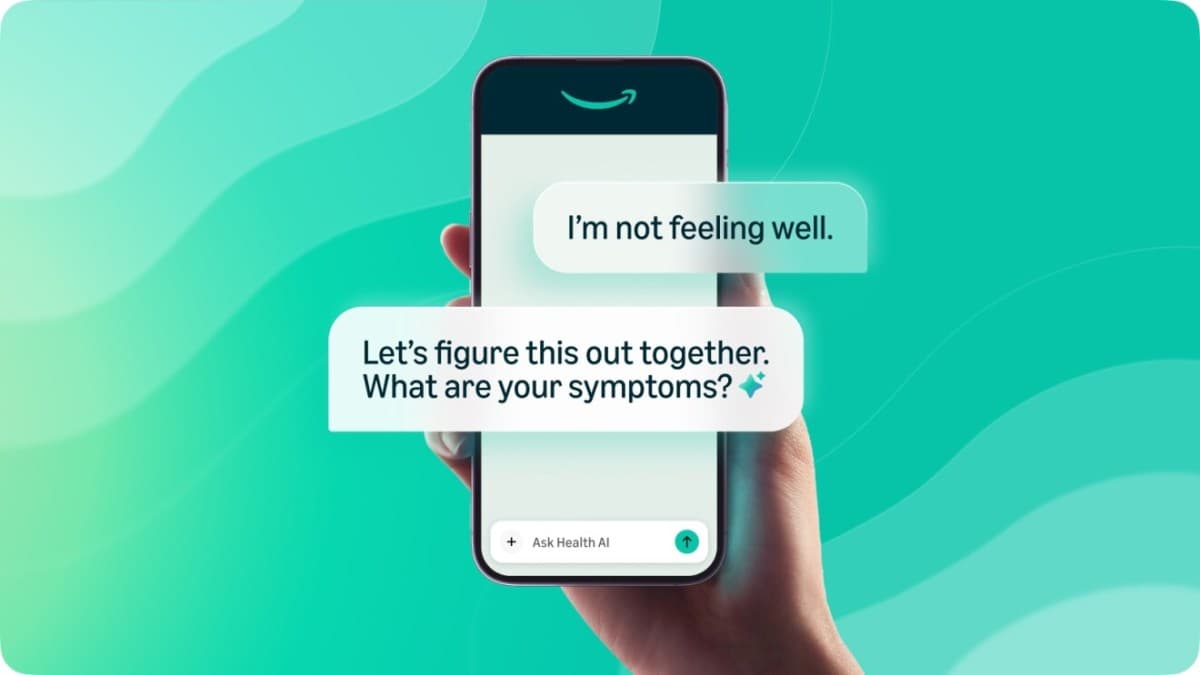
Here's the deal. On May 7 AWS added a Payments preview to Bedrock AgentCore. Mechanism: developers attach a Coinbase CDP wallet or Stripe Privy wallet to an agent, set session-level spending limits (e.g., $50/session, $200/day), and the agent autonomously makes stablecoin payments during execution. When the agent hits a paid resource and gets an HTTP 402 response, AgentCore handles x402 protocol negotiation and pays in USDC.
This is the first such case among major clouds (AWS, GCP, Azure). An agent holds its own wallet and transacts without human click-to-pay. Coinbase contributes CDP (Coinbase Developer Platform) wallet infrastructure + Base-chain USDC payments. Stripe contributes its Privy subsidiary's wallet infrastructure + stablecoin payment processing. Both come in as first-class connectors.
What this means: First, AI agents graduate from "API caller / data processor" to "economic actor." Second, stablecoin + x402 protocol becomes the de facto starting point for agent payment standards. Third, AWS bundles Anthropic + Bedrock + AgentCore + Payments into a complete "agentic infrastructure" full stack — a direct counter to Alphabet's full-stack narrative.
Each player — AWS, Stripe Privy, Coinbase, x402
AWS Bedrock AgentCore. AWS's agent infrastructure launched in 2024. Provides model routing (Anthropic Claude, Llama, Mistral, Titan), session memory, tool use, MCP server integration, and observability in one place. The May 7 Payments addition is the largest feature expansion. AgentCore moves from "tool to build agents on Bedrock" to "agent operating system."
Stripe Privy. Wallet infrastructure company Stripe acquired in 2024. Core: user-friendly embedded wallets (sign in via email/SMS, no seed phrase). Operates 100M+ wallets. In AgentCore Payments, Privy wallets (1) generate agent-only wallets, (2) enforce session limits, (3) integrate with existing Stripe payment infrastructure (cards, ACH).
Coinbase CDP (Coinbase Developer Platform). Coinbase's developer wallet/payment infrastructure. Base L2 chain + USDC + Smart Wallet. In AgentCore Payments, CDP wallets provide (1) low Base-chain gas costs ($0.01–0.05 per transaction), (2) instant USDC payments, (3) multisig / spending policy enforcement.
x402 protocol. Payment protocol Coinbase released last year. Starts with HTTP 402 ("Payment Required"). Client (agent) receives 402, automatically negotiates payment information → stablecoin payment → 200 response with resource access. Machine-to-machine payment without a human payment page. AgentCore is the first major-cloud implementation of this protocol.
Consortium signal. AWS + Anthropic (already on Bedrock) + Stripe + Coinbase appear together in a single announcement. A four-party "AWS-Anthropic-Stripe-Coinbase" alliance, distinct from OpenAI ChatGPT Operator and Google Vertex AI Agent Builder. New axis of agentic infrastructure competition over the next 12 months.
Core developments — workflow and use cases
Default workflow.
- Developer builds an agent on Bedrock (e.g., travel booking agent, data fetch agent)
- Attaches a Privy or Coinbase CDP wallet to the agent
- Sets session limits: $50/session, $200/day, $20 per single transaction, etc.
- During execution, the agent automatically pays for paid resources it encounters
- All payments captured in audit log + spending policy enforcement
- Limit breach triggers human approval escalation
Representative use cases.
- Data purchase agent: Autonomous access to paid data APIs like S&P/Nasdaq/Crunchbase. Per-token micro-payments around $0.001.
- Travel booking agent: Hotel/flight booking on Expedia/Booking.com. $500–1,000 session limit.
- AI agent-to-agent payments: Agent A commissions analysis from Agent B → B receives USDC for the work.
- Content licensing agent: Auto-license Reuters/AP/Getty images and stock footage.
- Cloud resource auto-purchase: Auto-scale extra GPU instances, storage, API call quotas.
- On-chain trading agent: Autonomous trading on DEX/DeFi protocols (subject to financial regulatory compliance).
Pricing model. Bedrock AgentCore charges hourly + per-transaction fees. No per-transaction fees during Payments preview (beta). At GA, expect 0.5–1% per transaction (Stripe standard) or 0.1–0.3% on USDC payments (Coinbase standard).
| Layer | Legacy | AgentCore Payments |
|---|---|---|
| Payment subject | Human (click-to-pay) | AI agent (autonomous) |
| Payment method | Card / bank | USDC stablecoin |
| Payment protocol | Card page | x402 protocol |
| Payment lead time | Minutes-hours | Seconds |
| Payment limits | Human decision | Session limits + policy |
| Audit | Payment receipt | Audit log + spending policy |
Who wins — beneficiary breakdown
AWS. Bedrock usage acceleration + claim to the "agentic infrastructure" category. Bedrock revenue scenarios: $8B 2026 visibility → $15B 2027. The Anthropic + Stripe + Coinbase alliance solidifies AWS's agentic full-stack narrative. Direct counter to Alphabet's full-stack story.
Stripe. Privy's value compounds. The 2024 acquisition price was ~$700M; 2026 value scenario $3–5B. Stripe also takes the lead in the new "AI agentic payments" category over PayPal/Square. The Stripe IPO conversation reignites.
Coinbase. Base chain + USDC become the standard layer for AI agent payments. CDP transaction volume grows 5–10x scenario. Coinbase revenue mix shifts away from trading fee dependency toward infrastructure + payment fees — improved revenue stability.
Anthropic. Claude Opus 4.7 on Bedrock now sits on a full agentic + payment-capable stack. Combined with the May 5 finance agents launch, the message lands: "Anthropic + AWS = enterprise agentic standard."
Service providers (API companies): Exposing your own resources via x402 means AI agents pay you automatically. New revenue channel. But pricing + policy design required. Crunchbase, S&P, Reuters, Getty are likely the fastest adopters.
End users (consumers / enterprises): Agents handle more work autonomously. But limit/policy design is essential. Misconfigured agents can over-spend or be exposed to fraud.
Past parallels — Stripe API 2010, IFTTT 2011, Smart Contracts 2015
Stripe Connect 2014. Infrastructure that let marketplaces pay their own users. The payment backbone for the explosive growth of Uber/Lyft/DoorDash. AgentCore Payments restructures the same pattern in the "AI agent → external resource" direction. That Stripe is central to both cycles is meaningful.
IFTTT (If This Then That) 2011. First case of the automation workflow market. Trigger → action defined by users for auto-execution. AgentCore Payments is the "AI + payments" evolution of IFTTT. Difference: the LLM makes the decisions/judgments.
Smart Contracts / DeFi 2015–2017. Ethereum + DeFi protocols built autonomous payment/transaction infrastructure under "code is law." But humans still triggered contract deployment/execution. AgentCore Payments adds (1) AI agent self-determines triggers, (2) Base L2 + USDC improves user friendliness. The next evolutionary step from DeFi.
Counter-case: Apple Pay autonomous payment attempts 2016–2018. Voice and beacon-triggered Apple Pay attempts stalled due to fraud + UX friction. AgentCore Payments differentiates with (1) explicit session limits, (2) audit log + spending policy enforcement, (3) stablecoin + blockchain transparency. Same fraud risk persists, but control infrastructure is more sophisticated.
Competitor counterplays — Google, OpenAI, Stripe, Visa, PayPal
Google's counter. Vertex AI Agent Builder + Google Pay + Wallet integration possibility. No explicit announcement as of May 11. Strength: Google Pay user base. Weakness: lacks stablecoin/blockchain infrastructure. Google needs to ship its own "Agentic Payments" within 6–12 months — otherwise AWS owns the category standard.
OpenAI's counter. ChatGPT Operator + AgentKit + Stripe Atlas/Issuing integration. May 9 announcement of deeper Stripe partnership expansion. But cloud is MS Azure-dependent — full-stack weaker than AWS. Counter: (1) leverage ChatGPT user base for consumer agentic payments, (2) Sora-3 + Operator + Payments multimodal agent.
Microsoft's counter. Azure AI Foundry + Microsoft Pay integration possibility. But OpenAI dependency makes solo full-stack difficult. Differentiation possible by integrating payments into M365 Copilot for enterprise workflows.
Visa/Mastercard's counter. Visa Direct API + AI agent payment beta under review. Strength: global card infrastructure. Weakness: payment lead time (minutes → hours) slower than USDC/blockchain. Counter: define a card + AI agent payment integration standard.
PayPal/Square's counter. PayPal: PYUSD stablecoin + AI agent payment beta. Square: differentiation via Cash App + Bitcoin Lightning payments. Both lack entry into the AWS Bedrock alliance and face standalone build burden.
Korea market implications: Toss, KakaoPay, Naver Pay lag globally in "AI agent payments." Differentiation: (1) Korean consumer base + Korean-language agent integration, (2) Toss's P2P payment infrastructure extended to agent-to-agent payments, (3) Korea-specific standards compatible with electronic financial transaction law. Failure to ship within 6–12 months means lagging the global standard.
So what changes — by persona
Developers / startups: Adding payment capability to AI agents is now possible via single API + session limits. New SaaS categories explode (travel booking agents, data purchase agents, content licensing agents). But payment policy design + fraud prevention + audit logging become essential skill sets. "Agentic payments engineer" emerges as a new job role within 6–12 months.
Service API operators: Exposing your resources via x402 opens new revenue from AI agent auto-payments. Pricing design (per-call, per-token, per-MB) is critical. Crunchbase, S&P, Reuters, Getty are likely the fastest adopters.
Enterprise CIOs: Autonomous payment by AI agents makes cost control + fraud prevention policy design the biggest must-have. Integrate session limits, daily caps, category-specific limits, escalation policies into enterprise governance. Accounting/audit systems also need audit log integration.
Regulators: Autonomous AI agent payments are an area where KYC/AML is hard to apply. Regulatory guidelines for "code-driven payments" are urgent. EU MiCA, US SEC, Korea FSC are each working on their own. First explicit guidelines expected in H2 2026.
Investors: Stripe IPO valuation jump visibility + Coinbase infrastructure revenue diversification + Anthropic valuation jump in tandem. New "agentic payments" category ETFs/funds likely launch. New unicorns (agent payment middleware, x402 wallet infrastructure, agent-to-agent marketplaces) emerge in 12–24 months.
Korea market implications: Toss, KakaoPay, Naver Pay are close to evaluating their own AI agent + payment integration. Concurrent UX/education challenge to make Korean consumers understand "agent payments." Korean fintech startups (agent payment middleware, Korean-style x402 wallets) actively raising seed/Series A.
References
- Agents that transact: Introducing Amazon Bedrock AgentCore Payments — AWS, 2026-05-07
- Amazon's new AI wallet: AWS, Coinbase, and Stripe build payment rails for bots — CoinDesk, 2026-05-07
- AWS adds agentic payment features to Amazon Bedrock AgentCore — SiliconANGLE, 2026-05-07
- Stripe partners with AWS to power AgentCore payments with Privy — Stripe, 2026-05-07
- x402 protocol specification — Coinbase, 2025
- Bedrock AgentCore documentation — AWS
Key signals to track over the next 90 days
Three signals will tell us whether AgentCore Payments becomes the de facto agentic payment standard or fragments into a multi-protocol mess. First, the Google Vertex Agent Builder response: Google has the wallet (Google Pay) and the user base, so a Vertex + Pay payments preview within 90 days locks the duopoly competition; absence cedes the standard to AWS. Second, x402 protocol adoption beyond Coinbase — if Cloudflare, Vercel, and Fly.io expose their paid resources via x402 within 60 days, the protocol crosses the chasm from "Coinbase-supported" to "industry-standard." Third, the first major fraud incident — historically, every new payment rail (PayPal 2002, Venmo 2018, Cash App 2020) has a defining fraud loss in the first 18 months that shapes regulatory response. Whether AgentCore Payments handles its first incident with full audit log + immediate refund matters more than any feature on the roadmap. The combination of these three determines whether agentic payments graduate from preview to standard.