€12B → $18B in 8 months, multiples over-subscribed
On May 11, TechCrunch reported that German defense AI startup Helsing is closing a $1.2B round. Lead investor: US growth fund Dragoneer. Co-lead: existing backer Lightspeed Venture Partners. Post-money: $18B. The number that matters is that 8 months earlier the same company's Series D came in at €12B (~$13B) — that's a +50% jump in less than a year, led by a fresh growth fund rather than a follow-on from the same set of insiders. The market is pricing in "Helsing graduates to the next stage."
The round itself is multiples over-subscribed — without the $1.2B cap, $3–4B could have come in. Another data point worth highlighting — roughly 80% of Helsing's cap table is still European capital. Dragoneer led, but the structure intentionally keeps European ownership dominant. Europe's political will to reduce US defense dependence is showing up directly in the cap table.
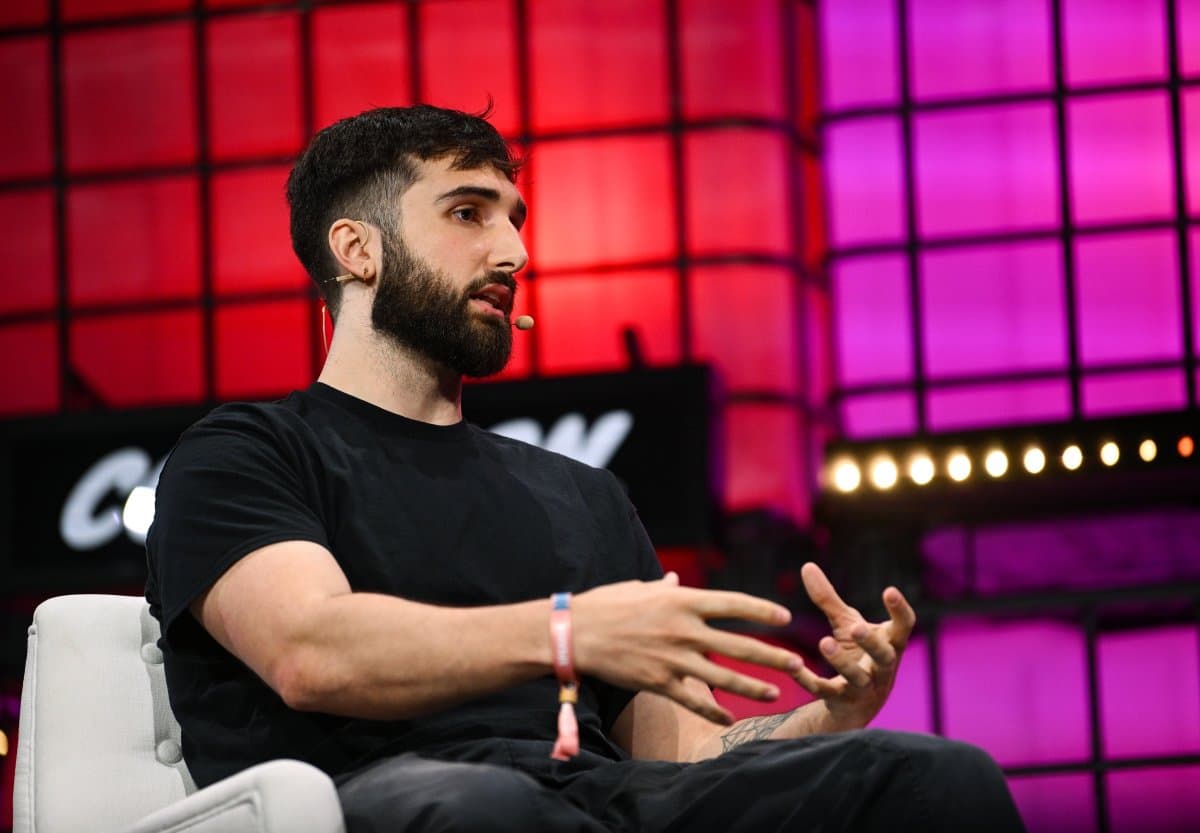
The Daniel Ek angle is the headline non-obvious story. The Spotify founder seeded Helsing with €100M from his family office in 2021, has chaired the board for five years, and has built the largest example in Europe of a tech billionaire making a direct, persistent defense bet.
The cast — Helsing, Dragoneer, Lightspeed, Daniel Ek, the German government
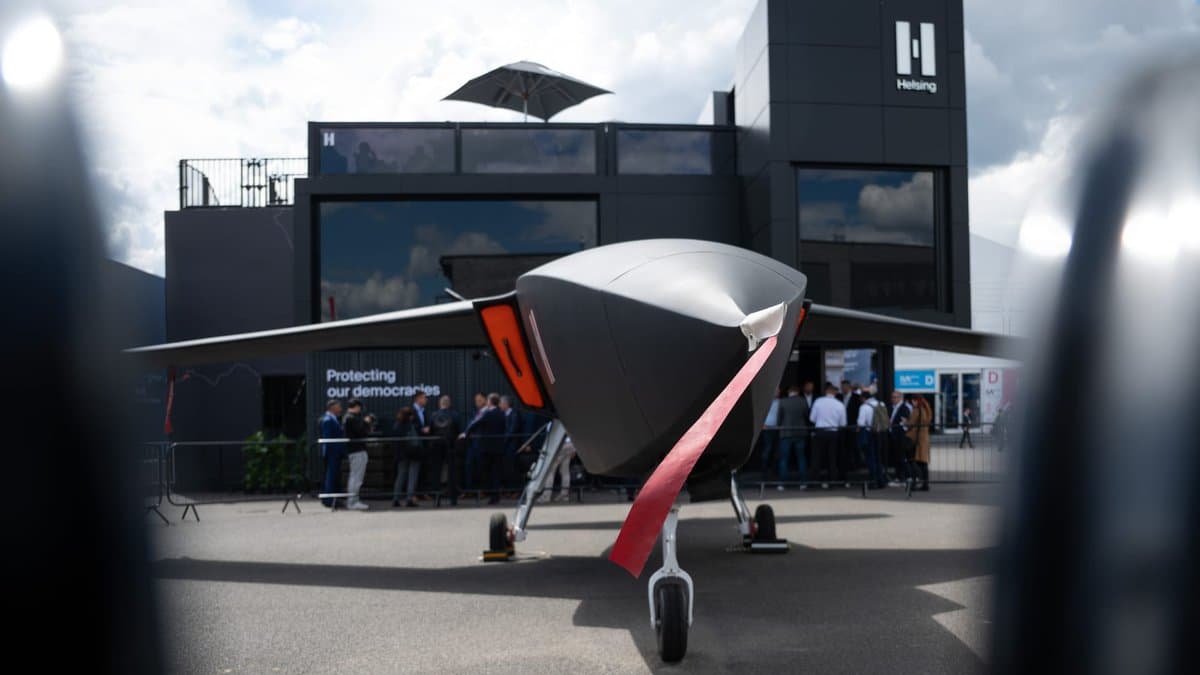
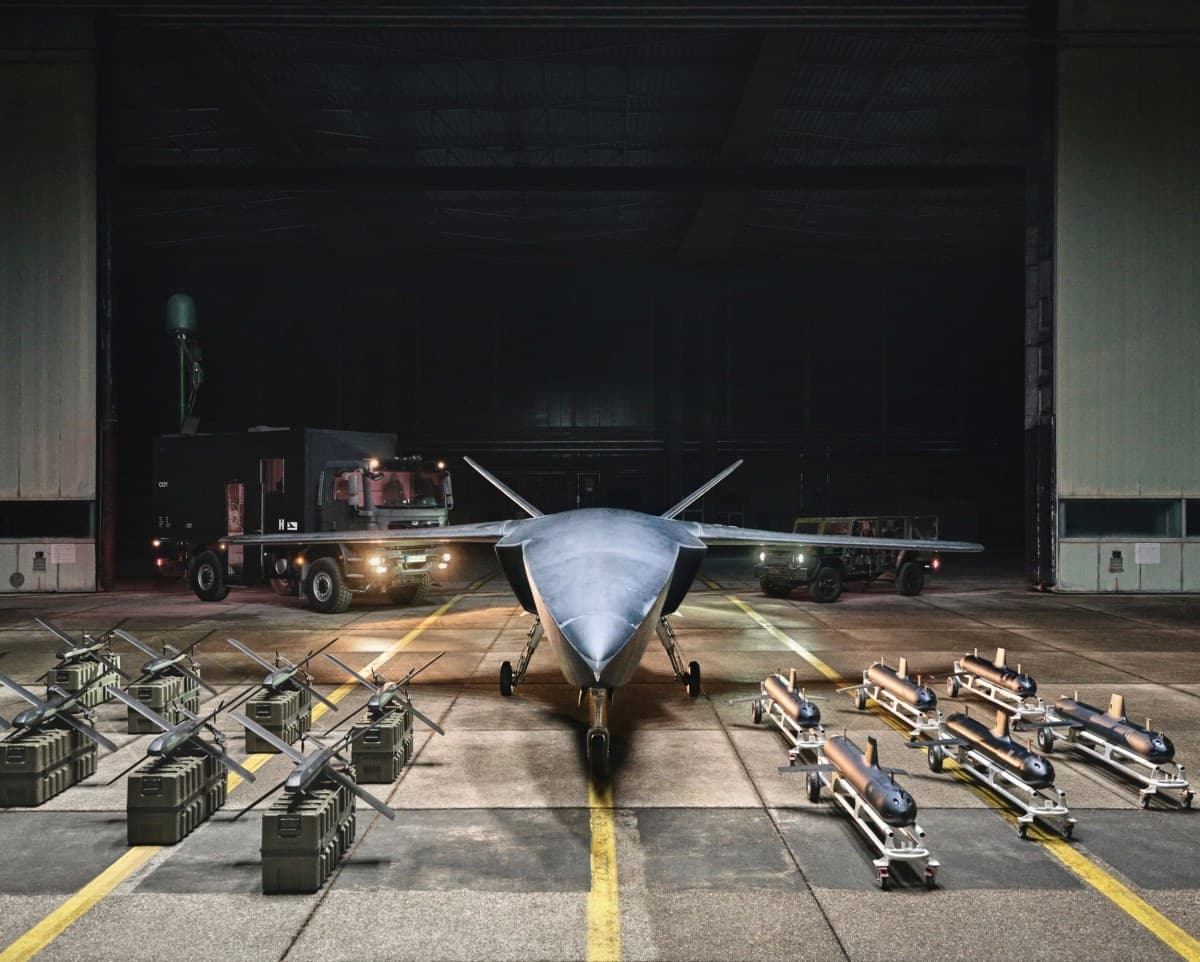
Helsing. Founded in Munich in 2021. Co-founders Torsten Reil, Gundbert Scherf, Niklas Köhler. Core products: (1) Centaur — AI combat system embedded in fighter jets, drones, ground systems. (2) HX-2 — AI-enabled loitering munition. (3) Altra — edge inference appliance for GPS-denied environments. December 2025 brought a Centaur integration manufacturing contract with the UK's BAE Systems for Eurofighter and F-35 platforms. Early 2026 reports of HX-2 combat validation on the Ukrainian front amplified market value.
Dragoneer Investment Group. San Francisco growth fund, ~$15B AUM. Past bets: Spotify, Snowflake, Airbnb, Bytedance. Helsing is its first major defense entry. The signal: US growth capital has decided European defense is now an investable category. "Sovereign AI" is no longer a niche — it's a thesis at the multi-billion fund level.
Lightspeed Venture Partners. Silicon Valley VC. Backed Helsing in Series C (2024) with €100M+, in Series D (2025), and now leads alongside Dragoneer. Among the earliest US VCs into European defense — building a sizable concentrated stake.
Daniel Ek. Spotify founder. €100M solo seed in 2021, chairman since. His family office Prima Materia has put roughly €1B into European deep tech with Helsing as the flagship holding. As of May 11 the position is worth roughly $2B on paper.
German government (Bundestag). February 2026 approval of a €269M HX-2 manufacturing contract was the immediate catalyst. First major case of Germany directly funding a domestic defense startup at scale. That triggered a domino across France, Italy, Sweden, and Poland — and lifted Helsing's revenue visibility 5–10x in a year.
Competitor Anduril (US). Helsing's American counterpart. Pulled back from a planned 2024 IPO; now restarting in 2026. Anduril is the standard in the US; Helsing is the standard in Europe. Together they form the duopoly of Western defense AI.
What's inside — round structure, revenue visibility, product line
Round structure. Roughly $650M in the Tier-1 cap (Dragoneer + Lightspeed); $550M in Tier-2 (Plural, General Catalyst, Saab Ventures, Accel). Format is essentially a "Series D-1" or Series D extension rather than a fresh Series E. Terms aren't public; standard growth-round assumption is 1x non-participating preferred with a 4–5% cumulative dividend optionality.
Revenue visibility. 2026 guidance isn't disclosed. Industry estimates: €700M–1B, vs. ~€350M in 2025 — a 2–3x jump. The Bundestag HX-2 line is the largest single contract. BAE Systems Centaur integration is second. Pipeline reportedly includes integrations with Dassault (France), Saab (Sweden), and Leonardo (Italy) over the next 12–18 months.
Product lineup. (1) Centaur — multi-platform AI combat system, integrated with Eurofighter, Gripen, F-35, Eurodrone. Core capabilities: multi-sensor fusion, real-time threat prioritization, human-machine teaming UI. (2) HX-2 — AI loitering munition. Recon → target ID → strike-decision → terminal phase, with a mandatory human approval step. Combat-validated in Ukraine. (3) Altra — edge inference device that keeps the above autonomous in GPS- and comms-denied environments.
| Item | Detail |
|---|---|
| Round size | $1.2B |
| Post-money valuation | $18B |
| Prior Series D (2025-09) | €12B (~$13B) |
| 8-month valuation jump | +50% |
| Lead | Dragoneer (US growth) |
| Co-lead | Lightspeed Venture Partners |
| Round status | Multiples over-subscribed |
| European capital share | ~80% |
| Bundestag HX-2 (2026-02) | €269M |
| 2026E revenue (industry est.) | €700M–1B |
| Daniel Ek paper value | ~$2B |
Regulatory and political context. January 2026 brought the EU's "European Defense Industrial Strategy" (EDIS) into force, mandating member-state defense spending of 2% of GDP+ and requiring 50%+ of defense procurement come from EU-based suppliers. Helsing is the direct beneficiary. With Lockheed Martin, Boeing, and RTX constrained on EU access, Helsing fills the gap.
Who wins, who loses
Helsing. First, funding cushion — $1.2B covers 24–36 months of opex, R&D for the next product generation, and manufacturing capacity expansion. Second, valuation runway — next round or IPO plausibly opens at $30–50B. Third, political alliance lock-in — Daniel Ek as chair + US/European growth capital + EU government revenue locks Helsing in as the EU defense AI standard-bearer.
Dragoneer. A category opening for US growth capital. Roughly 4–5% of $15B AUM concentrated in one deal. If Helsing IPOs or hits secondary in 24–36 months, 5–10x is on the table. Plus first-mover positioning among US growth funds in European defense.
Lightspeed. Three follow-ons (Series C, D, D-extension). Helsing is plausibly the single largest contributor to fund IRR — a textbook home-run position. Strongest validation yet of the European deep tech thesis.
Daniel Ek. €100M seed → ~$2B in five years, ~20x mark. Patient capital playbook. Second home run after Spotify; cements his brand as the most credible European deep-tech investor.
German government / EU. Sovereign AI dividends. Less US dependence, more domestic frontier military AI capability, supply-chain coverage for Ukraine support. The downside: single-vendor risk. Expect EU-level multi-vendor diversification policies.
Anduril. Pricing pressure. The US is Anduril's home court; Europe is effectively Helsing's. Anduril's IPO will be priced relative to Helsing — if Helsing trades at $30B in secondary, that's the comp.
Big incumbents (Lockheed, RTX, BAE). Mixed. Lose EU procurement share, but win as OEM integrators of Centaur and Altra. BAE is the most aggressive Helsing partner.
Past patterns — what worked, what didn't
Worked: Anduril (2017–2026). US defense startup playbook. Palmer Luckey, Founders Fund backing, $1B+ revenue in 7 years. Pre-IPO valuation ~$14B in 2024; restart estimates put 2026 at $25–30B. Helsing's growth curve runs about a year behind Anduril's.
Worked: SpaceX (2002–present). The original government-revenue + private-capital + tech-founder-chairman template. Anduril copied it for US defense; Helsing is now copying it for European defense.
Failed: QuantumBlack (2008–2015). European AI consultancy, never built proprietary product, absorbed by McKinsey. The default failure mode for European deep tech without its own capital and manufacturing capacity. Helsing avoided that trap by locking in production lines early.
Failed: Boston Dynamics (Google era, 2013–2017). Captured government R&D revenue but couldn't translate it into a private-capital valuation that anyone wanted to underwrite. Sold Google → SoftBank → Hyundai. Lesson: government revenue alone doesn't multiply; you need growth-capital tracking too. Helsing has both.
Counter-plays
Anduril. 2026 IPO acceleration. Estimates of $25–30B at IPO. If Helsing's secondary clears $25–30B, Anduril's IPO benchmark is set above. Geographic expansion to UK, Australia, Israel — markets where Helsing is weaker.
Shield AI (US). Autonomous flight focus, directly competitive with Helsing's Centaur. Closed Series F at ~$1B in 2025. Strong US military revenue, weak EU access.
Palantir. The data/software rival. AIP (Artificial Intelligence Platform) dominant in defense and government for analytics. Helsing competes more in weapons and platforms; Palantir competes in decision-support. Some complementarity, but a clear competition for budget share.
European primes (Airbus Defence, Dassault, Leonardo, Saab). Building proprietary AI while partnering with Helsing for integration. Saab Ventures' presence in this round is the tell — primes locking in Helsing as their integration partner.
China (CASC, AVIC). Domestic acceleration in AI and drones. Locked out of European markets but competing in the Middle East, Africa, Southeast Asia. Helsing's global expansion will overlap with Chinese primes.
So what changes — by persona
European defense policymakers. Manage single-vendor risk. Funding for "Helsing alternatives" (Quantum Systems, Tekever) is plausible. Diversify Helsing's revenue across multiple NATO partners to reduce political concentration risk.
Investors. Re-rate the defense-AI multiple. Helsing's $18B against ~€700M–1B revenue prints at 18–25x P/S — same range as top SaaS. The market is paying for (1) government-revenue stability + (2) manufacturing-capacity moat + (3) AI differentiation. Anduril, Shield AI, and other private comps will re-mark to the same range.
Founders, deep-tech startups. Sovereign AI is no longer niche. EU, Middle East, Southeast Asia, and India are funding domestic AI capability. More deep-tech founders will see government revenue as a viable first market. But — defense has high barriers (security clearances, manufacturing, political access) and is operationally very different from SaaS.
ML engineers. Defense AI requires a different skill stack: edge inference under GPS-denial, multi-sensor fusion (radar, IR, EO, SIGINT), mission-critical safety standards (e.g., DO-178C), and security clearances. This will be the steepest talent shortage of the next five years.
Civil society. Ethical-control debates about autonomous weapons get more urgent. The EU AI Act partly excludes defense AI from "high-risk AI" rules; civil society pressure may force a separate regulatory round. Whether HX-2-style loitering munitions retain a mandatory human-in-the-loop step will be the policy battleground.
Regulators. August 2026 EU AI Act enforcement requires defense-AI exemption mechanics to be operationalized. ITAR (US) vs. EU dual-use regulation alignment is open work — Helsing selling to US allies needs ITAR compliance; US firms selling to EU members need EU member approval. Reconciling those is a 12–24-month project.