Valuation doubled in a year — but the real story is AI finally walking into the warehouse
Here's the deal: on May 26, e-commerce logistics and fulfillment company Stord announced a $250M Series F at a $3B post-money valuation. A year ago it was $1.5B — exactly double. The cap table is loud: Strike Capital led, with Kleiner Perkins, Founders Fund, Franklin Templeton, Baillie Gifford, and Lux Capital joining. Top-tier Silicon Valley VCs and big asset managers in one round means this read not as another logistics startup but as "the next paradigm."
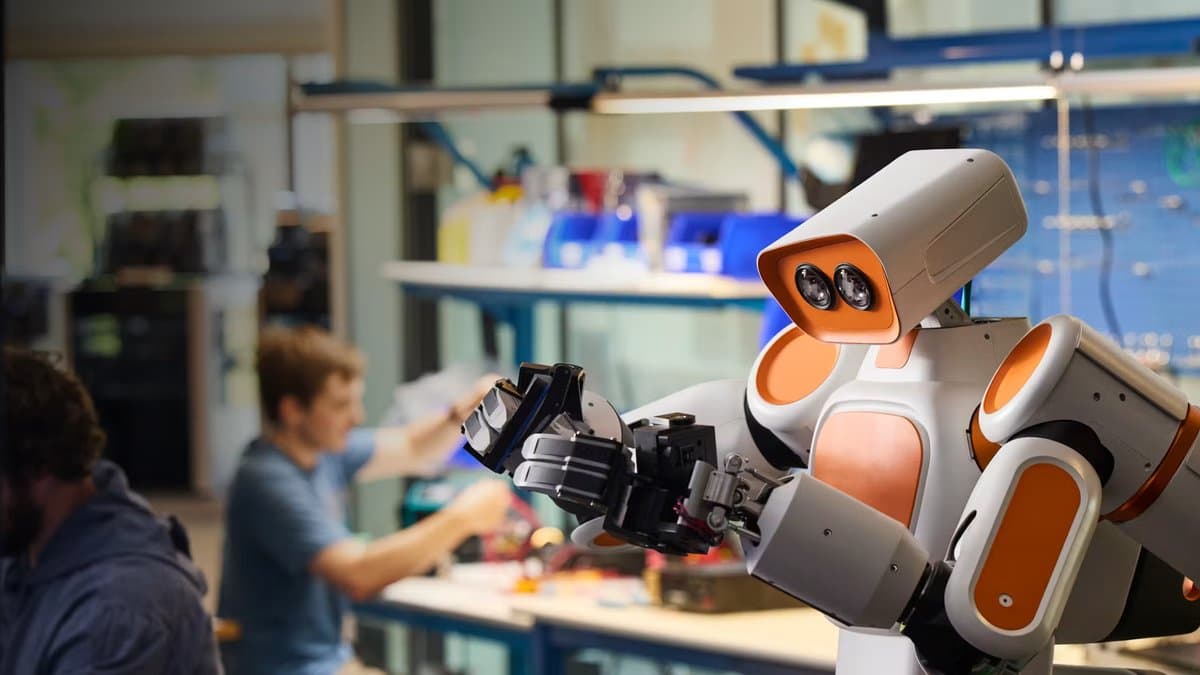
What paradigm? The answer is in the co-announced Stord Labs. This Atlanta-based group's mission is "physical intelligence" — putting agentic AI and robotics into warehousing and fulfillment. AI capital has mostly poured into the digital world — chatbots, coding, documents. Stord's round is symbolic because the money is finally crossing into physical-world automation — picking, packing, moving real things. And into fulfillment, the home turf of a giant named Amazon.
The players — Stord, and the idea of "physical AI"
Stord, founded in 2015, sells brands "Amazon-grade delivery without Amazon." Hand Stord your inventory and it runs the whole back end — storage, order processing, shipping, returns. Its core asset is ~100 logistics facilities: about 20 it operates directly and ~80 in a partner network. It aims to be a "full-stack logistics OS," fusing software (orders, inventory, shipping) with a physical warehouse network. CEO and co-founder Sean Henry started the company in his early twenties and grew it into a $3B business in a decade.
"Physical intelligence" is the keyword. If digital AI handles on-screen text and images, physical AI automates real-world objects and tasks via robots, sensors, and equipment. In a warehouse: where to place an item (slotting), what path to pick an order (picking), how to pack and load — an AI agent decides and robots execute. Beyond simple conveyor automation, Stord Labs' ambition is a "warehouse that reasons." It's the "physical AI" wave that Nvidia, Tesla, and Figure tout via humanoids and robotics — now with capital landing on logistics, its most practical application.
What the round looks like and where the bet points
The gist as a table:
| Item | Detail |
|---|---|
| Round | Series F |
| Size | $250M |
| Post-money valuation | $3B (from $1.5B a year ago — 2x) |
| Lead | Strike Capital |
| Participants | Kleiner Perkins, Founders Fund, Franklin Templeton, Baillie Gifford, Lux |
| Co-announcement | Stord Labs (Atlanta) |
| Core mission | Agentic AI + robotics in warehousing/fulfillment |
| Facilities | ~100 (~20 operated, ~80 partner) |
| Date | May 26, 2026 |
The point to watch is where they said the money goes. Usually a logistics startup that raises big builds more warehouses or makes acquisitions. Stord instead set the symbolic direction as "a new AI lab" — re-positioning as "not a warehouse company but an AI/robotics company that makes warehouses smart." The 2x valuation in a year looks driven less by raw revenue growth than by this "AI logistics OS" narrative resonating with investors.
There's skepticism too: in an AI boom, did slapping a "logistics + AI" label inflate the valuation? $3B is aggressive against Stord's actual revenue and profit. For the bet to work, Stord must prove in numbers that AI genuinely improves warehouse unit economics.
Who benefits — Stord, investors, and brands
For Stord, it's ammunition and a mandate to fight Amazon. Fulfillment's dominant player is Amazon (FBA), yet many brands face a dilemma: they hate being dependent on Amazon but want Amazon-grade speed. Stord targets that gap, selling "the Amazon experience without Amazon." $250M becomes the weapon to raise warehouse efficiency with AI and robots and cut that experience's cost. Higher efficiency means price competitiveness, and better pricing pulls more Amazon-wary brands over.
For investors, it's a bet on "the round after digital AI." Chatbot/LLM valuations are already sky-high, so VCs hunt less-crowded AI applications. Logistics and warehouse automation is a massive market (trillions globally) with huge room to automate but low AI penetration. Kleiner and Founders Fund joining signals a judgment that "physical AI is the next big theme," with Stord as their flagship bet — and if it works, multiples rivaling digital AI.
For brands (e-commerce sellers), it strengthens the Amazon alternative. If Stord lowers fulfillment cost with AI, even small brands can offer fast delivery at reasonable cost — keeping the customer experience without bowing to FBA's fees and policies. For brands that can't build logistics infrastructure themselves, an "AI-run shared fulfillment network" becomes a competitive equalizer.
History — logistics and robot automation, wins and misses
Putting AI and robots in warehouses isn't new, and outcomes split sharply. Weigh Stord's bet against precedent.
Win — Amazon × Kiva (2012, $775M acquisition). Amazon bought robot company Kiva Systems and deployed robots at scale, using "goods-to-person" (shelves come to the worker) to explode picking efficiency — the foundation of today's fulfillment edge. Lesson: warehouse automation, done well, builds a cost/speed moat rivals can't cross. That moat is exactly what Stord wants. But Amazon built it over 14 years — time is both Stord's weapon and its enemy.
Cautionary — the ups and downs of warehouse-robot startups. Many automation startups launched flashy but struggled because robots couldn't match real warehouse complexity — odd SKUs, fragile items, irregular packaging are never as clean as the demo reel. Lesson: physical AI's true hurdle isn't the algorithm but reality's messiness. For Stord Labs to win, it must prove efficiency in live data across 100 facilities, not controlled demos.
Reference — logistics-tech like Flexport and ShipBob. Digital logistics platforms spiked on pandemic demand, then corrected as the bubble deflated. Lesson: "logistics + tech" valuations are sensitive to macro and results. Stord doubling in a year is opportunity and burden — to justify this mark at the next round or IPO, it must show real AI-driven efficiency gains.
How rivals counter
Amazon defends with overwhelming scale and data — hundreds of fulfillment centers, hundreds of thousands of robots, and 15+ years of operating data make it the physical-AI leader. With heavy ongoing investment in humanoids and next-gen warehouse robots, Stord can't out-tech it overnight. Amazon's weakness is the emotional/strategic resistance of brands not wanting to depend on it — exactly the gap Stord exploits.
The Shopify ecosystem (+ logistics partners) is a variable. Shopify shut its own logistics (SFN) and pivoted to partners like Flexport; if it strengthens AI-fulfillment partners, competition emerges over Stord's core D2C customers. Conversely, becoming Shopify's preferred partner would hand Stord a huge distribution channel. A space where collaboration and competition blur.
Traditional 3PLs and robot companies react too. Giants like DHL and UPS accelerate their own automation/AI, while robot firms like Figure and Agility aim to supply "warehouse humanoids" to logistics players. Stord's differentiator is vertically integrating software (logistics OS) + physical sites + AI lab — whether that integration is strength or overload is the thing to watch.
So what actually changes
For logistics and e-commerce workers, the "warehouse becomes software" era nears. Fulfillment edge may hinge less on real estate (warehouse location) or labor cost and more on "how smartly AI runs the sites." AI-optimized slotting, picking, and inventory allocation means more orders, faster and cheaper, from the same warehouse. Frontline roles begin shifting from "physical labor" to "operating and supervising AI and robots."
For the AI and investment world, the theme sharpens: AI capital's next destination is the physical world. As LLM/chatbot valuations near saturation, capital flows to robotics, logistics, manufacturing, and agriculture — physical industries AI has barely touched. Stord's round is a flagship example, and expect a wave of "physical AI"-labeled fundraises over the next year or two. But unlike digital, the physical world is capital-intensive and hard to execute, so the winnowing will be harsher.
For consumers, expect "delivery experience leveling up." The ultra-fast, accurate delivery that today only Amazon-scale players offer will increasingly appear at small-brand shops. As AI lowers fulfillment cost, the benefit flows down as faster shipping and lower fees. The flip side is a social challenge: accelerating warehouse automation reshapes logistics jobs. AI starting to move the real things we order — beyond digital — is this round's biggest message.
References
- PR Newswire — Stord Raises $250M Series F at $3B to Advance the Physical Intelligence Layer for Commerce
- TechCrunch — Amazon fulfillment competitor Stord raises $250M at $3B valuation
- The AI Insider — Stord Announces $250M Series F, New Lab to Focus on Robotics, Physical AI
- Stord official site
- Amazon-Kiva acquisition (historical comparison)