Here's the deal: Southeast Asia just entered the humanoid race — not with one machine, but a whole ecosystem
Singapore-based physical-AI humanoid firm Doozy Robotics announced seed funding plus a global expansion across the U.S., GCC (Gulf) and Asia on May 21. Coming from a growth stage ahead of a planned Series A, it signals a move from "experiment" to "commercial deployment." Its flagship "Industrial Super Humanoid" is scheduled to launch in Q3 2026, with first deployments to follow.
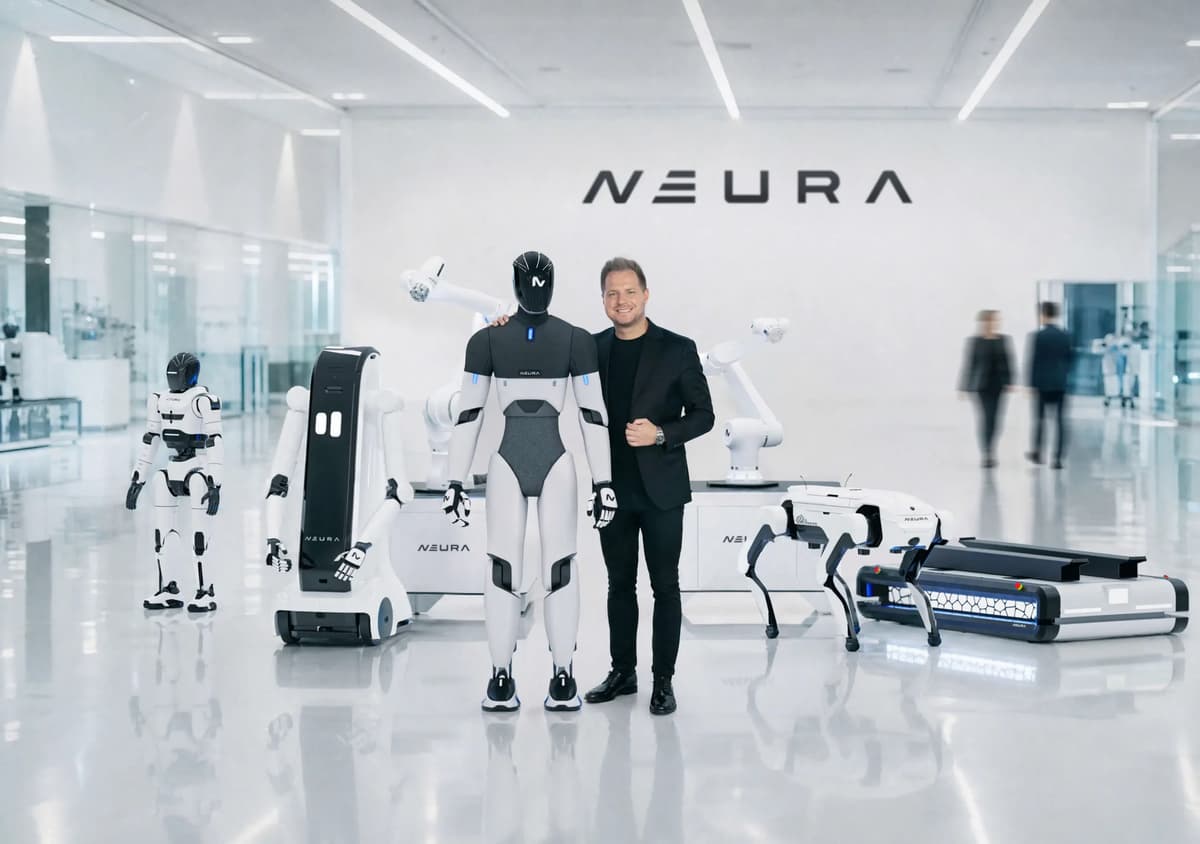
Doozy's differentiator is that it isn't selling "a single humanoid." The company is building a vertically integrated ecosystem — an industrial super humanoid, a fleet of Autonomous Mobile Robots (AMRs) and autonomous forklifts, all coordinated by its own orchestration layer, Eywa-OS. The goal isn't "one robot's performance" but "running a factory's entire autonomous workforce as one system."
It cited commercial proof points too: a global qualified pipeline of over $200M, a $144M MOU with a major industrial conglomerate, and a large humanoid pilot with a U.S. pharmaceutical leader. Heavy numbers for a seed-stage company. Paying customers are live across two continents, with names like Daimler, Carrier and VitaQuest cited; Cocoon Capital is among its backers.
The founders are Suresh Chandrasekar and Ajmal Thahseen. Doozy's arrival matters because it signals the industrial-humanoid race spreading beyond "U.S.-China duopoly" into Southeast Asia. A new player with a vertical-integration strategy is joining areas — logistics, semiconductors, food service — where commercial deployments are scaling fast.
The players — Doozy, Eywa-OS, and the factory floor
Doozy Robotics. A Singapore-based physical-AI startup. It pitches itself as "a company that runs an autonomous industrial workforce," not "a company that sells machines." Founders Suresh Chandrasekar and Ajmal Thahseen push a vertical-integration vision binding humanoids, AMRs and forklifts under one OS. Seed-stage, but its strength is already having paying customers on two continents.
Eywa-OS. Doozy's real weapon — software that coordinates heterogeneous robots (humanoids, AMRs, forklifts) under one orchestration layer. In a humanoid market where hardware competition is fierce, "an OS that runs many robots together" can be a differentiator. After all, software is what actually runs a robot fleet.
The factory floor (manufacturing, logistics, pharma). The real stage. Manufacturing giants like Daimler and Carrier, plus a U.S. pharma leader, are cited as pilots/customers. Labor shortages, aging workforces and rising wages are the source of humanoid demand — and Doozy aims to enter on the strength of "proven industrial deployments."
What it's about — vertical integration and commercial proof
The product makeup. Industrial super humanoid (Q3 launch) + AMR fleet + autonomous forklifts, bound by Eywa-OS. The crux is "integrated autonomous workforce," not "a single robot." It pictures multiple robot types collaborating under one OS in a single facility.
Commercial proof. $200M+ pipeline, $144M MOU, a large U.S. pharma pilot, paying customers on two continents. It's striking that a seed-stage startup leads with "actual deployments and contracts" rather than "demos." Humanoids have lots of "slick videos" but few "paying customers" — Doozy emphasizes the latter.
Expansion strategy. Simultaneous expansion across the U.S., GCC and Asia. The Gulf especially, with vast oil money invested aggressively in industrial automation and robotics, is an attractive funding source and deployment market for humanoid startups. Doozy aims beyond its Southeast Asian base for global demand.
| Item | Detail |
|---|---|
| Company | Doozy Robotics (Singapore) |
| Round | Seed (Series A planned) |
| Flagship | Industrial Super Humanoid (Q3 launch) |
| Integration OS | Eywa-OS (humanoid + AMR + forklift) |
| Pipeline | $200M+ |
| MOU | $144M |
Why it's worth watching. The humanoid race has been led by the U.S. (Tesla, Figure, etc.) and China (Unitree, etc.). Doozy's arrival signals Southeast Asia joining that mix. But it's seed-stage, so watch the gap between "promises" and "actual launch and scaling."
What each side gets out of it
Doozy. It secured seed capital and a global-expansion narrative at once. Ahead of a Series A, flaunting traction like "$200M pipeline + paying customers" gives it an edge for further fundraising. A successful Q3 humanoid launch would make it a player to watch overnight.
Industrial customers. Manufacturing, logistics and pharma — squeezed by labor shortages and aging — gain an autonomous-workforce option. The integrated "run many robots under one OS" model especially has potential to cut the operational complexity of adopting robots piecemeal.
GCC / Asia markets. Aggressive on industrial automation, the Gulf and Asian markets welcome new humanoid suppliers — diversifying supply away from a U.S.-China-only field. As a geopolitical hedge, a Southeast Asian option is attractive.
Who loses. If anyone leans on unverified promises, both investors and customers carry risk. Humanoids have a wide gap between demos and real commercial deployment. If Doozy misses its Q3 launch/expansion promises, the trust hit is large. Remember: seed-stage "big numbers" are pre-verification.
Precedents — successes and failures
The Tesla Optimus / Figure path. U.S. humanoid leaders built hype with flashy demos but moved slowly on "real factory deployment and monetization." Doozy leading with "paying customers and MOUs" over "demos" is positioning mindful of that lesson — prove it with deployments, not talk.
The industrial-robot success formula. Successful industrial automation always started from "clear ROI on a specific process." Precisely hitting repetitive, high-cost processes (pharma, logistics) pays better than a vague "general-purpose humanoid." Doozy's industry-specific + integrated-OS strategy fits that formula.
The fall of overhyped robot startups. Conversely, many robot startups touting grand visions and big pipelines collapsed on mass production, reliability and unit cost. Humanoids especially make hardware mass production a nightmare. Doozy's real test is "actual production and deployment after the Q3 launch."
Competitor counter-plays
U.S. humanoids (Tesla, Figure, etc.). They lead on mass production and performance with huge capital and AI capability. A newcomer like Doozy must wedge in via "price, integrated operations, regional proximity" — head-on hardware competition is unfavorable given the capital gap.
Chinese humanoids (Unitree, etc.). Aggressive pricing and fast production are their weapons. Doozy differentiates on "software (Eywa-OS) integration" and "proven industrial deployments," but may lose on unit price to China — which is why betting on the "operations OS" over "hardware" is the rational play.
Incumbent industrial-automation giants. Traditional robot leaders like ABB and FANUC wield vast installed bases and trust. Against Doozy's "integrated humanoid workforce," they can respond by layering humanoids onto their own automation lines — a tough opponent for a newcomer.
So what actually changes — by persona
Manufacturing / logistics / pharma ops leaders. Autonomous-workforce options are multiplying. But judge by "proven ROI on my process," not "demos." Doozy's integrated-OS model could cut the complexity of running many robots separately, so it's worth measuring in a pilot.
Robotics founders / engineers. The lesson: "hardware alone isn't enough." An "OS that binds many robots," like Doozy's, is becoming the differentiator. Rather than charging head-on into the humanoid mass-production race, consider finding a moat in integration and operations software.
Investors. Capital is piling into physical AI and humanoids, but the "demo vs. real deployment" gap is wide, so separating wheat from chaff matters. Use proof metrics like Doozy's "paying customers and MOUs" as the bar — and discount seed-stage "promises" until production capability is proven.
Policy / industry folks. Humanoid supply is diversifying beyond the U.S. and China into Southeast Asia. From the angles of addressing domestic labor shortages and diversifying supply chains, it's time to weigh how to leverage the rise of new suppliers.
Further reading
- RoboticsTomorrow — Doozy Robotics Announces Global Expansion with Seed Funding
- TNGlobal — Singapore's Doozy Robotics raises seed funding for global AI expansion
- The AI Insider — Singapore's Doozy Robotics Announces Global Expansion with Seed Funding
- Robotics 24/7 — Doozy Robotics announces global expansion to scale physical AI industrial workforce