One word — "real-time" — is the whole company
On May 28, San Francisco startup Reactor announced a $59M Series A and exited stealth mode. Lightspeed Venture Partners led, with WndrCo, Amplify, Sky9, and FPV participating. But the name that drew the most attention on the investor list was a Hollywood one — Jeffrey Katzenberg, DreamWorks co-founder and content-industry titan, took a stake via WndrCo and joined as a board observer.
What Reactor pitches is a "real-time AI worlds" platform. The key word is "real-time." Until now, generative AI video (think Sora, Runway) has mostly been "batch processing" — enter a prompt, wait seconds to minutes, and the finished video appears. Reactor wants to eliminate that wait. When video is generated in real time, it stops being "playing a pre-made video" and becomes "an interactive world that reacts like a game." That's exactly what this company is after.
Meet the players — Reactor, the Vision Pro founders, and Katzenberg
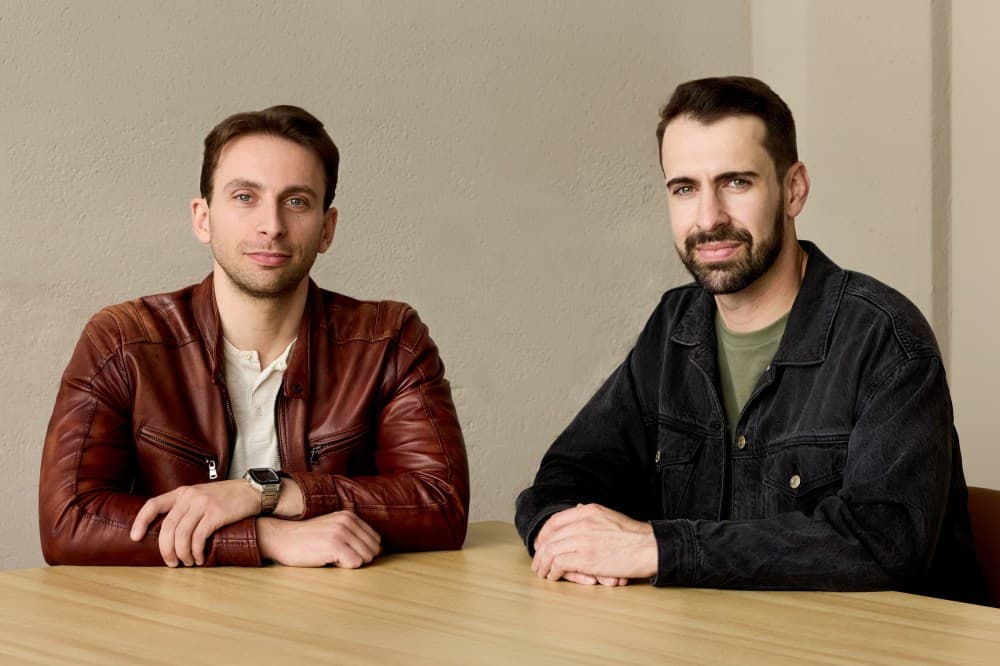
Reactor's co-founders are Alberto Taiuti and Bryce Schmidtchen. Their backgrounds are the crux — both are former technical leads on Apple's Vision Pro AR/VR headset. Vision Pro pitched "spatial computing," rendering 3D space in real time and reacting to user movement. People who worked on its core tech (real-time rendering, low latency, spatial awareness) are now tackling "worlds AI generates in real time." It's not a coincidence but a founding that precisely leverages their expertise.
Jeffrey Katzenberg adds weight to this story. A titan of Hollywood's content industry — former Disney chairman, DreamWorks Animation co-founder — he now leads venture fund WndrCo. When someone who understands the mechanics of video, animation, and entertainment production better than almost anyone bets on "real-time AI video" and joins as a board observer, it reads as a signal that this tech could change the content industry's production pipeline.
AWS is an important partner too. Reactor draws compute and distribution from AWS for real-time generative-video workloads at global scale. Real-time generation requires running inference "right now, without interruption," demanding enormous GPU resources and low-latency infrastructure. So a cloud partner's backing is a make-or-break factor for the business.
The details — the leap from "batch" to "real-time"
Here's the key info in a table.
| Item | Value | Note |
|---|---|---|
| Raise | $59M (Series A) | Announced May 28 |
| Lead investor | Lightspeed Venture Partners | WndrCo, Amplify, Sky9, FPV participating |
| Co-founders | Alberto Taiuti, Bryce Schmidtchen | Former Apple Vision Pro tech leads |
| Core product | Real-time AI worlds platform | Available now via SDK & API |
| Infra partner | AWS | Global-scale compute & distribution |
| Notable figure | Jeffrey Katzenberg (WndrCo, board observer) | DreamWorks co-founder |
The limit of existing generative AI video was "time." However good the output, if making one scene takes minutes, it's a "production tool," not an "interactive medium." For a game-like world where the user moves and the world reacts instantly, video must be generated "in real time." Reactor makes exactly this "batch→real-time" leap its core value, and offers it via SDK and API so developers can grab it right away.
Why is this hard? Generative-model inference is inherently heavy computation, making "real-time, low-latency" tricky. The Vision Pro founders' "real-time rendering, low latency" know-how shines here, and AWS's infrastructure backs the scale. In short, it's an attempt to fuse "the quality of generative AI" with "the real-time nature of a game engine."
Who gains what — Reactor, games/entertainment, the cloud
For Reactor, $59M buys "time to solve the hard problem of real-time." Real-time generation is high-difficulty engineering that requires reworking model efficiency, infrastructure optimization, and a low-latency pipeline — needing capital and time. Bundling a top-tier VC (Lightspeed), a content titan (Katzenberg), and an infra partner (AWS) at once means it starts with technology, capital, and industry connections all secured.
For the game and entertainment industries, a new category opens: "real-time interactive content." Picture worlds, characters, and scenes generated on the spot in response to a player's actions, rather than pre-made cutscenes. Games could offer infinitely varied content; live entertainment could direct in real time to audience reactions. That's why Katzenberg bet — making content production "real-time" changes the industry's fundamental grammar.
For AWS, it gains an anchor customer for the next-gen heavy workload of "real-time generative AI." Real-time inference creates enormous, continuous compute demand. If a company like Reactor grows on AWS, that flows straight into AWS's GPU and networking revenue. It's why cloud vendors race to bring such next-gen AI startups onto their infrastructure.
Historical parallels — the fate of tech that chased "real-time"
The challenge of "running heavy computation in real time" recurs in tech history. The dividing line between success and failure is clear.
Success — cloud game streaming sticking the landing (partly). Rendering games in the cloud and streaming them in real time eventually took hold to a degree after long skepticism. The key was "did you cut latency below human perception?" Lesson: real-time tech isn't "does it work or not" but "how far can you cut latency," and crossing that threshold opens a new experience. Reactor's fate, too, hinges on the balance of latency and quality.
Cautionary — the Vision Pro lesson. Ironically, Vision Pro itself — where the founders worked — is a poster child for "amazing tech, slow market." Real-time spatial computing was impressive, but mass adoption lagged for lack of price, content, and a killer use case. Lesson: even if real-time generation is technically possible, without a clear use people will pay for, it can end as a great demo. Reactor targeting the developer ecosystem first via SDK/API is a smart move to dodge that trap.
Challenge — generative video's cost wall. Even batch-style generative video strains on inference cost, and real-time must bear that cost "continuously." Various past real-time AI services collapsed because they couldn't hit a viable unit cost. Lesson: Reactor partnering with AWS means it's confronting this cost/scale problem head-on. The real battleground for real-time generation is, as much as "quality," "can you drop unit cost to a level that's a business?"
Competitor counter-plays
Incumbent generative-video leaders like Sora and Runway counter with "quality and brand." They already lead on high-quality video generation and have large user bases. If Reactor makes "real-time" its differentiator, the incumbents will push inference optimization to raise generation speed and narrow the gap. It becomes a race over "how fast while keeping quality."
NVIDIA and the game-engine camp (Unreal, Unity) are competitors from another angle. They already own the standard for real-time rendering and are evolving toward layering AI generation on top. If Reactor is "AI-first real-time worlds," the engine camp approaches via "real-time-rendering-first plus AI augmentation." The two camps will likely meet and compete somewhere in the middle.
Big Tech's in-house real-time generation models are a long-term threat. Google and Meta both invest in real-time generation and world models, so it's hard for an independent startup to hold a tech edge for long. Reactor must quickly seize an area Big Tech can't easily follow, using "proprietary assets" — the Vision Pro alumni's low-latency know-how and the content-industry connection through Katzenberg.
So what actually changes
For game and interactive-content developers, a new tool — "real-time generation" — comes into view. Offered via SDK/API, it lets you actually experiment with generating scenes on the fly in response to player actions. That said, real-time generation has a tight three-way trade-off of latency, quality, and cost, so before real adoption you must verify "is the latency tolerable for my use case."
For entertainment and media workers, Katzenberg's bet is telling. If content production shifts from "make it all in advance and play it" to "generate it reactively in real time," new formats open — live events, interactive storytelling, personalized content. But this is a long-term bet that depends on tech maturity and cost, so view it as a direction for the coming years rather than an immediate jackpot.
For startups and investors, it's a textbook case of how the combo "founders from a specific Big Tech + top-tier VC + industry titan + cloud partner" comes together. A $59M Series A is no small sum, but it's hardly generous for cracking a problem as hard as real-time generation. Reactor's real homework is proving, by the next round, that "real-time actually works and makes money."