While chatbots write words, this company teaches AI how the world moves
Here's the deal: most AI news lately is "smarter chatbot," "longer context." But on June 17, something with a completely different flavor landed. Palo Alto AI lab Odyssey raised $310M in Series B at a $1.45B valuation. Natural Capital led, and names like Amazon, AMD Ventures, GV (Google Ventures), EQT, and In-Q-Tel piled in.
Odyssey isn't building an AI that writes. It builds world models that simulate the physical world — how objects move, how space is arranged, what happens when you push something. Causality and physics, in other words. If chatbots handle "words," Odyssey wants to handle "the world itself."
There's one more telling detail: Odyssey picked AWS as its preferred cloud and will optimize its models for Amazon's Trainium chips. Today let's unpack who Odyssey is, what's different about world models, what each side is after, and what it means for the AI landscape.
The players — Odyssey, self-driving veterans, and Amazon
Odyssey is a Palo Alto AI lab founded in 2023. It builds not a text generator but AI that understands physical-world concepts — movement, space, object interactions, causality. Put simply, it plausibly simulates "if this ball rolls down that slope, where does it go." That maps to robotics, gaming, simulation, and content.
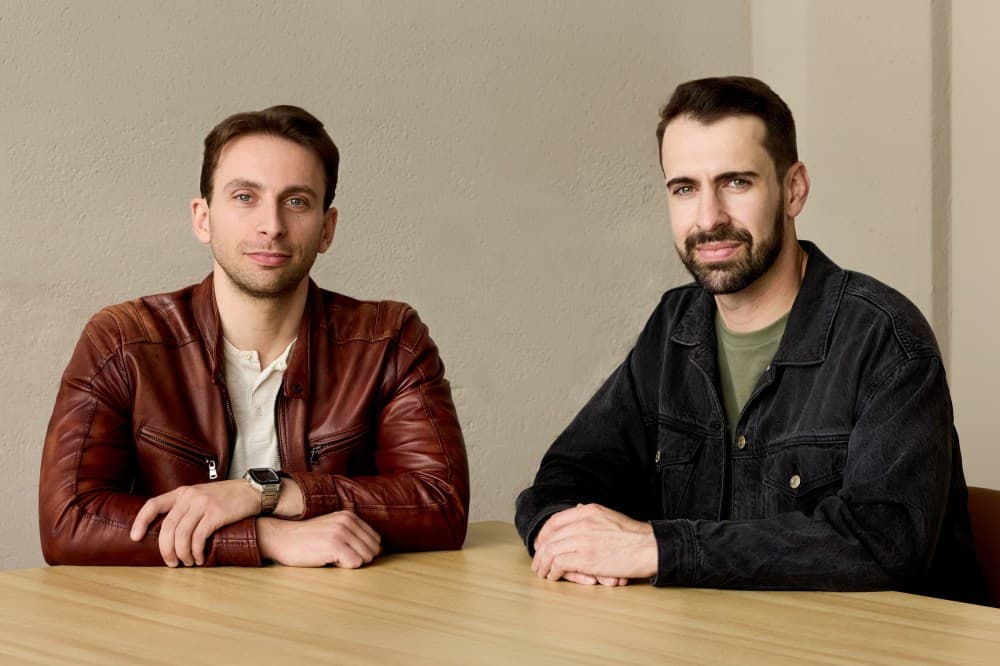
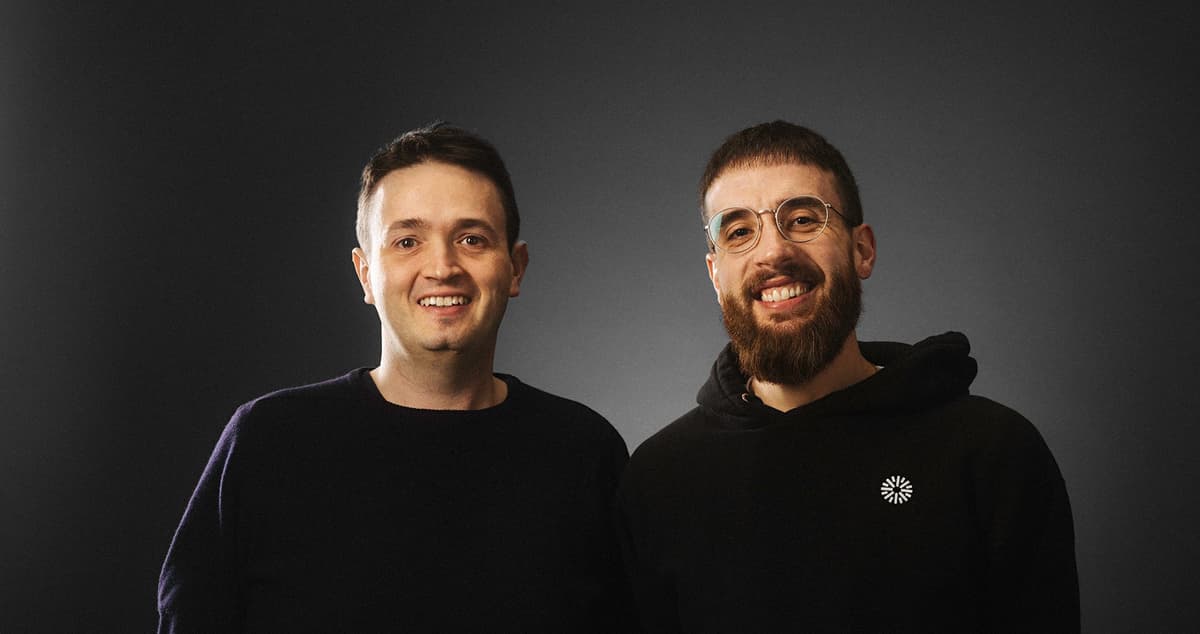
The founders are Oliver Cameron and Jeff Hawke, both self-driving veterans. Self-driving is fundamentally about a model understanding and predicting the world seen through cameras and acting on it — experience that flows naturally into world models. Existing backers include Google chief scientist Jeff Dean, Y Combinator's Garry Tan, Vercel's Guillermo Rauch, and Cruise's Kyle Vogt — a signal the industry takes this direction seriously.
Amazon (AWS) is both an investor here and Odyssey's preferred cloud partner, with Odyssey optimizing for AWS's own AI chip, Trainium. World models — video and physics simulation — demand enormous compute, and who hosts that compute is big business for clouds. In-Q-Tel (a venture arm tied to US intelligence) joining hints at security and defense applications too.
By the numbers
| Item | Detail |
|---|---|
| Round | Series B |
| Size | $310M |
| Valuation | $1.45B |
| Lead | Natural Capital |
| Participants | Amazon, AMD Ventures, GV, EQT, In-Q-Tel |
| Core tech | World models (physical-world simulation) |
| Infra | AWS preferred cloud, Trainium optimization |
| Founders | Oliver Cameron, Jeff Hawke (self-driving) |
Read it line by line and the bet is clear. First, "physics, not text" positioning. The AI market is packed with LLMs. Odyssey stepped off that red ocean onto a different track: models that understand the physical world. For robots to actually work, AI can't just talk well — it has to know how the world behaves.
Second, the AWS–Trainium tie. World models are compute-heavy, so cloud cost is a core variable. Locking AWS as preferred and optimizing for Trainium diversifies cost and supply away from sole reliance on Nvidia GPUs — and pulls a next-gen workload onto Amazon's chips.
Third, the breadth of investors. Pure VC (Natural Capital, GV), a chip company (AMD), a cloud (Amazon), private equity (EQT), and an intel-linked venture (In-Q-Tel) all mixed in. That signals world models span robotics, gaming, defense, and simulation — many whales betting on one company for their own reasons.
What each side gets — different reasons, same bet
Odyssey wins clearly. $310M secures compute and talent while it stakes early ground on the new continent of world models rather than the LLM red ocean. Tying to AWS stabilizes infra cost and supply risk. It now has the ammo to scale the "model the world" know-how built in self-driving.
Amazon (AWS) wins on two layers: financial upside as an investor, and the strategic pull of a next-gen AI workload onto its cloud and Trainium chips. World models will consume vast compute, so capturing this workload feeds directly into AWS's AI-infra competitiveness — and fits Amazon's chip strategy to reduce Nvidia dependence.
The other investors each have their math. AMD eyes a new market for its chips, In-Q-Tel eyes security and defense uses, and GV and Natural Capital eye early ownership of the next AI paradigm. They bet on world models being the wave after LLMs — for different reasons that meet at one point: physical-world AI is the next battlefield.
Echoes of the past — world models, take two
"AI that understands the world" isn't a new idea. Meta's Yann LeCun has long argued LLMs alone won't reach real intelligence, pushing world-model approaches like JEPA. Self-driving was effectively a giant world-model lab — predict the world from cameras and move the car. The key to success was "is the simulation close enough to reality." The closer, the more robots and self-driving actually delivered.
But there's a shadow. World models are compute-heavy, and if the simulation diverges even slightly from reality (the "reality gap"), robots misbehave. Many past attempts had slick demos but collapsed in the real world over that gap. So "back the compute with AWS and Trainium" isn't just about cost — it's also ammo to narrow that gap.
Conditions differ from the past, though. After the self-driving and LLM booms, data, compute, and talent are far deeper, and the robotics market is growing fast. The same "world model," now backed by infrastructure, has a better shot at reality than before. Too early to call, of course.
Competitor counter-play — LeCun's Meta and the LLM camp
World models aren't Odyssey's stage alone. Meta pushes JEPA-style world models around LeCun, and Nvidia ships world-model tools for robotics and simulation — big tech is already looking the same way. Odyssey's counter is "battle-tested self-driving know-how plus startup speed": focused and fast, versus sprawling organizations.
The LLM camp's response is interesting too. OpenAI and Google are expanding into video generation and simulation, effectively dipping into world models. Everyone seems to agree AI must understand the world to reach the next stage. The split is whether that's an extension of LLMs or a different architecture — and Odyssey bet on the latter.
For latecomers, the calculus sharpens. If "world models are next" hardens into consensus, capital and talent will flow here. Odyssey planting a $1.45B valuation with Amazon behind it signals a play for early advantage on this track. Other labs will likely bring similar infra partnerships.
So what actually changes
If you care about robotics and automation, watch this. Robots only get useful with "AI that understands the world," and big money flowing to companies like Odyssey means that infrastructure is being laid fast. The road to commercialization is still long, though, so your daily life won't change tomorrow.
If you're a developer, keep in mind that "language models" and "world models" may grow as two parallel branches. The instincts for chatbot APIs differ a lot from physics and simulation. Which ecosystem you step into depends on your interests.
If you watch cloud and chips, note the AWS–Trainium tie. If world models create next-gen compute demand, who hosts that workload becomes a new front in cloud and chip competition — and a sign of Amazon and AMD cracking the Nvidia-only board.
One step further — why big money is flowing to "world models" now
More interesting than the $310M is the timing — why now. AI investment has overwhelmingly gone to LLMs: bigger language models, longer context, smarter chatbots soaked up the money. But as that track gets crowded and costs balloon astronomically, capital began hunting for "the next thing after LLMs." World models surfaced as the candidate. AI that handles the physical world beyond text promises huge markets that touch the real economy directly — robotics, self-driving, industrial automation.
Why it matters: it shows AI's economic value possibly expanding from "words" to "action." Chatbots organize information and write, but ultimately stay inside a screen. AI that understands the world can intervene in physical labor — a robot grabbing objects, a machine running a process, a car navigating a road. If "work that uses the body" still makes up the largest share of the labor market, the potential market for AI that touches it dwarfs chatbots. That's why differently-flavored whales — Amazon, AMD, In-Q-Tel — piled into Odyssey.
But the real-world wall is clear. World models carry the chronic ailment of the "reality gap": perfect in simulation, yet one tiny real-world variable can make a robot misbehave and collapse the whole thing. And video and physics simulation are compute-heavy, so costs swell fast. Tying to AWS and Trainium isn't just an infra contract — it's ammo to attack both walls at once: the reality gap and compute cost. Still, commercialization is far off; too early to call.
There's also the way this shakes the chip and cloud competition. AI compute today is nearly an Nvidia GPU monopoly. But if world models become the next big workload, who hosts that compute becomes a new battlefield. That's why Amazon (Trainium) and AMD (own chips) want into this market. Odyssey is one stage of that proxy war. The fate of world models could touch not just one startup's destiny but the power map of the cloud and chip industries.
Finally, an implication for markets like Korea. Korea is strong in robotics, manufacturing, and automobiles. If world models become the brain of robots and industrial automation, who uses this tech well becomes a new variable in manufacturing competitiveness. At the same time, as a memory and semiconductor power, the compute demand world models create is another opportunity. Odyssey's round may read like distant Silicon Valley news, but the "AI that handles the physical world" trend may meet Korean industry's strengths at a surprisingly close point.
🥄 Three Things You're Probably Wondering
— So what does this mean for me? Not much right now. But it signals that "AI that understands the world" is advancing fast in robotics, simulation, and gaming. Worth tracking if you work or dabble there.
— Does a world model replace LLMs (chatbots)? Less replacement, more a different track. Chatbots handle "words," world models handle "the physical world." The two are likely to grow side by side and complement each other. Too early to call.
— Is it ahead of big tech like Meta? By scale, Meta and Nvidia lead; Odyssey's edge is real self-driving experience and startup speed. Different roads and weight classes, so a straight comparison is hard — we'll watch.
References
- Odyssey Raises $310 Million to Accelerate World Simulation — BusinessWire
- World model maker Odyssey nabs $1.45B valuation backed by Amazon — TechCrunch
- Odyssey Raises $310M Series B to Advance AI World Models — HPCwire
- Odyssey Raises $310 Million Series B at $1.45 Billion Valuation — Unite.AI
- AI world model startup Odyssey lands $310m in Series B — Verdict
Numbers and criteria are as of announcement and may change.