A $410M Compute Bill, Described By The Buyer As "One Of The Smallest"
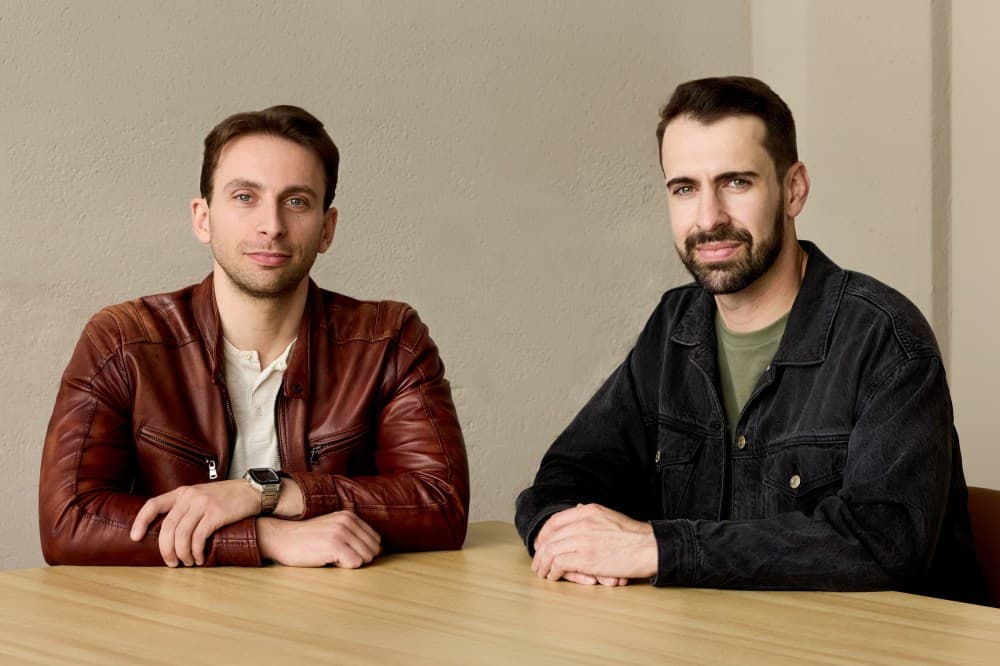
On July 28, AWS put out a press release that most people scrolled past. Recursive Superintelligence, the lab run by Richard Socher, had signed a $410 million multi-year compute agreement with Amazon Web Services. By 2026 standards, that number barely registers. Anthropic committed to spending $100 billion on AWS over ten years back in April. Recursive's deal is 0.4% of that.
Here's what actually makes it strange: not the absolute size, but the ratio. Recursive came out of stealth on May 13 with $650 million at a $4.65 billion valuation. It has now pre-committed roughly 63% of that money to a single cloud vendor for a single input. Headcount is under 30. Shipped products: zero.
And then Socher went further. He told TechCrunch the contract is "likely going to be one of the smallest compute deals we're going to sign in the next few years." Calling a deal that consumes two-thirds of your bank account "one of the smallest" means one of two things — either the next round is already effectively lined up, or this company has decided that everything except compute is a rounding error. Possibly both.
The line that explains the whole strategy came next: "For us, it's less about headcount and more about agent count." Instead of hiring researchers to run experiments, Recursive wants to automate the research process itself and run swarms of agents. If that works, GPU-hours legitimately replace salaries as the dominant cost line. The catch is that nobody has shipped a product proving it yet — including Recursive.
The Guy Who Sold To Salesforce, Built You.com, And Is Now On His Third Act
Socher is not a first-time founder with a deck. He's one of the researchers who dragged neural networks into natural language processing — his work on word and contextual vectors is foundational, cited relentlessly. In 2016 he sold his startup MetaMind to Salesforce and became the company's chief scientist and EVP. That matters here: he has actually run a large corporate research org, not just a lab.
After Salesforce he built You.com. It launched as an AI search engine and has since repositioned as search infrastructure and APIs for AI models doing web research — reportedly $200M+ raised at a valuation around $1.5 billion. Socher is still You.com's CEO while also serving as CEO of Recursive, and he's a co-founder of the early-stage firm AIX Ventures on top of that. Three hats, simultaneously. Reasonable people can disagree about whether that's a feature.
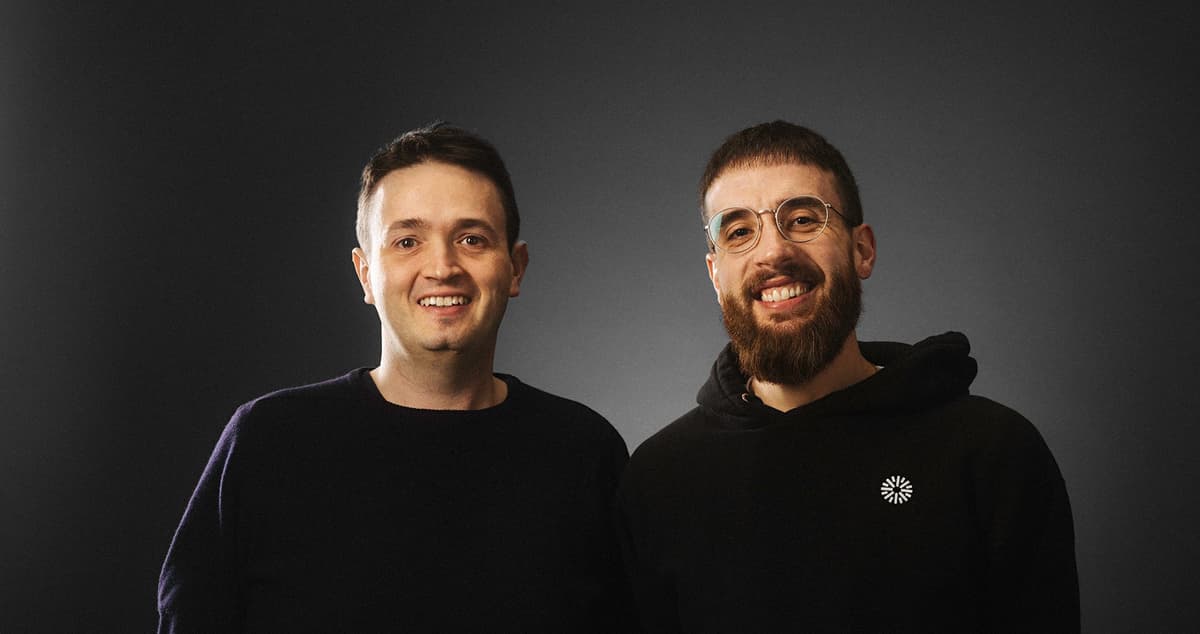
The co-founder roster explains how a stealth company raised $650M without a product. Per GV's own post, there are seven co-founders beyond Socher: Yuandong Tian (former research scientist director at Meta's FAIR lab), Tim Rocktäschel (UCL professor, ex-principal scientist at Google DeepMind), Alexey Dosovitskiy (a Vision Transformer author), Josh Tobin (ex-OpenAI), Caiming Xiong, Tim Shi, and Jeff Clune, whose academic career is basically built on open-endedness — the exact research area Recursive is betting on.
Peter Norvig joined too — 25 years as Google's director of research, co-author of the AI textbook that's been standard on university syllabi for three decades. His title is genuinely unclear across coverage: TechCrunch listed him as a co-founder, The Next Web described him as an adviser. I couldn't find a company document stating it either way, so "he's involved" is as far as I'll go. Founding date is similarly muddy — some outlets say 2025, The Next Web says the company was about four months old in May 2026.
GV's investment thesis fits in one sentence: "AI is code, and now AI can code. When these two realities connect, the self-improvement loop can be closed." GV frames this as an S-curve orthogonal to pretraining scaling — a second axis of improvement that doesn't require simply building bigger models. The stated first milestone is a system with the capability of "50,000 PhDs" pointed at AI research itself, then aimed at therapeutics, battery design, and fusion physics. Socher's own framing: AI will be to biology what calculus was to physics.
What's Actually In The Contract (And What Conspicuously Isn't)
The structure is simple. $410 million, term described only as "multi-year" — no annual breakdown, no expiration date disclosed. No specific silicon is named: the press release says "purpose-built compute" without committing to Trainium2, Trainium3, or GPUs. There is language about co-developing future systems with AWS.
The most important detail came from TechCrunch, not the press release: there is no investment component from AWS. No equity, no convertible, no credits-for-shares arrangement. Recursive is paying cash for compute. That's genuinely unusual right now. Most headline AI infrastructure deals of the past two years have been circular — the cloud invests, and the investment comes back as cloud revenue. Amazon–Anthropic, Microsoft–OpenAI, and several Nvidia arrangements all work that way. This one routes venture capital straight into AWS revenue with no equity round trip.
Both sides' quotes reveal what they each care about. Socher: partnering with AWS "gives us the infrastructure to run self-improving AI research at a scale very few teams in the world are capable of." From AWS, Jason Bennett, VP and global head of startups and venture capital, said AWS provides "the elasticity to run those loops in parallel at massive scale, and the reliability, security, and purpose-built compute to turn months of sequential research into days." Note "loops" and "parallel." Self-improvement research doesn't look like one long training run — it looks like thousands of simultaneous cheap experiments where most die. That's a fundamentally different consumption pattern than pretraining, and it's why elasticity, not just peak FLOPs, is the selling point.
| Item | Detail |
|---|---|
| Announced | 2026-07-28 |
| Deal value | $410 million |
| Term | Multi-year (length undisclosed) |
| Counterparty | AWS |
| Investment component | None |
| Chip model | Not specified in release |
| May 2026 raise | $650 million |
| May 2026 valuation | $4.65 billion |
| Lead investors | GV, Greycroft |
| Other investors | Nvidia, AMD Ventures |
| Headcount | Under 30 |
| Offices | San Francisco, London |
| Product timing | "Within a few months" (Socher) |
Socher also made a product promise: "We are excited to build like really amazing products that people can use, and you will see those within a few months." Back in May he said "there will be products, and you'll have to wait quarters, not years." The timeline is at least internally consistent. But if "a few months" starts in late July, then nothing shipping before January breaks that consistency in public.
Who Needed This Deal More — And The Question Nobody Asked
For AWS, $410 million is a rounding error. Per Fortune, AWS is on track for roughly $168 billion in 2026 net sales, up 30.7% year over year, sitting on a remaining-performance-obligation backlog of about $364 billion — and that figure excludes the $100B Anthropic commitment. Revenue commitments tied to Amazon's in-house chips reportedly exceed $225 billion. Amazon's company-wide 2026 capex is discussed at around $200 billion, with the AWS portion described as almost entirely spoken for.
So why issue an official press release for a company with fewer than 30 employees? Because the payoff isn't revenue, it's a reference customer. Frontier research teams have real alternatives now: Google Cloud TPUs, Azure, Oracle OCI, neoclouds like CoreWeave and Nebius, and — new this year — SpaceX selling capacity from its Colossus data centers. Reflection AI agreed to pay SpaceX $150 million per month through 2029 per CNBC, and separately signed a $1 billion deal with Nebius. Nobody is begging hyperscalers for scraps.
In that market, AWS badly needs a sentence that isn't "Anthropic." Anthropic is partially owned by Amazon, which makes it a weak proof point for free-market choice. Recursive is the opposite: it's backed by GV — Alphabet's venture arm — plus Nvidia and AMD Ventures, and it still picked AWS over Google Cloud. That's a slide the AWS startup team will use for years. Bennett's title being "startups and venture capital" rather than an infrastructure role tells you which org inside Amazon actually closed this.
Now the uncomfortable question. Recursive raised $650M and committed $410M of it to compute. The remaining ~$240M has to cover salaries for a growing team of elite researchers, two offices in two of the most expensive cities on earth, and hiring. Frontier researcher comp runs into the millions per person, and the "agent count over headcount" strategy still requires humans to design the agents. Which means Recursive has structurally guaranteed it must raise again before the AWS term expires. Socher calling this his smallest deal reads as confidence, but flipped around it's also a disclosure: continuous mega-fundraising is now load-bearing.
There's a second risk in the term length. Recursive's workload — massively parallel exploratory loops, then large training runs on whatever survives — has hardware requirements that are genuinely hard to forecast. The optimal chip, interconnect, and memory configuration for 2026 exploration is not obviously the right one for a 2028 training run. That "co-develop" clause in the press release is probably an attempt to absorb exactly that risk contractually, which is smart, but it's also an admission that nobody knows what this compute should look like in two years.
Stability Died Of Invoices; Inflection Ended Up As A Cluster With No Company
There's plenty of precedent for pouring your raise into compute. The cautionary case is Stability AI. Per internal documents reported by The Register, Stability was spending roughly $99 million a year renting infrastructure from AWS, Google Cloud, and CoreWeave — against projected 2023 revenue of about $11 million, plus $54 million in wages and operating expenses. By October 2023 it had roughly $4 million in cash. It underpaid its July 2023 AWS bill by $1 million and reportedly had no plan to pay the $7 million August bill, with another $1.6 million owed to Google Cloud and CoreWeave. Founder Emad Mostaque resigned in March 2024.
What killed Stability wasn't the compute contract per se — it was that compute cost and revenue were in different orders of magnitude. Recursive's revenue is currently zero, which makes the comparison look worse, but there's one real structural difference: Stability kept receiving invoices after fundraising failed, while Recursive raised first and prepaid. The order is reversed. The lesson survives anyway — compute obligations come due whether or not your product shipped, and clouds are not charities.
The other precedent is Inflection AI. In June 2023 it raised $1.3 billion from Microsoft, Nvidia, Bill Gates, and Eric Schmidt, and built what was then the world's largest AI cluster with CoreWeave and Nvidia: 22,000 H100 GPUs. Most of the money went to compute. Then in March 2024, Microsoft paid roughly $650 million to license Inflection's technology and absorbed Mustafa Suleyman, Karén Simonyan, and much of the team. What remained was a cluster and a legal entity.
The Inflection warning for Recursive is precise: securing compute is not the same as securing a business. Inflection had compute and it had world-class people. It didn't have a product market, so the people became the asset that got sold. Recursive is promising a "50,000 PhDs" system aimed at drug discovery, batteries, and fusion — but the intermediate step, the one involving customers who pay money, is thin in every public account. That's likely exactly why Socher keeps saying "a few months."
To be fair, the success case matters too. Anthropic–AWS shows large prepaid compute working. AWS built Project Rainier for Anthropic with nearly 500,000 Trainium2 chips, which Amazon says is 70% larger than any prior AI platform in AWS history and delivers over five times the compute Anthropic used for its previous models; Anthropic expected to deploy more than a million Trainium2 chips by year-end, and April's expansion pushed toward as much as 5 gigawatts. The difference is unmissable: Anthropic was already generating substantial revenue from Claude before signing. Prepaid compute against real revenue and prepaid compute against a hypothesis are not the same instrument.
Sakana Says You Don't Need The Money; Anthropic Says It's Already Doing This
Recursive's approach isn't the only path to the same goal, and the most pointed counterargument comes from the opposite direction. Sakana AI stood up a dedicated Recursive Self-Improvement (RSI) Lab in 2026 with an explicit design principle: build sample-efficient self-improvement engines rather than compute-intensive ones, so that advances "compound on national, rather than hyperscale, compute budgets."
Sakana has receipts, not just a manifesto. In 2024, LLM-Squared had a language model autonomously discover DiscoPOP, a state-of-the-art preference optimization algorithm. In 2025, the Darwin Gödel Machine reportedly more than doubled its own baseline software-engineering performance. ALE-Agent placed first against 804 human competitors in a programming contest. And the AI Scientist methodology paper was published in Nature on March 26, 2026 — the first fully automated AI research system to clear that bar. Sakana points to results achieved with as few as 150 samples. If that line of work keeps compounding, Recursive's $410 million stops looking like a moat and starts looking like an expensive assumption.
The second counterplay is Anthropic, and it's arguably scarier for Recursive. In its May 2026 report When AI builds itself, Anthropic disclosed that more than 80% of code merged into its own production codebase the prior month was written by Claude — up from low single digits before Claude Code's early-2025 preview. A typical Anthropic engineer now ships about 8x the code per day versus 2024. On the hardest, least-specified internal coding tasks, Claude's success rate went from roughly 26% to 76% in six months. The length of task a model can reliably complete alone is doubling roughly every four months, up from every seven, with Claude Opus 4.6 handling 12-hour tasks.
Translated: Anthropic is running the early stages of the self-improvement loop without incorporating a separate company to do it. Google DeepMind has walked into the same territory with AlphaEvolve, a Gemini-powered agent for algorithmic and scientific discovery. Recursive isn't really selling the idea of self-improvement — that's now table stakes at every major lab. It's selling an organization purpose-built around it from day one. Whether that org-design advantage beats an incumbent's existing models, data, and revenue is the actual bet.
And the skeptics deserve airtime. Georgia Tech's Mark Riedl published a detailed rebuttal on July 13, 2026, arguing hard takeoff doesn't survive contact with reality. Low-level optimization hits diminishing returns — attention can't become sub-linear no matter how clever you are, and physics caps circuit throughput. The binding constraint is data: "We're tapping out on cheap data and new data is more specialized and harder to get." Systematically searching for architectures beyond transformers, he argues, would require more compute than the world has while it's also busy serving existing models. The Next Web framed the open question as runaway acceleration versus convergence on diminishing returns, and noted Anthropic co-founder Jack Clark putting roughly 60% odds on such systems existing by 2028. Either way: Recursive has staked 63% of its capital on a hypothesis that is still unresolved.
What This Actually Changes For You
If you're a developer, nothing today. There's no Recursive API, no weights, no docs, no published benchmarks. Q4 is the thing to watch, given Socher's "a few months." Two questions will tell you most of what you need: is the first product a coding/research agent or a foundation model of their own, and do they substantiate the self-improvement claim in a reproducible form? Sakana-style papers plus code is verifiable. A demo reel plus a proprietary internal benchmark is not, and you should discount accordingly.
If you're an investor, this deal is a prompt to reread AI startup accounting. When 60–70% of a raise is locked into prepaid commitments to one vendor, "runway" needs a different calculation than cash divided by burn. Compute commitments are contractual liabilities with cancellation exposure, and a delayed product can produce the awkward situation where money remains but the contract term is expiring. From the cloud side, the interesting question about AWS's $364 billion backlog is what fraction is owed by customers with revenue versus customers funded by venture capital. The circular-financing debate is already underway, and Recursive will get cited in it as the rare pure-cash, no-equity counterexample.
If you're an enterprise practitioner, there's a negotiating lesson here. A sub-30-person company extracted purpose-built compute and co-development language by committing to a multi-year term. Term length and predictability, not headcount, are what buy leverage. The flip side is identical: multi-year terms transfer hardware-generation risk to the customer. Recursive presumably insisted on "co-develop" for exactly that reason, so if you're signing anything multi-year, push for spec-refresh language and credit portability across chip generations.
If you're a general user, today's impact is zero, and any eventual product will likely target researchers and developers first. The medium-term implication is real though. If automating AI research works, the bottleneck on model improvement shifts from "find brilliant people" to "find electricity and chips." That means faster improvement cycles but higher capital intensity — and possibly fewer organizations capable of operating at the frontier at all. That concentration risk is precisely why Sakana keeps insisting frontier progress should be reachable on national rather than hyperscaler budgets.
One last thing worth flagging: safety. In the same report, Anthropic warned that full recursive self-improvement could increase the risk of humans losing control of AI systems, and floated coordinated international mechanisms to pause development if needed. The 2026 International AI Safety Report classifies loss of control via recursive self-improvement as a national-security-tier risk. Recursive took its name from this concept, yet the AWS release offers only a passing phrase about autonomous experiments designed to safely improve its own performance — no framework, no evaluation commitments, no oversight structure described. For a company valued at $4.65 billion on precisely this thesis, how it documents that is worth watching as closely as the product launch.
🥄 Three Things You're Probably Wondering
— So what does this mean for me? Directly, nothing yet — Recursive has no product you can touch. But if AI automating AI research actually works, the update cadence on the models you already use could get noticeably faster over the next couple of years.
— How much GPU time does $410 million actually buy? You can't calculate it. The release names no chip model, no hourly rate, and no contract length. Large multi-year commitments are typically priced far below list, so reverse-engineering from public rates would be badly wrong. Too early to say.
— Is self-improving AI real, or is it a buzzword? There's evidence both ways. Anthropic says Claude writes over 80% of its production code, and Sakana got an automated-research paper into Nature. On the other side, researchers like Mark Riedl argue data exhaustion and diminishing returns rule out any runaway loop. "The early stages work; whether it goes all the way is unknown" is the honest answer right now.
References
- Recursive Signs $410 Million Multi-Year Collaboration With AWS to Scale Self-Improving AI — AWS official press release
- Recursive Superintelligence signs $410M compute deal with Amazon — TechCrunch
- Recursive Superintelligence: Why Self-Improving AI is the Next Frontier — GV (investor post)
- Recursive Superintelligence raises $650M to build self-improving AI models — SiliconANGLE
- When AI builds itself — Anthropic official report
- Introducing Sakana AI's Recursive Self-Improvement (RSI) Lab — Sakana AI
- What to Expect When You Are Expecting Recursive Self Improvement — Mark Riedl, Georgia Tech
- AWS activates Project Rainier: One of the world's largest AI compute clusters — About Amazon
- Stability AI stopped paying its bills for cloud compute — The Register
- AI Startup Reflection Inks $1 Billion Compute Deal — Forbes
Numbers and criteria are as of announcement and may change. Investment calls are yours to make!