Zoom declared its shift from 'meeting tool' to 'AI teammate'
Here's the deal: say "Zoom" and you think video calls — the app that boxed us all into a grid of faces during the pandemic. But on June 1, Zoom shipped a product that redefines its identity. It's called ZoomMate. Zoom calls it not just an "AI assistant" but an "AI teammate." Beyond summarizing meetings, it turns what was said in a meeting into finished work.
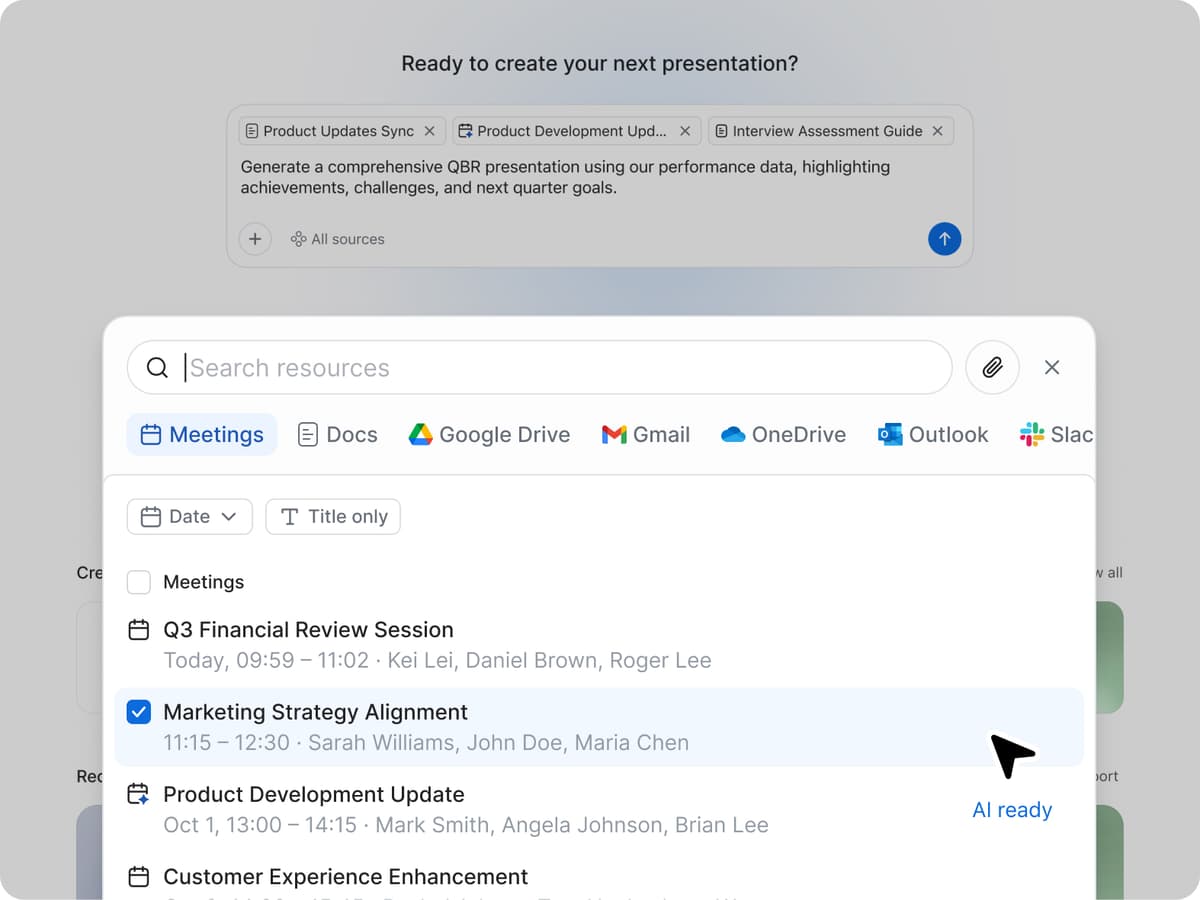
"AI meeting summaries" are already common. Zoom and others have spat out a recap when a meeting ends. ZoomMate's claim is what comes next. Instead of stopping at the summary, it builds slides from the content, books schedules, creates follow-up tasks, and searches internal systems for answers. In other words, it aims to automate not "meeting → summary" but "meeting → work actually done."
Pricing is clear: $20 per user per month (with included AI credits) for North American online and direct customers. A separate AI Productivity Suite is $10/month. Europe and Asia-Pacific availability is expected later this year. Into the "agentic work-automation" race led by Google, OpenAI, Anthropic, and Microsoft, Zoom enters in earnest — armed with its meeting data.
The players — Zoom, 'agentic AI,' and enterprise systems
First, Zoom. It rose on video calls but carried the homework of post-pandemic growth slowdown. As people returned to offices, it became clear that "video conferencing alone isn't enough." So for years Zoom has tried to shift from "meeting company" to "work platform." ZoomMate is the most aggressive move of that pivot — turning its most distinctive asset, the conversations exchanged in meetings, into monetizable output via AI.
Next, the concept of 'agentic AI.' Beyond a chatbot (assistant) that answers questions, it's AI that plans multiple steps on its own and uses tools to complete tasks. The goal is to handle compound jobs like "make a proposal from this meeting, draft follow-up emails to the relevant people, and book the next meeting on the calendar" without a human directing each step. It's the hottest keyword in the 2026 AI industry.
The last player is the enterprise systems it connects to. ZoomMate links with core work tools like Salesforce (CRM), Jira (dev management), Slack (collaboration), and ServiceNow (IT service). This matters because for an agent to do real work, it needs to reach the company's data and systems. Meeting content alone isn't enough; it must also see CRM customer records, Jira tickets, and project status to produce "finished output."
What's inside — the three things ZoomMate actually does
Zoom describes ZoomMate's features in roughly three tracks.
First, agentic search. It indexes integrated internal systems, customer records, tickets, and project updates, so for a question like "what were that customer's issues last quarter?" it gathers scattered info into an answer. Instead of opening many apps one by one, you ask once and the AI digs for you.
Second, workflow orchestration. It books events in Google Calendar/Outlook, updates records, creates follow-up tasks, and drafts communications. After a meeting, follow-ups usually pour out — "who does what by when" — and the AI organizes them automatically and carries them toward execution.
Third, content creation. It combines meeting conversation with enterprise context to auto-generate presentations, documents, spreadsheets, reports, and project plans. It takes over the most time-consuming post-meeting work, like "turn what we decided into slides."
| Feature | What it does | Manual work it replaces |
|---|---|---|
| Agentic search | unified search of systems/records/tickets | digging through many apps |
| Workflow automation | schedules/records/follow-ups/drafts | post-meeting organizing/execution |
| Content creation | slides/docs/sheets/reports | making the deliverables yourself |
To recap pricing: ZoomMate is $20 per user per month (with AI credits) for North American online and direct customers. The AI Productivity Suite is a separate $10/month. Europe and APAC are expected later this year. It's a "layer AI on top of the meeting fee" structure, clearly aiming to upsell existing Zoom customers naturally.
What each side gets — Zoom, enterprise customers, employees
For Zoom, it's a matter of survival and growth. Video conferencing is now a commodity (price competition with Google Meet and Teams), and meetings alone can't grow revenue. ZoomMate is a bridge that widens the "meeting" entrance into the bigger market of "work automation." Pull an extra $20/user/month and you bolt a new growth engine onto stagnant revenue. And the edge of "we understand meeting data best" is hard for other AI assistants to copy.
For enterprise customers, the core gain is cutting "post-meeting busywork." It's common for more time to go into post-meeting organizing, follow-ups, and documentation than the meeting itself. Let AI do that and employees focus on work that truly needs judgment. For companies already using Salesforce, Jira, and Slack, it means integrated automation on top of Zoom without installing a separate tool.
For individual employees, it's ambivalent. Less busywork is clearly welcome — freedom from repetitive tasks like writing minutes and making slides. But the more an "AI teammate" does the work, the more the question "so what do I do?" follows. The key: the ability to review, judge, and decide on AI-made drafts — and the ability to give the AI good instructions — grows ever more important.
Prior cases — the success and limits of 'AI copilots'
Bolting AI onto meetings and docs isn't new to Zoom. Earlier cases preview ZoomMate's path.
The path to success — Microsoft Copilot. Microsoft installed Copilot into Office and Teams, pushing "docs/meetings + AI" at scale. The strategy of layering AI naturally onto the hundreds of millions already using Office worked. ZoomMate follows the same logic — upsell AI to "customers already using our meetings." The bigger the existing user base, the better this strategy works. Zoom's meeting share is that asset.
A sign of limits — 'summaries are easy, trust is hard.' At the same time, AI meeting tools have hit a common wall. Summaries look plausible, but "who's accountable when the AI mis-organizes or omits something?" Agentic features that auto-draft emails and book schedules are as risky when wrong as they are convenient. So companies often adopt conservatively at first — "AI suggests, humans confirm execution." ZoomMate's real adoption speed hinges on how well it solves this trust problem.
ROI pressure — coincidentally the same period's topic. Interestingly, around the same time came reporting on enterprise reality: "AI adoption is rising but 79% struggle with ROI." An extra AI cost of $20/month like ZoomMate becomes something companies scrutinize — "does this really save that much time?" Closing the gap between flashy feature demos and "actual measurable value" is the shared homework of every agentic product.
Counter-plays — Microsoft, Google, and specialized AI vendors
The most direct rival is Microsoft. The Teams + Copilot combo already leads the "meeting + AI work automation" market, with the giant moat of the Office ecosystem. To compete with ZoomMate, Zoom must prove "we're better at the meeting experience and meeting-data use." Pure meeting quality and neutrality (not locked into a particular office ecosystem) are Zoom's cards.
Google fights the same battle with Workspace + Gemini. Mail, docs, and Meet are bound into one ecosystem, an advantage for integrated automation. Zoom's weakness is "strong at meetings, weak on the doc/mail ecosystem" — which is why ZoomMate emphasizes integration with external tools like Salesforce, Slack, and Jira. With no ecosystem of its own, the strategy is to position as a "neutral hub that connects to everyone."
Specialized AI note/agent startups are a variable too. Startups specialized in meeting transcription/summary (various AI notetakers) have already penetrated the market. Zoom tries to beat them with the integration advantage of "you already meet on our platform," while startups differentiate with "a specific feature done deeper and more precisely." Ultimately it's the classic clash of "integrated good-enough vs. specialized excellence."
So what changes — by persona
If you're in enterprise IT/operations, this signals "agentic AI is starting to ship built into meeting tools too." Soon nearly every collaboration tool will arrive with a similar "work-completing AI." If you're evaluating adoption, weigh — before the flashy features — (1) integration with systems you already use, (2) security and data governance, and (3) the review process for "when the AI is wrong."
If you're a team lead or knowledge worker, a future with less post-meeting busywork just got closer. With AI drafting minutes, slides, and follow-up emails, humans focus on review and decisions. But "don't blindly trust what the AI organized — verify it" becomes a new core skill. Whoever quickly picks out and refines good drafts gets the biggest productivity gain.
If you watch the AI trend, the core point: the shift "from assistant to agent" is spreading to all SaaS. If 2025 was the year "AI answers," 2026 is heading toward the year "AI finishes the work." ZoomMate is evidence that the trend reached video conferencing — the tool most familiar to us. The crux is always the same — does the convenience translate into real "measurable value"?
🥄 Three Things You're Probably Wondering
— How is ZoomMate different from the meeting summaries we already have? Summaries stop at "here's what was said." ZoomMate claims to go further — building slides from the content, booking schedules, creating follow-up tasks, and searching internal systems for answers. The pitch is "meeting → work actually done," not "meeting → recap." Whether it delivers that reliably is the open question.
— What does $20/user/month actually get me? For North American online and direct customers, it bundles ZoomMate (agentic search, workflow orchestration, content creation) with AI credits. The separate AI Productivity Suite is $10/month. Europe and APAC are expected later this year. It's structured to upsell existing Zoom customers — AI layered on top of the meeting you already pay for.
— Why does it integrate with Salesforce, Jira, Slack, and ServiceNow? Because an agent can't do real work from meeting transcripts alone — it needs the company's data. Pulling in CRM records, dev tickets, and project status is what lets it produce "finished output." Zoom has no doc/mail ecosystem of its own, so it positions as a neutral hub that connects to everyone else's tools.
— Should my company adopt it now? Evaluate cautiously. Weigh integration with your existing systems, security and data governance, and — most importantly — the review process for when the AI is wrong. Agentic features that auto-draft and auto-schedule are as risky when incorrect as they are convenient, so many firms start with "AI suggests, humans confirm."
Bottom line: ZoomMate is Zoom's most aggressive attempt yet to become a work platform rather than a meeting app, riding the industry-wide shift "from assistant to agent." The features are compelling on paper; the open questions are trust (what happens when the agent is wrong) and ROI (is $20/user/month worth it in measured time saved). If 2025 was the year AI answered, 2026 is shaping up to be the year AI finishes the work — and ZoomMate is that trend arriving in the tool we know best.
References
- Zoom launches ZoomMate, the first AI teammate built to turn conversations into completed work — GlobeNewswire
- Zoom launches ZoomMate — Zoom Newsroom
- Zoom launches AI assistant ZoomMate at $20 per user monthly — Investing.com
- Zoom AI Companion — Product Page (Zoom)
- Microsoft Copilot for Microsoft 365 (Microsoft)