The Agents Finally Started Talking to Each Other
Today is June 15. Salesforce officially flipped the switch on the Summer '26 release. It actually started rolling out in waves from June 13, but today is the official launch date. And the real headline of this release is just one thing: Agentforce multi-agent orchestration graduated from beta to full General Availability (GA).
Why is that a big deal? Until now, most enterprise AI agents have been like "smart interns who work alone." The sales agent did sales, the support agent did support. They couldn't talk to each other. So from the customer's side, you'd explain something to sales, then have to re-explain it from scratch to the support bot — that annoying loop kept repeating. Salesforce calls this the "seam problem." It's where context gets dropped at the seam between one agent and the next.
Summer '26 is the release that sets out to stitch that seam shut. Multiple agents share context like a single team, so the customer never has to say the same thing twice. That's the core promise of this GA.
The Cast — Salesforce, Agentforce, Atlas 3.0
Let me introduce the leads in this story first.
Salesforce. The undisputed CRM heavyweight — needs no introduction. But the mood around it is a little strange lately. The stock is in a slump, and the market is in a back-and-forth over "can this company survive into the AI era?" So for Salesforce, multi-agent orchestration isn't just a feature update. It's the enterprise-AI bet the company's future is riding on.
Agentforce. Salesforce's AI agent platform. It's been the flagship push since late 2024, and this time it proved its presence with numbers. Agentforce ARR (annual recurring revenue) hit $800 million, up 169% year-over-year. Add up all of Salesforce's AI revenue and it crosses $2.9 billion. At that scale, you don't call it an "experiment" — you call it a business.
Atlas Reasoning Engine 3.0. This is the real engine behind the GA. The coordination layer that orchestrates the multiple agents is Atlas 3.0. Put simply, it's the brain that plays orchestra conductor — commanding a roster of specialist agents with "you take this, you take that." The fact that it's now at version 3.0 also means Salesforce has been sharpening this reasoning layer for a good while.
What Actually Changed
So how does multi-agent orchestration actually run? The pattern is surprisingly intuitive.
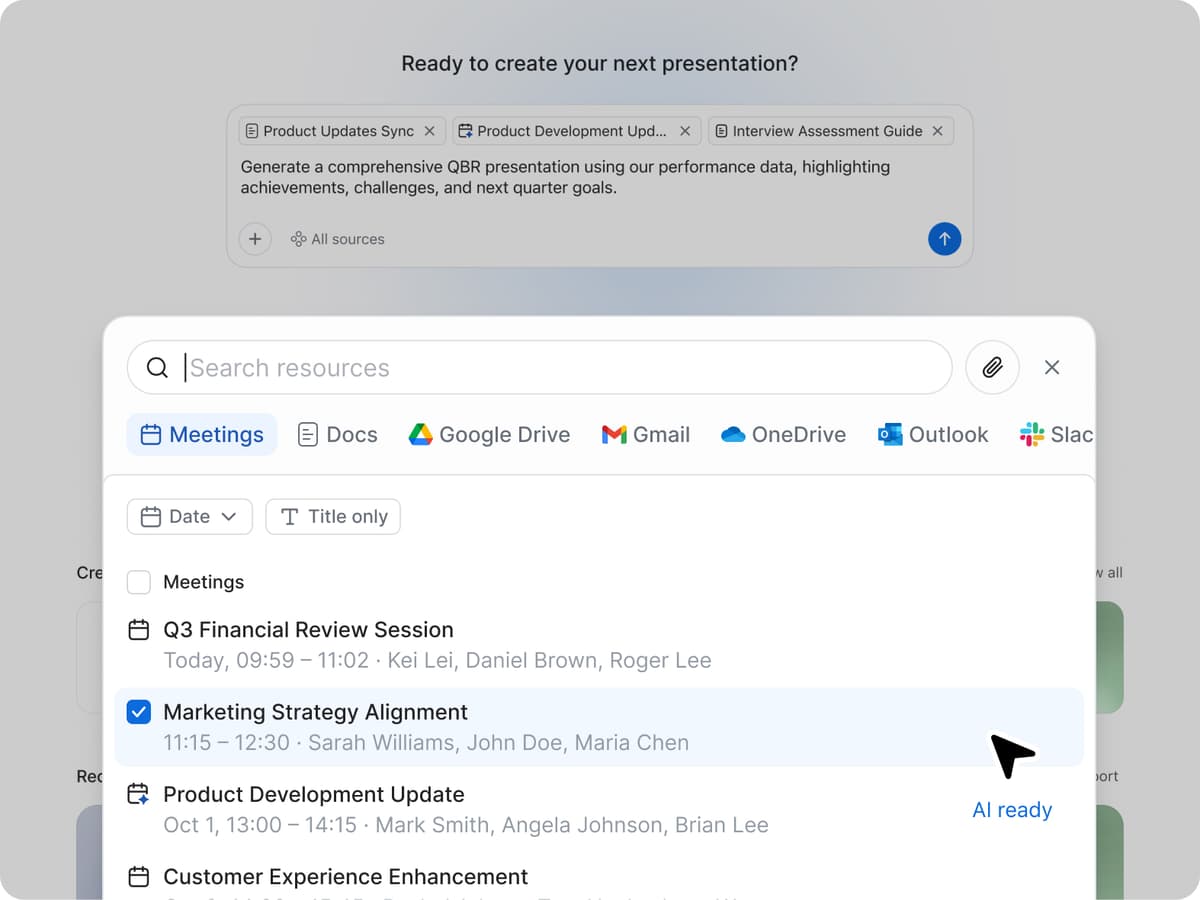
A single orchestrator agent receives the request. Then it scans the roster: "Which subagents are registered right now?" It reads each subagent's description and the actions it can take, and routes the work to the specialist it figures is best for the job. In human terms, it's exactly like a project manager skimming team members' resumes and divvying up the work.
The important part here is that it supports two open standards. With A2A (Agent-to-Agent), agents talk to each other directly, and with MCP (Model Context Protocol), they plug into external tools and data. Why does that matter? Because it means you can weave together not just agents living inside the Salesforce fence, but outside agents and tools too, all speaking the same language. It's a signal that they're going open, not closed.
There's big news on the model side too. Google Gemini 3.5 Flash is now embedded natively inside Agentforce. No separate integration — it's in as a default option. It's a fast, lightweight model, which is perfect for a multi-agent environment where agents have to run inference dozens of times. On top of that, Slack-first workflows are live, and Tableau gets MCP. Meaning your data-analytics tooling can now be called directly by agents.
Here's a quick table.
| Item | Details |
|---|---|
| Launch date | June 15, 2026 (wave rollout from June 13) |
| Multi-agent | Beta → full GA; orchestrator routes work to subagents |
| Atlas 3.0 | Reasoning / orchestration layer running the coordination |
| Protocols | A2A (agent-to-agent) + MCP (external tools/data) |
| Gemini 3.5 Flash | Natively embedded in Agentforce; fast, lightweight inference |
| Slack / Tableau | Slack-first workflows live; MCP added to Tableau |
| ARR | Agentforce $800M (+169% YoY) |
| AI revenue | Salesforce AI combined passed $2.9B |
Who Gains What
Let's break down who actually gets what out of this release.
Salesforce itself. The biggest beneficiary. The multi-agent GA completes the narrative: "We're not a single-bot company, we're the company that installs the agent operating system for you." In the middle of a stock slump, it's the strongest card to play in shouting to the market that "Salesforce is still the center even in the AI era." The $800M ARR number is the weight behind that shout.
Existing Salesforce customers. If you're already on Sales Cloud, Service Cloud, and Tableau, this is the sweetest part. You can run multiple agents as one team on top of your own data, without bringing in a new vendor. Solve the seam problem and your customer experience gets smoother — which translates directly into lower churn.
Google. A surprising supporting actor. With Gemini 3.5 Flash going in as Agentforce's native model, Google effectively locks in a massive enterprise distribution channel called Salesforce. In a market that looked like OpenAI was eating whole, Google just secured a foothold.
Developers. Thanks to open standards like A2A and MCP, there's now a path to plug your own custom agents into the Salesforce ecosystem. If it were closed, it'd be "do it the Salesforce way only" — but with standard protocols, you can reuse assets you've already built.
Past Parallels — Wins and Losses
Multi-agent isn't a brand-new concept. Look at history and there have been plenty of similar attempts.
On the win side. Salesforce's own history is a good reference. In the 2010s, Salesforce expanded from a single CRM into a platform (Force.com, AppExchange) and struck gold with an ecosystem strategy: "put apps other people built on top of us." The picture of embracing external agents via A2A and MCP today is structurally identical. The combo of open standards plus a giant distribution channel is a game Salesforce has already won once.
Another win is cloud function orchestration. As coordination layers that stitch small units together — like AWS Step Functions — became standard, serverless exploded. Multi-agent orchestration is chasing the same formula: "once the coordination layer becomes standard, applications boom on top of it."
On the loss side. There are clear warning lights too. Remember the first generation of chatbots in the 2010s? They hyped "the bot solves everything," but in reality they couldn't grasp context and just repeated "Sorry, I didn't understand that" until they lost trust. Multi-agent has the same risk. The more agents you add, the more routing gets tangled, and if one of them spouts nonsense, that propagates to the next agent — an "error amplification" hazard. They said they'd stitch the seam, but they might end up with even more seams.
So the real test of this GA isn't "does it look cool in a demo" but "does it hold up in actual production when 5 or 10 agents are wired together." That, only time will tell.
Competitor Counter-Plays
Salesforce isn't the only one playing this game. Enterprise multi-agent is a battlefield every Big Tech player has jumped into right now.
Microsoft Copilot. The scariest rival. Microsoft is embedding agents across the Office, Teams, and Dynamics ecosystem with Copilot Studio and its agent builder. If Salesforce holds the CRM data, Microsoft holds the work surface where people actually do their jobs (email, documents, meetings). It's a "data vs. work environment" matchup. Salesforce stressing Slack-first is a move to avoid losing that work-surface fight.
ServiceNow. A powerhouse in enterprise workflow automation, planting its own AI agents deep into IT, HR, and support processes. ServiceNow's strength is that "it already knows the process." For an agent to route work, it needs a process map — and ServiceNow is the company that owns that best. If Salesforce is the customer-relationship side, ServiceNow is drawing the same multi-agent picture on the internal-operations side.
Google. An odd position. On one hand it's a partner supplying Gemini to Agentforce, but on the other it's a competitor going straight after the enterprise agent market with Vertex AI Agent Builder. The A2A protocol itself was a standard Google led and pushed. So Google holds a triple position: "sells the model, lays the standard, and plays the match itself."
Salesforce's counter-play is clear: "we're where your data already lives." No matter how smart an agent is, it ultimately has to run on customer, deal, and service data — and the home base of that data is Salesforce. Keeping the door open with open standards while insisting the data gravity is on their side: that's the core line of defense.
So What Actually Changes — Depending on Where You Sit
Enough abstract talk. Let me pin down what changes for you today depending on your seat.
If you're an enterprise IT decision-maker. Now the question isn't "should we adopt one agent" but "how do we operate agents as one team." GA means SLAs and support come attached, so "it's an experiment, can't be helped if it breaks" no longer flies like it did in beta. That said, don't rush — I'd recommend piloting in a small scope first to see whether the seam problem actually gets solved. Thanks to A2A and MCP support, lock-in risk is lower than before, but you have to verify routing accuracy and error amplification yourself.
If you're a developer. Now is the time to get on the learning curve. The orchestrator-subagent pattern, A2A, and MCP aren't a Salesforce-only thing — they're the industry's shared direction. The design instincts you pick up here (how to write an agent description so routing works well, how to slice up actions) carry straight over to other platforms. Also note that Gemini 3.5 Flash is the default model. Design your prompts and costs around a fast model.
If you're an investor. The numbers are clearly good. $800M ARR with 169% growth is a rare hard metric showing "AI does actually make money." But coldly, whether this can flip the stock slump in one shot is a separate question. The market will watch "does the growth rate hold" and "does it keep share from Microsoft," and the real verdict comes only after post-GA adoption and renewal data lands. Today's announcement is a good starting line, not a finish line.
🥄 Three Things You're Probably Wondering
— Multi-agent went GA, but won't costs blow up as you add more agents? A perfectly reasonable worry. When agents call each other and run inference, token consumption can multiply. Putting a light, fast model like Gemini 3.5 Flash in as the default looks exactly like a choice to press down on that cost curve. Still, how the actual bill prints depends on the workload, so you really should measure tokens and cost in a pilot.
— It supports A2A and MCP — can you really wire up a competitor's agents too? In theory, that's the promise of standard protocols. Speak the same language and anyone's agent should be linkable. But in reality, there's always a gap between "supports" and "runs smoothly." Friction tends to show up in the details — authentication, permissions, data governance — so real interoperability only gets proven as post-launch cases pile up.
— $800M ARR is huge, so why is the stock in a slump? This is the core contradiction. The absolute growth is genuinely impressive, but the market is weighing "sustainability" and "competitive pressure" more heavily. With Microsoft holding the work surface and chasing hard, the question is whether Salesforce can keep its growth rate. One good number doesn't lift a slump. The market will judge on next quarter's data, and the one after that.
References
- Salesforce Summer 2026 Product Release Announcement — Salesforce
- Salesforce puts Google Gemini 3.5 Flash inside Agentforce in June 15 release — TechTimes
- The Salesforce Developer's Guide to the Summer '26 Release — Salesforce Developers
- Agentforce product page — Salesforce
- Atlas Reasoning Engine overview — Salesforce
Numbers and criteria are as of announcement and may change. Investment calls are yours to make!