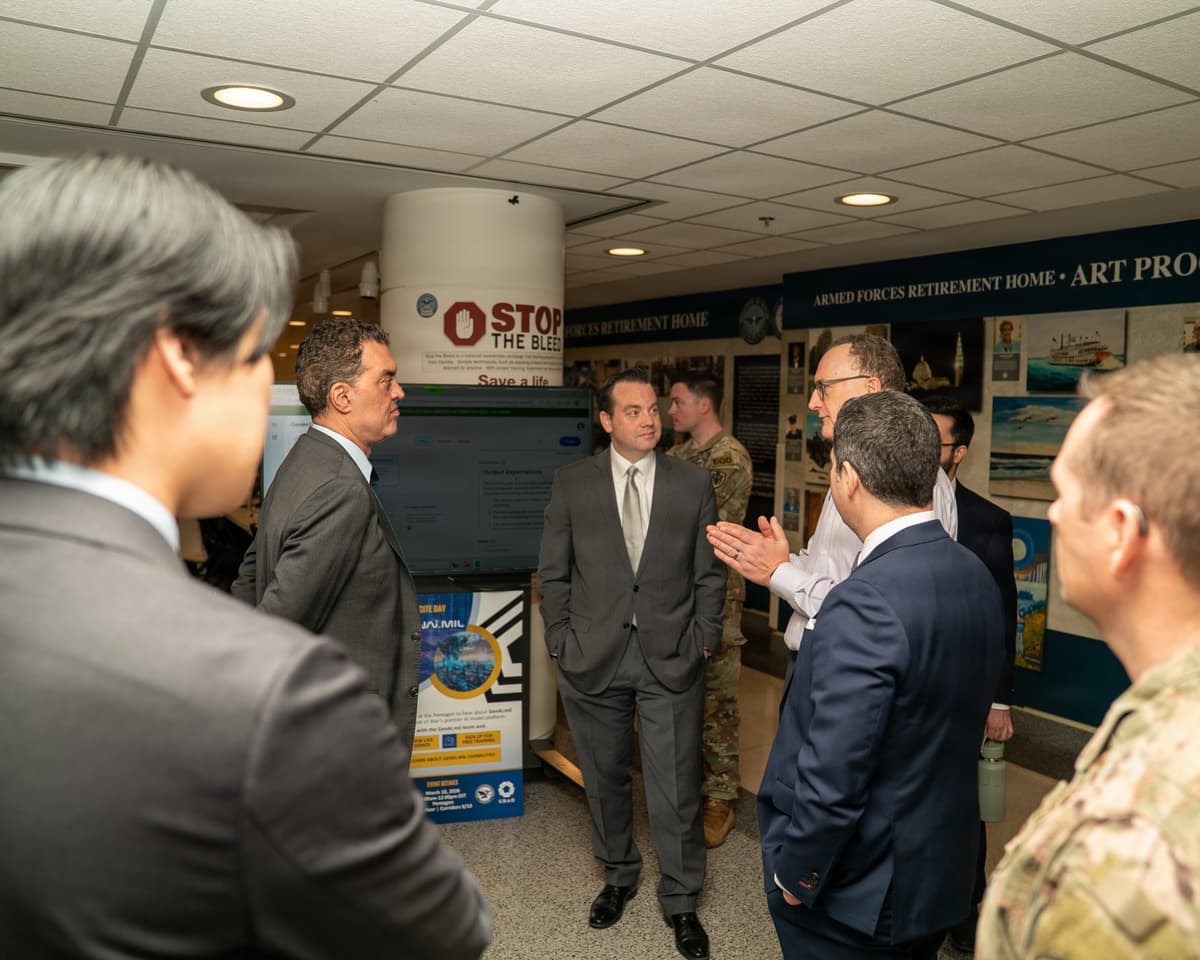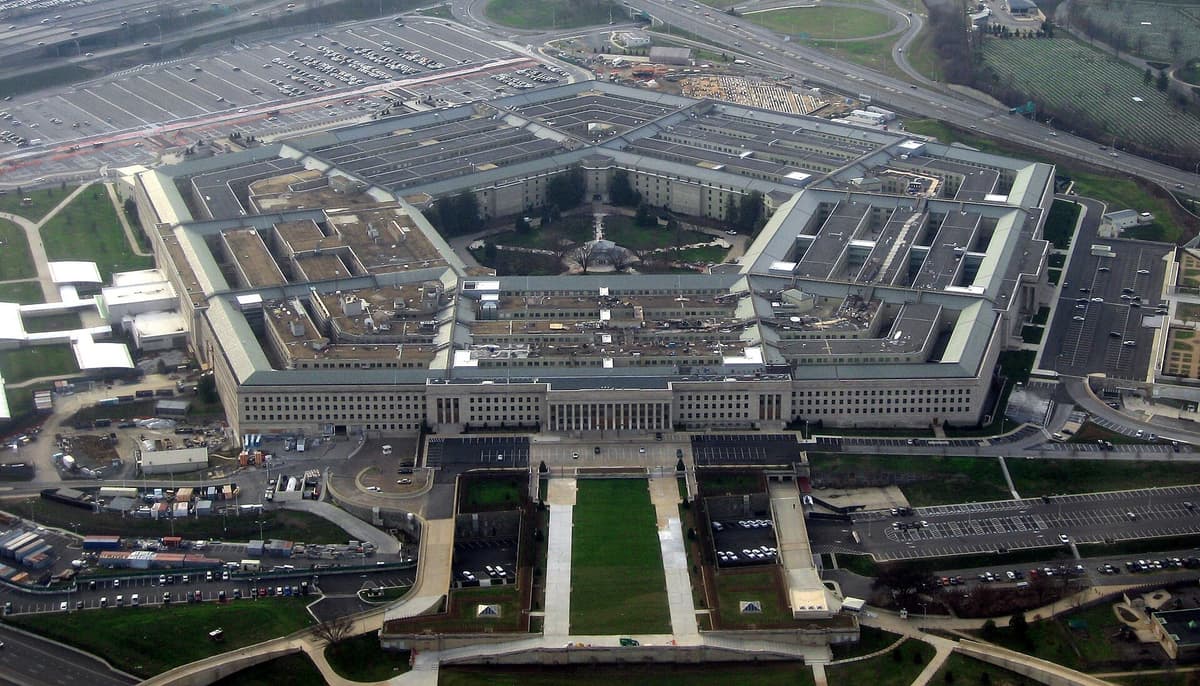
Here's the deal: the military is annoyed that an AI is "too safe"
Usually when you hear about an AI problem, it's the "this model is dangerous, nobody can control it" flavor. This one is the exact opposite. The US Defense Department is preparing to swap Anthropic's Claude out of its classified systems for OpenAI, Google, and xAI models — because Claude is "too safe" for what the military wants to do with it. One sentence, but it lands right on the sharpest nerve in the whole AI-safety debate, so it's worth slowing down for.
Quick setup. For the past year Anthropic was a core AI vendor for defense and intelligence work. Claude was embedded in classified networks — most notably the "Maven Smart System," which crunches battlefield data to identify targets and threats fast. Then Defense Secretary Pete Hegseth tagged Anthropic's products a "supply-chain risk," and the ground shifted. The Pentagon started seriously testing rival models, running the workflows Claude used to handle through competing systems to see who could replace it.
Why is "too safe" the problem? Because Anthropic built guardrails that block its models from being used for mass surveillance and lethal autonomous weaponry. The military's read: "We're buying a war tool, and you've coded it so it can't be used for war." Anthropic's read: "That's a line we won't cross." Both sides have a coherent argument, which is what makes this less a contract dispute and more a clash of values.
So here's what we're unpacking: why the military turned on its "trustworthy, safe AI" vendor within a year, why Anthropic chose court over caving on a deal worth potentially billions, and what this fight signals about the bigger question — how far should AI go as a weapon? Three players and you've got the picture.
The players — the Pentagon, Anthropic, and a red line
First, the Pentagon. It's busy wiring AI deep into combat. The Maven Smart System is the emblem: drones, satellites, and sensors dump enormous data streams, and AI sifts them to flag targets and threats fast — work humans used to do by hand. The DoD wants the smartest possible model running that brain. It's also an organization that absolutely will not tolerate a vendor tying its hands.
Next, Anthropic. "AI safety" isn't a slogan here, it's the identity. The company writes usage policies that actually forbid certain applications, and two of its firmest red lines are mass surveillance and fully autonomous killing — an AI making a lethal call with no human in the loop. Anthropic held that line through a year of military work, and that's exactly where the friction caught fire.
The third "player" isn't a person, it's a concept: the red line itself. Anthropic blocks Claude from being used to directly target and kill, or to surveil entire populations. The military thinks "in war you might need all of that." So this isn't a "Model A vs. Model B" performance bake-off — it's a question of how a customer treats a vendor whose ethics get in the customer's way.
One sentence to bind it: the military wants the smartest brain, Anthropic put an ethical safety pin in that brain, and the military — irritated by the pin — went shopping elsewhere. That's the skeleton.
What actually happened
Words get long, so here are the confirmed facts in a table.
| Item | Detail |
|---|---|
| Prior vendor | Anthropic Claude (classified networks incl. Maven Smart System) |
| Prior contract | Signed July 2025, worth up to $200M |
| Trigger | Defense Secretary Hegseth designated Anthropic a "supply-chain risk" |
| Core dispute | Anthropic won't drop guardrails against mass surveillance / autonomous lethal use |
| Replacement testing | OpenAI, Google, xAI models trialed on the "GenAI.mil" platform |
| Test personnel | ~25 designated military staff running side-by-side workflow comparisons |
| Contractor impact | Firms that integrated Claude given a 6-month window to find alternatives |
| Anthropic's move | Challenging the "supply-chain risk" designation in court (argues billions at stake) |
Line by line. First, the testing is real. This isn't a threat — there's a separate evaluation platform (GenAI.mil, independent of Maven), and designated personnel are running Claude's old tasks through rival models and scoring them. That's "actively preparing to switch," not "might switch someday."
Second, the 6-month contractor window is telling. Defense and IT partners who baked Claude into their systems were told: you've got six months to find a replacement. It's not one company quietly exiting — it's a signal that an entire Claude-dependent ecosystem could wobble.
Third, Anthropic went to court. It's contesting the "supply-chain risk" label and arguing the move could wipe out billions in revenue — while still refusing to drop the guardrails. Choosing a legal fight over folding, with money on the table, is Anthropic demonstrating in action that it doesn't treat "AI safety" as a marketing line.
Who gains, who loses
The party with the most to lose is clearly Anthropic. Beyond a contract worth up to $200M, it's the defense and intelligence market — huge and stable revenue — that's under threat. For a company heading toward an IPO, losing military revenue stings. But paradoxically, Anthropic also banks a brand asset here: "the company that wouldn't bend its safety principles even for money" reads as trust in regulated and enterprise markets. Lose the military, harden the "AI you can rely on" identity.
On the flip side, OpenAI, Google, and xAI just got an opening into a mega-customer's classified workflows. They're understood to impose less restrictive military-use limits than Anthropic, which lets them pitch "we don't block what the military needs." Government contracts are long and sticky once you're in, so it's a prize seat.
And the Pentagon itself is chasing a near-term win: vendor diversification. Hand your core brain to one company and you're stuck if that company ties your hands. Pit several vendors against each other and you gain leverage plus insulation from any single firm's policy. The risk is that this slides from "pick the best model" to "pick the least-restricted model," which could eventually saddle the military itself with the AI-safety reputational baggage.
Net: short-term, it's Anthropic-minus and competitors-plus, clearly. The long-term reputation game — whether the market rewards "the company that held the line" or "the company that dropped the limits" — is genuinely undecided.
Precedents — wins and losses
Tech-vs-military tension isn't new. The famous case: a giant IT company's military AI project where employees revolted ("I don't want our tech used to kill"), and the company ultimately dropped the renewal. The lesson was sharp: for an AI firm, a military contract is a double-edged sword — big money, but it detonates when it collides with identity. Anthropic drew its red lines up front precisely to dodge that explosion.
The success side balances it. Some defense-and-tech firms made "we actively help national defense" their whole identity and won massive contracts and rich valuations because of it. They turned closeness to the military into an asset. So there's no universal right answer to "is being close to the military good or bad?" — opposite strategies both work depending on which identity and customer base a company chases. Anthropic picked the "safety/trust" crowd; some rivals picked the "defense/government" crowd.
The failure shadow is real too. Plenty of military-dependent tech firms have seen core revenue wobble when a policy or an administration changed. Government customers are huge but also fickle and political. Losing the military hurts Anthropic short-term, but if it means not being heavily dependent on one government buyer, that's not purely bad for long-term risk spread.
So the balanced read: this is a clear short-term hit for Anthropic, but whether "the company that couldn't bend on safety" turns out to be a strength or a liability is undecided. The one thing precedent teaches is that the right answer about military ties depends entirely on a company's identity.
How rivals counter
Will Anthropic just hand over the military? Not necessarily. Card one: drag out the legal fight. If the "supply-chain risk" basis is shaky, court buys time — and the policy environment or the political mood could shift in the meantime. Government decisions get reversed and re-reversed, so the legal process itself becomes leverage.
Card two: pivot to the "civilian/allied" security market. Even if it's pushed out of the US military core, allied governments, cyber defense, and intelligence analysis — security work that's far from "killing" — are still enormous. Anthropic can carve out new security revenue under a "we'll do defense and analysis but draw the line at offensive lethality" banner that doesn't fight its own principles.
Card three, from the rivals' side: OpenAI, Google, and xAI will push "we don't block what the military needs" as a core government-sales message — while keeping a "but we still care about safety" balance. Lean too hard into "unconstrained AI" and you risk backlash in civilian and regulated markets. So they're walking their own tightrope between military revenue and civilian reputation.
And don't forget the wild card: politics and public opinion. "Should an AI be allowed to make the call to kill?" is something the public and Congress watch closely. If an autonomous-lethality controversy blows up, Anthropic's "we kept the guardrails" choice could suddenly be re-read as foresight. Conversely, if security threats spike, the "go fast, drop the limits" camp gains steam. The eventual winner here may be decided less by model performance than by whichever political wind is blowing.
So what changes — by who you are
If you're a developer. No impact on your daily coding. But this shows that an AI vendor's usage policy is a real business variable. When you bake a model into production, don't just weigh performance and price — check "what uses does this company forbid?" That habit matters more and more, especially in regulated or sensitive industries.
If you're a decision-maker. The lesson is vendor lock-in risk. Hand a core workflow to one AI company and you wobble when its policy or availability changes. Like the Pentagon giving a 6-month window to find alternatives, your org should pre-build a multi-model strategy and a "swap-able" architecture. Also check upfront that a vendor's ethics policy doesn't collide with your business.
If you're a bystander. The real significance: "AI safety" is no longer an abstract ethics seminar — it's a concrete variable swinging billion-dollar contracts. Companies, governments, and the public are each answering "how far should AI go as a weapon?" and we're watching those answers collide in real time. When you read AI news, weigh "where does this company draw the line?" as much as "who's #1 on the benchmark," and the picture gets a lot more three-dimensional.
The one line across all three: AI's real edge is now decided not only by performance but by where it draws the line. Whether Anthropic's line becomes an asset or a burden — even if it loses the military — is something the next few quarters of market and politics will answer.
🥄 Three Things You're Probably Wondering
— So is the military actually dumping Claude for good? Too early to call. What's confirmed is "seriously testing replacements" plus a 6-month contractor window — not "Claude fully out, final." And Anthropic is contesting the designation in court, so the outcome could shift the whole trajectory. "Preparing to switch" is the accurate frame right now.
— Why would Anthropic give up money rather than drop the guardrails? Because "AI safety" is the company's actual identity. Mass surveillance and autonomous killing are red lines it drew from day one, and dropping them once turns it into "the company that unlocks anything for the right price" — which would crater its trust in regulated and enterprise markets. Looks like a bet on long-term reputation over short-term revenue. Whether that bet pays off, we'll see.
— Does this mean rival models are just better for military use? No. This is closer to "fewer constraints" than "better performance." The core reason is that rivals don't block the uses the military wants — not that anyone judged their models smarter. Performance is a separate question, and the public info doesn't settle it.
References
- Pentagon tests rival AI models to replace Anthropic's Claude in military workflows — Crypto Briefing
- The Pentagon Is Racing to Replace Anthropic's Claude — Because It Was 'Too Safe' for War — TechTimes
- Pentagon reportedly testing AI models in bid to replace Anthropic's Claude — Investing.com
- Pentagon Tests OpenAI and Google AI to Replace Anthropic's Claude — OpenTools
- Pentagon Tests New AI Models, Shifts from Anthropic Claude — StartupNews.fyi
Numbers are as of announcement and may change.