When the Market Leader Suddenly Says the Game Needs a Referee
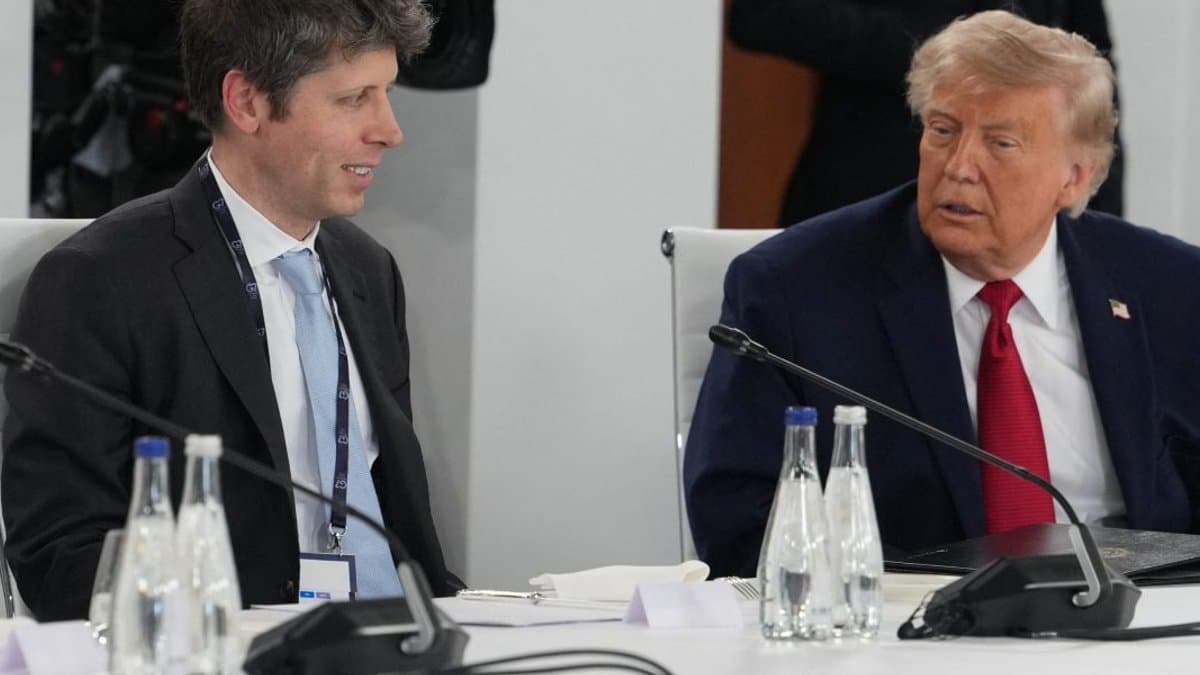
When a company owns a market outright, it rarely talks about rules. Why would it? Winning is enough. So when the founder of the defining AI company suddenly starts arguing that the whole industry needs an international order to keep it safe, that's usually a tell — a signal that the ground under the leader is shifting. On July 2, 2026, Fortune caught exactly that scene. Sam Altman is pitching a U.S.-led international forum for AI, something close to a "new world order" for the technology. And the headline was pointed: OpenAI is slowly losing ground to Google and Anthropic.
Look at the numbers and Altman's pivot starts to make sense. In May, Anthropic said it had reached a $47 billion annualized run-rate. OpenAI's own self-reported figure sits somewhere between $25 and $33 billion. Even judging both companies by their own press releases, Anthropic is now ahead. On top of that, Anthropic says it will turn profitable in 2029 — a year sooner than the 2030 timeline OpenAI has floated. Revenue, profitability, enterprise share: on all three, the moment has arrived where OpenAI can no longer comfortably call itself the clear number one.
What's telling is Altman's response. As his lead in the market starts to erode, he isn't reaching for a better product — he's reaching for a higher-order game of rules and safety standards. He cites aviation safety, global financial standards, and the International Atomic Energy Agency, arguing for a U.S.-led forum that would assess AI's capabilities and risks and set the accepted standards. Read charitably, it's a sincere safety proposal. Read coldly, it's a slipping frontrunner trying to redraw the board. In this piece we'll break down who's ahead on which numbers, why Altman is playing this card right now, and what actually changes for developers, the industry, investors, and everyday users. The short version up front: it's far too early to write OpenAI's obituary.
Three Players: Altman, Amodei, and a Google That Owns Distribution
There are three actors on this stage. First, Sam Altman and OpenAI. ChatGPT made them the household name of consumer AI, and they still dominate on raw user numbers. But the walls of that consumer castle are starting to creak. According to Similarweb data, ChatGPT's monthly visit share of the generative-AI market fell below 50% for the first time in May. That sounds minor, but it means consumers are increasingly comfortable switching between models. The era where ChatGPT simply was AI is quietly fading.
Second, Anthropic, led by Dario Amodei. From day one, this company aimed at enterprises and the API, not consumers — companies that embed Claude into their own products, especially in coding, where it exploded. The engine is Claude Code, an agentic coding tool that has become the fastest-growing product in Anthropic's history. The revenue trajectory is genuinely startling: roughly $9 billion at the end of 2025, $14 billion by February 2026, and $47 billion by May — a 47x jump in seventeen months. On May 29, Anthropic closed a $65 billion Series H at a $965 billion valuation, snatching the title of most valuable AI startup away from OpenAI.
Third, Google. Google is a different animal from the other two. It isn't a startup — it's a giant that already owns Search, Android, and Workspace, products billions of people touch every day. By weaving Gemini into Search and bolting it onto Gmail, Docs, and Cloud, Google absorbs users without them ever downloading a separate app. While OpenAI fights for consumers and Anthropic fights for enterprises head-on, Google quietly expands share through the back door of distribution. The fact that all three are wielding completely different weapons is the whole story of this round.
The Scoreboard — Where Exactly OpenAI Slipped
Words don't land like numbers do, so here's the board. Pulling together the Fortune piece and the Similarweb and Ramp data behind it, it looks roughly like this.
| Metric | OpenAI | Anthropic | Note |
|---|---|---|---|
| Annualized run-rate | $25-33B | $47B | Self-reported |
| Expected profitability | 2030 | 2029 | Anthropic a year ahead |
| Business spend share (Ramp) | 32.3% | 34.4% | First flip, May 13 |
| Recent valuation | ~$500B range | $965B | Anthropic now top startup |
| Consumer visit share | Below half in May | Rising | Similarweb |
| Flagship growth product | ChatGPT | Claude Code | Coding = biggest enterprise use |
The line that jumps out is the Ramp data. Ramp is a corporate card and expense platform that tracks real spending across roughly 50,000 U.S. companies. Its May 13 monthly AI Index showed Anthropic passing OpenAI in paying business customers for the first time — 34.4% to 32.3%. A year earlier, OpenAI sat around 32% and Anthropic under 8%. In other words, Anthropic quadrupled its business adoption in a year while OpenAI grew by just 0.3 points. What's scary in that number isn't the gap — it's the direction. The growth trajectories have completely diverged.
That said, the figure comes with caveats worth stating plainly. The 34.4% vs. 32.3% split isn't global market share — it's the share of AI spend among Ramp's customers, and those skew toward U.S. mid-market and growth-stage companies, so big enterprise deals and international markets barely register. The $47B and $25-33B revenue numbers are all self-reported run-rates, built on different accounting and derived by annualizing a single strong month, so they swing. The honest read isn't "Anthropic has beaten OpenAI outright" — it's "on these specific metrics, Anthropic has started to pull ahead."
What Each Side Actually Gains
Start with Altman and OpenAI. Fought product-against-product, the current momentum runs against them. So they've reached for a higher frame: safety and standards. If a U.S.-led international forum evaluates AI's capabilities and risks and writes the rules, then OpenAI gets a seat at the table where those rules are designed. The IAEA analogy is telling — if AI gets defined as a dangerous technology that not just anyone should be allowed to build, then a company that's already at the front and has deep government ties, like OpenAI, benefits. Genuine concern about safety and a calculated effort to lock in latecomers through regulation can live in the same proposal at the same time.
What Anthropic gains is clear — money and moral high ground at once. Leading in the enterprise makes revenue stable and predictable. Consumers are fickle, but enterprise contracts, once signed, rarely churn. More than 1,000 business customers are each spending over $1 million a year, and Claude is the only frontier model available on all three major clouds — AWS Bedrock, Google Vertex AI, and Azure Foundry. On top of that, the "safety-first" brand becomes an asset as the regulatory conversation heats up. When Altman raises the banner of safety standards, Anthropic — which planted that flag first — can simply reply, "we've been doing this from the start."
What Google gains is time and scale. Google has no reason to rush. With Search, Android, and Workspace already in place, it just slots Gemini in and users are exposed automatically. While OpenAI and Anthropic tear at each other, Google lowers its cost base with its own TPU chips and pours ad-generated cash into AI, preparing for a long war. That Google is the least hurried of the three may be the most dangerous fact on this board.
Past Parallels — Leads That Flipped, and Leads That Didn't
This picture isn't new in tech history. Take a case that flipped. In the search wars of the 2000s, Yahoo was once the front door to the internet. Then Google quietly absorbed users on the strength of one thing — better search quality — while Yahoo tried to bulk up into a sprawling "portal," lost its identity, and collapsed. There's an echo here: OpenAI bolting features onto a consumer super-app while Anthropic drills one well — coding — and captures the enterprise. When the leader broadens its focus, a challenger piercing a single point has worked before.
Another one: think of BlackBerry in the early smartphone era. It dominated secure enterprise email, and then the iPhone rewrote the game on consumer experience and BlackBerry was gone within a few years. The lesson here runs the opposite direction — no matter how strong you are in one domain (enterprise), if a completely new standard emerges in another (consumer experience), you can crumble fast. That's exactly why Anthropic can't relax just because it leads in the enterprise today. If OpenAI or Google ships a consumer-side breakthrough that resets the board, that enterprise edge can wobble too.
To be fair, you also have to look at leads that didn't flip. In cloud, AWS held the top spot for years despite relentless pursuit by rivals, because its moat — economies of scale, developer ecosystem, switching costs — was simply that deep. OpenAI has a comparable moat: the ChatGPT brand, hundreds of millions of users, a vast API ecosystem, and Microsoft as a heavyweight partner. One reversal in Ramp share doesn't mean OpenAI is about to fall over. Tech history has far more cases of leaders holding on for years, or reversing the reversal, after the first stumble.
Finally, the precedent for rule-making games. The IAEA for nuclear power and ICAO for aviation really did set industry standards — but it's also true that the advanced nations and incumbent firms who held the pen first came out ahead. Whether Altman's "world order" proposal turns out to be a pure safety mechanism or a barrier to entry that fences out latecomers by regulation is — genuinely too early to call. History says both are possible.
The Counter-Play — How Anthropic and Google Push Back
Anthropic's counter-play is already in motion, and the core of it is digging the enterprise lock-in deeper. It knits developer tooling tightly around Claude Code and puts Claude on all three major clouds so teams can reach it wherever they already are. It keeps reinforcing the "safety-first" brand, which turns into a shield as regulation tightens. When Altman starts talking safety standards, Anthropic can reclaim the narrative with "we built it this way from the beginning." That said, as VentureBeat pointed out, there are three threats that could erase Anthropic's lead — price offensives from OpenAI and Google, the strain of expanding beyond coding, and the ballooning infrastructure costs that come with explosive growth.
Google's counter-play is, essentially, refusing to hurry. It keeps embedding Gemini deeper into Search, Gmail, and Android so users adopt AI without even noticing. Its own TPU chips lower inference costs, and its enormous ad cash flow gives it the stamina to absorb losses. While OpenAI and Anthropic grab headlines with revenue and valuation, Google quietly lays long-game groundwork on two axes — distribution and cost. It's the least flashy strategy and probably the most sustainable one.
So what about OpenAI itself? According to Fortune, the debate inside OpenAI is heated. Executives are arguing over how to defend the consumer lead while clawing back the enterprise. One camp wants to lever the powerful ChatGPT brand into stronger enterprise products; another wants to push harder on the consumer super-app. Altman's "world order" card sits apart from that internal fight — it's an attempt to redraw the board at the level of rules rather than products. The fact that all three companies are fighting with entirely different weapons is exactly what makes this round worth watching.
So What Actually Changes — By Who You Are
If you're a developer, now is the time to seriously test agentic coding tools like Claude Code. Anthropic captured the enterprise coding market for a reason, and plenty of teams are wiring Claude into code review, refactoring, and agent workflows. But betting everything on one vendor is risky. If OpenAI and Google fire back with price cuts, the board shifts again, so keep an abstraction layer that lets you swap models. This isn't the age of one model — it's the age of switching between models.
If you're in the industry, the real message here is that the consumer leader and the enterprise leader have split apart. Where one company (OpenAI) used to own both, now consumers lean toward OpenAI and Google, enterprises toward Anthropic, and distribution toward Google. If you're evaluating AI adoption, choose by "who's best for our use case," not "who's most famous." Coding and agents point to Claude, consumer-facing to ChatGPT, and living inside the Google ecosystem to Gemini. The decision criteria have fragmented.
If you're an investor, look past the intoxicating valuation numbers at two things. First, figures like $47B and $25-33B are all self-reported run-rates built on different accounting and are volatile. Second, a valuation like Anthropic's $965 billion is attached to a company that isn't even profitable yet. The growth is real, but the question is the cash burn and infrastructure cost between here and profitability (2029 for Anthropic, 2030 for OpenAI). Remember, this phase is less about "who won" and more about "who can last."
If you're a general user, the immediate change is small. ChatGPT still works fine, and you can try Claude and Gemini for free. But here's the good news — the fiercer the competition, the better it is for you. Models get better, prices fall, switching gets easier, and the reasons to stay loyal to any one company keep shrinking. So instead of "this is just the one I use," poke a different model with the same question now and then and find out for yourself which one actually fits you best.
🥄 Three Things You're Probably Wondering
— So is OpenAI finished now? No, that's not it. It's true that it got passed on Ramp's business-spend share and that its consumer visit share dropped below half for the first time — but the moat of the ChatGPT brand, hundreds of millions of users, and the Microsoft partnership is still thick. Tech history has more cases of leaders holding on for years, or reversing again, after the first stumble. "The top spot is shaking" is accurate; "it's over" is an exaggeration.
— Is Altman's 'AI world order' sincere or calculated? Probably both. There's likely genuine worry about AI's risks in there, but there's also a clear calculation from a slipping leader trying to grab the rule-making table first. The IAEA analogy is telling — if AI gets defined as a dangerous technology that not just anyone should build, the company already out front benefits. Whether it ends up a pure safety mechanism or a barrier to entry is honestly too early to call.
— So which one should I actually use? It splits by use case. For coding or agent automation, there's a reason Claude owns the enterprise right now; for everyday conversation and consumer use, ChatGPT is still the easy choice; and if you work inside Gmail and Docs, Gemini is the natural fit. The key is not to stay loyal to one — throw the same question at several models. This is the era when switching costs the least.
References
- Sam Altman seeks new world order for AI as OpenAI slowly loses ground to Google and Anthropic — Fortune (2026-07-02)
- Anthropic now has more business customers than OpenAI, according to Ramp data — TechCrunch (2026-05-13)
- Anthropic tops OpenAI as most valuable AI startup, nears $1 trillion valuation — CNBC (2026-05-28)
- Anthropic's run-rate revenue hits $47 billion — Simon Willison (2026-05-29)
- Anthropic finally beat OpenAI in business AI adoption — but 3 big threats could erase its lead — VentureBeat
Numbers are as of announcement and may change.