The smartest money in the room just bet $30 billion that AI compute is a shortage, not a bubble
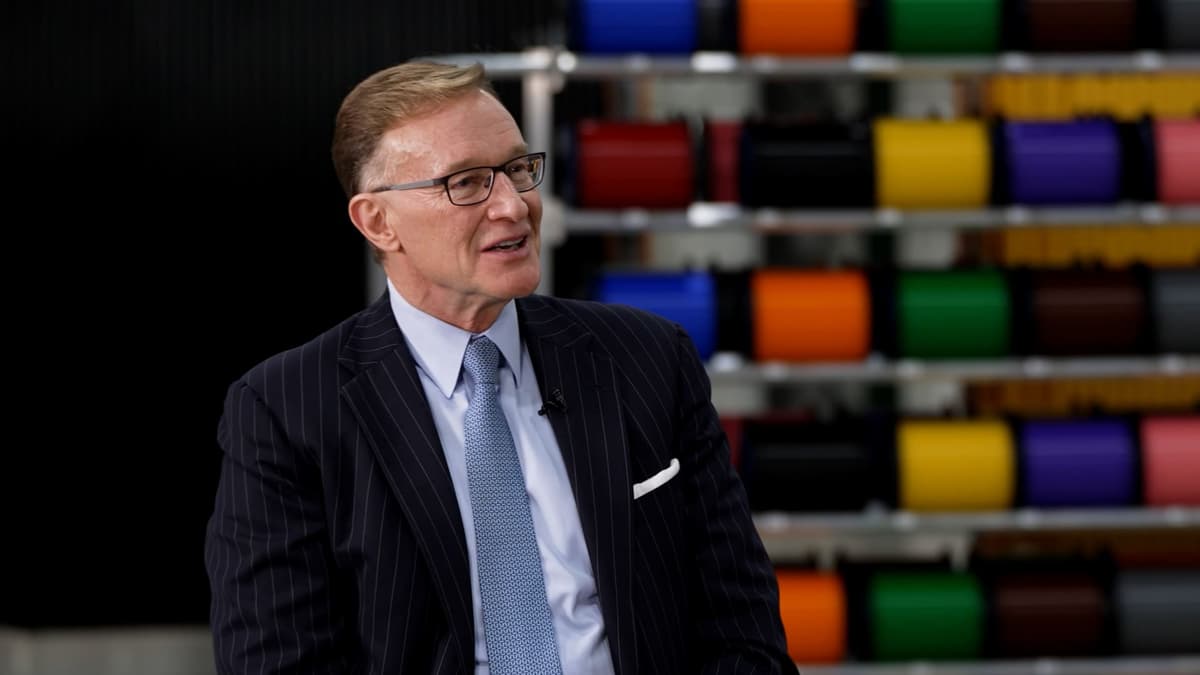
Here is the deal: Blackstone, the firm with the best nose for money on the planet, just said it will pour a staggering $30 billion into Japanese soil. And it did not hedge it as a vague "we're exploring it." President and Chief Operating Officer Jonathan Gray sat down with Japan's Nikkei and flatly said the firm plans to spend $30 billion on AI data centers in Japan over the next three to five years. In private equity, Gray's name is shorthand for "the guy who reads real estate and infrastructure before anyone else." So the fact that he is pointing at Japan, right now, is the whole story.
The juicier part is the line Gray dropped. Lately the market has started whispering: aren't we building way too many AI data centers? Isn't this a bubble? Gray hit that head-on, saying "I actually think the risk is there's a shortage." The largest alternative asset manager on Earth is stepping on the gas exactly when everyone else is tapping the brakes. Whether that is bravado or a genuine early read on the game is what makes this worth chewing on.
Blackstone, Jonathan Gray, and the Japan stage
Let's line up the players first. Blackstone manages north of $1 trillion in assets, making it the biggest private equity (technically alternative asset) manager in the world. Real estate, private equity, infrastructure, private credit — there is nothing it does not touch. And of all its themes over the past few years, the one it is betting hardest on is "digital infrastructure," which really means data centers. The firm has openly called data centers its "highest-conviction investment theme."
Jonathan Gray is Blackstone's number two and effectively its investment engine. He built the real estate arm that grew the company into what it is today, and now as president and COO he oversees the firm's entire deal machine. Where he puts money reads like a signal for "where smart money is flowing." So Gray picking Japan — not the US, not Europe — is what gives this news its weight.
Why Japan? Because Japan is fast becoming the new hub of global AI infrastructure. Its power grid is relatively stable, it is a political ally aligned with the US so geopolitical risk is low, and it sits in a great spot to serve Asia-Pacific demand (including Korea and Southeast Asia). On top of that, a weak yen makes Japanese assets look cheap to anyone holding dollars. For a whale like Blackstone, the picture is "buy now, it gets pricier later."
And Blackstone is not starting from scratch here. It has already built more than 500MW (megawatts) of data center capacity in Japan. Underneath that sit assets like AirTrunk, the Asia-Pacific data center platform Blackstone acquired in 2024. In other words, this is not a "new entry" — it is "we already laid the board, now we more than double it," which makes it far more credible.
The partner lineup is not ordinary either. Gray revealed that Blackstone is working globally with Anthropic to support companies adopting AI, and with Google to offer customers AI computing capacity. This is not a landlord renting out idle buildings; it is positioning itself as an infrastructure operator holding hands directly with the core players of the AI ecosystem.
Breaking down what $30 billion actually buys
This deal comes down to numbers, so let's take them apart. The gist: spend $30 billion over three to five years, and grow the existing 500MW into more than 1GW (gigawatt). Gray compared a 1GW-scale facility to "the output of a nuclear reactor." A cluster of data centers eating as much electricity as one nuclear plant — that puts the scale into focus, right?
| Item | Detail |
|---|---|
| Who | Blackstone (announced by President & COO Jonathan Gray) |
| Size | ~$30 billion |
| Timeframe | Next 3-5 years |
| Existing Japan capacity | 500MW+ (already built) |
| Target capacity | 1GW+ (compared to one nuclear reactor) |
| Key partners | Anthropic (AI adoption), Google (compute capacity) |
| Gray's view | "The risk is a shortage, not a glut" |
| Channel | Nikkei interview, late June 2026 |
The line to watch is "more than double the capacity." Taking 500MW to 1GW+ means, over the next few years, building all over again everything they have built so far — plus more. Data centers do not appear just because you have land. You need power (grid interconnection), cooling, high-end GPUs, and above all a customer (hyperscalers, AI firms) willing to buy that capacity. Blackstone being tied to Anthropic and Google signals it has pre-empted the "build it and it sits empty" risk.
One more thing: $30 billion is a big number, but at Blackstone's scale it is not a bet-the-house gamble. A firm with over $1 trillion under management deploys this across multiple funds and co-investments, so no single fund is emptying its vault. In return, Blackstone chases development and management fees, rental income, and later the gain from selling the assets. It is the classic private equity "buy, grow, sell" playbook, laid neatly on top of AI-era data centers.
Finally, timing. Behind Gray's "shortage is the risk" line is a judgment that generative AI training and inference demand is growing far faster than expected. GPUs have been sold out for years, and the fight for power and land is fierce. Gray's math is simple: "if we do not build now, later we won't be able to lock down the land, the power, or the permits."
What each side walks away with
Start with Blackstone. The gain is clear: locking up the upstream (power, land, buildings) of a hyper-growth market. If the AI boom keeps running, data center rents and asset values rise, and Blackstone pockets both development gains and management fees. Anchoring assets in a stable market like Japan also secures predictable long-term cash flow versus volatile stocks or credit — exactly the picture that Blackstone's clients (LPs) like pension funds love.
What does Japan get? An inflow of $30 billion in foreign capital first creates construction, power, and real estate jobs and tax revenue. More importantly, it secures the "physical foundation of the AI era" within its own borders. Japan gets to run AI compute on its own soil instead of depending on someone else's data centers. Tokyo has been pushing "digital sovereignty" as a national agenda, from semiconductors (Rapidus) to data centers, and Blackstone's money fits that direction perfectly.
Partners Google and Anthropic win too. Instead of spending tens of billions to build every data center themselves, they can rent or jointly use the infrastructure Blackstone builds, easing their capital burden. In a race where "how fast you can secure compute" decides who wins, teaming up with an infrastructure whale like Blackstone lets you buy that speed.
And there is one more quiet winner: the GPU, power, and cooling equipment suppliers. Building 1GW+ of data centers means that much more demand for Nvidia GPUs, high-voltage transformers, and immersion/liquid cooling gear. Blackstone's $30 billion ultimately flows into this entire supply chain.
Past parallels — the wins and the wipeouts
Mega infrastructure bets like this are nothing new. On the win side, Blackstone itself has already scored big with data centers. In 2021 it bought US data center REIT QTS for about $10 billion, and as cloud and AI demand exploded, that asset's value soared. It bet early, back when the market still saw data centers as "boring real estate," and won. Its 2024 acquisition of AirTrunk (A$24 billion, ~$16 billion) followed the same logic — snapping up an entire Asia-Pacific footprint — and is seen as a masterstroke.
The shadow behind those wins is "timing." A data center you build but cannot fill is just concrete that eats electricity. QTS and AirTrunk worked because they lined up with the exact moment hyperscaler demand actually exploded. Blackstone wiring up Anthropic and Google in advance this time is it acting on that lesson.
But there are clear failures too. The most famous is the fiber-optic overbuild around the dot-com bubble of 2000. Companies like Global Crossing and WorldCom laid cable like maniacs betting "internet traffic will explode," and when demand did not arrive as fast as promised, many went bankrupt. Most of the fiber they laid sat as unlit "dark fiber" for years. The reason people now worry "aren't AI data centers just like that fiber?" comes straight from this history.
Gray's decision to charge straight through it with "shortage is the risk" is a line written with that fiber trauma in mind. The difference from back then is that AI compute demand is already proven to be in a "can't buy it even with money in hand" state. Fiber was laid down waiting for traffic; today GPUs and compute sell out the moment they are made. Still, "this time it's different" is the phrase uttered at every bubble — so it is too early to be 100% comfortable.
How the competitors punch back
While Blackstone plants its flag in Japan, the rivals are not sitting still. The most visible is Microsoft. In April 2026, Microsoft announced a $10 billion investment in Japan. Teaming with local players like SoftBank, Sakura Internet, Fujitsu, Hitachi, NEC, and NTT Data, it plans a "sovereign AI cloud" — infrastructure where Japanese data stays on Japanese soil. It even bolted on a plan to train more than one million Japanese engineers by 2030. Right after the announcement, partner Sakura Internet's stock jumped over 20% in a single day.
Amazon (AWS) belongs in the frame too. AWS long ago pledged to put more than 2 trillion yen (~$15 billion) into Japanese cloud infrastructure by 2027. So Japan's data center market has become a battleground where Blackstone, Microsoft, and Amazon are all charging in at once. Add SoftBank layering on its own AI infrastructure ambitions (including Stargate-style plans), and it gets even hotter.
What is interesting about the rivalry is that these players are not purely enemies. Blackstone is on the "build and own" side of infrastructure, while Google, Microsoft, and Amazon are on the "sell AI services on top of it" side. So a Google or another hyperscaler renting the data centers Blackstone builds is entirely possible — indeed Blackstone said it is already collaborating with Google. It is a "frenemy" setup where foe and ally blur together.
Other infrastructure whales are loading counter-punches too. KKR, Brookfield, GIP (Global Infrastructure Partners, now owned by BlackRock), and DigitalBridge are all piling into data centers. In other words, a land-grab for good sites and power has already begun, and Blackstone's $30 billion declaration is partly a move to assert "in Japan, we're out front."
In the end the thing to watch is power. Everyone has money. The real bottleneck is whether you can pull in the electricity, and whether you can clear local communities and regulators. Japan is still wrestling with nuclear restarts and renewables expansion, and as data centers suck up power, an "AI is eating all the electricity" conflict could flare up. Whoever locks in favorable power contracts first will likely decide the winner.
So what actually changes
For investors, this news signals that AI-boom money is spreading beyond chips and models into infrastructure — power, real estate, construction. It is not just about GPU makers like Nvidia; the beneficiary circle could widen to data center REITs, power/cable/cooling gear, transformer makers, and local Japanese construction and real estate. That said, Blackstone (ticker BX) is public, but one deal like this will not swing its stock wildly. Read it as a directional signal of a bigger trend.
If you work or run a business in Japan, the power, real estate, and labor markets in data center clusters (the Kanto region, the Osaka area, etc.) could heat up. Conversely, burdens like higher electricity prices and local cooling/noise issues could grow too. Opportunity and friction arrive together.
For everyday AI users, investment like this eventually means "the AI you use gets faster, cheaper, and runs from a data center closer to you." AI response latency in Japan and Asia falls, and more services free of data-sovereignty headaches appear. Of course, this is a change you feel gradually over several years.
From Korea's vantage point it is mixed. If Japan cements itself as the AI infrastructure hub, Asian data center investment and talent could tilt toward Japan. Unless Korea builds competitiveness in data centers and power infrastructure, there is a real tension that it could cede the "Asian AI hub" seat to Japan. At the same time, it could be a chance for Korean cooling, power, and construction firms to join Japanese projects.
🥄 Three Things You are Probably Wondering
— So what does this mean for me? Not much directly. But if you follow AI stocks or infrastructure funds, this helps you read the money flow widening from "GPUs" into "power, data centers, construction" ahead of time. Even more so if you were already watching Japanese real estate or utilities.
— Why now? Because AI compute demand is growing faster than expected, and the judgment is "if we don't build now, we won't lock down the land or the power later." The weak yen making Japanese assets look cheap pulled the timing forward too. Gray's "shortage, not a glut" line packs that whole call into one sentence.
— Is Blackstone ahead of its rivals? In Japan specifically, yes — it already has 500MW built, so it is out front. But Microsoft ($10 billion) and Amazon (~$15 billion) are betting big on Japan too, so it is hard to call it a runaway lead. The real contest turns on "who locks up the power first," so it is too early to be sure.
References
- Blackstone to invest $30bn in Japan AI data centers: president (Nikkei Asia)
- Blackstone Commits $30B as Japan's AI Battle Heats Up (AI Business)
- Blackstone lines up $30 billion Japan AI data centre push (The Tech Capital)
- Microsoft deepens its commitment to Japan with $10 billion investment (Microsoft News)
- Sakura Internet jumps 20% as Microsoft plans $10 billion AI push with SoftBank (CNBC)
- Blackstone sets $30bn Japan AI data centre investment plan (Investment Monitor)
Numbers and criteria are as of announcement and may change. Investment calls are yours to make!