Musk's AI Just Walked Past Coding and Into the Regulated Office
Here's the deal: on July 8, xAI — now operating under SpaceX — unveiled a new model called Grok 4.5. This isn't just another version bump. It's the first joint model built together with AI coding startup Cursor, and where it's aimed is the genuinely interesting part. Software development is table stakes; on top of that, Grok 4.5 goes straight at finance and legal work. Elon Musk calls it "Opus-class but way cheaper and faster," and public availability lands July 9.
The story isn't "another frontier model exists." It's which market this thing is hunting. Contract review, case-file summarization, regulatory analysis, financial-statement analysis, due diligence, investment research, risk assessment. Every one of those is a domain where a wrong answer gets a person hurt or a company sued. That's a completely different arena from the world where a chatbot could make stuff up and everyone just laughed it off. White-collar work where hallucination tolerance is basically zero — and Musk drove right into it.
The context makes the picture sharper. This dropped just weeks after SpaceX agreed to acquire Cursor (legally, Anysphere) in a $60 billion all-stock deal — the largest acquisition of a venture-backed startup in history. So Grok 4.5 isn't merely a new model; it's the first answer to the question "why did SpaceX pay $60 billion for a coding company?" Cursor's coding data and real-world know-how got baked directly into xAI's foundation model.
Why does this matter? For the last two years, the main stage of the AI agent race has been coding. But coding is ultimately the work of a narrow tribe — developers. Finance and legal, by contrast, are the highest-billing white-collar labor on the planet. The hours lawyers, accountants, and analysts spend all night reading contracts and reconciling numbers — that's what the AI wants to take. The size of the pot just changed. And this is an arena decided less by "how smart are you" than by "how rarely are you wrong," so winning here is real money.
Meet the Players — SpaceXAI, Cursor, and Musk
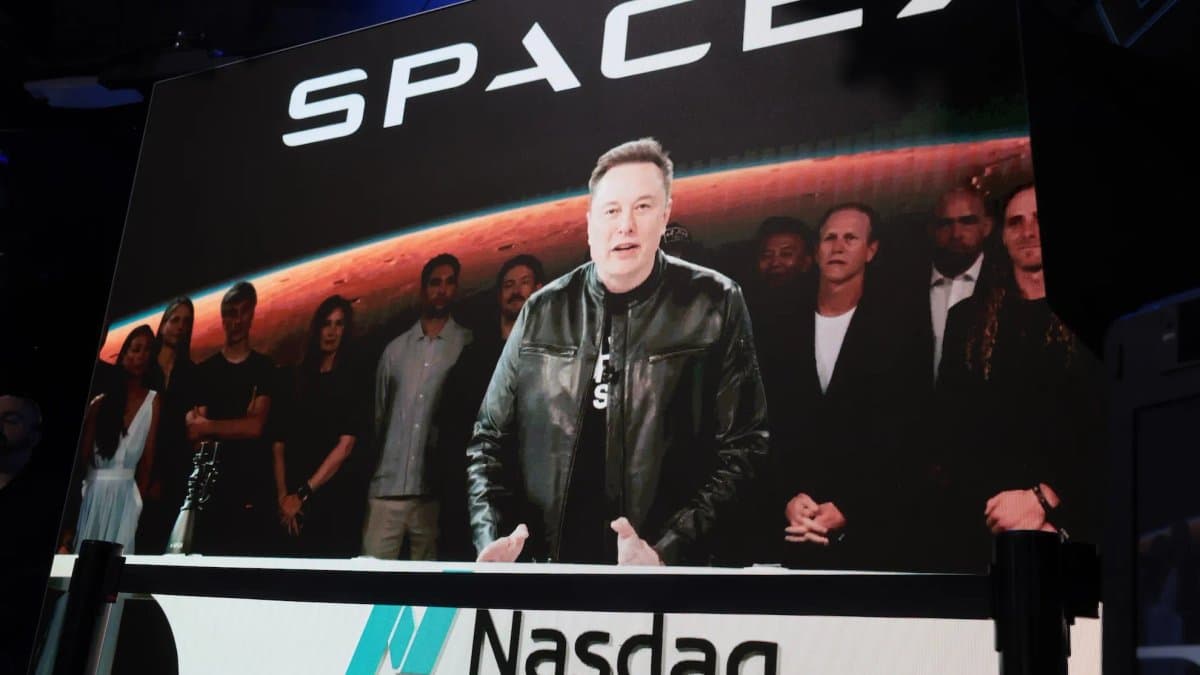
Start with xAI. Musk founded it in 2023, and it's known for the Grok chatbot. It began as a chatbot bolted onto X (formerly Twitter), but version after version it bulked up into a frontier model with real coding and reasoning chops. What jumps out in this launch is the branding: multiple outlets are attributing the model not to "xAI" but to "SpaceXAI." That name reflects how Musk's AI efforts are consolidating under the SpaceX umbrella. SpaceX went public on Nasdaq last month in the largest IPO ever, stacking up a war chest — and it's using that firepower to pull in AI and coding.
Next, Cursor. It's an AI coding editor that blew up among developers. The legal entity is Anysphere, and in under four years it hit roughly $4 billion in annualized revenue. The key detail: about $2.6 billion of that comes from enterprise B2B. This isn't a toy individual developers noodle with — it became a real enterprise product companies pay for. That's why SpaceX paid $60 billion, roughly 15 times revenue — one of the richest multiples ever slapped on an AI software company.
And the person who stapled these two together is Elon Musk, who controls SpaceX, Tesla, and xAI all at once. His line about this model is the whole marketing hook: "Opus-class," meaning it rivals Anthropic's top-tier Claude Opus. That said, Musk dialed the nuance himself, saying "our internal assessment is that Grok 4.5 is roughly comparable to Opus 4.7, but much faster," and adding that "hardcore engineers at Tesla and SpaceX find Grok 4.5 genuinely useful."
Understanding Cursor's role in this combo matters. Grok 4.5 is built on xAI's roughly 1.5-trillion-parameter "V9" foundation model, with Cursor's real-world coding data layered on top for training. It was made by burning tens of thousands of NVIDIA GB300 GPUs. The design goal is to go beyond a model that just "talks well" toward one that actually knows how developers solve problems inside real codebases. That hands-on data becomes the springboard for expanding into finance and legal — domains where accuracy is life or death.
Zoom all the way out and this is the story of Musk's empire consolidating its AI. A SpaceX flush from a record IPO buys the best coding startup, transplants that capability into its own AI model, and points it at the most lucrative white-collar market. A rocket company buying an AI coding company to chase the lawyer-and-analyst market may look odd, but in Musk's world it all folds into one compute-talent-data pipeline.
What Actually Shipped — In Numbers
Grok 4.5 comes down to three things. First, the specialization angle. It's not a general-purpose chatbot; it's focused on software engineering, legal, finance, and AI-agent work. On the legal side it pitches contract review, case-file summarization, legal-document comparison, regulatory analysis, and drafting assistance. On the finance side it pushes financial-statement analysis, investment research, due diligence, market intelligence, corporate reporting, and risk assessment.
Second, price — and this is the real weapon in the launch. The standard version runs $2 per million input tokens and $6 per million output tokens. The faster premium version is $4 input, $18 output. For a top-tier frontier model, that's aggressively cheap. The reason Musk keeps repeating "Opus-class but way cheaper" lives right there on the price sheet.
Third, benchmarks. On xAI's own numbers, Grok 4.5 beats Opus 4.8 on DeepSWE 1.0 and Terminal-Bench 2.1, and loses to it on DeepSWE 1.1 and SWE-Bench Pro. In other words, not "won everything" — closer to "can go toe-to-toe." What genuinely stands out is token efficiency: on SWE-Bench Pro, Grok 4.5 solves the same tasks using an average of 15,954 output tokens versus 67,020 for Opus 4.8. That's a 4.2x gap — the same job done with far less compute, which is the foundation of its price pitch.
| Item | Detail |
|---|---|
| Announced / public | Announced July 8, 2026; public July 9 |
| Built by | xAI (under SpaceX) × Cursor (first joint model) |
| Specialization | Coding · legal · finance · AI agents |
| Standard price | $2 per 1M input tokens / $6 per 1M output tokens |
| Premium (fast) price | $4 input / $18 output |
| Base model | xAI 1.5T-parameter "V9" + Cursor coding data |
| Speed | ~80 tokens per second |
| Token efficiency (SWE-Bench Pro) | 15,954 tokens vs Opus 4.8's 67,020 (4.2x) |
| Where to use it | Cursor (desktop, web, iOS, CLI, SDK), Grok Build, SpaceXAI console |
| Acquisition context | SpaceX's $60B all-stock buy of Cursor/Anysphere (announced June 16) |
| EU availability | Not yet |
Dig into the numbers and the strategy shows. It's not fighting head-on to be "the smartest model" — it's wedging in with "competitive performance, much cheaper and faster." That 4.2x token efficiency isn't just a spec sheet to a law firm, accounting firm, or investment shop that has to run mountains of documents; it's a line on the invoice. Just remember these benchmarks are all xAI's own self-favorable numbers, so treat them as a reference point, not gospel. And the fact you can't use it in the EU yet is a signal the regulatory work isn't finished.
Who Gets What Out of This
Start with the Musk camp. SpaceX paid $60 billion for Cursor, and just weeks after announcing the deal it's showing "this is what that money buys." Not a coding company that only codes better, but one whose capability extends into the far pricier finance and legal markets. For investors, that's the first evidence the $60 billion acquisition is producing synergy. For xAI, which had been trailing Anthropic and OpenAI in the frontier race, it's a differentiation card — "specialized plus cheap" — now in hand.
Cursor gains a lot too. It carried an "AI editor for developers" image, but now, backed by SpaceX's compute and capital, it's in the foundation-model game directly. The coding data it accumulated becoming training fuel for a frontier model means Cursor climbed from a mere application to an infrastructure layer. Its $2.6 billion enterprise revenue base also becomes a distribution channel to sell Grok 4.5 through.
Enterprise customers, especially in finance and legal, now have a real thing to weigh. When a law firm reviews thousands of contracts, an investment shop combs due-diligence files, or an accounting team tears into financial statements, a model that's 4x more token-efficient at an aggressive price isn't just cost savings — it can change how the work gets done. Of course it has to pass the "can we trust it where accuracy is life or death" test, but if it passes, the incentive to adopt is enormous.
For regular users and developers, there's simply one more option. If you use Cursor, you can now reach Grok 4.5 as a baseline model across desktop, web, iOS, CLI, and SDK. At 80 tokens per second and an aggressive price, that's reason enough to give it a spin. Just note it's not available in the EU yet and will only open once the regulatory work clears, so the experience will vary by region.
Past Parallels — Wins and Flops
This shape has precedent worth studying. The poster-child win is the Bloomberg Terminal. In finance — a market where accuracy is life or death — a product armed with proprietary data and tooling shows how you become a Wall Street must-have and build an enormous moat. The regulated white-collar market has a trait: once you earn trust, it doesn't switch easily. That's exactly the seat Grok 4.5 is going for.
On the legal side, the winning precedents are legal-AI players like Harvey and Thomson Reuters' CoCounsel. They positioned not as "general chatbots" but as "tools specialized for legal work," and cracked adoption at big law firms. Grok 4.5 leading with contract review and case-file summarization is following that proven path. These players already proved that in this market a specialized model beats a general-purpose one.
There are flop-scented cases too. The poster child for AI face-planting in a regulated domain is, ironically, legal. In the US there have been multiple incidents of lawyers sanctioned for submitting fake case law a chatbot hallucinated. It showed this is a world where a single hallucination turns into an actual lawsuit or disciplinary action. However cheap and fast Grok 4.5 is, the real test is how it manages the fundamental LLM weakness — confidently telling a plausible lie now and then — in this market. A low price gets you in the door; fail to earn trust and you get used once and tossed.
One more thing to revisit is the track record of Musk's "coming soon" timelines. Musk always announces aggressive schedules and benchmark leads, and there have been times the real performance didn't match the demo or the release slipped. Here again, the benchmarks are all self-reported, so until independent evals land you should half-filter the "Opus-class" line. When the performance narrative and the real-world experience diverge, trust breaks in a heartbeat.
The Competitor Counter-Play
Musk isn't running this race alone — the three-way frontier fight is already hot. The most direct rival is Anthropic. The reason Musk specifically picked "Opus-class" as his comparison is that the benchmark is Anthropic's Claude Opus. Anthropic has been strong in coding and agents, and lately it's expanding into general office work with Cowork. If Grok 4.5 barges in with "same performance, cheaper," Anthropic will likely defend on "trust and safety." In regulated markets like finance and legal especially, "we're wrong less often" is the best shield there is.
OpenAI is no joke either. As it happens, chatter about an imminent GPT-5.6 launch overlapped with Musk's Grok 4.5 reveal. OpenAI dominates on user scale (ChatGPT) and is pushing enterprise penetration aggressively. Its move to widen the Codex coding agent into non-developer work collides head-on with Grok 4.5. In the end, on "who holds the broader base of real-world usage," OpenAI sits on higher ground.
Google can't be left out. It's embedding Gemini deep into Workspace and expanding partnerships into finance- and legal-specialized territory. And this regulated market isn't just pure AI giants. Domain-specialized players like Harvey, Hebbia, Thomson Reuters, and Bloomberg are already dug in. Grok 4.5 has to fight them too, and the crux is whether a general-purpose frontier model can beat specialized tools on accuracy and workflow integration.
The Musk camp's response runs two ways. One is price and efficiency. A 4.2x token edge plus an aggressive price sheet is a clean sales line: "performance is competitive, but total cost is far lower." The other is vertical integration. A pipeline that binds SpaceX's compute, Cursor's data, and xAI's model into one is a structure rivals can't easily copy. But the weakness is just as clear. The thing that matters most in the regulated white-collar market is trust, and Musk's AI has — through Grok's history of off-the-rails outputs and controversies — trailed Anthropic and Google on the "safe and trustworthy" image. A cheap price opens the door; earning trust once inside is an entirely different game.
So What Actually Changes
For developers, there's an immediate, tangible change. If you use Cursor, you can now reach Grok 4.5 as a baseline model across desktop, web, iOS, CLI, and SDK. The combo of 80 tokens per second, an aggressive price, and 4x token efficiency is reason enough to say "let's plug it in and see." But since the benchmarks are all self-reported, the right move is to run it side by side with Opus and GPT models on your actual codebase and judge for yourself. And remember EU developers can't use it yet.
For enterprises, especially in finance and legal, this is a genuine opening shot. The pitch is to handle high-billing repetitive work — contract review, financial analysis — with "competitive performance, 4x efficiency, aggressive price." If it gets adopted, the cost structure can shift. But in this market "doesn't get it wrong" comes before "cheap." Botch one due-diligence summary or cite one fake case, and those savings vanish into litigation costs in an instant. So if you're the person deciding on adoption, look at verification, audit logs, and human-in-the-loop design before you look at the price tag.
For the investing/policy crowd, there's a double meaning. One is that Musk's empire consolidating its AI has taken concrete form. A SpaceX flush from the largest IPO ever buys coding capability via the largest startup acquisition ever, then jams it into the most lucrative white-collar market. The synergy of a $60 billion acquisition producing a first deliverable within weeks is a rare pace. The other is regulation. Once AI starts reviewing contracts and judging financial statements, questions like "who's liable when the AI is wrong" and "how far do we let AI go in regulated work" become hot potatoes fast. The fact you can't use it in the EU yet is the trailer for that.
Push one step further and this launch also signals a shift in the center of gravity of the AI race. Until now the headline was "whose model is #1 on the benchmark." But Grok 4.5 isn't competing on "#1" — it's competing on "competitive performance, much cheaper, tuned to a specific job." That's a sign the frontier fight is moving from a "peak performance race" to a "value-times-specialization race." And the fact its first target is finance and legal — the domains least tolerant of hallucination — is both ironic and provocative. Musk has placed a bet: "crack the hardest market at the cheapest price." Whether that bet pays off is something the next few months of independent evals and real adoption will decide.
🥄 Three Things You're Probably Wondering
— Is it really Opus-class? Too early to call. The benchmarks are all xAI's own self-reported numbers. It beat Opus 4.8 on DeepSWE 1.0 and Terminal-Bench but lost on DeepSWE 1.1 and SWE-Bench Pro, so "can go toe-to-toe" is more accurate than "won everything." Until independent evals land, half-filter Musk's "Opus-class" line.
— Can you actually use this in finance and legal? It opened the possibility, but the gate it has to clear is big. This market is one where a single hallucination becomes a lawsuit or a sanction, so a cheap price alone won't crack it — there have already been multiple cases of lawyers disciplined for citing fake case law. How solid the verification, audit, and human-in-the-loop design is will be the real condition for adoption.
— Why now, and why this market? It had to prove the synergy of the $60 billion Cursor deal within weeks, and finance and legal are the highest-billing white-collar work there is. Armed with 4x token efficiency and an aggressive price, the play is "replace the most expensive labor at the cheapest cost." That the timing overlapped with rumors of an OpenAI GPT-5.6 launch probably isn't a coincidence either.
Sources
- SpaceXAI, Cursor Launch Grok 4.5 AI Model for Finance, Legal Applications — Bloomberg
- Scoop: SpaceXAI launches new model, Grok 4.5 — Axios
- SpaceX to acquire Cursor for $60B in stock, days after blockbuster IPO — TechCrunch
- SpaceXAI launches Grok 4.5, its first model built with Cursor — The Next Web
- The New Grok 4.5 Is Out. Elon Musk Says It Competes With Last Year's Claude Opus — Decrypt
Numbers and criteria are as of announcement and may change.