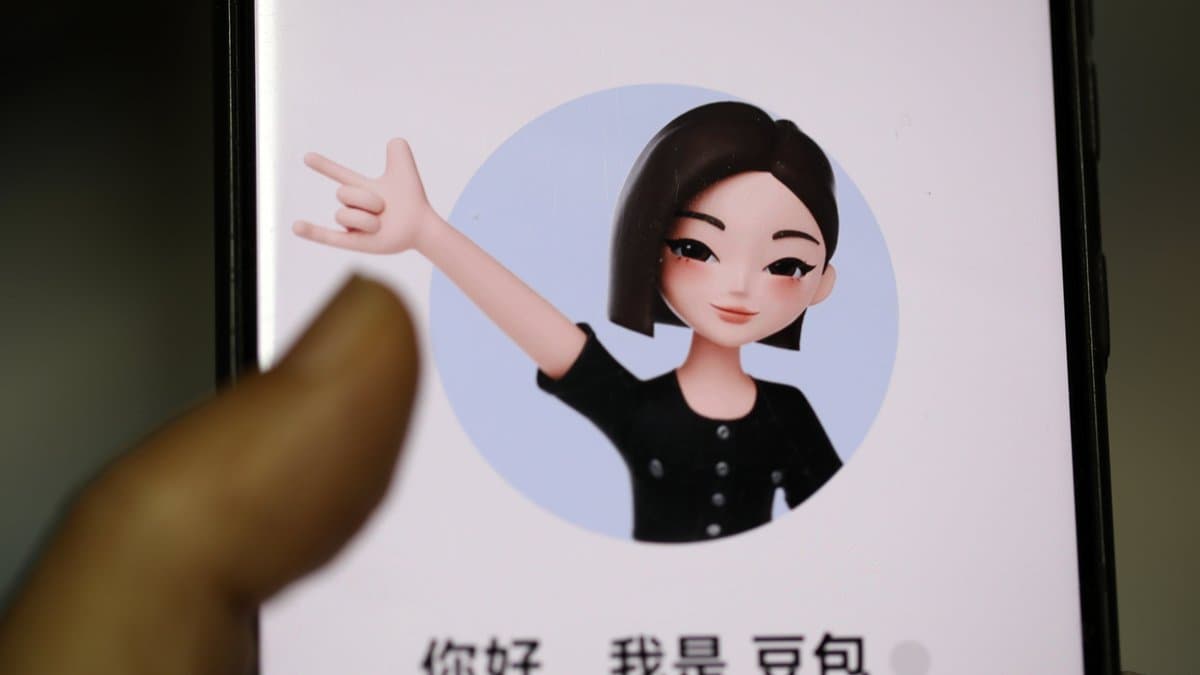
30 seconds in one pass, no stitching — and it's actually shipping this week
If you've ever made an AI video, you know the drill. Almost every video model until now spits out short clips of four to fifteen seconds, and if you want something longer you generate a bunch of them and stitch them together in editing. That's why every scene cut carries a little wrongness — a face that shifts slightly, lighting that jumps, a shirt that changes color. About eighty percent of what makes AI video "look like AI" comes from those seams.
The model ByteDance started rolling out this week, Seedance 2.5, kills the stitching. It generates a full 30-second clip in a single pass, with no cut-and-paste editing. Scene changes happen inside that clip, tempo speeds up and slows down inside that clip, and all of it lives inside one continuous generation. No stitching, no seams. That's the whole pitch, and it's a big one.
It was first shown on June 23 at the Volcano Engine FORCE conference in Beijing, with an "early July" launch promised — and that promise is now playing out in real time. The actual rollout began in early July and it's shipping progressively through this week. Regular users meet it first inside ByteDance's own apps: Dreamina for international users and Jimeng for China. The developer API opens on July 16 via BytePlus.
But there's a heavy shadow over all of this: copyright. The previous version, Seedance 2.0, got dragged to the edge of a lawsuit by essentially all of Hollywood earlier this year and voluntarily paused its global rollout. This new, stronger model is arriving before that wound has even healed — which makes this rollout a tech story and a legal-risk story at the same time. Let's take it apart piece by piece.
The cast — ByteDance, the Seed team, Dreamina/Jimeng, and BytePlus
Start with ByteDance. Yes, the company behind TikTok and Douyin. It's one of the most aggressive players in Chinese AI right now, and it has built out a full in-house lineup: the Doubao language model, the Seedream image model, and the Seedance video model. At this FORCE conference it didn't just drop Seedance 2.5 — it also unveiled the Doubao 2.1 Pro language model, the Seedream 5.0 Pro image model, and the Seed-Audio 1.0 audio model, all at once. For flavor: ByteDance openly claimed Doubao 2.1 Pro costs "about 80 percent less than Claude Opus 4.6." Volume plus price — that's the classic ByteDance move.
As for the Seedance lineage itself: the first version landed in June 2025. Version 2.0 came in February 2026 — and 2.0 caused a very large mess (more on that below). Now we get 2.5. The fact that it jumped to 2.5 instead of straight to 3.0 is telling — it reads as a "cleaned-up major update," one that tries to move the tech forward hard while cleaning up the copyright fallout that 2.0 left behind.
The team that actually builds the tech is ByteDance's Seed team, the group that develops the whole stack of language, image, video, and audio models. That "Seed" prefix — Seedance, Seedream, Seed-Audio — all comes from them. Pulling off native 30-second single-pass generation is this org's engineering flex.
So where do you and I actually touch it? Two channels. One is the consumer apps — Dreamina for international users, Jimeng for China. Dreamina rolled out internationally around late February 2026 as a creative platform, and you can think of it as Jimeng's overseas twin. On top of that, CapCut, the editing app with more than 400 million monthly active users, is slated to get it in mid-July. The other channel is developers and enterprises — the API through Volcano Engine (China) and its international brand, BytePlus and its ModelArk platform. That API opens July 16.
So: built by ByteDance's Seed team, met by consumers through Dreamina/Jimeng/CapCut, wired in by developers through BytePlus/Volcano Engine. Hold that triangle in your head and the rollout order makes sense.
What's actually new — 30-second single-pass, 50 references, and the timeline
You can boil the core down to four numbers. First, 30 seconds in one pass — a single clip, no stitching. Second, up to 50 reference materials in a single generation — reference images, audio, and other modalities all at once. Third, native 4K output with 10-bit color. Fourth, audio generated together with the picture — sound isn't dubbed in afterward, it comes out alongside the video from the start.
The real game-changers here are the first two. Generating 30 seconds in one pass means the camera can orbit a character and scenes can transition without the face, clothes, or lighting consistency breaking. Being able to feed in 50 references means that in a complex scene with multiple characters, you can lock in "this person has this face, that person has that voice" ahead of time and generate against it. A full ad spot, one music-video shot, a short brand film — those are entering "just run it once" territory.
There's an editing feature too: you can go back and revise an already-generated video while keeping its original visual style and look intact. Until now, if you didn't like a result you had to regenerate from scratch — that pain gets much easier. Some reports also say 30 seconds is the standard mode and a separate "long-video beta mode" can extend to as much as 180 seconds (three minutes), but that's unconfirmed observation and rumor, so take it with a grain of salt.
The rollout timeline goes like this: unveiled at FORCE on June 23 → actual rollout begins early July → progressive rollout to Dreamina and Jimeng this week → CapCut integration in mid-July → the BytePlus API opens officially on July 16. Note that Seedance 2.5's API pricing hasn't been published yet, and the model is currently moving from an enterprise-beta stage toward general availability.
| Item | What Seedance 2.5 does | When / where |
|---|---|---|
| First unveiled | Volcano Engine FORCE conference (Beijing) | 2026-06-23 |
| Max length | 30 seconds in one pass, no stitching (long-mode 3-min unconfirmed) | Standard 30s |
| Reference inputs | Up to 50 multimodal references | Per generation |
| Quality / audio | Native 4K, 10-bit; video and audio generated together | — |
| Consumer apps | Dreamina (intl) and Jimeng (China) first | This week, progressive |
| Editing app | CapCut (400M+ MAU) integration | Mid-July |
| Developer API | BytePlus ModelArk / Volcano Engine | 2026-07-16 |
| Pricing | Not published (enterprise beta → GA) | TBD |
Who gains what — ByteDance, creators, and the copyright cloud
What ByteDance gains is obvious: leadership in the video-generation market. As we'll see below, OpenAI shut down its consumer Sora app in April, leaving one top slot empty. With Google's Veo and Kuaishou's Kling splitting that void, ByteDance walks in with one clear differentiator: "30 seconds, no editing." And ByteDance already owns massive distribution — TikTok, Douyin, CapCut — so it's close to the only player that ships both the model and the place to post what you make with it, as a set.
What creators and marketers gain is time and money. A 30-second ad concept can be generated in multiple versions in a single day with no live shoot, the best one polished right inside CapCut and posted straight to TikTok — the whole workflow living inside one app ecosystem. Camera crews, gear rentals, location scouting: for some jobs, that all disappears. For small businesses and solo creators, this yanks the barrier to entry way down.
And then the shadow arrives: copyright. Here's what the previous version, Seedance 2.0, did back in February. It generated things — "Friends characters reimagined as otters," "a fight between Brad Pitt and Tom Cruise," "Will Smith battling a red-eyed spaghetti monster" — a little too convincingly. These went viral and Hollywood erupted. Disney sent a cease-and-desist on February 13; Paramount accused ByteDance of "blatant infringement" of IP like Star Trek, South Park, and Dora; and the Motion Picture Association sent a strongly worded cease-and-desist — the first time it had ever done so to a major generative-AI company. The MPA wrote that "the scale and consistency of these results demonstrate systemic infringement rather than inadvertence" and that "Seedance's copyright infringement is a feature, not a bug."
ByteDance responded on February 16, saying it "respects intellectual property rights" and had "heard the concerns," and pledged to strengthen its safeguards. In March it voluntarily paused Seedance 2.0's global rollout. None of those legal disputes has been resolved in court. So 2.5 shipping now means releasing an even more powerful tool into the world while that unresolved risk still hangs. A blessing for creators, and a nightmare for rights holders that just evolved a level.
Past cases — Sora's rise and fall, Veo/Kling/Runway/Luma, and the deepfake backlash
AI video has been a roller coaster for two years. The most symbolic case is OpenAI's Sora. In 2024-2025 it rode enormous hype as the "video AI that changes everything," but by 2026 late-movers like Google Veo 3.1, Kuaishou Kling 3.0, and Runway Gen-4.5 caught up on quality while charging less, and Sora lost its edge. Video inference costs orders of magnitude more compute per request than image generation, so maintaining a high-cost product that no longer led on quality or price became a hard business case. OpenAI announced Sora's shutdown on March 24 and went dark on the web and app on April 26 (the API follows on September 24). Watching a former category king fold like that tells you this arena runs on unit economics, not hype.
The ones smiling on the other side were Google's Veo and Kuaishou's Kling. Veo was strong on native dialogue audio generated with the video and on 4K cinematic quality; Kling pushed longer clips, native 4K motion, and the lowest cost. Kling matters especially because it's also a Chinese product (from Kuaishou), which means Seedance 2.5 is really squaring off more directly with a rival at home than with any Western competitor. Runway held its ground in the practical ad-and-film production workflow, and Luma carved out a niche on fast generation and accessibility.
And a shadow always trailed this space: deepfakes and copyright backlash. Every time a celebrity face, a copyrighted character, or a resurrected dead actor showed up in a clip, the social blowback came. Seedance 2.0's Hollywood standoff was the peak of it. The more realistic the tech, the heavier the "what can you actually make with this" question becomes — so it became clear that AI video wins or loses not just on picture quality but on "how safely, and with how little legal risk, can you actually run it."
Three lessons, then. One: hype alone doesn't sustain you (Sora). Two: unit economics — quality per dollar — is the real battlefield (Veo, Kling). Three: if you can't handle copyright and deepfake risk, even a great model ends up hitting its own brakes (Seedance 2.0's voluntary pause). Seedance 2.5 stands right in the middle of all three.
How rivals counter — Veo, Kling, Runway, Luma, Meta
The top of AI video was effectively a two-horse race between Google's Veo 3.1 and Kuaishou's Kling 3.0. Seedance 2.5 now wedges in with "30 seconds, no editing." Google has to answer the clip-length fight while keeping Veo's strengths in native audio and 4K quality. Veo hasn't officially made native 30-second single-pass generation its headline, so ByteDance effectively landed the first punch here. Google has the capital and the YouTube distribution to hit back hard, but this round the "did it first" title goes to ByteDance.
Kuaishou's Kling is the most direct rival. Both are Chinese companies, both own a massive short-form platform as distribution (Douyin vs. Kuaishou), and both push on price. Kling 3.0 is already known for long clips and low cost, and with Seedance 2.5's 30-second no-stitch and 50-reference specs out there, Kling will have little choice but to match in its next version. This home-turf fight between the two is really the true front line of this generation of video AI.
Runway and Luma play a different card than a spec race. Runway dug deep into being a practical production tool for ads and film, holding its ground as "a workflow that melts into the shooting pipeline." No matter how well you generate 30 seconds in one pass, professional sets want fine control and collaboration features. Luma held a niche on fast generation, accessibility, and a developer-friendly API. Both are more likely to hold specific user segments than to take the "longest clip" fight head-on.
Don't sleep on Meta, either. It stepped into video generation with its Movie Gen line, and it owns enormous distribution in Instagram and Reels. It hasn't pushed as aggressively into consumer apps as ByteDance, but structurally it looks similar: a company that owns "the place to post what you make." And the slot OpenAI vacated is still empty, so who fills that "trusted-brand premium" position is another storyline to watch. In sum, Seedance 2.5 isn't opening a new market — it's throwing a new weapon called "length" into an already hot battlefield, and rivals' next-version spec sheets will reshuffle around it.
So what actually changes — by persona
If you're a creator or marketer, this reshapes your entire workflow. You can generate a first draft of a 30-second ad or brand film in one pass with no live shoot, lock down characters and tone with 50 references, polish it in CapCut, and post it straight to TikTok — all inside one ecosystem. Just check the copyright safeguards before you use anything commercially. Having lived through the 2.0 mess, ByteDance has surely added more filters to 2.5, but don't use famous IP or real people's faces anyway. Not using it now is cheaper than getting an ad pulled later.
If you're a regular user, the tangible change for now is that when you open Dreamina or CapCut, you can make a "30-second video." Birthday clips, memes, short stories — much smoother than before. But the flip side is that telling real footage from AI on social feeds gets harder. Rendering a smooth 30 seconds in one pass sharply reduces the "AI tell." It's worth leveling up your instincts about what to trust.
If you're worried about copyright and IP, honestly, this rollout isn't good news. All of Hollywood rose up over 2.0, the lawsuits still haven't been decided in court, and in the meantime a stronger 2.5 is being released into the world. ByteDance says it strengthened safeguards, but how much they actually block is a use-it-and-see. Creators, rights holders, and platforms will keep colliding in the gray zone of "how far can I make this video go" for a while. It's the classic stretch where regulation and case law can't keep up with tech's speed.
If you're a developer or enterprise, mark July 16 for the BytePlus API. But pricing isn't public yet and it's an enterprise-beta stage, so confirm the actual rates and usage terms before you wire it in. Even if 30-second single-pass generation is attractive, if you're putting it into a commercial product you need to interrogate the copyright filters, the terms of service, and who owns the output at the contract level. The ByteDance stack's strengths are price and distribution — but the regulatory uncertainty becomes yours to carry.
🥄 Three Things You're Probably Wondering
Is generating 30 seconds in one pass really that big a deal? Yeah, bigger than it sounds. Until now long videos were built by stitching short pieces, and every seam had a face, lighting, or outfit that subtly jumped — that's the signature awkwardness of AI video. Generate 30 seconds in one pass and the seam itself disappears, so consistency shoots up. It means you can render a full ad spot or one music-video shot in a single piece.
Wasn't Seedance 2.0 sued? Is 2.5 safe? Legally, nothing is settled. The Hollywood disputes over 2.0 are still awaiting court decisions, and ByteDance only said it "strengthened safeguards" — how much they actually block is unverified. So 2.5 ships carrying the same copyright risk, and if you're using it commercially, avoid famous IP and real people.
Can I try it right now? It's rolling into the consumer apps (Dreamina internationally, Jimeng in China) progressively this week, CapCut in mid-July, and the developer API on July 16. But it's still an enterprise-beta stage, so access may vary by region and account. If you don't see it yet, it's opening in waves over the next few days — hang tight.
Sources
- ByteDance Seedance 2.5 Launches This Week: 30-Second AI Video Carries Copyright Cloud — Tech Times
- ByteDance's Seedance 2.5 breaks the 30-second barrier for AI video generation — The Decoder
- MPA Sends Cease and Desist Letter to ByteDance Over Seedance 2.0 Videos — The Hollywood Reporter
- ByteDance says it will add safeguards to Seedance 2.0 following Hollywood backlash — CNBC
- Hollywood isn't happy about the new Seedance 2.0 video generator — TechCrunch
- ByteDance set to launch Seedance 2.5 with 3-minute AI video output — TestingCatalog
Numbers are as of announcement and may change.