A telecom carrier just declared itself the company that builds AI's stage
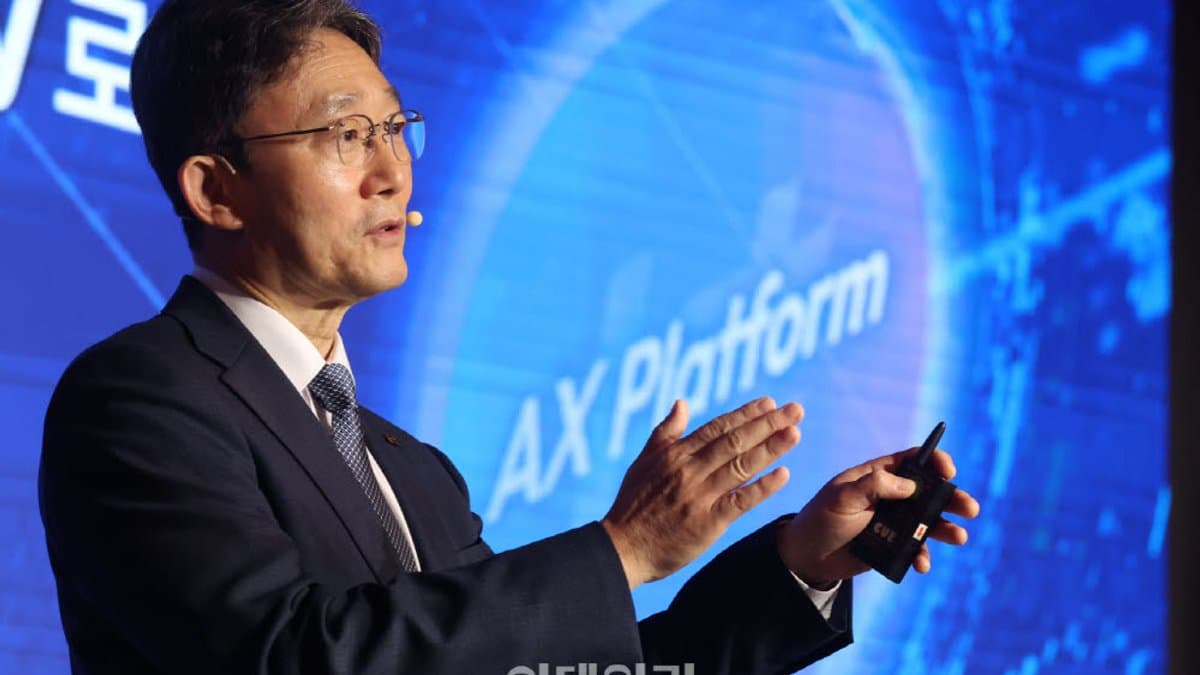
Here's the deal: on July 6, KT CEO Park Yoon-young held his first press briefing since taking the top job, at the Pullman Ambassador Seoul Gangnam (East Tower) in Gwangjin-gu, Seoul. It landed right on his 100th day in office. And the number he brought was punchy. Over the next five years KT will invest a total of 18 trillion won — and out of that, 5 trillion won goes into AI data centers (AIDC) alone, targeting a total of 1 gigawatt (GW) of capacity.
If 1GW doesn't mean much to you, here's a frame: a single nuclear reactor puts out roughly 1GW of electricity. So the total AI data center footprint KT wants to build would essentially swallow an entire reactor's output. That tells you how power-hungry AI training and inference have become, and how scarce the "land + power + cooling" infrastructure that feeds that beast has gotten. KT is aiming straight at exactly that shortage.
But the word to watch in this announcement isn't "5 trillion won" or "1GW." It's "demand-based." While big tech companies are throwing tens of trillions around, boasting they'll "multiply our compute," KT explicitly drew a line: "we won't get swept up in vague investment competition." It'll build only as much as it has signed leases for, only as much as it has confirmed tenants walking in the door. That's where you see the real strategy of a telecom carrier trying to survive on the AI infrastructure battlefield.
In this piece I'll break down why Park drew up this board the way he did, where the 5 trillion and 18 trillion actually flow, and what all of it means for developers, investors, enterprises, and ordinary users — one by one.
The players — KT, Park Yoon-young, and the "AX Company" banner
Start with KT. KT is one of Korea's flagship fixed-line and mobile telecom operators. It grew out of the old state telephone monopoly, which means it has laid down a dense national web of networks and telecom offices (physical buildings) across the country. That "infrastructure already in the ground" is the core weapon in this announcement. The very identity of being a telecom carrier becomes an asset in the data center business that rivals can't easily replicate.
Park Yoon-young is the protagonist of this briefing. Marking his 100th day, this was the first time he publicly showed his own colors. His slogan: "AX (AI Transformation) Platform Company." Put simply: "We won't be the company that directly builds the AI that changes the world — but we'll be the company that builds the stage those AIs play on, and connects them." Park put it as "connecting people with AI, and AI with AI."
What's interesting is where KT positioned itself in this picture. It's not trying to be a top-tier player building frontier models like OpenAI or Anthropic. That's a fight in a different weight class — different capital, different talent pool. Instead KT bet on the "infrastructure layer" and the "connectivity layer." Even if others build the models, the logic goes, we build the data centers that run them and the networks that link them, better than anyone.
And underneath this whole strategy sits the core telecom business. Park didn't just chant "AI" — he repeated that KT would "re-solidify the fundamentals of telecom." Of the 18 trillion won over five years, 12 trillion — two-thirds — goes into telecom basics like networks and information security. The structure is: lay a solid telecom cash cow behind the flashy AI ventures, and use the cash flow it throws off to grow the AI board. The 5 trillion won for AI data centers is ultimately an extension of that telecom infrastructure.
The core — where the 18 trillion won flows
Let's line up the numbers. Eighteen trillion won over five years, split into two big lumps: 12 trillion for telecom fundamentals, 6 trillion for AI infrastructure. Inside that 6 trillion sits 5 trillion for AIDC and 1 trillion for submarine cables.
The goal of the 5-trillion-won AIDC push is crisp: secure a total of 1GW of capacity within five years. The build approach is asymmetric — push aggressively and pre-emptively in the Seoul metropolitan area, and expand in non-metro regions only in phases, as tenant (lease) commitments come in. KT plans data centers at roughly 25 sites nationwide, and it'll repurpose the 3,500 telecom offices it already holds across the country as "AI edges" to create a low-latency, real-time inference environment. Big central data centers handle training; the offices scattered nationwide process inference close to the user.
The 1 trillion won for submarine cables isn't a footnote either. KT's current international connectivity capacity is 38Tbps, and it wants to grow that to over 128Tbps. The ambition is to make the traffic global big tech pumps into Asia flow through Korea, turning KT into an "Asia AX connectivity hub." Building the data center isn't the end — it's laying the pipes to pull the world's traffic into that data center.
| Category | Amount (5 yrs) | Key details |
|---|---|---|
| Total investment | 18tn won | Shift to AX Platform Company |
| Telecom fundamentals | 12tn won | Network 8tn + security 4tn |
| AI infrastructure | 6tn won | AIDC 5tn + submarine cable 1tn |
| AIDC | 5tn won | 1GW within 5 yrs, demand-based, ~25 sites |
| Submarine cable | 1tn won | 38Tbps → over 128Tbps |
Two new ventures ride on top. First, the "Token Factory." It links multiple AI models together, then automatically routes a customer's query to the optimal model for the question or task, and meters usage. The pitch: solve the usage-control and cost-management headache that hits enterprises when they mix ChatGPT, Gemini, and Claude. The heart of it is running GPU and NPU resources efficiently to churn out "AI tokens" cheaply. Second, a "stablecoin." The plan stacks KT's network and security tech on top of K-Bank's customer base and BC Card's payment and settlement infrastructure, aiming to cover the whole cycle — issuance, custody, transfer, and real-world usage ecosystem.
Park also let a hiring plan slip: KT will bring on 140 new graduates in September. As the company pivots toward AI infrastructure and new ventures, it reads as a signal that it'll staff up in that direction too.
Who gains what
What KT gains is clear: a new growth narrative to escape its "telecom identity crisis." The domestic telecom market is already saturated, leaving almost no room to grow by adding subscribers. So KT is riding into the AI data center market — where demand is all but certain to explode — by recycling its telecom assets. Because it repurposes networks and nationwide offices it already built, the capital efficiency is good.
Global big tech gains "a stable Asian foothold in Korea." To spray AI services across Asia you need low-latency, high-capacity data centers and the international lines that link them. If KT builds exactly that, right-sized on real demand, big tech can solve the messy physical infrastructure — real estate, power, cooling — through leasing instead of building it themselves. That's precisely why KT stressed "partnership with big tech."
Domestic enterprise customers — especially those juggling multiple AI models — get a concrete win from the Token Factory: cost control. One of the real headaches companies face today is money leaking as different departments use different AI with no visibility into who spent what on which model. KT wants to sit in the middle and clean that up. It's not glamorous, but for enterprise IT managers it's a welcome pitch.
At the government and national level, the "AI sovereignty" and "AX hub" justifications hold. Stacking AI compute infrastructure domestically rather than leaning entirely on foreign clouds matters for data sovereignty, and becoming an Asian traffic hub via submarine cable is a plus for national digital competitiveness. KT's position as a telecom carrier close to government also works in its favor in this narrative fight.
Past parallels — the wins and the losses
A telecom carrier pivoting into data centers isn't new. On the win side, US carriers' "infrastructure asset recycling" is a reference point — though at times American carriers actually went the opposite way, selling off data centers to focus on telecom. KT is doing the reverse: reinterpreting telecom assets as AI infrastructure to grab them again. Which side is right depends on how long and how strong AI demand stays.
Domestically, Naver is a good benchmark. Naver built the mega data center "Gak Sejong" in Sejong to underpin its own AI and cloud business. Because its own demand (search, commerce, HyperCLOVA) was rock-solid, the data center didn't sit idle. Flip that around and it's the lesson: a data center business lives or dies on "do you actually fill what you build." KT's unusually heavy emphasis on "demand-based" looks like it's very aware of that lesson.
There are lessons on the failure side too. Around the world, plenty of players built data centers aggressively and pre-emptively, only to end up with white elephants when the leases never filled. Especially when power can't be secured or the location is awkward, you can put up all the buildings you want and still not run them. AI data centers eat so much electricity that "securing power" is often harder than "securing land." KT's choice to build 1GW in phases on real demand rather than all at once reads as a defensive design meant to dodge exactly that "build it and can't fill it" risk.
To sum up: the winning formula on this board is "lock in demand → secure power and land → expand in phases," and the losing formula is "bold pre-emptive investment → demand falls short → idle assets." KT clearly picked the former. The trade-off it carries is that its growth pace will inevitably be slower than big tech's aggressive expansion.
The competitors' counter-play
Start with the domestic field. SK Group is already pushing an "AI infrastructure full stack" by bundling SK Telecom, SK Hynix, and SK Broadband. SK Hynix's HBM (high-bandwidth memory) is a powerful semiconductor card — meaning SK holds even the "core component supply" that KT lacks, inside its own group. If KT competes on land and networks, SK can counter with vertical integration that includes chips. LG Uplus is also growing its data center business, so all three Korean carriers are now in this game.
Globally the opponents are far bigger. Hyperscalers like Amazon AWS, Microsoft Azure, and Google Cloud already run regions in Korea and keep expanding their own data centers. Their capital and their own demand are in a different weight class from KT. So rather than fighting them head-on, KT took the "partner with big tech" position — embracing them as tenants and partners rather than rivals. That's the clever bit: if you can't beat them, make them customers.
The Token Factory sits in a more crowded market. Services that auto-route across AI models and manage cost are closer to a red ocean — global players like OpenRouter and a swarm of startups are already in it. KT's differentiators are its domestic enterprise base, telecom-grade trust, and having its own data centers and GPU resources behind it. Whether that beats global services remains to be seen.
The stablecoin is yet another battlefield. Bundling with K-Bank and BC Card plays to the strength of a KT affiliate group that already owns payment and financial infrastructure. But stablecoins carry heavy regulatory uncertainty and swing hard on policy direction. With domestic and global financial firms and big tech all eyeing this space, it's too early to call whether KT gets out ahead.
So what actually changes
For developers, more large-scale AI compute infrastructure at home is good news. Scarce GPUs and pricey cloud have long been the bottleneck for domestic AI development, so if KT grows data centers on real demand and adds model routing via the Token Factory, options widen. That said, it's a phased build over five years — GPUs don't get cheaper tomorrow. Read it as a mid-to-long-term signal of expanding infrastructure supply.
For investors, this is an inflection point where KT's growth narrative pivots from "telecom stagnation" to "AI infrastructure." But be clear-eyed: 18 trillion won is a massive capex spread over five years, which can pressure near-term earnings. The key thing to watch is whether "real demand" actually materializes. If KT fills 1GW with real leases and lands big tech contracts, the growth story completes; if demand arrives later than expected, only the depreciation burden grows. That's part of why KT stressed "demand-based" — it's also a message meant to reassure investors.
For enterprises, if you're a company bleeding money by mixing multiple AI models, the Token Factory could be a real alternative. Delivered by a domestic carrier leaning on data sovereignty and security, it can be especially appealing to finance and public-sector players wary of putting sensitive data on foreign clouds. And if the stablecoin ecosystem takes hold, payment and settlement options widen too.
For ordinary users, there's little you'll feel right away. But if AI infrastructure gets densely laid across Korea, the response speed of the AI services you use can improve, and services that used to lean on overseas servers may become more stable as they're processed domestically. Using 3,500 nationwide offices as AI edges ultimately means "running AI close to the user" — the foundation for low-latency service.
🥄 Three Things You're Probably Wondering
— So what does this mean for me? Almost no direct impact. But if you use domestic AI services or build with AI, domestic compute infrastructure growing over the coming years could gradually improve speed, stability, and choice. And if you're a KT shareholder, it's worth watching how this investment plan hits earnings.
— Why drop 5 trillion won right now? AI data center demand is exploding while domestic supply falls short. The race for power and land is fierce, and if you're late, someone else takes the spot. On top of that, with its core telecom growth stalled, KT badly needed a new engine. It was also the stage where a 100-day-old CEO planted his own colors publicly for the first time.
— Is KT ahead of SK or big tech? Too early to call. On capital, in-house demand, and component competitiveness like SK Hynix's HBM, SK Group and the global hyperscalers are ahead of KT. KT's strengths are the telecom offices and networks it already has in the ground nationwide, and the position of embracing big tech as customers rather than rivals. "Ahead" is less accurate than "carved out its own spot."
References
- Edaily — KT to invest 5 trillion won in AI data centers over 5 years, 'demand-based, in partnership with big tech'
- Edaily — Beyond telecom into token economy and AI infra: KT's Park bets 18 trillion won on the future
- SisaJournal-e — KT's Park: 12tn for telecom, 6tn for AI infra, launching token factory and stablecoin
- Digital Daily — [Q&A] KT's Park: token factory as new business, hiring 140 new grads in September
- ZDNet Korea — KT's Park: 6tn won for AX infrastructure, 12tn won for telecom fundamentals
- Bloter — KT to invest 5 trillion won in AIDC over five years
Numbers and criteria are as of announcement and may change. Investment calls are yours to make!