Apple ran two years late on AI. It finally opened the door — halfway
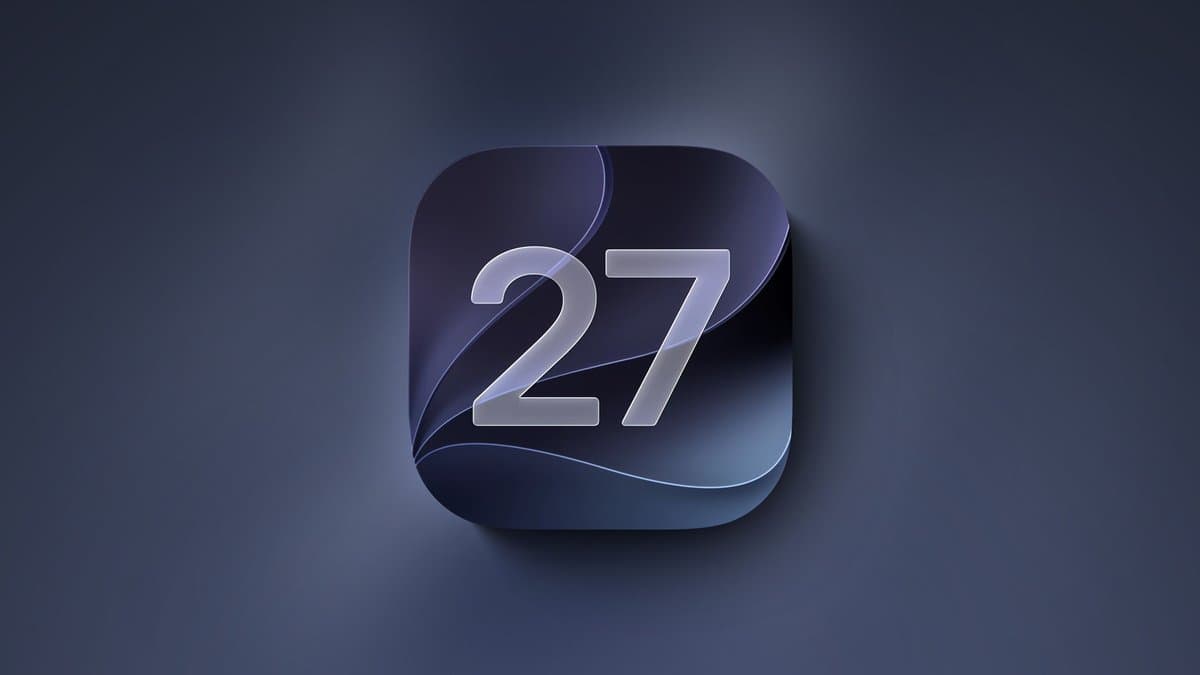
On Monday, July 13, Apple pushed the iOS 27 public beta live. Not the developer channel — the free Apple Beta Software Program at beta.apple.com, the one anybody with an Apple ID can join. The same day, iPadOS 27, macOS 27 "Golden Gate," watchOS 27, tvOS 27 and visionOS 27 all went out too. The entire Apple platform stack moved at once.
But the version numbers aren't the story. Siri AI is — Apple's ground-up rebuild of Siri, reaching ordinary users for the first time without a developer account. Why does that matter so much? Because Apple spent roughly two years flailing to get here. It promised a "Siri that understands your personal context" back in 2024, missed the ship date, pulled the ads it had already run, ate the mockery, and eventually reset the clock with a "we're rebuilding it" admission. This public beta is the first time that rebuild has walked out of the lab.
Here's the deal: dig one layer into the coverage and something odd shows up. TechCrunch headlined its piece "Apple opens its new Siri AI to everyone with the iOS 27 public beta." It is not remotely everyone. English only. A waitlist you have to join in the early betas. Not available in the European Union at all. Not available in China. And you need roughly an iPhone 15 Pro or better. That's the part worth watching — the list of who's excluded maps almost perfectly onto the things Apple currently can't control.
The players — the company that built Siri twice, and the man who owns it
Siri launched in 2011 alongside the iPhone 4S. It was the original mainstream voice assistant, the thing every rival copied. Then ChatGPT arrived, the ground shifted, and Siri became shorthand for "obsolete." It could set a timer and read you the forecast. It could not hold a conversation, could not see what was on your screen, and had no idea what was sitting in your inbox. While Siri stalled, OpenAI and Google sprinted past on conversational AI.
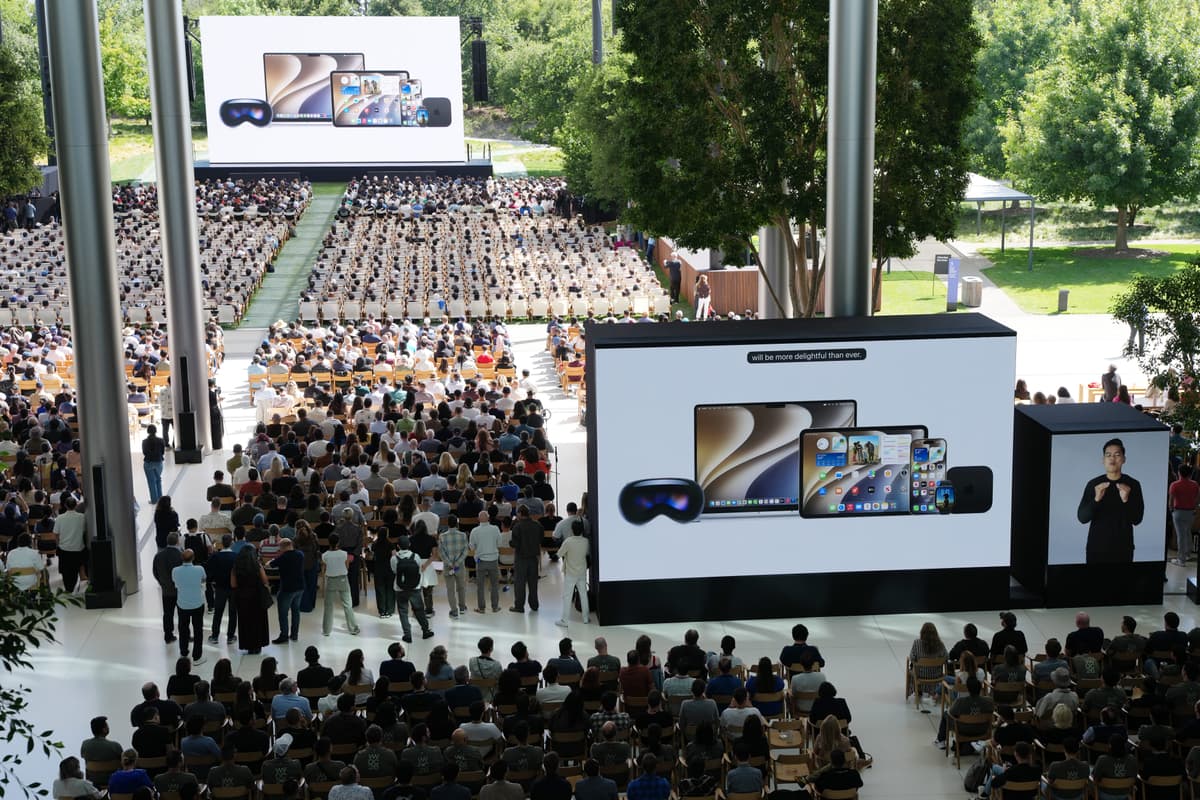
Apple's answer is Siri AI, unveiled at WWDC on June 8, 2026, in the Apple Newsroom release titled "Apple introduces Siri AI, a profoundly more capable and personal assistant." The name itself is the message. Apple didn't call it "the new Siri" or "Siri 2." It bolted a new product name onto it, which is what a company does when it wants to walk away from a decade of accumulated reputation and start the scoreboard over.
The executive holding the bag is Craig Federighi, Apple's senior vice president of Software Engineering. In that June 8 newsroom post he said: "With access to broad world knowledge for up-to-date answers on virtually any topic, along with onscreen awareness and personal context understanding, Siri AI can help users take action across apps more naturally than ever." Worth flagging the timing — that quote comes from the June WWDC announcement, not from the July 13 beta seed. Apple generally doesn't issue a press release for beta builds, and it didn't for this one.
Break Federighi's sentence into its parts and you get the entire product spec. One, world knowledge — ask it anything, chatbot-style, and it answers with current information. Two, onscreen awareness — it knows what's in front of you right now. Three, personal context — it can search across Mail, Messages, Notes, Reminders and Calendar to answer questions about your own life. And four, the one that actually changes behavior: multi-step actions inside apps. It doesn't just answer. It reaches in and does things.
What actually happened — an assistant that pours out of the Dynamic Island
There are three ways to summon the new Siri AI: the familiar "Hey Siri," a long press on the side button, and a new one — swiping down from the Dynamic Island. It's also wired into Spotlight. But how you call it matters less than how it answers. Old Siri hijacked your whole screen. Siri AI's responses emerge from the Dynamic Island instead, so whatever you were doing stays visible underneath. The assistant stopped walking onstage and started leaning over your shoulder to whisper.
Siri AI also exists as a standalone app, and conversation history syncs across your devices — start a thread on iPhone, pick it up on the Mac. That's Apple straightforwardly adopting the grammar of ChatGPT and Gemini rather than inventing its own.
Under the hood, Apple Foundation Models run on-device, and heavier requests route to Private Cloud Compute — Apple's own silicon-based servers that it says don't retain your data. Here's a detail worth pausing on: TechCrunch reports Apple built those Foundation Models "in collaboration with Google and its Gemini model." That's TechCrunch's reporting, not an Apple statement, and it's worth holding at arm's length accordingly. If it's accurate, the irony is thick. Apple and Google already exchange billions a year over search defaults; now they may be collaborating on the brain inside Siri too.
Apple also nailed some performance numbers to the wall. Apps launch up to 30% faster. Newly captured photos appear in the Photos app up to 70% faster. Nearby AirDrop transfers finish up to 80% faster. Those got buried under the AI headlines, but for day-to-day use they may well be the bigger deal. On top of that: a Liquid Glass transparency slider (Apple's fix for last year's "it's too shiny" complaints — hand the dial to the user), a rebuilt Screen Time with category limits and schedules, Visual Intelligence in the Camera app (nutrition lookups, splitting a bill, scanning a barcode straight into Wallet), Photos Clean Up / Extend / Spatial Reframing, Safari automatic tab organization and webpage change monitoring, and 4K camera support in the Home app.
| Item | Detail |
|---|---|
| Release date | Monday, July 13, 2026 (public beta) |
| Platforms | iOS 27 · iPadOS 27 · macOS 27 "Golden Gate" · watchOS 27 · tvOS 27 · visionOS 27 |
| Build | iOS 27 public beta = developer beta 3 |
| Channel | Free Apple Beta Software Program (beta.apple.com) |
| Headline feature | Siri AI — ongoing conversation, onscreen awareness, personal context, multi-step app actions |
| Invocation | "Hey Siri" · side button · Dynamic Island swipe · Spotlight |
| Language | English only |
| Excluded regions | European Union (Digital Markets Act) · China |
| Siri AI device requirement | iPhone 16 models or later, iPhone 15 Pro, iPhone 15 Pro Max |
| iOS 27 device requirement | iPhone 11 and later, iPhone SE 2nd gen and later |
| Speed claims | App launch up to 30% · Photos up to 70% · AirDrop up to 80% |
| Final release | Fall 2026, around September |
What each side gets — who profits from a beta
Apple gets time and data. The final release lands in the fall, roughly September, so there are about two months on the clock. In that window, public beta testers get to hammer Siri AI in real conditions with real messy requests — Apple doesn't publish how many people sign up. For a company as compulsive about polish as Apple, shipping an unfinished assistant into a public channel is itself an admission: lab testing cannot surface the failure modes of a conversational AI. TechCrunch's hands-on noted Siri "sometimes threw error messages or got confused" during developer testing. Shrinking that "sometimes" is the whole job right now, and shrinking it requires humans.
Regular users get optionality. Previewing a new OS used to require a paid developer account; the public beta is free and frictionless. But there's a bill attached. Betas eat battery, crash apps, and occasionally break your banking app — which is exactly why Apple keeps repeating the advice to install it on a spare device rather than your daily driver.
Developers just got a two-month runway. Because the core of Siri AI is performing multi-step actions inside apps, whether your app exposes its functionality properly to the assistant now shapes how often it gets used at all. In a world where Siri operates apps on the user's behalf, what your app offers the assistant may matter more than where your icon sits on the home screen.
Google is quietly up. If TechCrunch is right that Apple's Foundation Models came out of collaboration with Google and Gemini, then Google has planted its technology underneath a competitor's flagship feature. After locking in the search default deal, it's now sitting in the AI layer too. It's also an implicit signal that Apple couldn't hit its timeline on in-house models alone.
Precedents — what worked and what didn't
To understand how gingerly Apple is handling this moment, you have to remember 2024. Apple announced Apple Intelligence and teased a Siri that understood your personal context. It built ads around it and ran them. The feature didn't arrive. Apple delayed it, then pulled the ads. The criticism that followed was brutal and fair: it had sold hardware on the promise of software that didn't exist. For a company whose entire brand equity rests on "if we said it, it ships," that was a genuine wound. The decision to rebuild Siri rather than improve it traces directly back to that scar.
There's a success template too, though. Apple has historically been the company that arrives not first, but best. It didn't invent the MP3 player, the smartphone, the tablet or the smartwatch. Its move has always been to let someone else open the category, watch them fumble the integration, then walk in and fuse hardware, software and services into one coherent object. Siri AI's design — responses trickling out of the Dynamic Island instead of a takeover, work split between on-device models and Private Cloud Compute, conversations syncing across devices — is exactly that playbook. The card Apple is playing is "we weren't first, but we're the version that actually belongs inside your phone."
The trouble is that this round has different physics. When the iPod arrived, the competing products had stopped improving. ChatGPT and Gemini change materially every few months. Apple spent two years catching up to a target that kept moving, and hundreds of millions of people built habits around someone else's AI app in the meantime. A latecomer trying to consolidate a market has to be clearly better than what's already there — and it's telling that Engadget titled its iOS 27 preview "Long-awaited Siri AI is practical but plain." Practical is a compliment. Plain means nobody said "whoa" yet.
And the failure case that matters most here is regulation. Apple has repeatedly shipped features late in Europe, or not at all, while it works through Digital Markets Act compliance. Siri AI's EU exclusion is the same lineage: not a capability gap, a legal-interpretation gap. China is a different layer of the same problem, tangled up in local AI rules and partnership requirements that Apple can't unilaterally resolve. Which is the underrated shift in this whole story — Apple's AI roadmap is now gated as much by "can we get permission" as by "can we build it."
How rivals counter
OpenAI's counter is almost embarrassingly simple. While Siri AI is English-only, EU-blocked, and demands an iPhone 15 Pro or better, the ChatGPT app doesn't care about your language, your country, or your hardware. Telling an iPhone 11 owner they can't have Siri AI is functionally telling them to keep using ChatGPT. As long as Apple can only serve a slice of its own installed base, the competitor riding on top of the App Store gets to serve the rest.
Google's position is stranger and stronger. On one side it ships Gemini as the default assistant across Android and fights Apple head-on. On the other, per TechCrunch's reporting, it's a collaborator on the Foundation Models work underneath Siri AI. Rival and supplier at the same time. Google has structured things so it doesn't much matter who wins. For Apple, the mirror image of that is uncomfortable: a strategic dependency sitting under its own flagship feature.
Samsung and the wider Android camp will attack the language and geography gaps. "English only" translates, for Korean, Japanese, Chinese and most European users, into "not yet." Whoever ships credible multilingual assistance first in that window gets to own the impression that they're ahead on AI, regardless of underlying model quality. The EU is the juiciest opening of all, because it's a market Apple voluntarily walked out of.
App developers have a counter-play too, and it's a defensive one. If Siri AI performs multi-step actions inside apps, users stop opening those apps. An app that loses its screen loses ad impressions, loses its checkout flow, and loses its brand surface. The more you cooperate with the assistant, the more you dissolve into it. Exactly how much to expose is going to be the most sensitive negotiation in the iOS ecosystem for the next several years.
So what actually changes
If you're a developer — the window between now and the fall release is your prep runway. Audit whether your app's core actions are properly exposed to the assistant, because Siri AI operating inside apps is the whole design premise. Then run the calculation in the other direction: if users can accomplish their goal without opening your screen, every screen-dependent metric you report — session time, ad impressions, funnel steps — is about to wobble. And when you put a device on the iOS 27 beta, use a spare, not your primary phone.
If you're an investor — there are two signals here. First, Apple has actually shipped a product to close the gap in the stretch where it fell behind on AI. Second, that product requires an iPhone 15 Pro or newer. The second one matters more than it looks: a large share of the installed base has to buy new hardware to get the new Siri, and Apple's intent to use AI as an upgrade catalyst is unmistakable. Just don't over-model it — English-only plus EU and China exclusions cap how far that upgrade pressure can travel this cycle.
If you're a regular user — nothing to do right now. The public beta is free but it's still a beta, and the finished version arrives in the fall. If you genuinely want to try the new Siri early, put it on a spare device and go in knowing it speaks English only and may put you on a waitlist in these early builds. If you're waiting on your own language, there's no announced timeline. The speed work (30% app launches, 70% Photos, 80% AirDrop) lands on devices that can't run Siri AI at all, which is reason enough to look forward to the fall update regardless.
🥄 Three Things You're Probably Wondering
— So what does this mean for me? Not much this minute. It's English-only, waitlisted in the early betas, and the real release is still a couple of months out. But if you're on an iPhone 15 Pro or newer and comfortable in English, a spare device gets you a two-month head start on the assistant everyone will be arguing about in September.
— Is the EU block really that big a deal? Bigger than it sounds. Apple didn't fail to build it there — it chose not to open the door while Digital Markets Act compliance is unsettled. That means Apple's AI schedule now runs on regulatory clock speed as much as engineering clock speed, and nobody can say when it unblocks.
— Is Siri AI actually good this time? Engadget called it "practical but plain," and TechCrunch's hands-on saw it throw errors and get confused. So the rebuild is real and substantive, but the polish is still beta-grade. The honest answer arrives with the fall release.
Sources
- Apple introduces Siri AI, a profoundly more capable and personal assistant (Apple Newsroom, June 8, 2026)
- Apple unveils next generation of Apple Intelligence, Siri AI, and more (Apple Newsroom)
- Apple opens its new Siri AI to everyone with the iOS 27 public beta — TechCrunch
- iOS 27 and iPadOS 27 Now Available to Public Beta Testers — MacRumors
- Public betas for iOS 27, macOS 27 and more Apple platforms are now available — Engadget
- iOS 27 public beta is here with Siri AI, iPhone speed upgrades, and more — 9to5Mac
- The OS 27 public betas are out now with Siri AI, platform improvements, and more — Macworld
- iOS 27 preview: Long-awaited Siri AI is practical but plain — Engadget
- Siri AI waitlist details — MacRumors
Numbers are as of announcement and may change.