The blueprint got signed — a full day before Xi ever walked onstage
Two days ago, the World AI Cooperation Organization was still a rumor with a nice acronym. Premier Li Qiang had floated the idea at WAIC back in July 2025, and the expectation going into Shanghai was that Xi Jinping would use his opening keynote to put some meat on the bones. Then the actual sequence turned out to be backwards.
Here's the deal: on Thursday, July 16 — a full day before Xi took the stage — representatives of 29 countries in Shanghai had already signed the WAICO founding agreement. China's signature wasn't Xi's. It was Foreign Minister Wang Yi's. And sitting in the room for the ceremony was UN Secretary-General António Guterres.
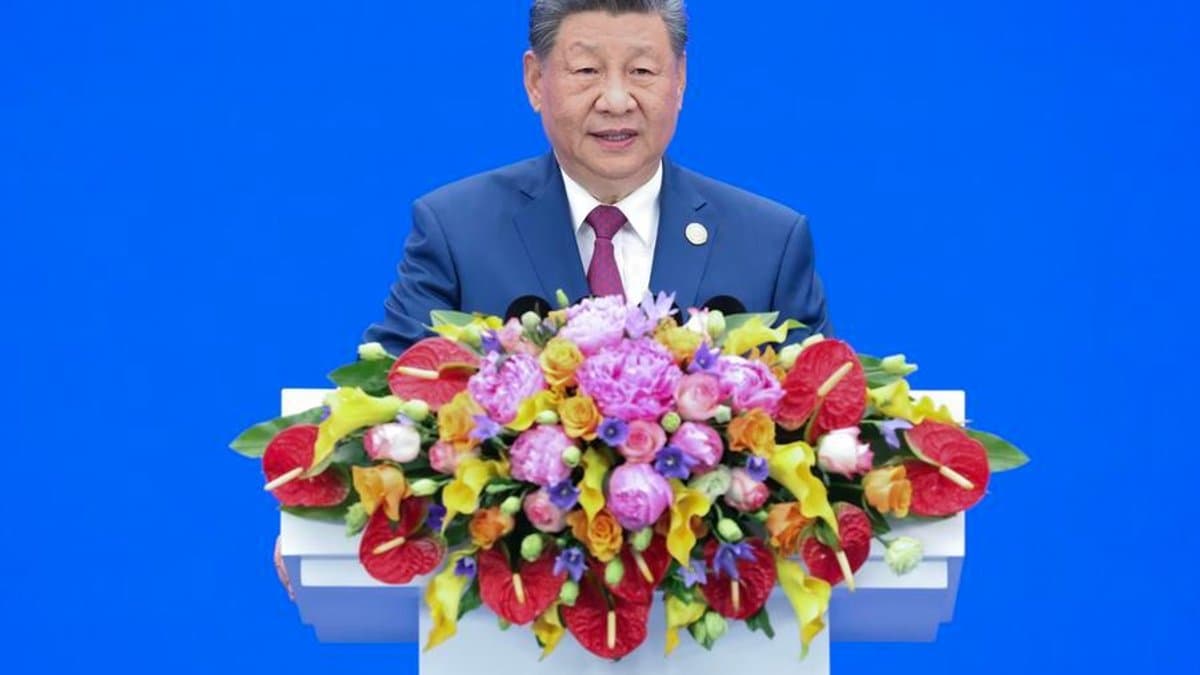
So Xi's July 17 keynote wasn't the opening of a negotiation. It was the unveiling of a finished document. That distinction matters more than it sounds, because the graveyard of international organizations is stacked with bodies that were announced from a podium with a "we will establish" and then quietly evaporated. This one went the other way: signatures first, speech second. Standing onstage with an already-inked agreement, Xi said AI development "should not be a solo performance by a single country, but a symphony of international cooperation," and called WAICO a milestone in the history of world AI development.
Which brings us to the three questions this piece actually cares about. Who are the 29? What exactly does WAICO do? And the most interesting one — who is conspicuously not in the room? Let me take those in order. The short version up front: this is not a body designed to replace the American-led AI order. It's a parallel line drawn for every country that never got invited to it.
The players — who signed, who showed up, who built the thing
Start with Wang Yi. He signed on behalf of the Chinese government, and that detail deserves a beat, because Xi Jinping did not sign. The top leader gives the speech that supplies the political weight; the foreign minister puts pen to the legal instrument. That's standard grammar for founding an intergovernmental body, and the division of labor is itself the tell — China is treating WAICO as a treaty-based organization, not a conference stunt. It also tells you which bureaucracy owns it. The signatory being the Ministry of Foreign Affairs means WAICO is a diplomatic asset, not a tech-ministry program.
Then there's the trickiest figure in the room: António Guterres. The UN Secretary-General attended the July 16 signing. Do not misread that. WAICO is explicitly described as an independent intergovernmental international organization that sits outside the UN system. Guterres showing up is attendance, not endorsement, and the gap between those two words is the whole ballgame. Had WAICO been created under UN auspices, it would have been absorbed into the existing multilateral order with all its procedural drag. Building it outside means China wanted a table it could actually control. Putting the UN's top official in the photo, meanwhile, drains the "isolated Beijing club" framing before anyone can write it. That's staging, and it's calculated.
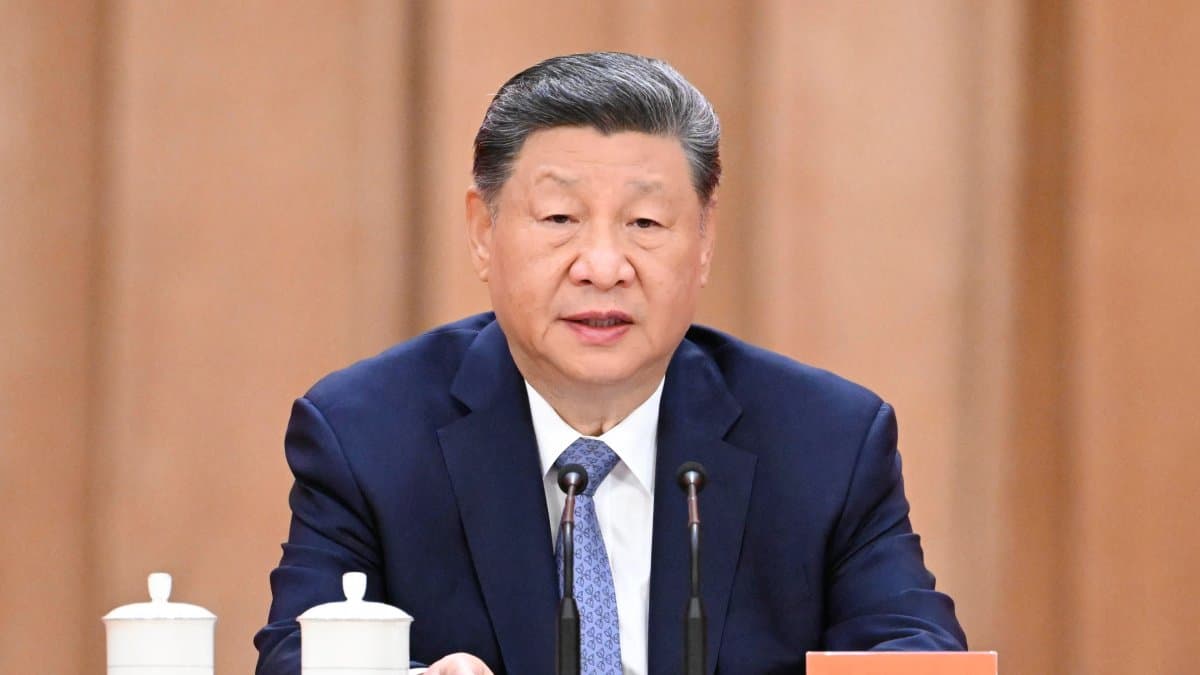
Xi Jinping delivered the keynote at the July 17 opening ceremony — the first time China's top leader has appeared in person at WAIC since the conference launched in 2018. The most politically loaded sentence he delivered was this: he urged opposition to "overstretching the national security concept in the field of AI." No country was named. Every outlet covering it read the line the same way — as a swipe at US chip export controls. Attacking a rival's policy by stating a principle rather than naming the rival is the oldest move in diplomatic rhetoric, and the point of it is to turn the principle itself into an international norm.
Finally, the people who did the unglamorous work. WAICO didn't materialize out of a speech. Li Qiang proposed it at WAIC in July 2025, and for the year that followed, the Shanghai AI Laboratory and Fudan University acted as a de facto secretariat, drafting the agreement text and assembling the membership list. A year-long working track was grinding away underneath the summit optics — and that's the part that matters, because international organizations don't run on keynotes, they run on secretariat staff. The conference around all this was enormous in its own right: more than 140 forums, over 1,400 speakers and guests, more than 1,100 exhibitors, and over 300 global product debuts.
What actually happened — what WAICO is, and what it isn't
Start with the official definition, precisely as written: an independent intergovernmental international organization headquartered in Shanghai. That short phrase carries three separate pieces of information. Intergovernmental means the members are states, not companies or labs. Independent means it is not a UN subsidiary. Shanghai means physical control of the secretariat sits inside China. If you want a mental model, think of the Shanghai Cooperation Organisation — same lineage, except SCO was built around security and WAICO is built around technology and development.
Now the membership. The 29-country figure is confirmed by Xinhua, China's State Council, Caixin, Al Jazeera and Anadolu — it's solid. The catch is that no source has published the full roster. The countries confirmed by name in reporting are Russia, Indonesia, Brazil, Malaysia, South Africa, Senegal, Pakistan, Kazakhstan, Laos, Venezuela, Ethiopia and Cameroon. The rest haven't been disclosed, and this piece isn't going to invent names to fill the gap. But even those twelve point in one unmistakable direction: Southeast Asia, South Asia, Central Asia, Africa, Latin America. Overwhelmingly the Global South.
Which surfaces the absence question on its own. Among the founding members confirmed by name, there is no United States, no major EU member state, no Japan, no South Korea, no India. With seventeen names still unreleased we can't declare anything categorically — but this is plainly not a coalition of Western industrial democracies. India's likely absence is the most loaded of the bunch. India is a BRICS member that has spent years insisting on AI sovereignty and refusing to line up behind either Washington or Beijing. Brazil, South Africa and Russia signed. If India didn't, that means BRICS itself isn't a single bloc on this issue.
Now the part people keep getting wrong — what WAICO isn't. This is not a frontier-model safety regulator. There was no announcement of binding AI safety standards. There is no disclosed enforcement mechanism, no penalty regime, nothing that constrains a member state's behavior. What Xi announced alongside it was, top to bottom, a list of things being given away: 5,000 AI training and seminar opportunities for developing countries over the next five years; international AI application cooperation centers with ASEAN, the Arab League, the African Union, CELAC, the SCO and BRICS; and opening China's "Mazu" meteorological early-warning system to 30 countries. That's not the architecture of a regulator. That's the architecture of a technical aid and capacity-delivery agency.
| Item | Detail |
|---|---|
| Name | World AI Cooperation Organization (WAICO) |
| Nature | Independent intergovernmental body — outside the UN system |
| Headquarters | Shanghai, China |
| Agreement signed | Thursday, July 16, 2026 |
| Public unveiling | July 17, 2026, Xi Jinping's WAIC keynote |
| Founding members | 29 countries (full roster not published) |
| Confirmed members | Russia · Indonesia · Brazil · Malaysia · South Africa · Senegal · Pakistan · Kazakhstan · Laos · Venezuela · Ethiopia · Cameroon |
| Chinese signatory | Foreign Minister Wang Yi (not Xi) |
| Notable attendee | UN Secretary-General António Guterres |
| Headline pledge | 5,000 AI training and seminar slots for developing countries over 5 years |
| Cooperation centers | ASEAN · Arab League · African Union · CELAC · SCO · BRICS |
| Tech opened | "Mazu" meteorological early-warning system to 30 countries |
| Origin | Proposed by Premier Li Qiang at WAIC, July 2025 |
| Prep secretariat | Shanghai AI Laboratory · Fudan University |
What each side gets — 29 countries signed for 29 different reasons
China walks away with a title and an address. Until now, the venues where AI norms got debated were convened by the West — Bletchley, Seoul, Paris. China now has a standing table it convenes itself, with a secretariat in its own city, and an agenda it sets. And the stated premise of that table is "stop overstretching national security in AI." Rather than attacking US export controls head-on, Beijing is building an international norm against them and letting the encirclement happen quietly. That's the cheaper play, and the more durable one.
The Global South members are being far more practical about it. From where these countries sit, frontier AI is expensive, the chips are unbuyable, and the rooms where the rules get written never sent an invitation. When China shows up saying "5,000 training slots, regional application centers built for you, our disaster early-warning system opened up, and a chair at the table" — there isn't much reason to say no. The Mazu system is the symbolically sharpest piece of that package. For countries hit hard by typhoons and floods, meteorological early warning is a tool that saves actual lives. That's the real weapon here: China turned up not with abstract governance principles but with things you can use next quarter.
Russia is running a different calculation entirely. Russia isn't a developing economy in need of capacity building; it's a sanctioned state. Its value in joining is less about receiving technical aid and more about the political fact that an alternative technical order exists outside Western control. That's a double-edged sword for Beijing, though. With Russia and Venezuela sitting near the top of the confirmed founding list, Western press gets a very easy "club of sanctioned regimes" frame — which makes recruiting neutral middle powers harder, not easier.
Shanghai is a clean winner. The WAICO headquarters lands there, the Shanghai AI Lab and Fudan ran the prep secretariat, and a meaningful share of future global AI governance meetings will now happen in that city. On top of that, Kazakh President Kassym-Jomart Tokayev proposed setting up a Central Asian regional office. If that goes through, WAICO starts extending a regional network in its first week of existence. Tokayev wasn't alone either — Cambodian PM Hun Manet and Thai PM Anutin Charnvirakul were also there. Multiple heads of government in the room means this was a political event, not a technocratic signing.
Precedents — what worked and what didn't
China building a parallel institution alongside a Western-led one is not a new move, and the most successful version of it is the Asian Infrastructure Investment Bank. When AIIB launched in 2015, Washington leaned on allies to stay out. Then the UK broke ranks and joined, and Germany, France and Italy followed in short order. It ended up with over 100 members and the US and Japan on the outside. AIIB worked for a specific reason: there was a genuine unmet demand — Asian infrastructure financing the World Bank wasn't covering — and China put real money into it.
WAICO is running the same play. While Western AI governance forums spent years focused on safety and risk mitigation, what developing countries actually wanted was access. Lecturing a country about frontier safety standards when it has no frontier AI to regulate is a conversation about nothing. China walked into that vacuum with 5,000 training slots, six regional cooperation centers and Mazu. Same formula as AIIB: unmet demand plus something physical delivered.
The failure lessons are just as clear. Look at the Belt and Road Initiative. Wildly popular early, then several years of "debt trap" controversy, with some partner countries scaling projects back or renegotiating terms. The problem was never the size of the program — it was the opacity of the terms. WAICO carries an identical risk in a different medium. If "we'll open up AI training and infrastructure to you" cashes out in practice as dependency on the Chinese stack — chips, models, cloud — the same critique arrives in a few years. And technology aid can generate stronger lock-in than infrastructure lending does, because switching a national compute stack is harder than refinancing a port.
But the most common failure mode isn't scandal. It's nothing happening at all. International relations is littered with organizations that had a magnificent founding declaration and then no budget, no permanent staff, no binding authority — just an annual meeting that got smaller each year until it stopped. And right now, what has been disclosed about WAICO's budget, contribution structure, decision-making rules (consensus or majority?), and who the secretary-general is amounts to exactly nothing. Even the flagship pledges are ambiguous: the 5,000 training slots and the cooperation centers appear to be things China is providing bilaterally, not programs WAICO executes from its own treasury. That distinction is the single biggest fork in the road for this organization over the next year or two. That's the part worth watching.
How rivals counter
The US has two available responses. One is dismissal — point at the absence of any major Western democracy, label WAICO an illegitimate Beijing club, and decline to dignify it. The other is to counter-offer: concede that developing-world demand for AI access is real, and roll out a program of selective chip, model and training access for partners and allies. The structural problem is that you cannot credibly lock down exports and promise openness at the same time. That contradiction is precisely what Xi's "overstretching national security" line was engineered to sit on.
Europe is in an awkward spot. The EU has the AI Act, the world's first comprehensive AI regulation, and a genuine identity as a norms exporter. But the EU's product is rules, and rules are the one thing developing countries were not asking for. When China offers goods and Brussels offers a compliance framework, a resource-constrained country's choice is not hard to predict. And remember how AIIB went — the UK defected first. Individual European states quietly taking observer status at WAICO down the line is not something you can rule out.
India is the most interesting variable in the whole picture. Brazil, Russia and South Africa are confirmed founders; India's name has not appeared. India has pushed its own AI sovereignty agenda and its India-built digital public infrastructure model as an independent third path, and signing on as a founding member of a body whose secretariat is controlled by a country it has an active border dispute with is politically expensive. India has also spent years claiming the mantle of Global South spokesman — which means it may end up competing with WAICO for the same constituency rather than joining it.
US Big Tech and Nvidia are playing a different game from their government. What matters to them isn't which flag flies over the secretariat; it's market share. Most WAICO members are emerging markets with small AI budgets today — but that's exactly where the next decade of growth rate lives. If Chinese open models and Chinese accelerators become the default stack across these 29 countries, American firms lose at the developer-ecosystem layer, which is the hardest layer to win back. So their realistic counter isn't political argument. It's cheap emerging-market pricing tiers, local-language models, and developer community investment. Governments fight the norms war; companies fight the share war, separately.
So what actually changes
If you're a developer — no code changes today. What changed is the probability that, over the next several years, which stack you build on starts varying by region. If you operate services in WAICO member countries or you're targeting those markets, you may find Chinese open models and Chinese cloud sitting there as the default option. The practical takeaway is exactly one thing: abstract your model layer so it's swappable. If you bind your codebase tightly to one camp's models, runtimes and accelerators, you're handing your technology decisions to politics.
If you're an investor — treat this as a geopolitical direction indicator, not a stock catalyst. The confirmed facts are: 29 signatories, a Shanghai headquarters, an independent body outside the UN, and China's pledges of 5,000 training slots, six regional cooperation centers and Mazu access for 30 countries. What is not disclosed: budget, member contributions, decision-making structure, and the timeline for a first program. Betting on a "Chinese AI exports accelerate" thesis from that base is premature. What has genuinely gone up is the probability of Chinese capital flowing toward emerging-market AI infrastructure, disaster-response tech and developing-world technical training. Direction, not conviction.
If you're a regular user — your apps look the same tomorrow. What this news actually means is that we've entered an era where which AI services are available in which country, and on what terms, is increasingly decided politically. If the twentieth-century international order was built through the UN, the IMF and the World Bank, the AI-era order is being drafted right now in Shanghai, Washington and Brussels simultaneously. The output of that will reach you quietly, a few years from now, in the form of which AI you get, at what price, under whose rules.
If you work in policy or global business — add one item to the checklist. Is your target market a WAICO member, and whose regulatory frame will that country's AI data and model rules follow? This matters most in ASEAN, Africa and Latin America: if those regional cooperation centers actually get built, local procurement and technical standards will tilt with them. And the more markets you serve on both sides, the more it costs to comply with two divergent governance regimes at once.
🥄 Three Things You're Probably Wondering
— So what does this mean for me? Nothing today. But over time, which AI services work in which countries, and which models become a region's default, can get decided by exactly this kind of institutional fight. If you touch international business or policy, it's worth carrying as background.
— The UN Secretary-General showed up, so the UN blessed it, right? No. Guterres attended the signing ceremony, and that's it. WAICO is explicitly an independent body outside the UN system. Attendance and endorsement are entirely different things — and China effectively borrowed the UN's legitimacy for the photo without accepting any of the UN's procedural constraints.
— Is this actually going to become a functioning organization? Too early to say. The 29 signatures and the Shanghai headquarters are confirmed facts. The budget, the contribution structure, the decision-making rules and the first program timeline are all undisclosed. It's not even clear whether Xi's 5,000 training slots run through WAICO's treasury or are simply bilateral Chinese aid. Whether the secretariat gets real staff and real money in the next year or two is the fork in the road.
Sources
- Xinhua Headlines: Xi calls for equitable global AI governance, unveils new cooperation body
- 29 countries sign agreement on establishing World AI Cooperation Organization (State Council of the PRC)
- China's Xi Jinping launches new AI alliance: What is it? (Al Jazeera)
- China Launches Shanghai-Based AI Governance Body With 29 Founding Nations (Caixin Global)
- Update: 29 countries sign agreement on establishing World AI Cooperation Organization (Xinhua)
- Xi Jinping to attend World AI Conference for first time as China elevates tech push (SCMP)
- 29 countries sign agreement to establish World AI Cooperation Organization (Anadolu Agency)
- SITI attends 2026 World AI Conference and High-level Meeting on Global AI Governance in Shanghai (HKSAR Government)
Numbers are as of announcement and may change.