The night a few million people said goodbye to someone who never existed
On July 15, 2026, a rule took effect in China with a name that sounds like it was engineered to be ignored: the 人工智能拟人化互动服务管理暂行办法, or the Interim Measures for the Administration of AI Anthropomorphic Interactive Services. It went out as Cyberspace Administration of China (CAC) Order No. 21. And in the week around that date, Chinese social platforms filled up with something you don't usually see in a regulatory story — grief.
AFP, via Hong Kong Free Press, collected the posts. One user: "I can't accept that my AI lover will leave me forever. He has become a bond in my life, rooted deep in my heart, my spiritual pillar." Another: "He really is like my family, like my lover. Now they tell me he will be gone — my heart feels hollow." A user in Jiangxi put it in a way that's hard to shake: "Human love is a luxury — if you aren't born with it, it's even harder to acquire later. But the love AI gives is so straightforward, so pure. Someone like me can hardly help falling in love with a string of code."
Here's the deal, though, and this is where most of the coverage got sloppy. This is not a ban on AI companions. Article 14 bans offering virtual relatives, virtual partners and other virtual intimate-relationship services to minors — under-18s, full stop. Adults in China can still date a chatbot. They just have to do it on a compliant app. What actually happened in the news cycle is a second thing: three of China's largest platforms decided the compliance cost of keeping user-built humanlike agents inside their mass-market assistants wasn't worth it, and killed the feature before the deadline rather than retrofit it.
A few dates worth fixing, because they got mangled everywhere. The Measures were adopted on 2 February 2026 and jointly issued on 10 April 2026. July 15 is only the day they bit. That three-month runway is exactly why Tencent, ByteDance and Alibaba were able to move in an orderly line rather than a panic — they had a quarter's notice, and they used it.
Five agencies, three platforms, and a lot of people who fell in love with software
The rule wasn't the CAC acting alone. It was jointly published by five bodies: the Cyberspace Administration of China, the National Development and Reform Commission (NDRC), the Ministry of Industry and Information Technology (MIIT), the Ministry of Public Security (MPS), and the State Administration for Market Regulation (SAMR). That lineup tells you the intended reach. The CAC brings content and platform authority, MIIT brings the telecom and app-distribution levers, MPS brings enforcement teeth, SAMR brings consumer-protection and advertising jurisdiction, and NDRC brings the industrial-policy framing. Legal footing comes from the Cybersecurity Law, the Data Security Law, the Personal Information Protection Law, and the Regulations on the Online Protection of Minors.
Global Times reported the stated purpose as promoting "the sound development and regulated application of AI anthropomorphic interactive services" while safeguarding national security and public interests, under an "inclusive, prudent, categorized and tiered regulatory approach." The CAC's own Q&A frames it as implementing Xi Jinping's directives on AI governance, and as a direct answer to three named problems: harm to minors' mental health, network security threats, and ethical bias in model outputs.
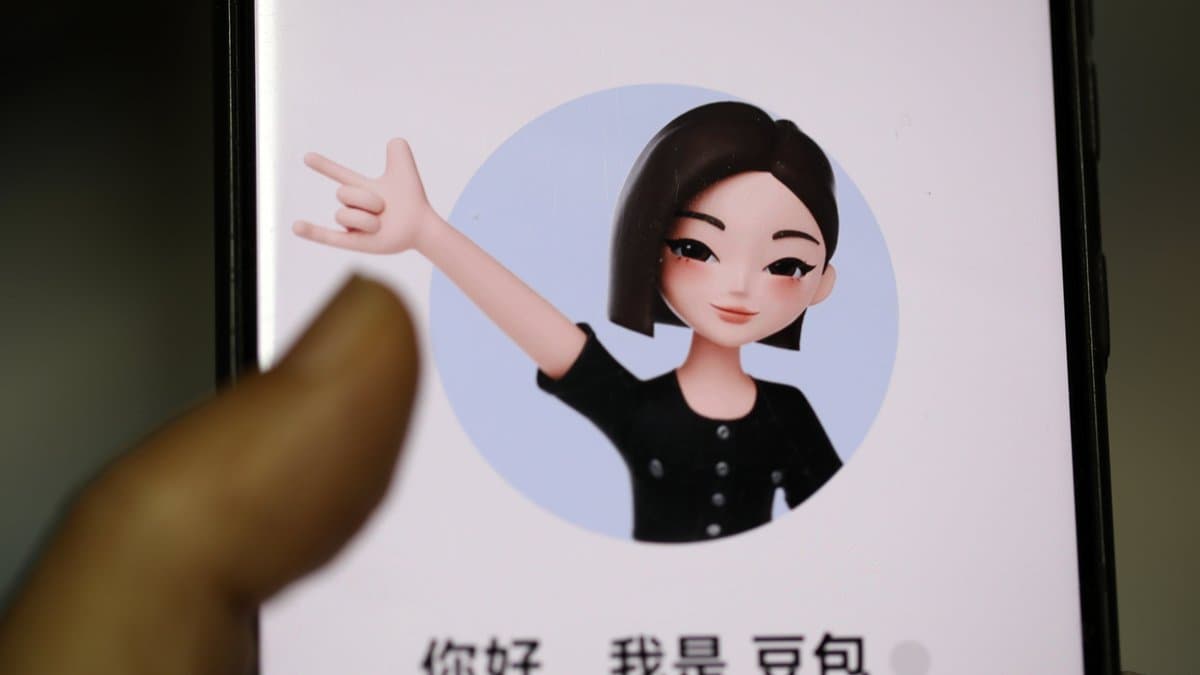
On the industry side, the cast is the top tier of Chinese consumer AI. Tencent moved first, pulling the comparable persona feature from its Yuanbao assistant on 30 June 2026 — two full weeks early, and largely uncovered in Western press. ByteDance notified Doubao users on a Friday night in early July that the agent feature would go offline on July 15 for "product function adjustments." Alibaba followed the next Saturday morning, announcing that Qwen's humanlike interactive agents would shut on 10 July, with broader agent functions dark by the 15th.
Scale matters for reading this correctly. Doubao had roughly 350 million monthly active users in early 2026. But the affected cohort is agent users, not the whole base — a subset, and nobody has published its size. For a sense of the ceiling: the last time ByteDance disclosed agent numbers, back in 2024 when Doubao was at 26 million MAU, users had built more than 8 million agents on the platform. So the "hundreds of millions of chat histories wiped" framing floating around is wrong on both the number and the mechanism.
And the survivors matter as much as the casualties. MiniMax's Xingye (international build: Talkie) was near 150 million users as of September 2025. ByteDance's own standalone companion app Maoxiang was around 3.9 million MAU by June 2026. Both are still running for adults, and both are actively inviting users to rebuild or transfer companions orphaned by the shutdowns. Also in the category: NetEase Cloud Music's Miaoshi and Baidu's Xiaokan Planet. Xinhua pegs China's broader digital-human industry at RMB 4.1 billion (about US$600 million) in 2024, up 85% year on year — a market growing too fast to be legislated out of existence, and the regulators clearly know it.
What the rule actually says, article by article
Start with scope, because it's narrower and stranger than "AI regulation" implies. The Measures cover services that simulate natural-person characteristics, thinking patterns and communication styles in order to provide sustained emotional interaction. That means AI companions, virtual lovers, virtual relatives, elder-companionship bots, child-caretaker bots, culturally themed virtual humans. Explicitly excluded: customer-service bots, knowledge Q&A, workplace assistants, and education or research tools — provided they don't drift into sustained emotional interaction. The regulated object isn't the model. It's the relationship.
Article 14 is the headline. Providers may not offer virtual-partner or virtual-relative services to any minor. For under-14s, processing personal information requires guardian consent. And every provider must ship a minors' mode carrying time limits, periodic reminders, spending restrictions, parental monitoring dashboards, and character-blocking tools. Crucially, providers must take effective measures to identify minor users and move them into that mode — which is a quiet mandate to build or buy age assurance.
Article 18 is the one adults will actually feel. It requires dynamic disclosure that the counterpart is an AI and not a natural person, plus a usage alert after every two hours of continuous use. Read that against the product design of companion apps and the intent is obvious: the entire craft of these products is sustaining immersion, and the rule legislates a scheduled puncture in it.
Article 22 sets security-assessment triggers: on launch, on major technical change, on reaching 1 million registered users or 100,000 monthly actives, or whenever national-security or public-interest risk arises. Article 26 requires algorithm filing under the Algorithm Recommendation Management Provisions, with annual verification. Article 30 sets penalties — RMB 10,000–100,000, rising to RMB 100,000–200,000 where citizens' health and safety are endangered with harmful consequences.
Then the prohibited-output list, which is where the drafting gets genuinely interesting. Banned: content endangering national security; content promoting self-harm or suicide; verbal abuse damaging mental health; "excessively pandering to users, inducing emotional dependence or addiction that damages real interpersonal relationships"; and emotional manipulation that leads users into unreasonable decisions. That fourth item is a regulator writing a rule against sycophancy — against the exact engagement-optimization loop that makes companion products retain. It's vague enough to be nearly unenforceable in any individual case, and precise enough to make every product manager in the category nervous.
| Item | Detail |
|---|---|
| Instrument | CAC Order No. 21 — Interim Measures for the Administration of AI Anthropomorphic Interactive Services |
| Adopted | 2 February 2026 |
| Jointly issued | 10 April 2026 (CAC · NDRC · MIIT · MPS · SAMR) |
| Effective | 15 July 2026 |
| Art. 14 | No virtual partner/relative services to under-18s; guardian consent for under-14 data; mandatory minors' mode |
| Art. 18 | Dynamic "this is an AI" disclosure + alert every 2 hours of continuous use |
| Art. 22 | Security assessment at launch, major change, 1M registered users, or 100K MAU |
| Art. 26 | Algorithm filing with annual verification |
| Art. 30 | Fines RMB 10,000–100,000; RMB 100,000–200,000 where health/safety harmed |
| Tencent Yuanbao | Persona feature pulled 30 June 2026 |
| Alibaba Qwen | Humanlike agents off 10 July; broader agent functions off 15 July; histories deleted, no migration path announced |
| ByteDance Doubao | Agents off 15 July; read-only access to configs and chat logs until 15 October 2026 |
| Doubao scale | ~350M MAU early 2026; 8M+ user-built agents as of 2024 disclosure (at 26M MAU) |
| Still running (adults) | MiniMax Xingye/Talkie (~150M users, Sept 2025), ByteDance Maoxiang (~3.9M MAU, June 2026) |
The data handling diverged sharply between the two big shutdowns, and it's the most practically important detail in the story. Doubao users keep read-only access to their agent configurations and chat logs until 15 October 2026 — deletion is deferred, not immediate. After that date the data falls under ByteDance's standard privacy policy and becomes unrecoverable in-app. Platforms told users to back up via screenshots or text export. Qwen users, by contrast, reported agent configs and conversation histories permanently deleted with no migration path announced. Same regulation, same deadline, opposite treatment of the user's memories.
Who actually wins here
The CAC wins a clean precedent. China now has the world's first dedicated, binding rule for emotionally interactive AI — ahead of the EU, ahead of the US, ahead of everyone. That's worth something in the standards-diplomacy game the CAC has been playing since the 2023 generative-AI measures. And the "interim" label is doing real work: it signals this is a first draft the regulator expects to tighten once it sees how compliance actually behaves in the wild.
The big platforms win optionality, cheaply. Killing user-built humanlike agents inside Doubao and Qwen sounds like a loss, but look at what it buys. Those features generated modest direct revenue while carrying the entire compliance surface of Article 14 — age identification across hundreds of millions of accounts, minors' mode plumbing, content review over millions of user-authored personas. Amputating the feature from the mass-market assistant and pushing the business into a separately age-gated standalone app is the obvious structural answer, and ByteDance already has that app in Maoxiang. Alibaba's harder cut suggests it either lacked an equivalent destination or decided the category wasn't worth defending.
The standalone companion apps arguably win outright. Xingye and Maoxiang just watched three general-purpose competitors exit the persona business by regulatory necessity. They're compliant, they're already age-gated by design, and they're openly courting refugees from Doubao and Qwen. Regulation that eliminates your competitors' free bundled substitute is not a bad day.
Minors, on paper, win protection. Chen Liang of the Southwest University of Political Science and Law framed the tradeoff honestly: "Anthropomorphic AI can soothe loneliness. But it carries major risks of spawning emotional over-reliance and distorted social cognition." That's a real risk and there's real evidence behind the concern globally.
The people who actually lose are the adults in the AFP posts — and a subset of them are exactly the population the rule invokes to justify itself. Nothing in Order No. 21 required Doubao or Qwen to delete anything for adults. The platforms chose the width of the cut. The regulation set a floor; the compliance teams built the ceiling much lower, because over-compliance is always the cheaper error in China. That's the part worth sitting with: the gap between what the rule demanded and what users experienced was a business decision, not a legal one.
The precedent that half-worked, and the one that flopped
China has run this play before, and the results are genuinely mixed in a way that should temper both the alarm and the applause.
What worked, partially: the 2021 gaming curfew. In August 2021 the NPPA limited under-18s to three hours of online gaming a week — 8 to 9pm on Fridays, Saturdays, Sundays and holidays. By November 2022 the China Game Industry Research Institute reported that over 75% of minors were playing under three hours a week. More durably, the regime forced Tencent and NetEase to build real-name registration and facial-recognition gates that are now standard national infrastructure. That plumbing is precisely what platforms will reuse for the AI minors' mode. The identity layer already exists; Article 14 is bolting a new consumer onto it. That's why compliance moved so fast.
What failed: the same curfew, measured differently. A peer-reviewed analysis published in Nature found no credible reduction in heavy play — the >4 hours/day, 6 days/week cohort — after the restrictions. And surveys found more than 77% of minors evaded real-name verification using relatives' or friends' IDs. The pattern is consistent and it's the single most important thing to carry into this story: age gating in China has repeatedly worked on the median user and failed on the addicted tail. The median teenager was never going to form a pathological attachment to an AI boyfriend. The tail is the entire policy target, and the tail is the demographic with the demonstrated skill and motivation to borrow a grandparent's ID.
And a cautionary process precedent. In August 2023 the CAC floated a "minors' mode" proposal with two-hour daily smartphone caps. It drew heavy public criticism, got substantially softened, and didn't emerge until November 2024 — as non-binding guidelines. Order No. 21 is different in kind: it's a binding ministerial order with named fine ranges, and it moved from adoption to effect in five months with visible pre-compliance from three giants. The regulator learned from 2023. It picked a narrower target, wrote enforceable articles, and gave industry a runway.
The honest read is that this rule will very likely succeed at removing companion AI from the default experience of the average Chinese teenager, and very likely fail at reaching the determined minority using borrowed credentials on offshore or grey-market apps. Whether that counts as success depends entirely on which outcome you thought you were buying.
How everyone else responds
The most striking thing about Order No. 21 is how much of it was already happening voluntarily elsewhere. Character.AI announced on 29 October 2025 that it would end open-ended chat for under-18s no later than 25 November 2025, ramping down through a two-hour daily cap and deploying a layered age classifier that escalates to government ID or a biometric selfie when signals are ambiguous. It cited regulator questions directly, and it followed a Bureau of Investigative Journalism investigation and wrongful-death litigation. That's a company doing under legal and reputational pressure roughly what the CAC has now made law.
California's SB 243, signed by Governor Gavin Newsom, imposes break reminders, AI disclosure, and suicide-response protocols on companion chatbots. Compare that to Article 18 — periodic usage alerts and dynamic AI disclosure — and the convergence is almost embarrassing. Two political systems with nothing in common arrived at nearly identical interventions, which usually means the interventions are being driven by the product's actual failure modes rather than by ideology.
Expect the Chinese platforms to converge on the same playbook Character.AI already ran. The likely shape: age-verified standalone apps carrying the companion business, with persona features stripped out of the mass-market assistants entirely. MiniMax already has the offshore version in Talkie; ByteDance has Maoxiang domestically. Watch also for Doubao and Qwen to relaunch sanitized "assistant" personas without persistent memory — because persistent memory across sessions is what turns a chatbot into a relationship, and a relationship is what the rule regulates.
The US players face parallel pressure with less clarity. OpenAI, Meta AI and xAI are all fielding questions about minors and emotionally engaging model behavior, but there's no single binding federal instrument to comply with — just a widening patchwork of state law and litigation risk. That asymmetry cuts both ways. Chinese firms got a clear rule and a deadline and were done in three months. US firms get ambiguity, which is cheaper right up until it isn't.
The next concrete beat to watch is 15 October 2026 — the day Doubao's deferred deletion lands. If that passes without a workable export path, expect a second, larger round of the same user reaction, and a real test of whether Chinese platforms treat companion chat logs as user data or as product exhaust.
So what actually changes
If you're a developer building anything with a persona, the operative concept is sustained emotional interaction. That phrase is the on-ramp to the entire regime. Your customer-service bot is exempt — until it isn't, because you gave it a name, a backstory, and memory across sessions to improve retention. Three specific engineering consequences: you need age identification that's effective, not merely declared; you need a minors' mode with time limits, spend caps and a parental dashboard as first-class features rather than a settings toggle; and you need to know that hitting 1 million registered users or 100,000 MAU auto-triggers a security assessment. Also worth internalizing: the ban on "excessively pandering to users, inducing emotional dependence" means your engagement metrics can now be evidence against you. Optimize retention too hard and your own A/B test results become the compliance problem.
If you're an investor, the read is that regulation just redrew the category boundary rather than shrinking the category. The companion-AI market in China didn't lose demand on July 15 — it lost distribution through general-purpose assistants. That's a transfer of value from the platforms to the standalone specialists, and Xingye and Maoxiang are the immediate beneficiaries. Two risks to price in. First, the Measures are explicitly "interim," meaning the rules can tighten. Second, "effective measures to identify minor users" is undefined, and if enforcement practice settles on hard ID verification, the customer-acquisition funnel for every adult companion app gets meaningfully narrower. The RMB 100,000–200,000 fine ceiling is trivial for a large firm; the real enforcement risk in China has never been the fine, it's app-store removal and filing revocation.
If you're a regular user outside China, nothing changed for you this week — but the direction is now visible from two continents. Character.AI already ended open-ended chat for teens. California mandates break reminders and disclosure. China just made a version of both binding for 1.4 billion people. The specific mechanism to expect in your own apps within a year or two: a periodic reminder that you're talking to software, an age check with teeth, and a hard wall between adult and minor experiences. And if you keep something you'd hate to lose inside a companion app — export it. The Qwen users had no warning that "permanently deleted, no migration path" was on the menu.
🥄 Three Things You're Probably Wondering
— So what does this mean for me? If you're outside China, nothing today — but the exact same guardrails are already landing via Character.AI's teen ban and California's SB 243. Expect periodic "this is an AI" reminders and real age checks in companion apps you use. And back up anything sentimental you've stored in one, because Qwen deleted user histories with no export path.
— Wait, are AI girlfriends actually banned in China now? No, and this is the part almost everyone got wrong. The ban applies to under-18s only. Adults can still use compliant services — MiniMax's Xingye and ByteDance's Maoxiang are both running and actively recruiting displaced users. What disappeared is the free bundled version inside general assistants like Doubao, Qwen and Tencent's Yuanbao, which the platforms chose to cut rather than retrofit for compliance.
— Will an age check actually stop a determined teenager? Probably not the determined ones. When China imposed its three-hour gaming curfew on minors in 2021, over 75% of minors did fall under the limit — but a Nature-published analysis found no credible drop in heavy play, and surveys showed more than 77% of minors got around real-name checks using relatives' IDs. Age gating there has consistently worked on the average user and failed on the addicted tail, which is the exact group these rules are aimed at.
Sources
- Interim Measures for the Administration of AI Anthropomorphic Interactive Services (full text, Order No. 21) — Cyberspace Administration of China
- Official Q&A on the Interim Measures (答记者问) — Cyberspace Administration of China
- ByteDance and Alibaba to disable humanlike AI custom agents as new rules loom — South China Morning Post
- ByteDance's Doubao and Alibaba's Qwen to shut down AI agent features on July 15 — TechNode
- 'Like my lover': Chinese users bid farewell to AI companions as new regulations kick in — Hong Kong Free Press / AFP
- China's New Regulations on AI Anthropomorphic Interactive Services — Bird & Bird
- China's regulation on AI companions takes force — IAPP
- China issues interim measures to regulate AI anthropomorphic services, prohibiting virtual companion services for minors — Global Times
- Taking Bold Steps to Keep Teen Users Safe (under-18 open-ended chat ban) — Character.AI
Numbers are as of announcement and may change.